VS

Skoda Kamiq vs Toyota Yaris comparison

Compare performance (150 HP vs 280 HP), boot space and price (22,300 £ vs 21,900 £ ) at a glance. Find out which car is the better choice for you – Skoda Kamiq or Toyota Yaris?

Skoda Kamiq vs Toyota Yaris: Key differences

Skoda Kamiq

5 (5 Reviews)
rate
  • visibly more trunk space
details

Toyota Yaris

4 (5 Reviews)
rate
  • barely cheaper
  • substantially more power
  • clearly more efficient
  • substantially quicker 0–100 km/h
  • moderately lighter
details

All details on performance, efficiency, range and trunk space can be found in the technical comparison below – including user reviews for both models.

By Achim Sedelmaier

Kamiq

A Compelling Face-Off: Skoda Kamiq vs. Toyota Yaris

In the ever-evolving automotive landscape, compact cars are increasingly popular due to their versatility, efficiency, and urban appeal. Two noteworthy contenders in this segment are the Skoda Kamiq and the Toyota Yaris. While they cater to different tastes and requirements, both vehicles boast impressive technical prowess and innovative features. In this article, we’ll dive deep into the details and innovations that set these two models apart.
Yaris

Body Style and Dimensions

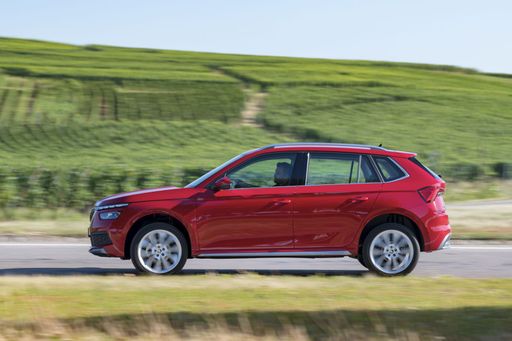
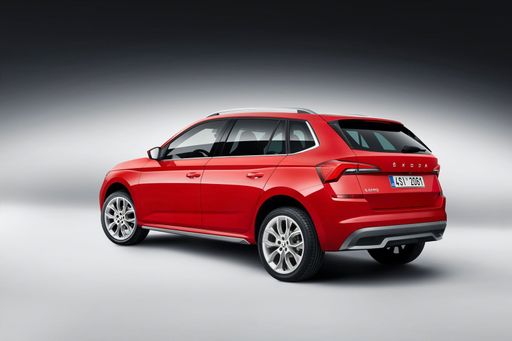
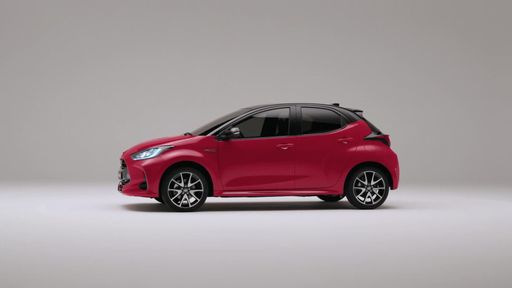
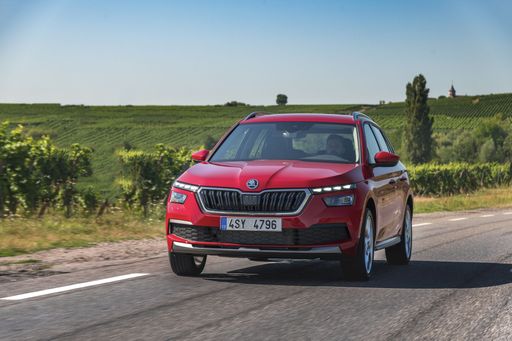
The Skoda Kamiq is a compact SUV that offers an elevated driving position, spacious interiors, and a rugged aesthetic. Measuring 4241 mm in length, 1793 mm in width, and 1562 mm in height, it stands out with a robust presence.

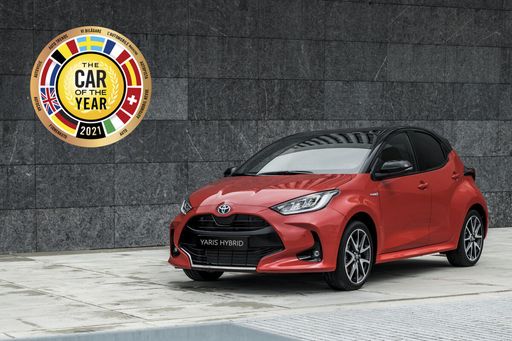
In contrast, the Toyota Yaris is designed as a hatchback, focusing more on agility and city maneuverability. Its dimensions vary slightly with lengths of 3940 mm and 3995 mm, widths ranging from 1745 mm to 1805 mm, and heights of 1500 mm and 1455 mm. The Yaris provides a sportier experience compared to the more SUV-like stance of the Kamiq.

Kamiq

Engine Options and Performance

The Skoda Kamiq is available with multiple petrol engine options, ranging from 95 HP to a powerful 150 HP. With a choice of manual and automatic transmissions, it caters to diverse driving preferences. The Kamiq delivers an acceleration of 0-100 km/h in as little as 8.3 seconds, showcasing its capability. Additionally, fuel consumption ranges between 5.4 and 5.7 L/100 km, making it competitive in efficiency.

On the other hand, the Toyota Yaris offers a mix of full hybrid and petrol engines, with power outputs peaking at 130 HP. The Yaris can achieve an acceleration of 0-100 km/h in 9.2 seconds, which, while respectable, does not quite match the Kamiq's top performance. Fuel efficiency shines in the Yaris, especially in hybrid mode, with consumption as low as 3.8 L/100 km.

Yaris

Interior Space and Comfort

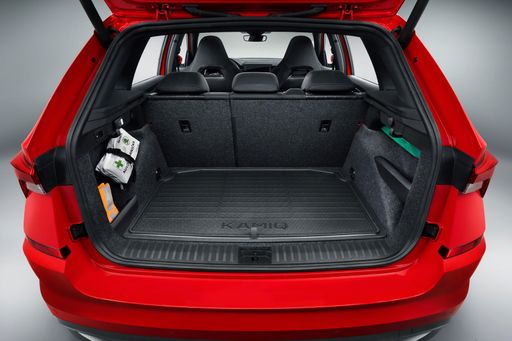
When it comes to interiors, the Skoda Kamiq excels with its trunk capacity of 400 liters, providing ample space for luggage and everyday items. With a spacious cabin designed for comfort, it seats five adults comfortably, making it the ideal choice for families or those requiring extra space.

The Toyota Yaris, while compact, might challenge buyers with its smaller trunk capacity of 286 liters. However, its interiors are cleverly designed to maximize space, creating a cozy atmosphere. It comfortably seats five but also offers a more compact option with four seats in specific configurations.

Kamiq

Innovative Features

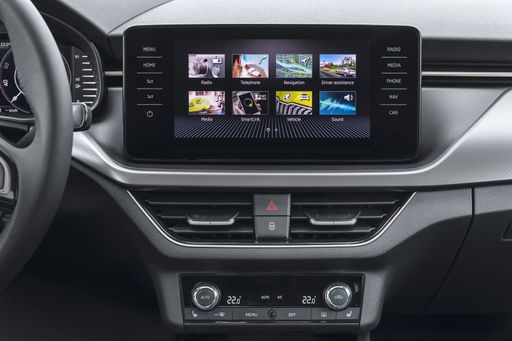
Both vehicles come equipped with a suite of advanced technology and safety features. The Skoda Kamiq offers a digital cockpit, a large touchscreen infotainment system, smartphone connectivity, and a range of driver assistance systems that enhance safety and convenience.

Meanwhile, the Toyota Yaris is known for its innovative hybrid technology, which not only provides excellent fuel efficiency but also contributes to lower emissions, achieving a CO2 rating as low as 87 g/km. The Yaris also features Toyota's Safety Sense package, delivering advanced safety features, such as pre-collision systems, lane departure alerts, and adaptive cruise control.

Conclusion: Choosing Your Champion

In this face-off between the Skoda Kamiq and the Toyota Yaris, both models excel in their unique ways. The Kamiq is perfect for those who crave spaciousness and SUV-like characteristics, while the Yaris captures those who prioritize efficiency and advanced hybrid technology.

Your choice will ultimately depend on your personal preferences: whether you value the rugged appeal and roomy interiors of the Kamiq or the agile, eco-friendly drive of the Yaris. Regardless of your decision, both vehicles promise an engaging drive backed by reliability and innovative features.

Here’s where it gets real: The technical differences in detail

Kamiq

Costs and Efficiency:

Price and efficiency are key factors when choosing a car – and this is often where the real differences emerge.

Toyota Yaris is barely cheaper – starting at 21,900 £ , while the Skoda Kamiq costs 22,300 £ . That’s a price difference of around 411 £.

Fuel consumption also shows a difference: the Toyota Yaris uses 3.8 L/100km and is clearly more efficient than the Skoda Kamiq with 5.3 L/100km. The difference is about 1.5 L/100km.

Yaris

Engine and Performance:

Power, torque and acceleration say a lot about how a car feels on the road. This is where you see which model delivers more driving dynamics.

When it comes to engine power, the Toyota Yaris offers substantially more power – delivering 280 HP compared to 150 HP. That’s roughly 130 HP more horsepower.

When accelerating from 0 to 100 km/h, the Toyota Yaris is substantially quicker – completing the sprint in 5.5 s, while the Skoda Kamiq takes 8.1 s. That’s about 2.6 s quicker.

There’s also a difference in torque: the Toyota Yaris delivers clearly more torque with 390 Nm compared to 250 Nm. That’s about 140 Nm more.

Kamiq

Space and Everyday Use:

Whether family car or daily driver – which one offers more room, flexibility and comfort?

Both vehicles offer seating for 5 people.

In terms of curb weight, Toyota Yaris is moderately lighter – 1,090 kg compared to 1,231 kg. The difference is around 141 kg.

Looking at boot space, the Skoda Kamiq offers visibly more boot space – 400 L compared to 286 L. That’s a difference of about 114 L.

When it comes to payload, the Skoda Kamiq carries very slightly more – 539 kg compared to 525 kg. That’s a difference of about 14 kg.

Who wins the race in the data check?

The Toyota Yaris is decisively ahead in the objective data comparison.
This result only shows which model scores more points on paper – not which of the two cars feels right for you.

from £21,900
Yaris

Toyota Yaris

  • Engine Type : Full Hybrid, Petrol
  • Transmission : Automatic, Manuel
  • Drive Type : Front-Wheel Drive, All-Wheel Drive
  • Power HP : 116 - 280 HP
  • Consumption L/100km : 3.8 - 8.7 L/100km
Skoda Kamiq
Toyota Yaris

Costs and Consumption

View detailed analysis

Engine and Performance

View detailed analysis

Dimensions and Body

View detailed analysis

Skoda Kamiq

The Skoda Kamiq is a practical, well-built small crossover that mixes city-friendly manners with surprisingly versatile interior space and clever storage solutions. It offers a comfortable ride, user-friendly technology and solid value, making it a sensible choice for everyday driving.

details

Toyota Yaris

The Yaris is a compact hatchback that blends everyday practicality with Toyota’s long-standing reputation for reliability, making it easy to live with in city traffic. Its nimble handling and sensible interior make the Yaris a smart choice for drivers who want straightforward, fuss-free transport.

details
Skoda Kamiq
Toyota Yaris

Costs and Consumption

Price
22,300 - 32,700 £
Price
21,900 - 40,800 £
Consumption L/100km
5.3 - 5.7 L/100km
Consumption L/100km
3.8 - 8.7 L/100km
Consumption kWh/100km
-
Consumption kWh/100km
-
Electric Range
-
Electric Range
-
Battery Capacity
-
Battery Capacity
-
co2
121 - 128 g/km
co2
87 - 197 g/km
Fuel tank capacity
-
Fuel tank capacity
-

Dimensions and Body

Body Type
SUV
Body Type
Hatchback
Seats
5
Seats
4 - 5
Doors
-
Doors
-
Curb weight
1,231 - 1,340 kg
Curb weight
1,090 - 1,356 kg
Trunk capacity
400 L
Trunk capacity
141 - 286 L
Length
-
Length
-
Width
1,793 mm
Width
1,745 - 1,805 mm
Height
-
Height
-
Max trunk capacity
-
Max trunk capacity
-
Payload
439 - 539 kg
Payload
289 - 525 kg

Engine and Performance

Engine Type
Petrol
Engine Type
Full Hybrid, Petrol
Transmission
Manuel, Automatic
Transmission
Automatic, Manuel
Transmission Detail
Manual Gearbox, Dual-Clutch Automatic
Transmission Detail
CVT, Manual Gearbox
Drive Type
Front-Wheel Drive
Drive Type
Front-Wheel Drive, All-Wheel Drive
Power HP
95 - 150 HP
Power HP
116 - 280 HP
Acceleration 0-100km/h
8.1 - 11 s
Acceleration 0-100km/h
5.5 - 9.7 s
Max Speed
-
Max Speed
-
Torque
175 - 250 Nm
Torque
390 Nm
Number of Cylinders
3 - 4
Number of Cylinders
3
Power kW
70 - 110 kW
Power kW
85 - 206 kW
Engine capacity
999 - 1,498 cm3
Engine capacity
1,490 - 1,618 cm3

General

Model Year
2025
Model Year
2026
CO2 Efficiency Class
D
CO2 Efficiency Class
B, G
Brand
Skoda
Brand
Toyota
DriveDuel uses data analysis and artificial intelligence to evaluate vehicle data and create content. Content is regularly reviewed and improved. The displayed prices are estimates based on German list prices, adjusted to the respective country’s VAT. Country-specific registration taxes are not included. This information is not legally binding.