VS

Skoda Karoq vs BMW X1 comparison

Compare performance (190 HP vs 326 HP), boot space and price (29,100 £ vs 38,700 £ ) at a glance. Find out which car is the better choice for you – Skoda Karoq or BMW X1?

Skoda Karoq vs BMW X1: Key differences

Skoda Karoq

4.6 (2 Reviews)
rate
  • noticeably cheaper
  • moderately lighter
details

BMW X1

4.3 (8 Reviews)
rate
  • substantially more power
  • clearly more efficient
  • visibly quicker 0–100 km/h
  • only slightly more trunk space
details

All details on performance, efficiency, range and trunk space can be found in the technical comparison below – including user reviews for both models.

By Achim Sedelmaier

Karoq

BMW X1 vs Skoda Karoq: A Comparative Review

The automotive landscape is teeming with choices for compact SUVs, where features such as performance, design, and technology significantly influence buyers' decisions. Two of the notable contenders in this segment are the BMW X1 and the Skoda Karoq. With distinctive qualities and a range of options, buyers may find themselves pondering which of these vehicles suits their needs best.
X1

Design and Dimensions

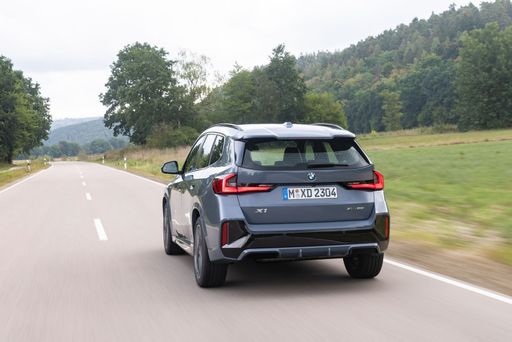
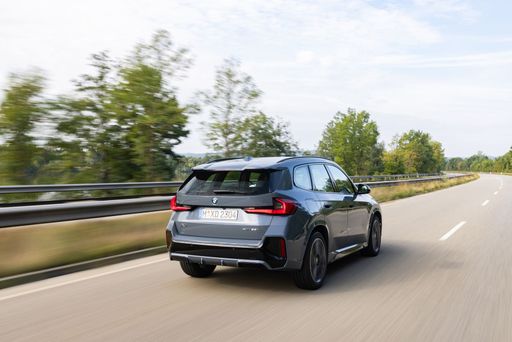
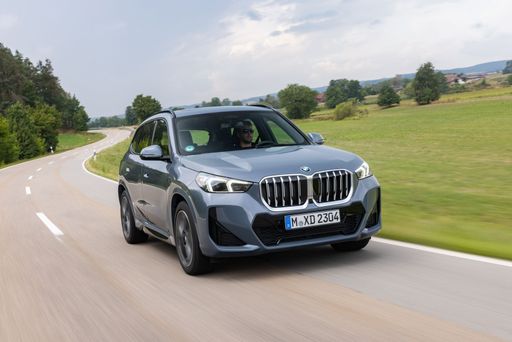
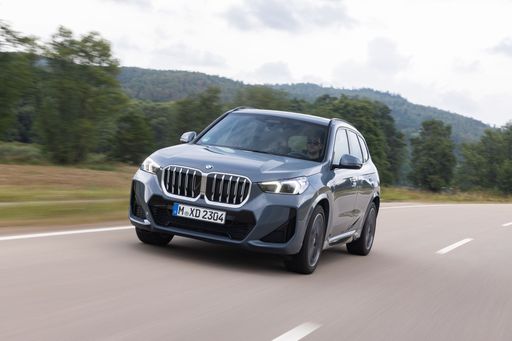
The BMW X1 is characterized by its robust, athletic design, measuring 4500mm in length and 1845mm in width. It stands tall at 1642mm. The X1’s bold kidney grille, sleek headlights, and sculpted lines underscore its luxury SUV status.

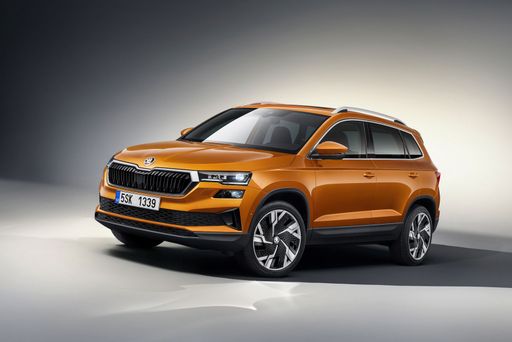
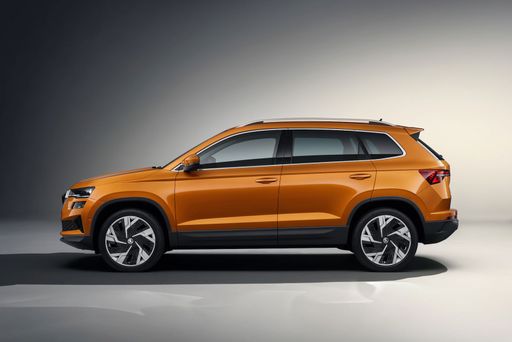
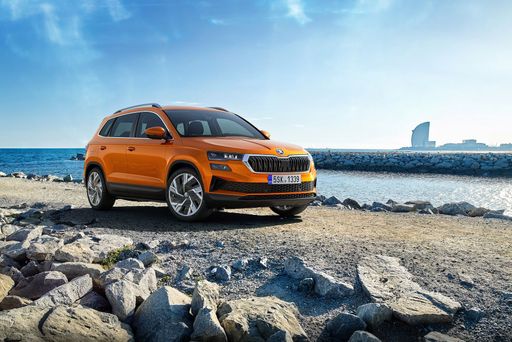
In contrast, the Skoda Karoq features a more understated aesthetic, measuring slightly smaller at 4390mm long and 1841mm wide. Its height varies between 1603mm to 1624mm depending on the variant. The Karoq embodies Skoda's clean design philosophy with a practical and functional exterior.

Karoq

Engine Options and Performance

Under the hood, the BMW X1 offers a diverse range of engines, including petrol, diesel, and hybrid options. Power outputs range from 136 to a potent 326 HP, with diesel MHEV and petrol MHEV configurations available. The engines are paired with an automatic transmission, enabling smooth gear shifts and responsive performance. The X1 boasts impressive acceleration figures, with the fastest variant sprinting from 0 to 100 km/h in just 5.4 seconds.

The Skoda Karoq, on the other hand, offers a more modest selection of engine options, with petrol and diesel engines generating between 115 and 190 HP. The Karoq’s acceleration from 0 to 100 km/h can reach as low as 7 seconds with its performance-oriented variants, although the overall output is fewer than that of the X1's aggressive engine range.

X1

Fuel Efficiency and Emissions

When it comes to fuel consumption, the BMW X1 showcases impressive figures, with some variants consuming as little as 4.6 L/100 km. Its hybrid configurations also offer an electric range of up to 83 km, providing a cost-effective and eco-friendly driving experience.

The Skoda Karoq similarly strives for efficiency, with its best-performing engines delivering figures around 4.9 L/100 km. However, its emissions tend to range from 129 to 174 g/km, slightly higher than some X1 variants, which can dip as low as 120 g/km.

Karoq

Interior Comfort and Technology

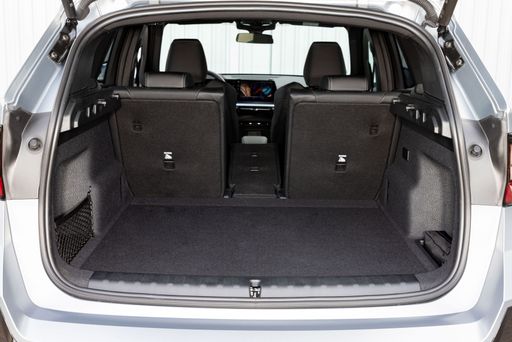
Stepping inside, the BMW X1 showcases a luxurious interior with high-quality materials and an intuitive infotainment system. With five seats and a trunk capacity of up to 540 liters, it strikes a balance between comfort and practicality.

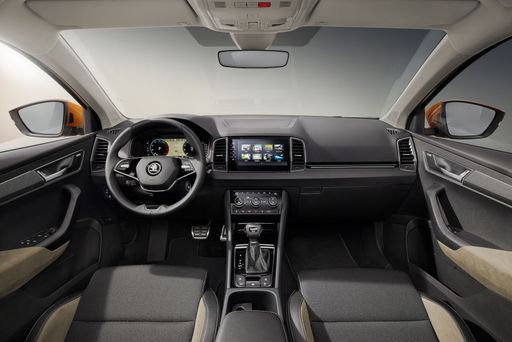
The Skoda Karoq does not shy away from comfort either, offering spacious seating for five and a trunk space of 521 liters, slightly less than the X1. Skoda is known for its attention to practicality, and the Karoq features numerous storage solutions and an easy-to-use infotainment system, making it a suitable choice for families.

X1

Safety and Innovations

Both vehicles are equipped with comprehensive safety features, including advanced driver assistance systems. The BMW X1 benefits from a suite of features such as lane-keeping assist and adaptive cruise control, amplifying its driving experience. Meanwhile, the Skoda Karoq offers similar technological advancements with a focus on safety and eco-friendliness, such as emergency braking and blind-spot monitoring.

Karoq

Conclusion

Choosing between the BMW X1 and the Skoda Karoq ultimately boils down to personal preference and priorities. The X1 dazzles with its robust performance and luxurious stature, while the Karoq stands tall with practicality, efficiency, and value. For those who cling to sportiness and premium features, the X1 might be the right bet. Conversely, buyers seeking reliability and functionality may find the Karoq a better fit. Each vehicle brings unique strengths to the table, ensuring that either choice will provide a rewarding driving experience.

Here’s where it gets real: The technical differences in detail

Karoq

Costs and Efficiency:

Price and efficiency are often the first things buyers look at. Here it becomes clear which model has the long-term edge – whether at the pump, the plug, or in purchase price.

Skoda Karoq is noticeably cheaper – starting at 29,100 £ , while the BMW X1 costs 38,700 £ . That’s a price difference of around 9,575 £.

Fuel consumption also shows a difference: the BMW X1 uses 2.5 L/100km and is clearly more efficient than the Skoda Karoq with 4.9 L/100km. The difference is about 2.4 L/100km.

X1

Engine and Performance:

Power, torque and acceleration say a lot about how a car feels on the road. This is where you see which model delivers more driving dynamics.

When it comes to engine power, the BMW X1 offers substantially more power – delivering 326 HP compared to 190 HP. That’s roughly 136 HP more horsepower.

When accelerating from 0 to 100 km/h, the BMW X1 is visibly quicker – completing the sprint in 5.4 s, while the Skoda Karoq takes 7 s. That’s about 1.6 s quicker.

There’s also a difference in torque: the BMW X1 delivers noticeably more torque with 477 Nm compared to 360 Nm. That’s about 117 Nm more.

Karoq

Space and Everyday Use:

Whether family car or daily driver – which one offers more room, flexibility and comfort?

Both vehicles offer seating for 5 people.

In terms of curb weight, Skoda Karoq is moderately lighter – 1,380 kg compared to 1,575 kg. The difference is around 195 kg.

Looking at boot space, the BMW X1 offers only slightly more boot space – 540 L compared to 521 L. That’s a difference of about 19 L.

When it comes to payload, the Skoda Karoq carries very slightly more – 549 kg compared to 500 kg. That’s a difference of about 49 kg.

Who wins the race in the data check?

The BMW X1 is decisively ahead in the objective data comparison.
This result only shows which model scores more points on paper – not which of the two cars feels right for you.

from £38,700
X1

BMW X1

  • Engine Type Diesel MHEV, Petrol MHEV, Petrol, Diesel, Plugin Hybrid
  • Transmission Automatic
  • Drive Type Front-Wheel Drive, All-Wheel Drive
  • Power HP 136 - 326 HP
  • Consumption L/100km 2.5 - 7.7 L/100km
  • Electric Range 81 km
Skoda Karoq
BMW X1

Costs and Consumption

View detailed analysis

Engine and Performance

View detailed analysis

Dimensions and Body

View detailed analysis

Skoda Karoq

Skoda Karoq is a smartly packaged compact SUV that balances practical family-friendly space with composed handling, making daily drives feel easy and assured. Its straightforward design, roomy cabin with clever storage solutions, and sensible equipment make it a strong choice for buyers seeking value and versatility without fuss.

details

BMW X1

The BMW X1 delivers BMW's sporty driving character in a compact premium crossover package, making daily driving both engaging and practical. With a refined cabin, flexible cargo space and composed handling, it's a smart choice for buyers who want luxury and versatility without compromise.

details
Skoda Karoq
BMW X1

Costs and Consumption

Price
29,100 - 41,700 £
Price
38,700 - 56,200 £
Consumption L/100km
4.9 - 7.6 L/100km
Consumption L/100km
2.5 - 7.7 L/100km
Consumption kWh/100km
-
Consumption kWh/100km
-
Electric Range
-
Electric Range
81 km
Battery Capacity
-
Battery Capacity
-
co2
128 - 173 g/km
co2
57 - 175 g/km
Fuel tank capacity
-
Fuel tank capacity
-

Dimensions and Body

Body Type
SUV
Body Type
SUV
Seats
5
Seats
5
Doors
-
Doors
-
Curb weight
1,380 - 1,655 kg
Curb weight
1,575 - 1,935 kg
Trunk capacity
521 L
Trunk capacity
490 - 540 L
Length
-
Length
-
Width
1,841 mm
Width
1,845 mm
Height
-
Height
-
Max trunk capacity
-
Max trunk capacity
-
Payload
456 - 549 kg
Payload
490 - 500 kg

Engine and Performance

Engine Type
Petrol, Diesel
Engine Type
Diesel MHEV, Petrol MHEV, Petrol, Diesel, Plugin Hybrid
Transmission
Manuel, Automatic
Transmission
Automatic
Transmission Detail
Manual Gearbox, Dual-Clutch Automatic
Transmission Detail
Dual-Clutch Automatic
Drive Type
Front-Wheel Drive, All-Wheel Drive
Drive Type
Front-Wheel Drive, All-Wheel Drive
Power HP
115 - 190 HP
Power HP
136 - 326 HP
Acceleration 0-100km/h
7 - 11.2 s
Acceleration 0-100km/h
5.4 - 9.2 s
Max Speed
-
Max Speed
-
Torque
200 - 360 Nm
Torque
230 - 477 Nm
Number of Cylinders
3 - 4
Number of Cylinders
3 - 4
Power kW
85 - 140 kW
Power kW
100 - 240 kW
Engine capacity
999 - 1,984 cm3
Engine capacity
1,499 - 1,998 cm3

General

Model Year
2025
Model Year
2,024 - 2,025
CO2 Efficiency Class
D, E, F
CO2 Efficiency Class
D, E, F, B
Brand
Skoda
Brand
BMW
DriveDuel uses data analysis and artificial intelligence to evaluate vehicle data and create content. Content is regularly reviewed and improved. The displayed prices are estimates based on German list prices, adjusted to the respective country’s VAT. Country-specific registration taxes are not included. This information is not legally binding.