VS

Skoda Karoq vs Hyundai Tucson comparison

Compare performance (190 HP vs 288 HP), boot space and price (29,100 £ vs 20,900 £ ) at a glance. Find out which car is the better choice for you – Skoda Karoq or Hyundai Tucson?

Skoda Karoq vs Hyundai Tucson: Key differences

Skoda Karoq

4.6 (2 Reviews)
rate
  • barely quicker 0–100 km/h
  • a bit lighter

Hyundai Tucson

4.6 (4 Reviews)
rate
  • noticeably cheaper
  • noticeably more power
  • considerably more efficient
  • moderately more trunk space

All details on performance, efficiency, range and trunk space can be found in the technical comparison below – including user reviews for both models.

Karoq

First impressions that refuse to be ignored

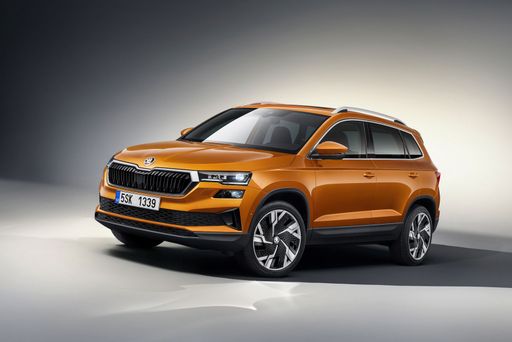
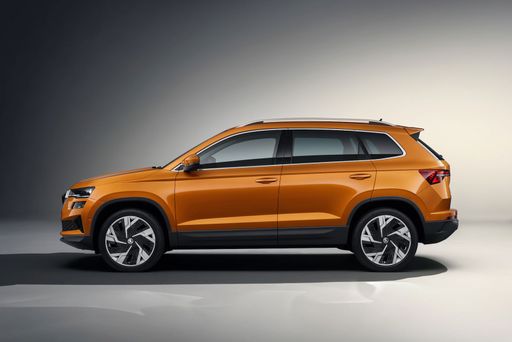
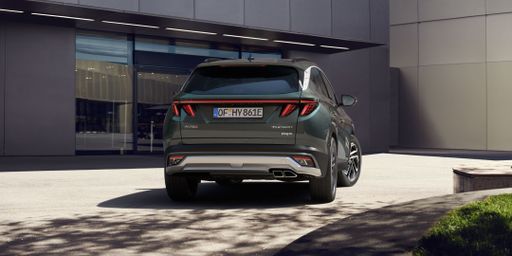
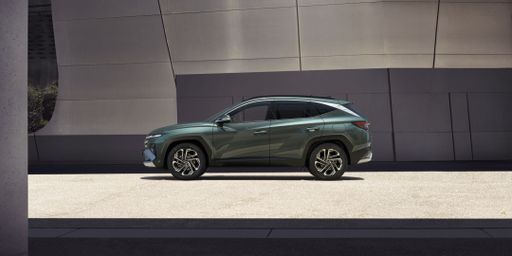
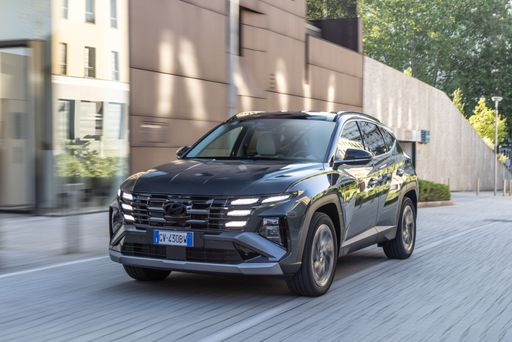
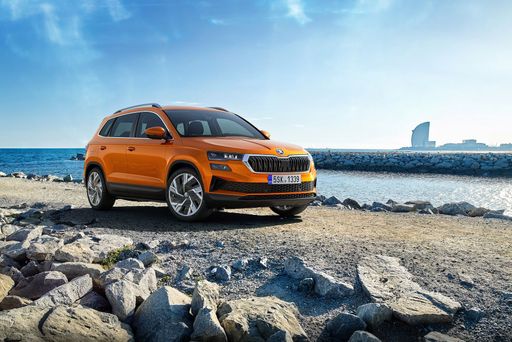
The Hyundai Tucson arrives like a concept car that decided to move in next door — bold surfaces, dramatic lighting signatures and a look that leans into modernity; it’s the statement choice for anyone who wants to be noticed at the supermarket. The Skoda Karoq, by contrast, dresses to last rather than to shock, favouring clean lines and a deliberately practical silhouette that will age gracefully. Together they set the tone for very different ownership stories: one confident and contemporary, the other discreet and sensible.
Tucson

How they behave when the road gets interesting

On twisty stretches the Skoda Karoq feels keen and composed, rewarding drivers who like precision and reassurance from the chassis; it’s the kind of compact SUV that makes urban runs and country B-roads feel purposeful. The Hyundai Tucson prefers to smooth things out, prioritising composure and refinement so occupants arrive relaxed rather than exhilarated. Both have believable characters — one more driver-focused, the other more comfort-minded — so your daily route will reveal which temperament suits you.

Karoq

Cabin moods: tech, touch and everyday comfort

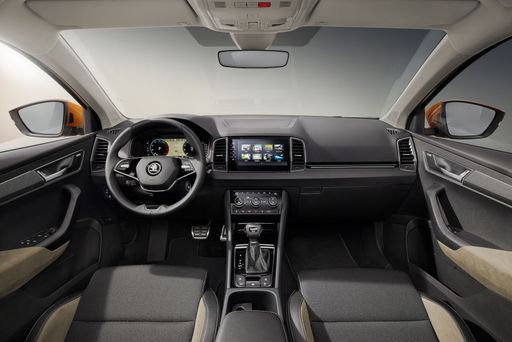
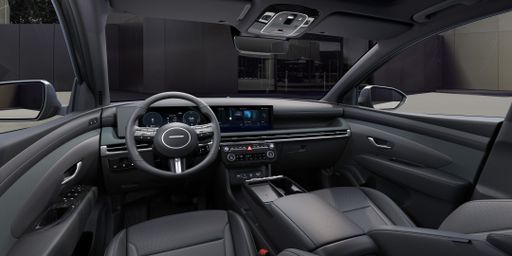
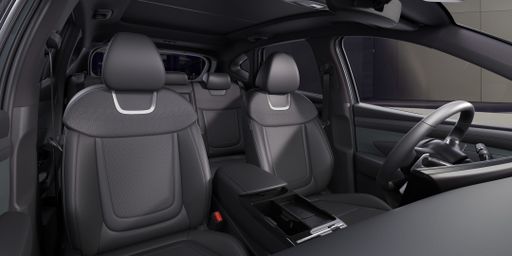
Step inside the Hyundai Tucson and you notice a modern cabin that leans on tech and styling to create a roomy, upscale feel; materials and seating aim for long-haul comfort and a liveable ergonomics. The Skoda Karoq champions straightforwardness: controls are logical, storage is sensible, and the interior prioritises user-friendliness over flash. Both cabins do their jobs well, but they appeal to different tastes — the Tucson for those who want a contemporary ambience, the Karoq for buyers who prize clarity and practicality.

Tucson

Living with it day to day

Practicality is where the Karoq’s strengths become very clear: it’s unapologetically useful, easy to park and engineered around the realities of family life and urban driving. The Tucson answers with more expansive packaging and flexible interior solutions that cater to long trips and larger loads without feeling cramped. In short, one leans into compact convenience while the other stretches to accommodate an active household.

Karoq

Sense of ownership: running it and living with it

The Skoda Karoq gives a reassuringly pragmatic feel — it’s designed with fuss-free ownership in mind and speaks to buyers who want simplicity and good value over flash. The Hyundai Tucson feels like a more fully appointed offering, with a longer spec list and a comfort-first philosophy that may appeal to those who measure value in features and cabin refinement. Either way, you’re buying into different philosophies: one frugal and functional, the other well-equipped and status-conscious.

Tucson

Matchmaking: who should look at which

If your commute is a mix of tight city streets and school runs, and you value clever packaging and a no-nonsense approach, the Skoda Karoq is squarely aimed at you. If you’re a style-conscious buyer who spends time on motorways and wants a more refined cabin and a strong presence on the driveway, the Hyundai Tucson will be an appealing choice. Both make sensible, defensible offers depending on whether you prioritise agility and thrift or space and amenity.

Karoq

Keep your seatbelt fastened — the decision is coming

Both cars bring clear personalities and practical strengths to the table, so the right pick depends on whether you favour understated utility or contemporary comfort; stick with us as we dig deeper into ownership impressions, feature-by-feature comparisons and long-term usability — the DriveDuel Champion will be revealed afterwards, so keep reading.

Here’s where it gets real: The technical differences in detail

Karoq

Costs and Efficiency:

When it comes to price and running costs, the biggest differences usually appear. This is often where you see which car fits your budget better in the long run.

Hyundai Tucson is noticeably cheaper – starting at 20,900 £ , while the Skoda Karoq costs 29,100 £ . That’s a price difference of around 8,185 £.

Fuel consumption also shows a difference: the Hyundai Tucson uses 2.7 L/100km and is considerably more efficient than the Skoda Karoq with 4.9 L/100km. The difference is about 2.2 L/100km.

Tucson

Engine and Performance:

Under the bonnet, it becomes clear which model is tuned for sportiness and which one takes the lead when you hit the accelerator.

When it comes to engine power, the Hyundai Tucson offers noticeably more power – delivering 288 HP compared to 190 HP. That’s roughly 98 HP more horsepower.

When accelerating from 0 to 100 km/h, the Skoda Karoq is barely quicker – completing the sprint in 7 s, while the Hyundai Tucson takes 7.5 s. That’s about 0.5 s quicker.

Looking at top speed, the Skoda Karoq is only slightly faster – reaching 210 km/h, while the Hyundai Tucson tops out at 204 km/h. The difference is around 6 km/h.

There’s also a difference in torque: the Hyundai Tucson delivers marginally more torque with 379 Nm compared to 360 Nm. That’s about 19 Nm more.

Karoq

Space and Everyday Use:

Whether family car or daily driver – which one offers more room, flexibility and comfort?

Both vehicles offer seating for 5 people.

In terms of curb weight, Skoda Karoq is a bit lighter – 1,380 kg compared to 1,542 kg. The difference is around 162 kg.

Looking at boot space, the Hyundai Tucson offers moderately more boot space – 620 L compared to 521 L. That’s a difference of about 99 L.

For maximum load capacity, the Hyundai Tucson offers marginally more capacity – up to 1,799 L, about 169 L more than the Skoda Karoq.

When it comes to payload, the Skoda Karoq carries very slightly more – 549 kg compared to 545 kg. That’s a difference of about 4 kg.

Who wins the race in the data check?

The Hyundai Tucson stands well ahead of its rival in the objective data comparison.
This result only shows which model scores more points on paper – not which of the two cars feels right for you.

from £20,900
Tucson

Hyundai Tucson

  • Engine Type : Petrol, Full Hybrid, Plugin Hybrid, Diesel MHEV
  • Transmission : Manuel, Automatic
  • Drive Type : Front-Wheel Drive, All-Wheel Drive
  • Power HP : 136 - 288 HP
  • Consumption L/100km : 2.7 - 7.6 L/100km
  • Electric Range : 63 - 70 km
Skoda Karoq
Hyundai Tucson

Costs and Consumption

View detailed analysis

Engine and Performance

View detailed analysis

Dimensions and Body

View detailed analysis

Skoda Karoq

The Skoda Karoq is a smart, unfussy compact SUV that blends roomy practicality with a pleasantly composed driving character. It won’t turn heads at a car meet, but it will make daily life easier with clever storage, sensible ergonomics and a reassuringly grown-up ride.

details

Hyundai Tucson

Hyundai Tucson marries bold, sculpted looks with a clever, roomy cabin that feels smarter than its price tag suggests. It's composed on the road, easy to live with day-to-day, and a sensible choice for buyers who want SUV style without the showroom theatrics.

details
Skoda Karoq
Hyundai Tucson

Costs and Consumption

Price
29,100 - 41,700 £
Price
20,900 - 47,900 £
Consumption L/100km
4.9 - 7.6 L/100km
Consumption L/100km
2.7 - 7.6 L/100km
Consumption kWh/100km
-
Consumption kWh/100km
-
Electric Range
-
Electric Range
63 - 70 km
Battery Capacity
-
Battery Capacity
-
co2
128 - 173 g/km
co2
62 - 172 g/km
Fuel tank capacity
50 - 55 L
Fuel tank capacity
52 - 54 L

Dimensions and Body

Body Type
SUV
Body Type
SUV
Seats
5
Seats
5
Doors
5
Doors
5
Curb weight
1,380 - 1,655 kg
Curb weight
1,542 - 1,893 kg
Trunk capacity
521 L
Trunk capacity
546 - 620 L
Length
4,390 mm
Length
4,525 - 4,535 mm
Width
1,841 mm
Width
1,865 mm
Height
1,624 mm
Height
1,650 mm
Max trunk capacity
1,630 L
Max trunk capacity
1,795 - 1,799 L
Payload
456 - 549 kg
Payload
518 - 545 kg

Engine and Performance

Engine Type
Petrol, Diesel
Engine Type
Petrol, Full Hybrid, Plugin Hybrid, Diesel MHEV
Transmission
Manuel, Automatic
Transmission
Manuel, Automatic
Transmission Detail
Manual Gearbox, Dual-Clutch Automatic
Transmission Detail
Manual Gearbox, Dual-Clutch Automatic, Automatic Gearbox
Drive Type
Front-Wheel Drive, All-Wheel Drive
Drive Type
Front-Wheel Drive, All-Wheel Drive
Power HP
115 - 190 HP
Power HP
136 - 288 HP
Acceleration 0-100km/h
7 - 11.2 s
Acceleration 0-100km/h
7.5 - 11.6 s
Max Speed
192 - 210 km/h
Max Speed
196 - 204 km/h
Torque
200 - 360 Nm
Torque
250 - 379 Nm
Number of Cylinders
3 - 4
Number of Cylinders
4
Power kW
85 - 140 kW
Power kW
100 - 212 kW
Engine capacity
999 - 1,984 cm3
Engine capacity
1,598 cm3

General

Model Year
2,025
Model Year
2,025
CO2 Efficiency Class
D, E, F
CO2 Efficiency Class
F, D, E, B
Brand
Skoda
Brand
Hyundai
DriveDuel uses data analysis and artificial intelligence to evaluate vehicle data and create content. Content is regularly reviewed and improved. The displayed prices are estimates based on German list prices, adjusted to the respective country’s VAT. Country-specific registration taxes are not included. This information is not legally binding.