VS

Skoda Karoq vs VW Tayron comparison

Compare performance (190 HP vs 272 HP), boot space and price (29,100 £ vs 40,200 £ ) at a glance. Find out which car is the better choice for you – Skoda Karoq or VW Tayron?

Skoda Karoq vs VW Tayron: Key differences

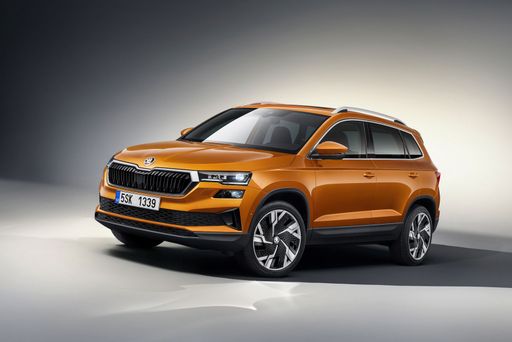
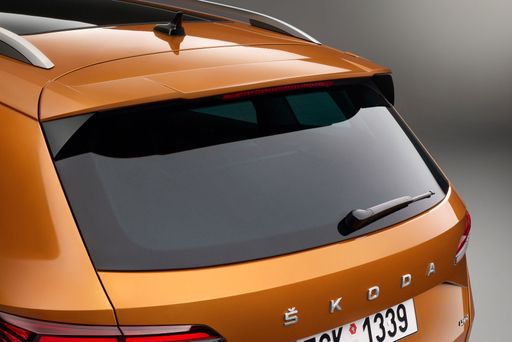
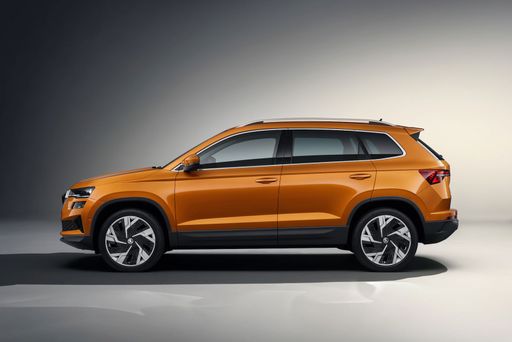
Skoda Karoq

4.6 (2 Reviews)
rate
  • noticeably cheaper
  • clearly lighter
details

VW Tayron

4.5 (5 Reviews)
rate
  • clearly more power
  • clearly more efficient
  • slightly quicker 0–100 km/h
  • substantially more trunk space
details

All details on performance, efficiency, range and trunk space can be found in the technical comparison below – including user reviews for both models.

By Achim Sedelmaier

Karoq

The Showdown: Skoda Karoq vs VW Tayron

In the competitive world of compact SUVs, the Skoda Karoq and VW Tayron stand out as two impressive options that cater to various customer needs. With their unique specifications, performance, and innovative features, both vehicles aim to capture the attention of discerning buyers. In this comparison, we will delve into the technical aspects, engine possibilities, and technological innovations that set these two models apart.
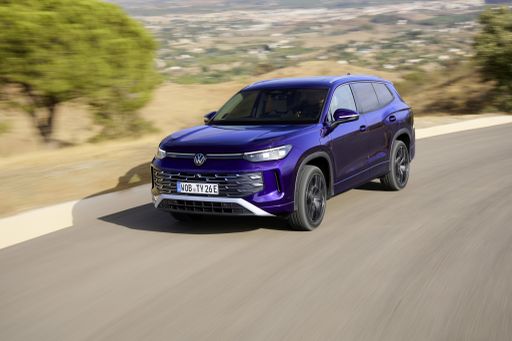
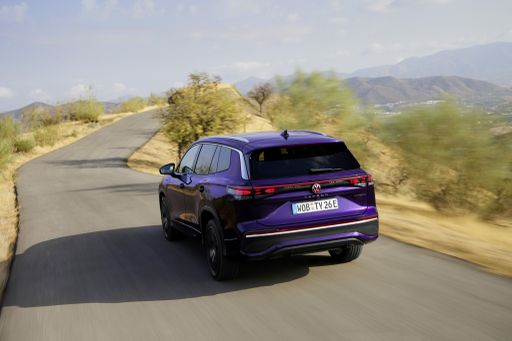
Tayron

Engine and Performance: Power Under the Hood

The Skoda Karoq offers a diverse range of powertrains, starting with petrol and diesel options. Buyers can choose from an array of engines, including 115HP, 150HP, and 190HP variants. The Karoq features efficient 1.0L and 1.5L petrol engines, as well as a robust 2.0L diesel option. With a choice between manual and dual-clutch automatic transmissions, it can effortlessly accelerate from 0-100 km/h in as little as 7 seconds, depending on the engine configuration.

On the other hand, the VW Tayron puts a spotlight on advanced hybrid technology, offering petrol mild-hybrid engines, plug-in hybrids, and traditional diesel units. Its lineup includes powerful options peaking at 272HP. Acceleration is impressive, with the Tayron hitting 0-100 km/h in just 6.1 seconds for its sportier configurations. When it comes to performance, the Tayron’s electric range of up to 126 km in plug-in hybrid mode adds a sustainable edge, appealing to eco-conscious drivers.

Karoq

Fuel Efficiency: Balancing Power with Economy

Fuel efficiency is a crucial consideration for modern SUV buyers. The Skoda Karoq shines with its commendable fuel consumption figures ranging from 4.9 to 7.6 liters per 100 km, depending on the engine and configuration. This means that even the sportier options do not compromise heavily on fuel economy, making it a pragmatic choice for daily usage.

The VW Tayron, while also showing promising fuel efficiency, typically ranges from 5.4 to 7.8 liters per 100 km depending on the chosen configuration. The integration of hybrid technology allows for even more reduced consumption, particularly in hybrid modes, making it a sensible option for urban commuting.

Tayron

Interior Space and Features: Comfort Meets Technology

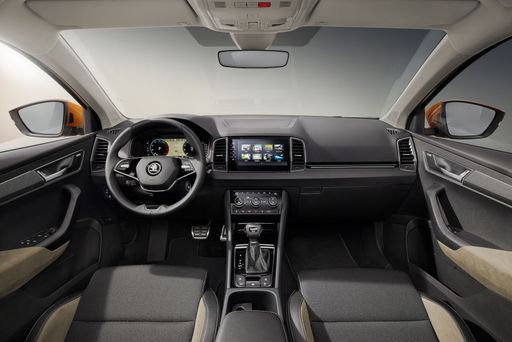
Stepping inside the Skoda Karoq reveals a stylish and spacious interior, designed to comfortably accommodate five passengers. Boot space is generous, with a capacity of 521 liters, providing ample room for luggage or sporting equipment. The Karoq integrates modern technology, featuring a user-friendly infotainment system equipped with connectivity options including Apple CarPlay and Android Auto.

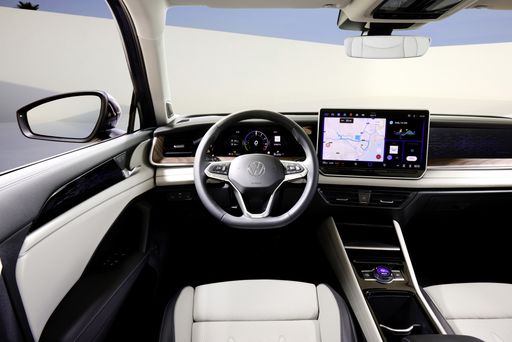
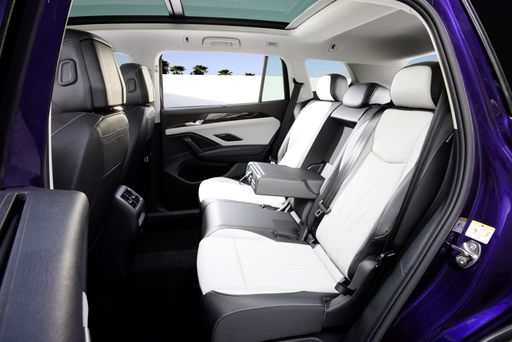
Meanwhile, the VW Tayron ups the ante with a luxurious interior and even more space, boasting a trunk capacity of 885 liters that excels in practicality. The Tayron showcases a host of technological innovations, including an advanced digital cockpit display, ambient lighting, and upgraded premium sound systems, enhancing the driving experience significantly.

Karoq

Safety Technologies: Protecting What Matters Most

When it comes to safety, both the Skoda Karoq and VW Tayron come equipped with a suite of advanced safety technologies. The Karoq has garnered high safety ratings, thanks to features like adaptive cruise control, lane-keeping assist, and emergency braking systems.

The VW Tayron follows suit, offering cutting-edge safety features complemented by advanced driver assistance systems, ensuring peace of mind for drivers and passengers alike. With a higher emphasis on technology and innovation, the Tayron arguably leads the charge in this department.

Tayron

Conclusion: Choosing Your Champion

Both the Skoda Karoq and VW Tayron offer compelling arguments for potential buyers, each excelling in different areas. The Karoq is a practical, efficient choice for those who prioritize value and utility without sacrificing performance. In contrast, the Tayron pushes the boundaries of innovation, boasting hybrid technology, a luxurious interior, and top-of-the-line safety features.

Ultimately, your choice between the Karoq and Tayron will depend on personal preferences regarding performance, technology, and brand loyalty. Whichever model you decide on, both are excellent representatives of their brands in the thriving compact SUV market.

Here’s where it gets real: The technical differences in detail

Karoq

Costs and Efficiency:

Price and efficiency are key factors when choosing a car – and this is often where the real differences emerge.

Skoda Karoq is noticeably cheaper – starting at 29,100 £ , while the VW Tayron costs 40,200 £ . That’s a price difference of around 11,139 £.

Fuel consumption also shows a difference: the VW Tayron uses 1.5 L/100km and is clearly more efficient than the Skoda Karoq with 4.9 L/100km. The difference is about 3.4 L/100km.

Tayron

Engine and Performance:

Under the bonnet, it becomes clear which model is tuned for sportiness and which one takes the lead when you hit the accelerator.

When it comes to engine power, the VW Tayron offers clearly more power – delivering 272 HP compared to 190 HP. That’s roughly 82 HP more horsepower.

When accelerating from 0 to 100 km/h, the VW Tayron is slightly quicker – completing the sprint in 6.1 s, while the Skoda Karoq takes 7 s. That’s about 0.9 s quicker.

There’s also a difference in torque: the VW Tayron delivers marginally more torque with 400 Nm compared to 360 Nm. That’s about 40 Nm more.

Karoq

Space and Everyday Use:

Whether family car or daily driver – which one offers more room, flexibility and comfort?

Both vehicles offer seating for 5 people.

In terms of curb weight, Skoda Karoq is clearly lighter – 1,380 kg compared to 1,682 kg. The difference is around 302 kg.

Looking at boot space, the VW Tayron offers substantially more boot space – 885 L compared to 521 L. That’s a difference of about 364 L.

When it comes to payload, the VW Tayron carries very slightly more – 573 kg compared to 549 kg. That’s a difference of about 24 kg.

Who wins the race in the data check?

The VW Tayron is decisively ahead in the objective data comparison.
This result only shows which model scores more points on paper – not which of the two cars feels right for you.

from £40,200
Tayron

VW Tayron

  • Engine Type : Petrol MHEV, Diesel, Petrol, Plugin Hybrid
  • Transmission : Automatic
  • Drive Type : Front-Wheel Drive, All-Wheel Drive
  • Power HP : 150 - 272 HP
  • Consumption L/100km : 1.5 - 8.5 L/100km
  • Electric Range : 116 - 123 km
Skoda Karoq
VW Tayron

Costs and Consumption

View detailed analysis

Engine and Performance

View detailed analysis

Dimensions and Body

View detailed analysis

Skoda Karoq

Skoda Karoq is a smartly packaged compact SUV that balances practical family-friendly space with composed handling, making daily drives feel easy and assured. Its straightforward design, roomy cabin with clever storage solutions, and sensible equipment make it a strong choice for buyers seeking value and versatility without fuss.

details

VW Tayron

The VW Tayron combines a roomy, practical interior with a composed, comfortable ride that suits both daily commuting and longer journeys. With a restrained, modern design and a focus on straightforward tech and safety, it’s a sensible choice for buyers who want Volkswagen refinement without unnecessary flash.

details
Skoda Karoq
VW Tayron

Costs and Consumption

Price
29,100 - 41,700 £
Price
40,200 - 56,000 £
Consumption L/100km
4.9 - 7.6 L/100km
Consumption L/100km
1.5 - 8.5 L/100km
Consumption kWh/100km
-
Consumption kWh/100km
-
Electric Range
-
Electric Range
116 - 123 km
Battery Capacity
-
Battery Capacity
-
co2
128 - 173 g/km
co2
33 - 192 g/km
Fuel tank capacity
-
Fuel tank capacity
-

Dimensions and Body

Body Type
SUV
Body Type
SUV
Seats
5
Seats
5
Doors
-
Doors
-
Curb weight
1,380 - 1,655 kg
Curb weight
1,682 - 1,948 kg
Trunk capacity
521 L
Trunk capacity
705 - 885 L
Length
-
Length
-
Width
1,841 mm
Width
1,853 - 1,866 mm
Height
-
Height
-
Max trunk capacity
-
Max trunk capacity
-
Payload
456 - 549 kg
Payload
489 - 573 kg

Engine and Performance

Engine Type
Petrol, Diesel
Engine Type
Petrol MHEV, Diesel, Petrol, Plugin Hybrid
Transmission
Manuel, Automatic
Transmission
Automatic
Transmission Detail
Manual Gearbox, Dual-Clutch Automatic
Transmission Detail
Dual-Clutch Automatic
Drive Type
Front-Wheel Drive, All-Wheel Drive
Drive Type
Front-Wheel Drive, All-Wheel Drive
Power HP
115 - 190 HP
Power HP
150 - 272 HP
Acceleration 0-100km/h
7 - 11.2 s
Acceleration 0-100km/h
6.1 - 9.7 s
Max Speed
-
Max Speed
-
Torque
200 - 360 Nm
Torque
250 - 400 Nm
Number of Cylinders
3 - 4
Number of Cylinders
4
Power kW
85 - 140 kW
Power kW
110 - 200 kW
Engine capacity
999 - 1,984 cm3
Engine capacity
1,498 - 1,984 cm3

General

Model Year
2025
Model Year
2,025 - 2,026
CO2 Efficiency Class
D, E, F
CO2 Efficiency Class
E, F, G, B
Brand
Skoda
Brand
VW
DriveDuel uses data analysis and artificial intelligence to evaluate vehicle data and create content. Content is regularly reviewed and improved. The displayed prices are estimates based on German list prices, adjusted to the respective country’s VAT. Country-specific registration taxes are not included. This information is not legally binding.