VS

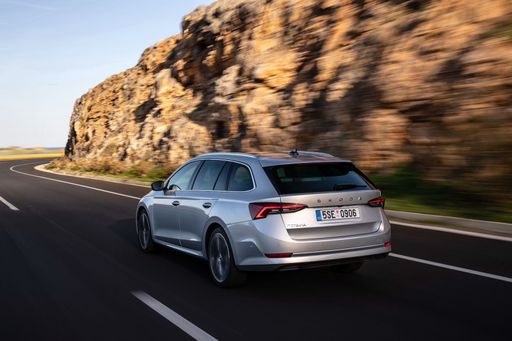
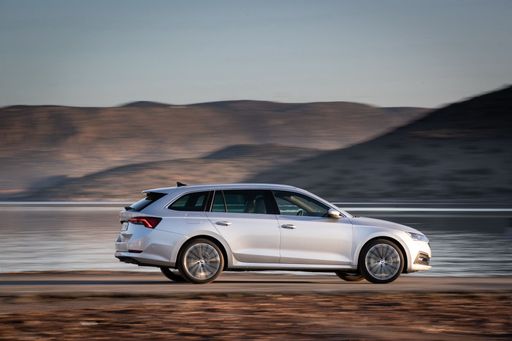
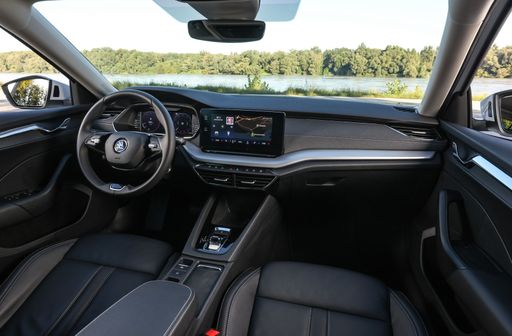
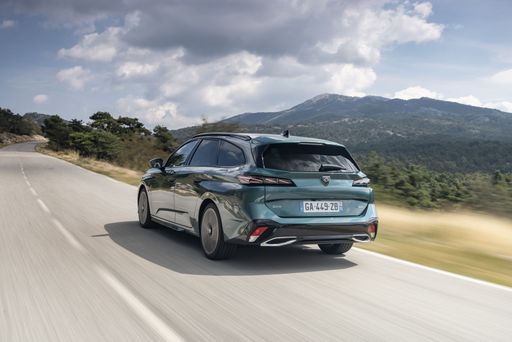
Skoda Octavia Combi vs Peugeot 308 SW comparison

Compare performance (204 HP vs 195 HP), boot space and price (25,600 £ vs 30,100 £ ) at a glance. Find out which car is the better choice for you – Skoda Octavia Combi or Peugeot 308 SW?

Skoda Octavia Combi vs Peugeot 308 SW: Key differences

Skoda Octavia Combi

4.6 (3 Reviews)
rate
  • a bit cheaper
  • barely more power
  • slightly quicker 0–100 km/h
  • very slightly lighter
  • a bit more trunk space
details

Peugeot 308 SW

4.5 (2 Reviews)
rate
  • substantially more efficient
details

All details on performance, efficiency, range and trunk space can be found in the technical comparison below – including user reviews for both models.

By Achim Sedelmaier

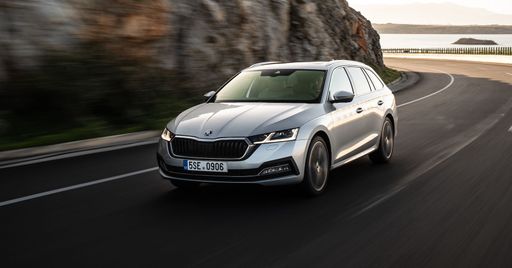
Octavia Combi

Introduction: Battle of the Wagons

In the ever-evolving landscape of family cars, two heavyweights stand out: the Peugeot 308 SW and the Škoda Octavia Combi. These two models exemplify the age-old adage that wagons are the unsung heroes of practicality and comfort. As we delve into their specifications, innovations, and overall demeanor, which one will claim victory as the better choice for you?
308 SW

Design and Dimensions: Sleek Vs. Sturdy

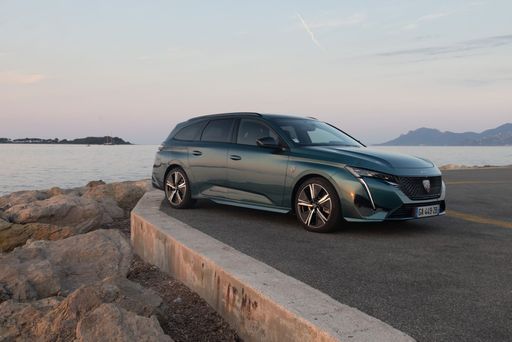
The Peugeot 308 SW features a modern and aggressive design with dimensions measuring 4636 mm in length, 1852 mm in width, and 1442 mm in height. Its stylish exterior is paired with a hint of French flair, making it a visual delight.

On the other hand, the Škoda Octavia Combi presents a slightly larger profile at 4698 mm in length, 1829 mm in width, and a height range up to 1468 mm. This ensures a tight balance between sturdiness and aerodynamic efficiency, catering to those who prefer a more robust look.

Octavia Combi

Engine and Performance: Power Meets Efficiency

The 308 SW offers a plethora of engine choices, including petrol, diesel, MHEV, and even electric. Outputs range from a modest 130 HP to a muscular 225 HP. The electric variant boasts an impressive range of up to 410 km, and petrol consumption varies from 1.3 to 5.9 L/100km, depending on the choice of powertrain.

The Octavia Combi sticks with petrol, MHEV, and diesel engines. Power options go from 116 HP up to a potent 265 HP. Its petrol efficiency starts at 4.4 L/100km, making it a strong contender for those looking for fuel economy.

308 SW

Transmission and Drive

Peugeot provides both manual and automatic transmissions across its lineup, with dual-clutch and automatic gearboxes enhancing the driving experience. It remains front-wheel drive, appealing to those who prioritize straightforward handling.

Meanwhile, Škoda offers a bit more flexibility with the inclusion of both front-wheel and all-wheel drive systems, suited for varying driving conditions. Dual-clutch automatic transmission ensures a swift and smooth gear change.

Octavia Combi

Comfort and Interior

Both wagons comfortably seat five passengers, promising a spacious travel experience. However, Škoda takes the lead in cargo capacity with a generous 640 liters in trunk space, compared to Peugeot's 608 liters. For families or adventure enthusiasts, this difference could be a tipping point.

308 SW

Environmental Impact: Green Credentials

The 308 SW shines with its electric variant having zero CO2 emissions and an advanced plugin hybrid option emitting only 30 g/km. It's a forward-thinking choice for environmentally conscious motorists.

While the Octavia Combi doesn’t offer an electric version, its petrol engines stay competitive with emissions starting at 114 g/km, aligning with stricter emission norms on a broader scale.

Octavia Combi

Conclusion: The Final Verdict

The decision between the Peugeot 308 SW and the Škoda Octavia Combi ultimately boils down to individual priorities. The Peugeot stands out with its variety of engine options and environmental efficiency, particularly with its electric model. Meanwhile, the Škoda Octavia Combi offers a larger cargo space and the versatility of an all-wheel-drive system, which might sway those with a penchant for long road trips or carrying more gear.

In this classic battle of wagon supremacy, both contenders have their distinct merits, ready to cater to varied lifestyle demands and preferences. Which one captures your heart?

Here’s where it gets real: The technical differences in detail

Octavia Combi

Costs and Efficiency:

Price and efficiency are often the first things buyers look at. Here it becomes clear which model has the long-term edge – whether at the pump, the plug, or in purchase price.

Skoda Octavia Combi is a bit cheaper – starting at 25,600 £ , while the Peugeot 308 SW costs 30,100 £ . That’s a price difference of around 4,543 £.

Fuel consumption also shows a difference: the Peugeot 308 SW uses 2.3 L/100km and is substantially more efficient than the Skoda Octavia Combi with 4.4 L/100km. The difference is about 2.1 L/100km.

308 SW

Engine and Performance:

Power, torque and acceleration are the classic benchmarks for car enthusiasts – and here, some clear differences start to show.

When it comes to engine power, the Skoda Octavia Combi offers barely more power – delivering 204 HP compared to 195 HP. That’s roughly 9 HP more horsepower.

When accelerating from 0 to 100 km/h, the Skoda Octavia Combi is slightly quicker – completing the sprint in 6.7 s, while the Peugeot 308 SW takes 7.7 s. That’s about 1 s quicker.

There’s also a difference in torque: the Skoda Octavia Combi delivers moderately more torque with 360 Nm compared to 300 Nm. That’s about 60 Nm more.

Octavia Combi

Space and Everyday Use:

Beyond pure performance, interior space and usability matter most in daily life. This is where you see which car is more practical and versatile.

Both vehicles offer seating for 5 people.

In terms of curb weight, Skoda Octavia Combi is very slightly lighter – 1,366 kg compared to 1,484 kg. The difference is around 118 kg.

Looking at boot space, the Skoda Octavia Combi offers a bit more boot space – 640 L compared to 551 L. That’s a difference of about 89 L.

When it comes to payload, the Skoda Octavia Combi carries very slightly more – 534 kg compared to 508 kg. That’s a difference of about 26 kg.

Who wins the race in the data check?

The Peugeot 308 SW holds a decisive overall lead in the objective data comparison.
This result only shows which model scores more points on paper – not which of the two cars feels right for you.

from £30,100
308 SW

Peugeot 308 SW

  • Engine Type Petrol MHEV, Diesel, Plugin Hybrid, Electric
  • Transmission Automatic
  • Drive Type Front-Wheel Drive
  • Power HP 131 - 195 HP
  • Consumption L/100km 2.3 - 5.1 L/100km
  • Consumption kWh/100km 15.7 kWh/100km
  • Electric Range 81 - 444 km
Skoda Octavia Combi
Peugeot 308 SW

Costs and Consumption

View detailed analysis

Engine and Performance

View detailed analysis

Dimensions and Body

View detailed analysis

Skoda Octavia Combi

The Skoda Octavia Combi is a practical, well‑packaged estate that delivers generous and flexible interior space ideal for families or active owners. Its sensible cabin layout, comfortable ride and solid reputation for reliability make it a pragmatic choice for buyers who value utility over flash.

details

Peugeot 308 SW

The Peugeot 308 SW blends French flair with estate practicality, dressing up daily chores in a surprisingly handsome package. Inside it's cleverly laid out and comfortable, and the composed, entertaining drive makes family duty feel a little less like a chore.

details
Skoda Octavia Combi
Peugeot 308 SW

Costs and Consumption

Price
25,600 - 39,600 £
Price
30,100 - 43,800 £
Consumption L/100km
4.4 - 6.9 L/100km
Consumption L/100km
2.3 - 5.1 L/100km
Consumption kWh/100km
-
Consumption kWh/100km
15.7 kWh/100km
Electric Range
-
Electric Range
81 - 444 km
Battery Capacity
-
Battery Capacity
-
co2
113 - 157 g/km
co2
0 - 134 g/km
Fuel tank capacity
-
Fuel tank capacity
-

Dimensions and Body

Body Type
Estate
Body Type
Estate
Seats
5
Seats
5
Doors
-
Doors
-
Curb weight
1,366 - 1,553 kg
Curb weight
1,484 - 1,783 kg
Trunk capacity
640 L
Trunk capacity
467 - 551 L
Length
-
Length
-
Width
1,829 mm
Width
1,852 mm
Height
-
Height
-
Max trunk capacity
-
Max trunk capacity
-
Payload
502 - 534 kg
Payload
417 - 508 kg

Engine and Performance

Engine Type
Petrol, Petrol MHEV, Diesel
Engine Type
Petrol MHEV, Diesel, Plugin Hybrid, Electric
Transmission
Automatic, Manuel
Transmission
Automatic
Transmission Detail
Dual-Clutch Automatic, Manual Gearbox
Transmission Detail
Dual-Clutch Automatic, Automatic Gearbox, Reduction Gearbox
Drive Type
All-Wheel Drive, Front-Wheel Drive
Drive Type
Front-Wheel Drive
Power HP
116 - 204 HP
Power HP
131 - 195 HP
Acceleration 0-100km/h
6.7 - 10.7 s
Acceleration 0-100km/h
7.7 - 10.9 s
Max Speed
-
Max Speed
-
Torque
220 - 360 Nm
Torque
230 - 300 Nm
Number of Cylinders
4
Number of Cylinders
3 - 4
Power kW
85 - 150 kW
Power kW
96 - 143 kW
Engine capacity
1,498 - 1,984 cm3
Engine capacity
1,199 - 1,598 cm3

General

Model Year
2025
Model Year
2,025 - 2,026
CO2 Efficiency Class
E, F, D, C
CO2 Efficiency Class
C, D, B, A
Brand
Skoda
Brand
Peugeot
DriveDuel uses data analysis and artificial intelligence to evaluate vehicle data and create content. Content is regularly reviewed and improved. The displayed prices are estimates based on German list prices, adjusted to the respective country’s VAT. Country-specific registration taxes are not included. This information is not legally binding.