
 Deutschland
 France
 Nederland
 Great Britain
 Sverige
 Norge
Norge Danmark
 Suomi
Suomi Italia
 Polska
 España
VS
smart #3 vs Maxus Deliver 7 - Differences and prices compared
#3
@ smart Europe GmbH
Costs and Efficiency:
Price and efficiency are often the first things buyers look at. Here it becomes clear which model has the long-term edge – whether at the pump, the plug, or in purchase price.
Maxus Deliver 7 has a slightly advantage in terms of price – it starts at 30600 £, while the smart #3 costs 34700 £. That’s a price difference of around 4116 £.
In terms of energy consumption, the advantage goes to the smart #3: with 16.30 kWh per 100 km, it’s convincingly more efficient than the Maxus Deliver 7 with 26.90 kWh. That’s a difference of about 10.60 kWh.
As for range, the smart #3 performs slightly better – achieving up to 455 km, about 85 km more than the Maxus Deliver 7.
#3
@ smart Europe GmbH
Engine and Performance:
Power, torque and acceleration say a lot about how a car feels on the road. This is where you see which model delivers more driving dynamics.
When it comes to engine power, the smart #3 has a slightly edge – offering 428 HP compared to 353 HP. That’s roughly 75 HP more horsepower.
In acceleration from 0 to 100 km/h, the smart #3 is convincingly quicker – completing the sprint in 3.70 s, while the Maxus Deliver 7 takes 7.20 s. That’s about 3.50 s faster.
In terms of top speed, the smart #3 performs slightly better – reaching 180 km/h, while the Maxus Deliver 7 tops out at 160 km/h. The difference is around 20 km/h.
There’s also a difference in torque: smart #3 pulls to a small extent stronger with 584 Nm compared to 515 Nm. That’s about 69 Nm difference.
#3
@ smart Europe GmbH
Space and Everyday Use:
Whether family car or daily driver – which one offers more room, flexibility and comfort?
Seats: smart #3 offers evident more seating capacity – 5 vs 3.
In curb weight, smart #3 is clearly perceptible lighter – 1780 kg compared to 2360 kg. The difference is around 580 kg.
In maximum load capacity, the Maxus Deliver 7 performs decisively better – up to 7200 L, which is about 6040 L more than the smart #3.
When it comes to payload, Maxus Deliver 7 clearly takes the win – 1140 kg compared to 450 kg. That’s a difference of about 690 kg.
Who wins the race?
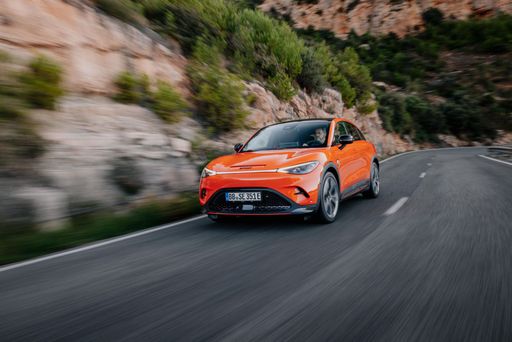
The smart #3 proves to be wins the duel decisively and therefore becomes our DriveDuel Champion!
smart #3 is the better all-rounder in this comparison.
from about £34,700
 @ smart Europe GmbH
smart #3
smart #3
Maxus Deliver 7
Costs and Consumption
View detailed analysis
View detailed analysis
Engine and Performance
View detailed analysis
View detailed analysis
Dimensions and Body
View detailed analysis
View detailed analysis
smart #3
5 (1 Reviews)
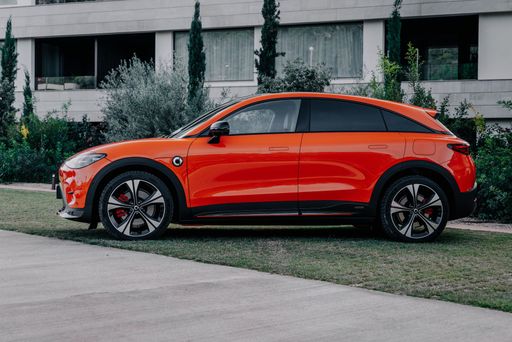
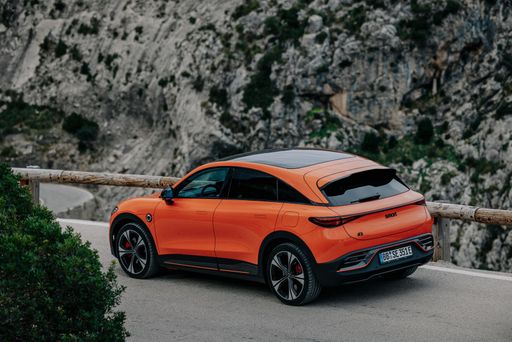
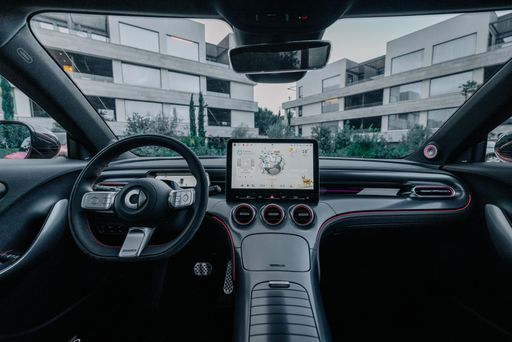
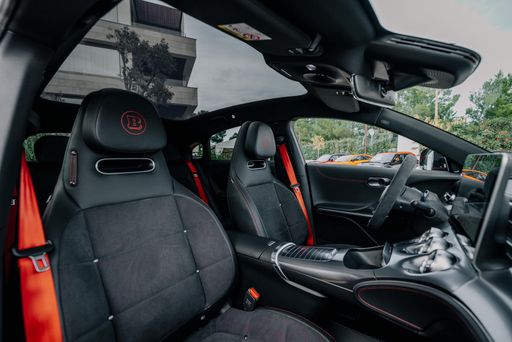
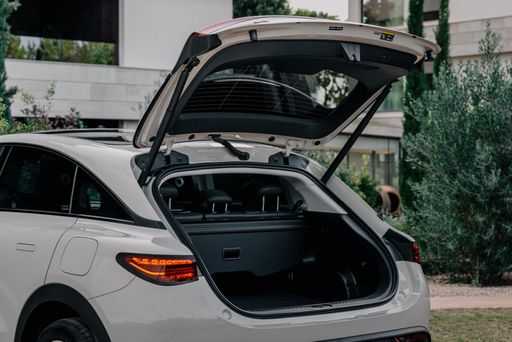
The Smart #3 turns the brand's cheeky city-car attitude into a grown-up compact SUV, pairing sleek styling with a surprisingly roomy, well-made interior. It's a brilliant pick for buyers who want electric ease without dullness — practical enough for daily life, but still lively enough to make parking and grocery runs feel a little fun.
details
@ smart Europe GmbH
 @ smart Europe GmbH
 @ smart Europe GmbH
 @ smart Europe GmbH
 @ smart Europe GmbH
 @ smart Europe GmbH
Maxus Deliver 7
The Maxus Deliver 7 shows up like the sensible workhorse every small fleet owner secretly wants, marrying a cavernous load area with a surprisingly composed drive that turns city streets into a stress-free route. It won't win any beauty contests, but with practical ergonomics, low running costs and a no-nonsense attitude, it makes delivery days feel less like a slog and more like efficient business.
details
smart #3
Maxus Deliver 7
|
@ smart Europe GmbH
|
|
|
|
|
Costs and Consumption |
|
|---|---|
|
Price
34700 - 45800 £
|
Price
30600 - 53000 £
|
|
Consumption L/100km
-
|
Consumption L/100km
8 L
|
|
Consumption kWh/100km
16.3 - 17.6 kWh
|
Consumption kWh/100km
26.9 - 28.2 kWh
|
|
Electric Range
325 - 455 km
|
Electric Range
310 - 370 km
|
|
Battery Capacity
47 - 62 kWh
|
Battery Capacity
-
|
|
co2
0 g/km
|
co2
0 - 211 g/km
|
|
Fuel tank capacity
-
|
Fuel tank capacity
-
|
Dimensions and Body |
|
|---|---|
|
Body Type
SUV
|
Body Type
Cargo Van
|
|
Seats
5
|
Seats
3
|
|
Doors
5
|
Doors
4
|
|
Curb weight
1780 - 1910 kg
|
Curb weight
2360 - 2595 kg
|
|
Trunk capacity
370 L
|
Trunk capacity
-
|
|
Length
4400 mm
|
Length
4998 - 5372 mm
|
|
Width
1844 mm
|
Width
2030 mm
|
|
Height
1556 mm
|
Height
1990 - 1999 mm
|
|
Max trunk capacity
1160 L
|
Max trunk capacity
5900 - 7200 L
|
|
Payload
419 - 450 kg
|
Payload
905 - 1140 kg
|
Engine and Performance |
|
|---|---|
|
Engine Type
Electric
|
Engine Type
Electric, Diesel
|
|
Transmission
Automatic
|
Transmission
Automatic, Manuel
|
|
Transmission Detail
Reduction Gearbox
|
Transmission Detail
Reduction Gearbox, Manual Gearbox
|
|
Drive Type
Rear-Wheel Drive, All-Wheel Drive
|
Drive Type
Front-Wheel Drive, All-Wheel Drive
|
|
Power HP
272 - 428 HP
|
Power HP
148 - 353 HP
|
|
Acceleration 0-100km/h
3.7 - 5.8 s
|
Acceleration 0-100km/h
7.2 - 11.6 s
|
|
Max Speed
180 km/h
|
Max Speed
120 - 160 km/h
|
|
Torque
343 - 584 Nm
|
Torque
330 - 515 Nm
|
|
Number of Cylinders
-
|
Number of Cylinders
4
|
|
Power kW
200 - 315 kW
|
Power kW
108 - 260 kW
|
|
Engine capacity
-
|
Engine capacity
1996 cm3
|
General |
|
|---|---|
|
Model Year
2023 - 2025
|
Model Year
2024 - 2025
|
|
CO2 Efficiency Class
A
|
CO2 Efficiency Class
A, G
|
|
Brand
smart
|
Brand
Maxus
|
What drive types are available for the smart #3?
The smart #3 is available as Rear-Wheel Drive or All-Wheel Drive.
The prices and data displayed are estimates based on German list prices and may vary by country. This information is not legally binding.