VS

SsangYong Torres vs Mitsubishi ASX comparison

Compare performance (207 HP vs 158 HP), boot space and price (33,800 £ vs 21,400 £ ) at a glance. Find out which car is the better choice for you – SsangYong Torres or Mitsubishi ASX?

SsangYong Torres vs Mitsubishi ASX: Key differences

SsangYong Torres

  • noticeably more power
  • clearly more trunk space
details

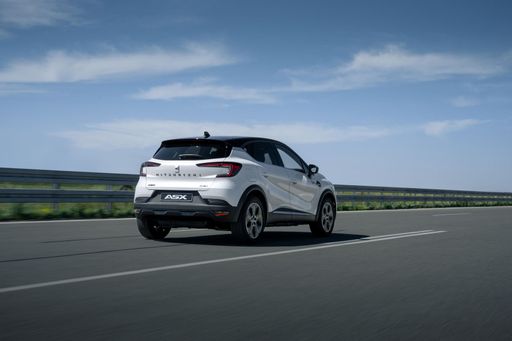
Mitsubishi ASX

4.9 (2 Reviews)
rate
  • significantly cheaper
  • considerably more efficient
  • a bit lighter
details

All details on performance, efficiency, range and trunk space can be found in the technical comparison below – including user reviews for both models.

By Achim Sedelmaier

Torres

When comparing two standout SUVs in the compact crossover segment, the Mitsubishi ASX and the SsangYong Torres provide an intriguing clash of features that cater to different lifestyles. With a focus on innovation, performance, and practicality, this article dives into the technical specifications and innovations that define these two models.
ASX

Dimensions and Design: Space and Style

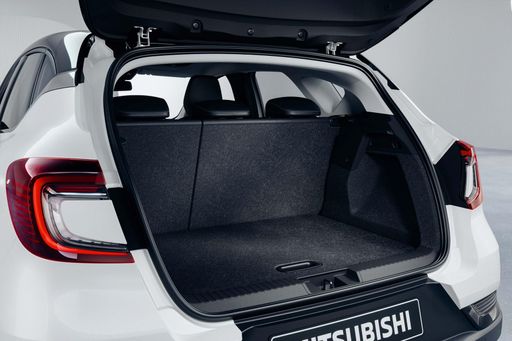
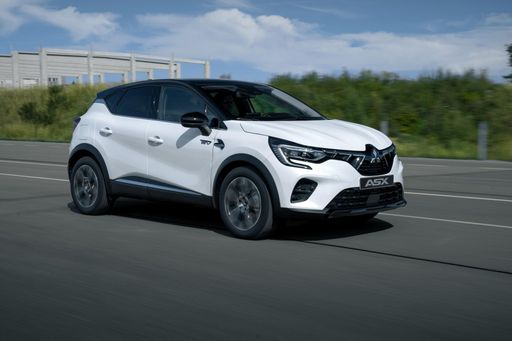
The Mitsubishi ASX boasts a compact yet spacious design, measuring 4239 mm in length, 1797 mm in width, and 1575 mm in height. It accommodates five passengers comfortably and showcases a trunk capacity of up to 484 liters, making it practical for everyday use.

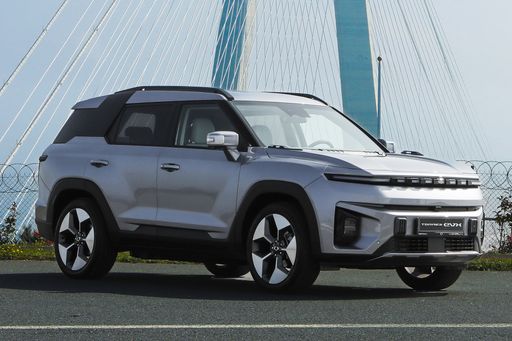
On the other hand, the SsangYong Torres takes the lead in dimensions, measuring 4700 mm in length and 1890 mm in width, which offers extra space for occupants and gear with a trunk capacity of an impressive 703 liters. Standing taller at 1710 mm, the Torres provides a commanding road presence and a somewhat more spacious feel inside.

Engine Options and Performance

Mitsubishi offers the ASX with a variety of engine options including petrol, petrol MHEV, and full hybrid variants, with power outputs ranging from 91 to 158 HP. The ASX is well-equipped with automatic and manual transmission options, providing a smooth driving experience with up to 270 Nm of torque. The fuel efficiency is impressive, with averages between 4.7 to 6 L/100 km.

In contrast, the SsangYong Torres comes with robust options, boasting a petrol engine that produces up to 207 HP and torque ratings soaring to 339 Nm. Available in both front-wheel and all-wheel drive, it offers flexibility for various driving conditions. The fuel consumption ranges from 7.9 to 9.1 L/100 km, which is slightly higher than the ASX but compensates with performance. Furthermore, the Torres offers an electric variant with an electric range of up to 462 km, appealing to eco-conscious drivers.

Innovative Technologies

The Mitsubishi ASX embraces technology with features such as advanced driver assistance systems, connectivity options including smartphone integration, and a user-friendly infotainment system. The hybrid options come with a battery capacity of 0.6 kWh, which enhances efficiency while maintaining performance.

On the technology front, the SsangYong Torres shines with its innovative electric model, heralding a new era of eco-friendly driving. It includes advanced connectivity and driver-assistance features designed to enhance safety and convenience. The emphasis on electric capability not only reduces emissions but also offers modern drivers a future-ready vehicle with eco-consciousness at its core.

Comfort and Convenience

Both SUVs prioritize passenger comfort and practicality. The ASX, with its thoughtful interior layout, offers ample legroom and supportive seating for five. Its trim materials and technology features, while functionally focused, provide a comfortable driving environment.

In comparison, the Torres excels with more luxurious touches and superior roominess, making it ideal for families and those requiring more storage space. The refined design and additional tech features contribute to an overall more premium feel within the cabin.

Conclusion: Choosing the Right SUV

Ultimately, the choice between the Mitsubishi ASX and the SsangYong Torres will depend on individual preferences and driving needs. The ASX is suited for those seeking a blend of efficiency, comfort, and compact charm, whereas the Torres appeals to those looking for power, space, and cutting-edge electrical options.

In summary, both models showcase commendable engineering and innovation, each catering to distinct requirements, making them worthy competitors in today's competitive SUV market.

Here’s where it gets real: The technical differences in detail

Torres

Costs and Efficiency:

When it comes to price and running costs, the biggest differences usually appear. This is often where you see which car fits your budget better in the long run.

Mitsubishi ASX is significantly cheaper – starting at 21,400 £ , while the SsangYong Torres costs 33,800 £ . That’s a price difference of around 12,428 £.

Fuel consumption also shows a difference: the Mitsubishi ASX uses 4.4 L/100km and is considerably more efficient than the SsangYong Torres with 7.9 L/100km. The difference is about 3.5 L/100km.

ASX

Engine and Performance:

Power, torque and acceleration are the classic benchmarks for car enthusiasts – and here, some clear differences start to show.

When it comes to engine power, the SsangYong Torres offers noticeably more power – delivering 207 HP compared to 158 HP. That’s roughly 49 HP more horsepower.

There’s also a difference in torque: the SsangYong Torres delivers markedly more torque with 339 Nm compared to 245 Nm. That’s about 94 Nm more.

Space and Everyday Use:

Cabin size, boot volume and payload all play a role in everyday practicality. Here, comfort and flexibility make the difference.

Both vehicles offer seating for 5 people.

In terms of curb weight, Mitsubishi ASX is a bit lighter – 1,296 kg compared to 1,498 kg. The difference is around 202 kg.

Looking at boot space, the SsangYong Torres offers clearly more boot space – 703 L compared to 484 L. That’s a difference of about 219 L.

When it comes to payload, the SsangYong Torres carries slightly more – 552 kg compared to 445 kg. That’s a difference of about 107 kg.

Who wins the race in the data check?

The SsangYong Torres comes out clearly ahead in the objective data comparison.
This result only shows which model scores more points on paper – not which of the two cars feels right for you.

from £33,800
Torres

SsangYong Torres

  • Engine Type : Petrol, Electric
  • Transmission : Manuel, Automatic
  • Drive Type : Front-Wheel Drive, All-Wheel Drive
  • Power HP : 163 - 207 HP
  • Consumption L/100km : 7.9 - 9.1 L/100km
  • Consumption kWh/100km : 18.7 kWh/100km
  • Electric Range : 462 km
SsangYong Torres
Mitsubishi ASX

Costs and Consumption

View detailed analysis

Engine and Performance

View detailed analysis

Dimensions and Body

View detailed analysis

SsangYong Torres

SsangYong Torres cuts a rugged, purposeful silhouette that feels more expensive than its price tag, offering generously practical packaging and a no-nonsense feature set. It drives with surprisingly assured manners and genuine off-road appetite, making it a clever choice for buyers who want real SUV capability without badge snobbery.

details

Mitsubishi ASX

The Mitsubishi ASX is a compact crossover that mixes practicality with a no-nonsense personality, making it an easy choice for buyers who want sensible space without the showroom theatrics. It won't set your pulse racing, but its composed ride and user-friendly kit make it a dependable companion for daily errands and weekend escapes — reliable rather than flashy.

details
SsangYong Torres
Mitsubishi ASX

Costs and Consumption

Price
33,800 - 44,600 £
Price
21,400 - 32,500 £
Consumption L/100km
7.9 - 9.1 L/100km
Consumption L/100km
4.4 - 6 L/100km
Consumption kWh/100km
18.7 kWh/100km
Consumption kWh/100km
-
Electric Range
462 km
Electric Range
-
Battery Capacity
-
Battery Capacity
-
co2
0 - 207 g/km
co2
99 - 137 g/km
Fuel tank capacity
50 L
Fuel tank capacity
-

Dimensions and Body

Body Type
SUV
Body Type
SUV
Seats
5
Seats
5
Doors
5
Doors
-
Curb weight
1,498 - 1,618 kg
Curb weight
1,296 - 1,493 kg
Trunk capacity
703 L
Trunk capacity
348 - 484 L
Length
4,700 mm
Length
-
Width
1,890 mm
Width
1,797 mm
Height
1,710 mm
Height
-
Max trunk capacity
1,662 L
Max trunk capacity
-
Payload
552 kg
Payload
397 - 445 kg

Engine and Performance

Engine Type
Petrol, Electric
Engine Type
Full Hybrid, Petrol, Petrol MHEV
Transmission
Manuel, Automatic
Transmission
Automatic, Manuel
Transmission Detail
Manual Gearbox, Automatic Gearbox, Reduction Gearbox
Transmission Detail
Automatic Gearbox, Manual Gearbox, Dual-Clutch Automatic
Drive Type
Front-Wheel Drive, All-Wheel Drive
Drive Type
Front-Wheel Drive
Power HP
163 - 207 HP
Power HP
115 - 158 HP
Acceleration 0-100km/h
-
Acceleration 0-100km/h
8.9 - 12.3 s
Max Speed
191 - 194 km/h
Max Speed
-
Torque
280 - 339 Nm
Torque
190 - 245 Nm
Number of Cylinders
4
Number of Cylinders
3 - 4
Power kW
120 - 152 kW
Power kW
84 - 116 kW
Engine capacity
1,497 cm3
Engine capacity
1,199 - 1,789 cm3

General

Model Year
2,023 - 2,024
Model Year
2025
CO2 Efficiency Class
G, A
CO2 Efficiency Class
C, D, E
Brand
SsangYong
Brand
Mitsubishi
DriveDuel uses data analysis and artificial intelligence to evaluate vehicle data and create content. Content is regularly reviewed and improved. The displayed prices are estimates based on German list prices, adjusted to the respective country’s VAT. Country-specific registration taxes are not included. This information is not legally binding.