VS

Suzuki Across vs Hyundai Tucson comparison

Compare performance (306 HP vs 288 HP), boot space and price (49,900 £ vs 20,900 £ ) at a glance. Find out which car is the better choice for you – Suzuki Across or Hyundai Tucson?

Suzuki Across vs Hyundai Tucson: Key differences

Suzuki Across

5 (1 Reviews)
rate
  • barely more power
  • significantly more efficient
  • marginally more electric range
  • clearly quicker 0–100 km/h
details

Hyundai Tucson

4.6 (4 Reviews)
rate
  • significantly cheaper
  • noticeably lighter
  • noticeably more trunk space
details

All details on performance, efficiency, range and trunk space can be found in the technical comparison below – including user reviews for both models.

By Achim Sedelmaier

Across

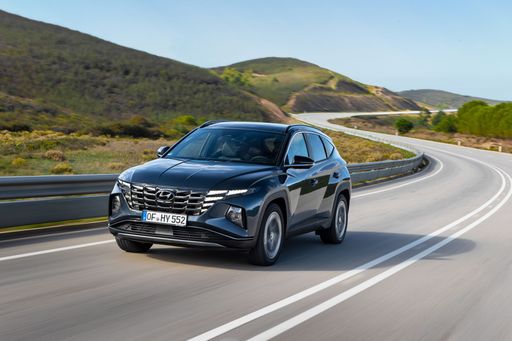
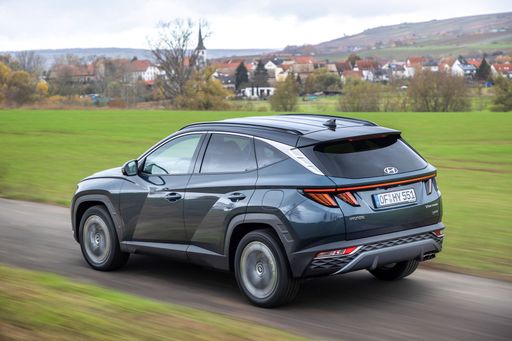
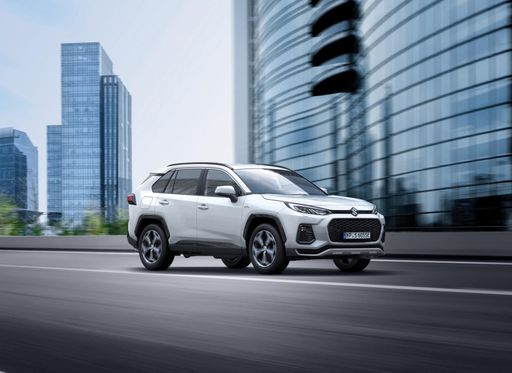
When it comes to choosing a compact SUV, the 2024 Hyundai Tucson and the 2024 Suzuki Across stand out in a crowded market with their unique offerings. While both vehicles boast a range of modern features and commendable performance, their approaches to powertrains, efficiency, and technology cater to different preferences. Let’s delve into how these two popular models compare in terms of technical aspects and innovations.
Tucson

Performance and Powertrains

The Hyundai Tucson offers a diverse lineup of engine options including Diesel MHEV, Petrol MHEV, Petrol, Full Hybrid, and Plug-in Hybrid configurations. The Tucson’s power outputs range from 136 HP for the entry-level model to an impressive 252 HP for its top-end variant. Acceleration is equally impressive, with the sportier versions achieving 0-100 km/h in as low as 7.9 seconds. The Tucson also offers both front-wheel and all-wheel drive options to suit different driving preferences.

In contrast, the Suzuki Across comes standard with a Plug-in Hybrid engine boasting a total output of 306 HP. The performance is compelling, achieving the 0-100 km/h sprint in just 6 seconds, making it one of the nippier options in the SUV segment. With a focus on efficiency, the Across’s combined fuel consumption can be as low as 1 L/100km with an electric range of 75 km, allowing for daily commutes on electric power alone.

Across

Dimensions and Cargo Space

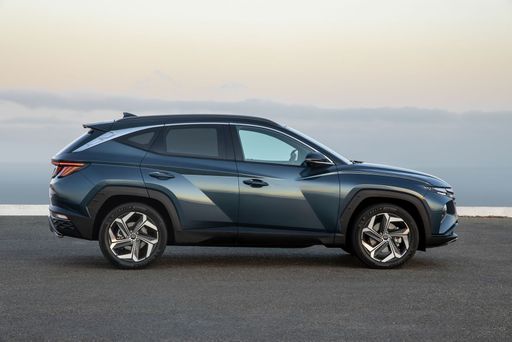
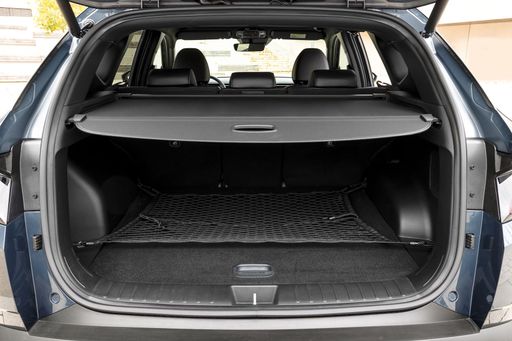
When comparing dimensions, the Tucson measures 4510 mm in length, while the Across is slightly larger at 4635 mm. The Tucson also offers a more generous trunk capacity ranging from 546 to 620 liters, depending on the variant, which is crucial for families needing extra luggage space. On the other hand, the Across provides a respectable 490 liters of trunk space, sufficient for everyday needs but slightly less than its competitor.

Tucson

Fuel Efficiency and Emissions

One of the significant advantages of the Tucson is its diverse engine options, which allow it to boast varying fuel efficiencies depending on the chosen configuration. The hybrid options consume as little as 1.2 L/100 km, while petrol models can average around 6.3 L/100 km. Notably, the Tucson also offers varying CO2 emissions ranging from 126 to 153 g/km based on the chosen configuration.

The Suzuki Across, being a Plug-in Hybrid, offers remarkably low emissions at just 22 g/km, making it an attractive option for environmentally conscious buyers. Its fuel efficiency at 1 L/100 km greatly surpasses traditional combustion engines, providing a cleaner alternative without sacrificing performance.

Interior and Technology

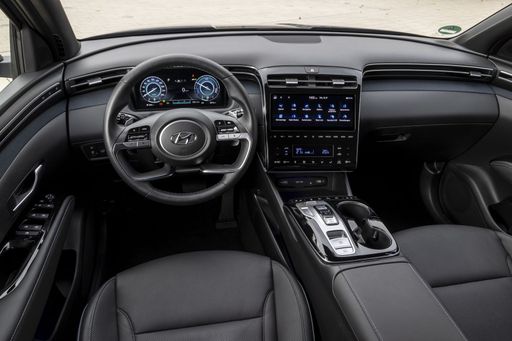
Both the Tucson and Across come equipped with a plethora of modern technological innovations aimed at enhancing user experience. The Tucson features a contemporary interior design with a spacious cabin suitable for five passengers, along with advanced infotainment systems that support smartphone connectivity and navigation services. Safety features include advanced driver-assistance systems, ensuring peace of mind on the road.

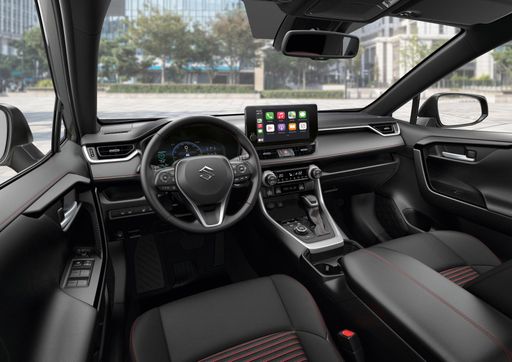
The Across also emphasizes comfort and technology, offering a well-appointed cabin with intuitive controls and a comprehensive infotainment system. It supports connectivity options while providing a suite of safety features aimed at protecting passengers and ensuring an enjoyable driving experience.

Conclusion: Which SUV Reigns Supreme?

The decision between the Hyundai Tucson and Suzuki Across ultimately rests on individual priorities. If you seek performance, engine variety, and trunk capacity, the Tucson proves to be a compelling choice. However, for those who prioritize eco-friendliness, swift acceleration, and cutting-edge plug-in hybrid technology, the Across emerges as a strong contender. Each model brings unique strengths to the table, catering to a broad spectrum of drivers’ needs in the ever-evolving SUV market.

Here’s where it gets real: The technical differences in detail

Across

Costs and Efficiency:

Price and efficiency are key factors when choosing a car – and this is often where the real differences emerge.

Hyundai Tucson is significantly cheaper – starting at 20,900 £ , while the Suzuki Across costs 49,900 £ . That’s a price difference of around 28,980 £.

Fuel consumption also shows a difference: the Suzuki Across uses 1 L/100km and is significantly more efficient than the Hyundai Tucson with 2.7 L/100km. The difference is about 1.7 L/100km.

As for electric range, the Suzuki Across offers marginally more range – reaching up to 75 km, about 5 km more than the Hyundai Tucson.

Tucson

Engine and Performance:

Power, torque and acceleration say a lot about how a car feels on the road. This is where you see which model delivers more driving dynamics.

When it comes to engine power, the Suzuki Across offers barely more power – delivering 306 HP compared to 288 HP. That’s roughly 18 HP more horsepower.

When accelerating from 0 to 100 km/h, the Suzuki Across is clearly quicker – completing the sprint in 6 s, while the Hyundai Tucson takes 7.5 s. That’s about 1.5 s quicker.

Looking at top speed, the Hyundai Tucson is somewhat faster – reaching 204 km/h, while the Suzuki Across tops out at 180 km/h. The difference is around 24 km/h.

Across

Space and Everyday Use:

Cabin size, boot volume and payload all play a role in everyday practicality. Here, comfort and flexibility make the difference.

Both vehicles offer seating for 5 people.

In terms of curb weight, Hyundai Tucson is noticeably lighter – 1,542 kg compared to 2,075 kg. The difference is around 533 kg.

Looking at boot space, the Hyundai Tucson offers noticeably more boot space – 620 L compared to 490 L. That’s a difference of about 130 L.

For maximum load capacity, the Hyundai Tucson offers moderately more capacity – up to 1,799 L, about 195 L more than the Suzuki Across.

When it comes to payload, the Hyundai Tucson carries clearly more – 545 kg compared to 435 kg. That’s a difference of about 110 kg.

Who wins the race in the data check?

The Suzuki Across is clearly superior overall in the objective data comparison.
This result only shows which model scores more points on paper – not which of the two cars feels right for you.

£49,877
Across

Suzuki Across

  • Engine Type : Plugin Hybrid
  • Transmission : Automatic
  • Drive Type : All-Wheel Drive
  • Power HP : 306 HP
  • Consumption L/100km : 1 L/100km
  • Electric Range : 75 km
Suzuki Across
Hyundai Tucson

Costs and Consumption

View detailed analysis

Engine and Performance

View detailed analysis

Dimensions and Body

View detailed analysis

Suzuki Across

The Suzuki Across is Suzuki's take on a roomy, efficient plug-in SUV handed down from its Toyota cousin, marrying sensible practicality with a polished, grown-up driving character. It won't thrill those chasing sporty drama, but for buyers who value measured refinement, low running costs and lots of usable space, it's an unexpectedly accomplished and subtly premium package.

details

Hyundai Tucson

Hyundai Tucson marries bold, sculpted looks with a clever, roomy cabin that feels smarter than its price tag suggests. It's composed on the road, easy to live with day-to-day, and a sensible choice for buyers who want SUV style without the showroom theatrics.

details
Suzuki Across
Hyundai Tucson

Costs and Consumption

Price
49,900 £
Price
20,900 - 47,900 £
Consumption L/100km
1 L/100km
Consumption L/100km
2.7 - 7.6 L/100km
Consumption kWh/100km
-
Consumption kWh/100km
-
Electric Range
75 km
Electric Range
63 - 70 km
Battery Capacity
-
Battery Capacity
-
co2
22 g/km
co2
62 - 172 g/km
Fuel tank capacity
55 L
Fuel tank capacity
52 - 54 L

Dimensions and Body

Body Type
SUV
Body Type
SUV
Seats
5
Seats
5
Doors
5
Doors
5
Curb weight
2,075 kg
Curb weight
1,542 - 1,893 kg
Trunk capacity
490 L
Trunk capacity
546 - 620 L
Length
4,635 mm
Length
4,525 - 4,535 mm
Width
1,855 mm
Width
1,865 mm
Height
1,690 mm
Height
1,650 mm
Max trunk capacity
1,604 L
Max trunk capacity
1,795 - 1,799 L
Payload
435 kg
Payload
518 - 545 kg

Engine and Performance

Engine Type
Plugin Hybrid
Engine Type
Petrol, Full Hybrid, Plugin Hybrid, Diesel MHEV
Transmission
Automatic
Transmission
Manuel, Automatic
Transmission Detail
CVT
Transmission Detail
Manual Gearbox, Dual-Clutch Automatic, Automatic Gearbox
Drive Type
All-Wheel Drive
Drive Type
Front-Wheel Drive, All-Wheel Drive
Power HP
306 HP
Power HP
136 - 288 HP
Acceleration 0-100km/h
6 s
Acceleration 0-100km/h
7.5 - 11.6 s
Max Speed
180 km/h
Max Speed
196 - 204 km/h
Torque
-
Torque
250 - 379 Nm
Number of Cylinders
4
Number of Cylinders
4
Power kW
225 kW
Power kW
100 - 212 kW
Engine capacity
2,487 cm3
Engine capacity
1,598 cm3

General

Model Year
2024
Model Year
2025
CO2 Efficiency Class
B
CO2 Efficiency Class
F, D, E, B
Brand
Suzuki
Brand
Hyundai
DriveDuel uses data analysis and artificial intelligence to evaluate vehicle data and create content. Content is regularly reviewed and improved. The displayed prices are estimates based on German list prices, adjusted to the respective country’s VAT. Country-specific registration taxes are not included. This information is not legally binding.