VS

Suzuki Across vs Suzuki S-Cross comparison

Compare performance (306 HP vs 110 HP), boot space and price (49,900 £ vs 21,800 £ ) at a glance. Find out which car is the better choice for you – Suzuki Across or Suzuki S-Cross?

Suzuki Across vs Suzuki S-Cross: Key differences

Suzuki Across

5 (1 Reviews)
rate
  • substantially more power
  • clearly more efficient
  • slightly more trunk space
details

Suzuki S-Cross

4.7 (4 Reviews)
rate
  • clearly cheaper
  • considerably lighter
details

All details on performance, efficiency, range and trunk space can be found in the technical comparison below – including user reviews for both models.

By Achim Sedelmaier

Across

Comparing the Suzuki S-Cross and Suzuki Across

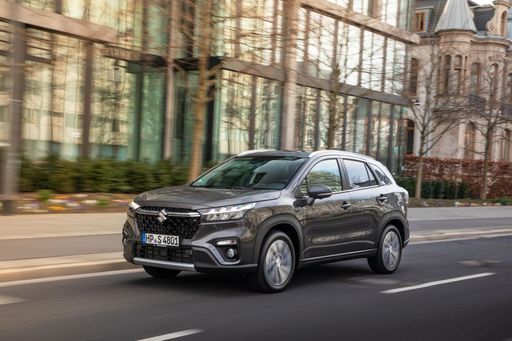
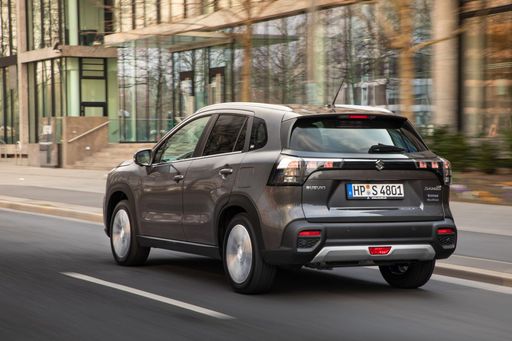
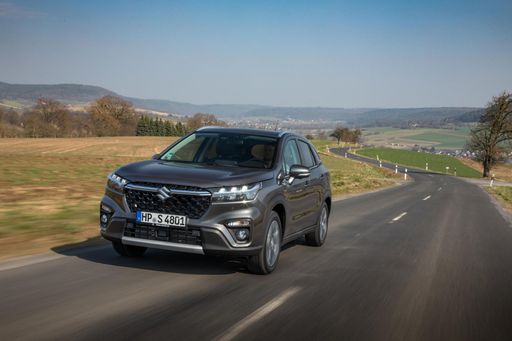
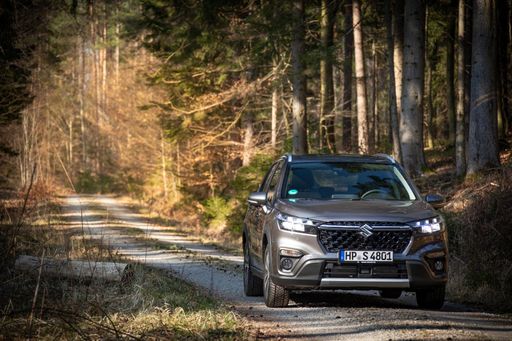
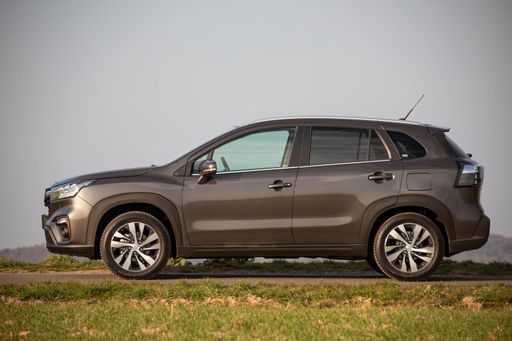
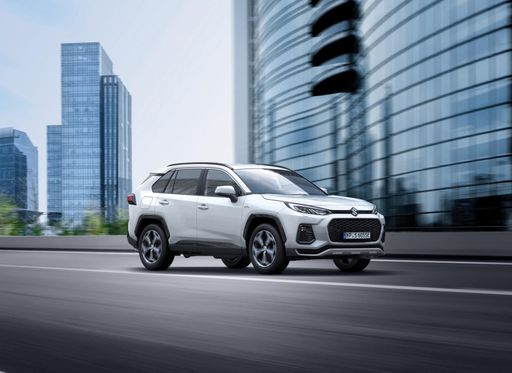
The Suzuki S-Cross and Suzuki Across stand next to each other as two very different takes on the compact SUV idea, and "Suzuki S-Cross VS Suzuki Across" is an apt way to frame the choice for buyers who want practical sense over styling drama. The S-Cross plays the role of the light, straightforward everyday tool — simple controls, compact footprint and a focus on low running costs. The Across is the heavy-hitting plug‑in cousin: roomy, quick off the line and built around an electric-first commute. This introduction sets up a matchup where price, packaging and the way each car moves define which buyer it will suit best.
S-Cross

Character and driving dynamics

The Suzuki S-Cross feels nimble and unpretentious, rewarding modest inputs with willing, efficient progress—it's the sort of car that hides its weight and drives easily in town. The Suzuki Across, by contrast, arrives with more shove and a planted highway demeanor thanks to its electrified drivetrain, but that composure comes with extra mass you can feel in steering and braking. The S-Cross’s simpler powertrains and lightness give it a livelier feel at low speeds, while the Across trades that agility for effortless midrange acceleration and strong reserve when overtaking. Both have their acoustic compromises: S-Cross can sound busy at motorway speeds and the Across makes itself known under load, but they do so for different reasons that reflect their engineering choices.

Across

Comfort, cabin feel and perceived quality

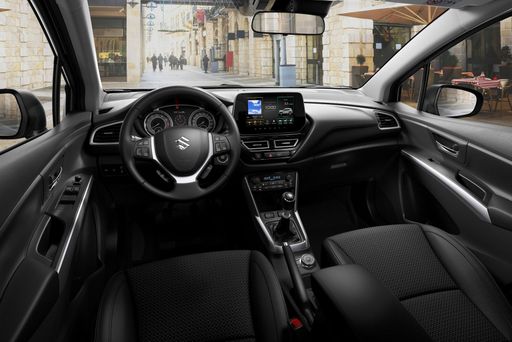
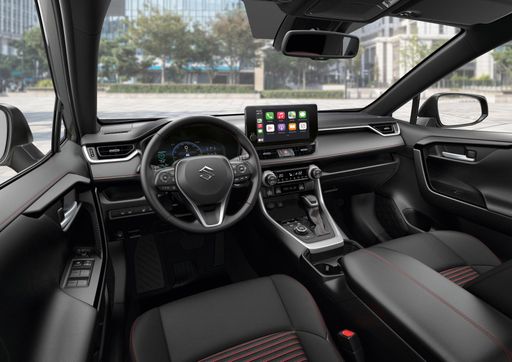
Step into the Suzuki S-Cross and the immediate impression is functional: firm plastics, physical knobs and switches and a cockpit built for use rather than show. The Suzuki Across presents a more spacious rear and generally more refined materials, especially for taller passengers who appreciate the extra head- and legroom. Neither car pretends to be premium, yet their differences are tangible — the S-Cross feels simpler and more rugged, the Across more composed and family-oriented. Infotainment and tech also feel a notch apart, with the S-Cross’s system showing its age while the Across offers a more modern, if still pragmatic, presentation.

S-Cross

Practicality and family usability

For daily hauling the Suzuki S-Cross makes sense as a compact, efficient family mover with a cleverly usable boot in its conventional form; it’s easy to live with and manoeuvre into tight spaces. The Suzuki Across flips the script toward outright practicality: more rear passenger room, a larger boot and the everyday benefit of electric commuting that shrinks running costs when you can charge regularly. The trade-off is weight and a higher purchase cost — Across brings extra space and EV capability, S-Cross brings lower ownership complexity and better curb appeal for budget‑minded buyers. Families who prioritise cabin room and plug‑in economy will lean to the Across; those who want simplicity, lower price and a practical layout will find the S-Cross more aligned to needs.

City friendliness vs long-distance behavior

In town the Suzuki S-Cross excels: light steering, compact dimensions and a forgiving ride make parking and short hops effortless and relaxing. The Suzuki Across is quiet and refined for urban commutes when running on electric power, but its larger dimensions and heavier feel are more noticeable in tight streets and on parking manoeuvres. On long runs the Across’s strong electric‑assisted acceleration and stable cruising are advantages, yet both cars reveal motorway compromises — wind and tyre noise are more evident than in quieter rivals, and the Across can sound strained under sustained load. If your life is mostly city and short trips, the S-Cross is the easier companion; for mixed use with regular charging the Across becomes a more compelling long-distance partner.

Who should pick which car — buyer-fit conclusion

Choose the Suzuki S-Cross if you value a lighter, easier-to-live-with SUV with low running complexity, optional traction options and a sensible purchase price that keeps ownership straightforward. Opt for the Suzuki Across if you can charge daily, want generous rear accommodation, and prioritise strong electric-first acceleration plus lower fuel bills in regular use despite a higher upfront cost. The real decision is a trade-off between purchase price and simplicity on one side, and space, electric range and midrange performance on the other. Below this editorial comparison you’ll find the technical breakdown that maps those trade-offs onto what actually changes in spec, fuel use and packaging so you can match figures to the real-world impressions here.

Here’s where it gets real: The technical differences in detail

Across

Costs and Efficiency:

Looking at overall running costs, both models reveal some interesting differences in everyday economy.

Suzuki S-Cross is clearly cheaper – starting at 21,800 £ , while the Suzuki Across costs 49,900 £ . That’s a price difference of around 28,115 £.

Fuel consumption also shows a difference: the Suzuki Across uses 1 L/100km and is clearly more efficient than the Suzuki S-Cross with 5.3 L/100km. The difference is about 4.3 L/100km.

S-Cross

Engine and Performance:

Power, torque and acceleration are the classic benchmarks for car enthusiasts – and here, some clear differences start to show.

When it comes to engine power, the Suzuki Across offers substantially more power – delivering 306 HP compared to 110 HP. That’s roughly 196 HP more horsepower.

Across

Space and Everyday Use:

Cabin size, boot volume and payload all play a role in everyday practicality. Here, comfort and flexibility make the difference.

Both vehicles offer seating for 5 people.

In terms of curb weight, Suzuki S-Cross is considerably lighter – 1,280 kg compared to 2,075 kg. The difference is around 795 kg.

Looking at boot space, the Suzuki Across offers slightly more boot space – 490 L compared to 430 L. That’s a difference of about 60 L.

When it comes to payload, the Suzuki Across carries marginally more – 435 kg compared to 405 kg. That’s a difference of about 30 kg.

Who wins the race in the data check?

The Suzuki Across stands well ahead of its rival in the objective data comparison.
This result only shows which model scores more points on paper – not which of the two cars feels right for you.

£49,877
Across

Suzuki Across

  • Engine Type : Plugin Hybrid
  • Transmission : Automatic
  • Drive Type : All-Wheel Drive
  • Power HP : 306 HP
  • Consumption L/100km : 1 L/100km
  • Electric Range : 75 km
Suzuki Across
Suzuki S-Cross

Costs and Consumption

View detailed analysis

Engine and Performance

View detailed analysis

Dimensions and Body

View detailed analysis

Suzuki Across

The Suzuki Across is Suzuki's take on a roomy, efficient plug-in SUV handed down from its Toyota cousin, marrying sensible practicality with a polished, grown-up driving character. It won't thrill those chasing sporty drama, but for buyers who value measured refinement, low running costs and lots of usable space, it's an unexpectedly accomplished and subtly premium package.

details

Suzuki S-Cross

The Suzuki S-Cross is a neatly packaged crossover that puts everyday practicality ahead of showy theatrics, offering a comfortable cabin and predictable handling that suit family life and weekend errands alike. It’s not a headline-grabber, but its sensible packaging, low-key charm and reputation for reliability make it a shrewd choice for buyers who prefer smart value over flash.

details
Suzuki Across
Suzuki S-Cross

Costs and Consumption

Price
49,900 £
Price
21,800 - 34,200 £
Consumption L/100km
1 L/100km
Consumption L/100km
5.3 - 5.8 L/100km
Consumption kWh/100km
-
Consumption kWh/100km
-
Electric Range
75 km
Electric Range
-
Battery Capacity
-
Battery Capacity
-
co2
22 g/km
co2
119 - 138 g/km
Fuel tank capacity
55 L
Fuel tank capacity
-

Dimensions and Body

Body Type
SUV
Body Type
SUV
Seats
5
Seats
5
Doors
5
Doors
-
Curb weight
2,075 kg
Curb weight
1,280 - 1,385 kg
Trunk capacity
490 L
Trunk capacity
430 L
Length
4,635 mm
Length
-
Width
1,855 mm
Width
1,785 mm
Height
1,690 mm
Height
-
Max trunk capacity
1,604 L
Max trunk capacity
-
Payload
435 kg
Payload
395 - 405 kg

Engine and Performance

Engine Type
Plugin Hybrid
Engine Type
Petrol MHEV
Transmission
Automatic
Transmission
Manuel, Automatic
Transmission Detail
CVT
Transmission Detail
Manual Gearbox, Automatic Gearbox
Drive Type
All-Wheel Drive
Drive Type
Front-Wheel Drive, All-Wheel Drive
Power HP
306 HP
Power HP
110 HP
Acceleration 0-100km/h
6 s
Acceleration 0-100km/h
-
Max Speed
180 km/h
Max Speed
-
Torque
-
Torque
235 Nm
Number of Cylinders
4
Number of Cylinders
4
Power kW
225 kW
Power kW
81 kW
Engine capacity
2,487 cm3
Engine capacity
1,373 cm3

General

Model Year
2024
Model Year
2025
CO2 Efficiency Class
B
CO2 Efficiency Class
D, E
Brand
Suzuki
Brand
Suzuki
DriveDuel uses data analysis and artificial intelligence to evaluate vehicle data and create content. Content is regularly reviewed and improved. The displayed prices are estimates based on German list prices, adjusted to the respective country’s VAT. Country-specific registration taxes are not included. This information is not legally binding.