VS

Suzuki S-Cross vs Fiat Grande Panda comparison

Compare performance (110 HP vs 113 HP), boot space and price (21,800 £ vs 16,300 £ ) at a glance. Find out which car is the better choice for you – Suzuki S-Cross or Fiat Grande Panda?

Suzuki S-Cross vs Fiat Grande Panda: Key differences

Suzuki S-Cross

4.7 (4 Reviews)
rate
  • only slightly lighter
  • barely more trunk space

Fiat Grande Panda

3.8 (1 Reviews)
rate
  • markedly cheaper
  • only slightly more power
  • barely more efficient

All details on performance, efficiency, range and trunk space can be found in the technical comparison below – including user reviews for both models.

S-Cross

The Urban SUV Clash: Suzuki S-Cross vs. Fiat Grande Panda

In the growing segment of urban SUVs, two contenders stand out with distinct personalities and unique offerings: the Suzuki S-Cross and the Fiat Grande Panda. With advancements in technology, efficiency, and design, both models cater to diverse automotive needs. Let’s delve into what each vehicle brings to the table.
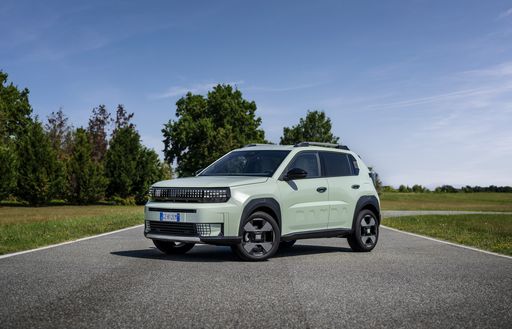
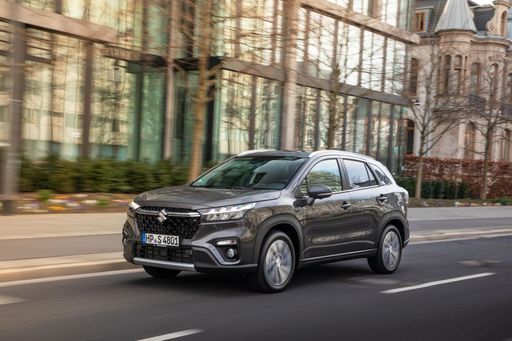
Grande Panda

Power and Performance

Under the hood, the Suzuki S-Cross is available with Full Hybrid and Petrol Mild Hybrid (MHEV) options, providing a power output of 116 to 129 horsepower, with a torque peak at 235 Nm. The S-Cross offers both Front-Wheel Drive and All-Wheel Drive configurations, catering to various driving preferences. Achieving 0-100 km/h in 9.5 seconds, the S-Cross reaches a maximum speed of 195 km/h.

Conversely, the Fiat Grande Panda presents a dual personality with its Electric and Petrol MHEV options. Delivering 113 to 101 horsepower, its petrol models reach a peak torque of 122 to 205 Nm. The Grande Panda offers a top speed of 160 km/h for the petrol variant, while its electric version, impressive for its class, provides an electric range of 320 km on a full charge, hitting 0-100 km/h in 10 to 11.5 seconds.

S-Cross

Efficiency and Eco-Friendliness

Suzuki’s dedication to efficiency is reflected in the S-Cross’s fuel consumption, which ranges from 5.1 to 5.8 L/100km, and its CO2 emissions from 116 to 131 g/km, falling into CO2 Efficiency Class D. These figures position it as a cost-effective choice for urban commuters who balance performance with fuel economy.

The Fiat Grande Panda takes a step ahead in eco-conscious driving with its electric variant, producing zero emissions and providing a consumption of 17.4 kWh/100km. The petrol version offers a consumption rate of 5.4 L/100km with CO2 emissions of 0 to 123 g/km, being positioned within the A to D efficiency class, depending on the powertrain.

Grande Panda

Design and Space

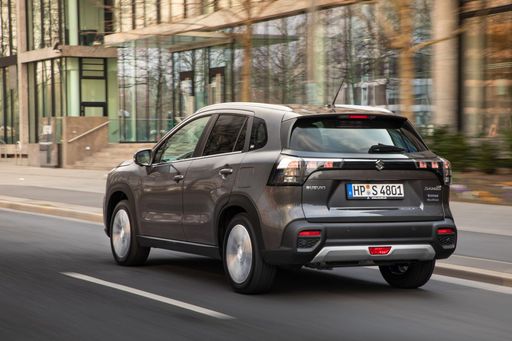
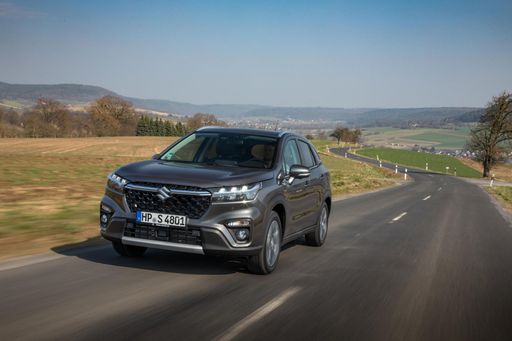
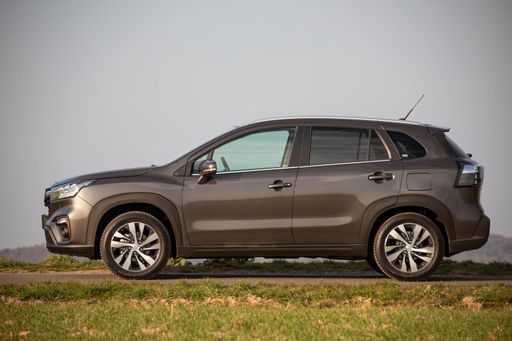
When it comes to dimensions, the Suzuki S-Cross measures 4,300 mm in length, providing ample space within its SUV frame, accommodating 5 passengers comfortably. The trunk capacity of 430 liters further emphasizes its utility, making it a practical companion for family trips.

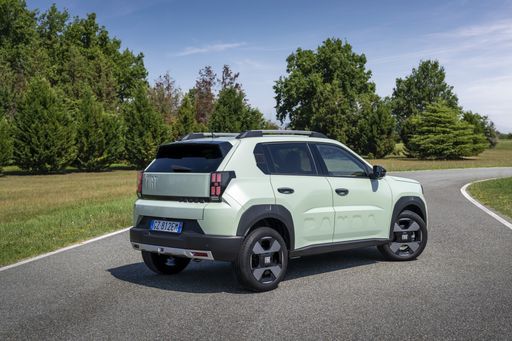
The Fiat Grande Panda, while slightly shorter at 3,999 mm, offers innovative use of space with a trunk capacity between 361 to 412 liters. Its compact nature combined with intelligent design ensures a comfortable ride without sacrificing urban maneuverability. The interior is well-suited for city driving while also catering to the occasional countryside excursion.

S-Cross

Technological Innovations

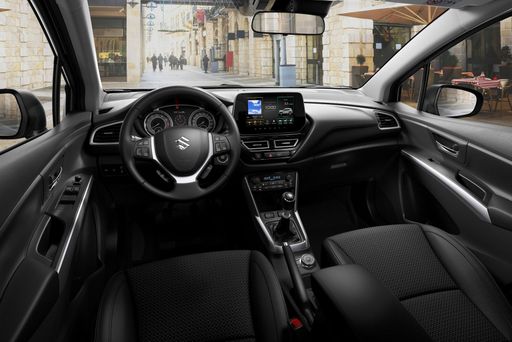
Suzuki equips the S-Cross with modern amenities, including various transmission options such as an Automatic Manual and Manual Gearbox, enhancing driving flexibility. Advanced safety features and an intuitive infotainment system elevate the overall driving experience, appealing to tech-savvy consumers.

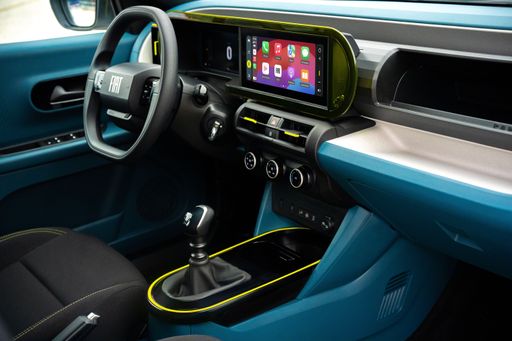
The Fiat Grande Panda, notably with its electric variant, showcases future-forward technology. The model features a Reduction Gearbox and a Dual-Clutch Automatic transmission, streamlining the driving process and ensuring efficiency. Technological enhancements in connectivity and driver-assist features further solidify its modern appeal.

Grande Panda

Final Verdict

Ultimately, the choice between the Suzuki S-Cross and the Fiat Grande Panda lies in personal preference and driving priorities. The S-Cross is an excellent choice for those who desire versatility with hybrid options and all-terrain capability. Meanwhile, the Grande Panda stands out with its eco-friendly electric option and efficient urban design, making it a formidable competitor in the electric vehicle segment. Both offer unique strengths tailored to complement different lifestyle needs.

Here’s where it gets real: The technical differences in detail

S-Cross

Costs and Efficiency:

When it comes to price and running costs, the biggest differences usually appear. This is often where you see which car fits your budget better in the long run.

Fiat Grande Panda is markedly cheaper – starting at 16,300 £ , while the Suzuki S-Cross costs 21,800 £ . That’s a price difference of around 5,485 £.

Fuel consumption also shows a difference: the Fiat Grande Panda uses 5.1 L/100km and is barely more efficient than the Suzuki S-Cross with 5.3 L/100km. The difference is about 0.2 L/100km.

Grande Panda

Engine and Performance:

Power, torque and acceleration say a lot about how a car feels on the road. This is where you see which model delivers more driving dynamics.

When it comes to engine power, the Fiat Grande Panda offers only slightly more power – delivering 113 HP compared to 110 HP. That’s roughly 3 HP more horsepower.

Looking at top speed, the Suzuki S-Cross is moderately faster – reaching 185 km/h, while the Fiat Grande Panda tops out at 160 km/h. The difference is around 25 km/h.

There’s also a difference in torque: the Suzuki S-Cross delivers somewhat more torque with 235 Nm compared to 205 Nm. That’s about 30 Nm more.

S-Cross

Space and Everyday Use:

Cabin size, boot volume and payload all play a role in everyday practicality. Here, comfort and flexibility make the difference.

Both vehicles offer seating for 5 people.

In terms of curb weight, Suzuki S-Cross is only slightly lighter – 1,280 kg compared to 1,295 kg. The difference is around 15 kg.

Looking at boot space, the Suzuki S-Cross offers barely more boot space – 430 L compared to 412 L. That’s a difference of about 18 L.

For maximum load capacity, the Fiat Grande Panda offers very slightly more capacity – up to 1,366 L, about 136 L more than the Suzuki S-Cross.

When it comes to payload, the Fiat Grande Panda carries moderately more – 453 kg compared to 405 kg. That’s a difference of about 48 kg.

Who wins the race in the data check?

The Fiat Grande Panda stands well ahead of its rival in the objective data comparison.
This result only shows which model scores more points on paper – not which of the two cars feels right for you.

from £16,300
Grande Panda

Fiat Grande Panda

  • Engine Type : Electric, Petrol MHEV, Petrol
  • Transmission : Automatic, Manuel
  • Drive Type : Front-Wheel Drive
  • Power HP : 100 - 113 HP
  • Consumption L/100km : 5.1 - 5.7 L/100km
  • Consumption kWh/100km : 16.8 kWh/100km
  • Electric Range : 320 km
Suzuki S-Cross
Fiat Grande Panda

Costs and Consumption

View detailed analysis

Engine and Performance

View detailed analysis

Dimensions and Body

View detailed analysis

Suzuki S-Cross

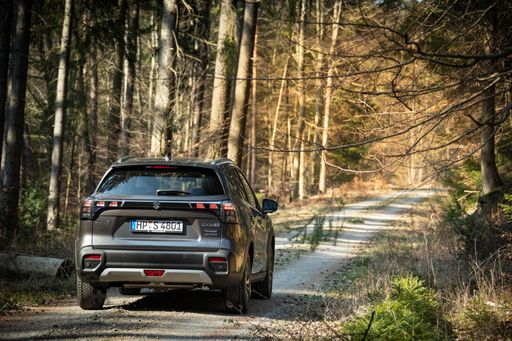
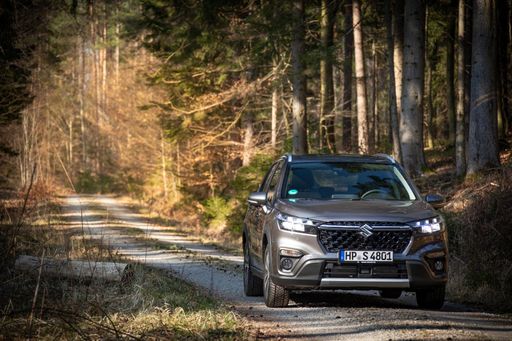
The Suzuki S-Cross is a neatly packaged crossover that puts everyday practicality ahead of showy theatrics, offering a comfortable cabin and predictable handling that suit family life and weekend errands alike. It’s not a headline-grabber, but its sensible packaging, low-key charm and reputation for reliability make it a shrewd choice for buyers who prefer smart value over flash.

details

Fiat Grande Panda

The Grande Panda is a delightful blend of practicality and charm, making it a popular choice for urban dwellers and families alike. With its compact design, the car navigates city streets effortlessly while providing ample interior space for passengers and cargo. Its quirky styling and user-friendly features make the Grande Panda not just a mode of transport, but a fun driving experience.

details
Suzuki S-Cross
Fiat Grande Panda

Costs and Consumption

Price
21,800 - 34,200 £
Price
16,300 - 25,700 £
Consumption L/100km
5.3 - 5.8 L/100km
Consumption L/100km
5.1 - 5.7 L/100km
Consumption kWh/100km
-
Consumption kWh/100km
16.8 kWh/100km
Electric Range
-
Electric Range
320 km
Battery Capacity
-
Battery Capacity
-
co2
119 - 138 g/km
co2
0 - 131 g/km
Fuel tank capacity
47 L
Fuel tank capacity
44 L

Dimensions and Body

Body Type
SUV
Body Type
SUV
Seats
5
Seats
5
Doors
5
Doors
5
Curb weight
1,280 - 1,385 kg
Curb weight
1,295 - 1,554 kg
Trunk capacity
430 L
Trunk capacity
361 - 412 L
Length
4,305 mm
Length
3,999 mm
Width
1,785 mm
Width
1,763 mm
Height
1,580 mm
Height
1,598 mm
Max trunk capacity
1,230 L
Max trunk capacity
1,366 L
Payload
395 - 405 kg
Payload
353 - 453 kg

Engine and Performance

Engine Type
Petrol MHEV
Engine Type
Electric, Petrol MHEV, Petrol
Transmission
Manuel, Automatic
Transmission
Automatic, Manuel
Transmission Detail
Manual Gearbox, Automatic Gearbox
Transmission Detail
Reduction Gearbox, Dual-Clutch Automatic, Manual Gearbox
Drive Type
Front-Wheel Drive, All-Wheel Drive
Drive Type
Front-Wheel Drive
Power HP
110 HP
Power HP
100 - 113 HP
Acceleration 0-100km/h
-
Acceleration 0-100km/h
11.2 - 11.5 s
Max Speed
180 - 185 km/h
Max Speed
160 km/h
Torque
235 Nm
Torque
122 - 205 Nm
Number of Cylinders
4
Number of Cylinders
3
Power kW
81 kW
Power kW
74 - 83 kW
Engine capacity
1,373 cm3
Engine capacity
1,199 cm3

General

Model Year
2,025
Model Year
2,025
CO2 Efficiency Class
D, E
CO2 Efficiency Class
A, D
Brand
Suzuki
Brand
Fiat
DriveDuel uses data analysis and artificial intelligence to evaluate vehicle data and create content. Content is regularly reviewed and improved. The displayed prices are estimates based on German list prices, adjusted to the respective country’s VAT. Country-specific registration taxes are not included. This information is not legally binding.