VS

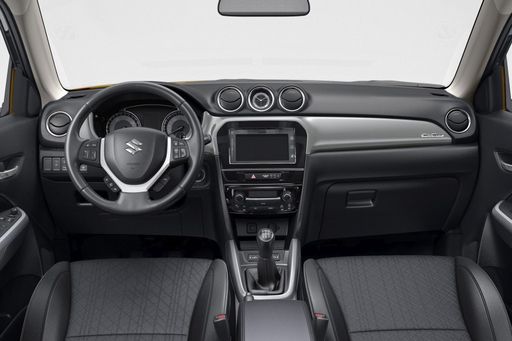
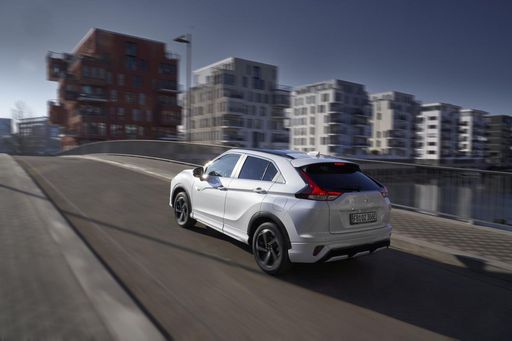
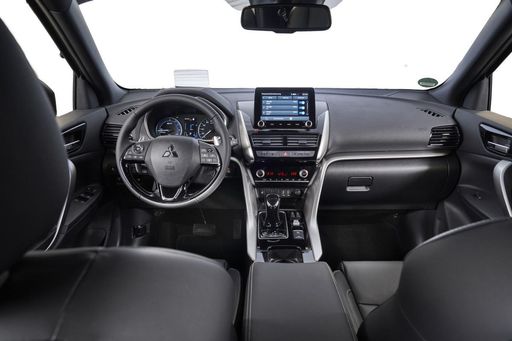
Suzuki Vitara vs Mitsubishi Eclipse Cross comparison

Compare performance (184 HP vs 218 HP), boot space and price (23,600 £ vs 41,100 £ ) at a glance. Find out which car is the better choice for you – Suzuki Vitara or Mitsubishi Eclipse Cross?

Suzuki Vitara vs Mitsubishi Eclipse Cross: Key differences

Suzuki Vitara

4.5 (3 Reviews)
rate
  • significantly cheaper
  • somewhat more efficient
  • very slightly quicker 0–100 km/h

Mitsubishi Eclipse Cross

4.9 (1 Reviews)
rate
  • somewhat more power
  • markedly more electric range
  • noticeably more trunk space

All details on performance, efficiency, range and trunk space can be found in the technical comparison below – including user reviews for both models.

Vitara

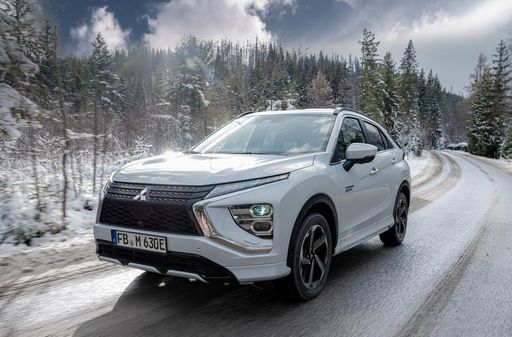
Mitsubishi Eclipse Cross vs. Suzuki Vitara: A Clash of Compact SUVs

In the competitive world of compact SUVs, the Mitsubishi Eclipse Cross and Suzuki Vitara are two noteworthy contenders that appeal to drivers seeking versatility and efficiency. These models offer a blend of performance, comfort, and technological advancements, but how do they stack up against each other? Let's dive into the technical aspects and innovations that set them apart in this comparative overview.
Eclipse Cross

Performance and Engine Options

The Mitsubishi Eclipse Cross is powered by a potent 2.36-liter plug-in hybrid engine, delivering an impressive 188 horsepower and 138 kW. With all-wheel drive as standard, the Eclipse Cross ensures superior traction and control, ideal for various driving conditions. It accelerates from 0-100 km/h in 10.9 seconds, making it a responsive option for city and highway driving alike. Furthermore, it boasts a fuel consumption of just 2 L/100km and an electric range of 45 km, appealing to environmentally conscious consumers.

On the other hand, the Suzuki Vitara presents a more traditional powertrain with options for both petrol MHEV and full hybrid variants. The engine choices offer between 116 and 129 horsepower, with a torque rating of 235 Nm. The Vitara displays strong fuel efficiency, consuming between 5.0 to 5.6 L/100km depending on the configuration. It offers a slightly quicker acceleration than the Eclipse Cross at best-in-class times of 9.5 seconds, putting it ahead in terms of straight-line performance.

Vitara

Dimensions and Practicality

When it comes to size and space, the Mitsubishi Eclipse Cross measures 4545 mm in length, 1805 mm in width, and stands 1685 mm tall. It accommodates five passengers comfortably and features a generous trunk capacity of 359 liters, perfect for weekend getaways. The vehicle's curb weight ranges from 1985 kg to 2052 kg, positioning it as a robust option.

Conversely, the Suzuki Vitara is slightly smaller, measuring 4185 mm in length and 1775 mm in width, with a height of 1595 mm. It also seats five people, but trunk capacity varies between 289 to 375 liters, depending on configurations. With a lighter curb weight ranging from 1255 kg to 1395 kg, the Vitara may offer a more agile driving experience in urban settings.

Eclipse Cross

Innovative Technology and Features

In terms of technology, the Mitsubishi Eclipse Cross is equipped with Mitsubishi's advanced smartphone-link display, which integrates Apple CarPlay and Android Auto for seamless connectivity. The infotainment system is user-friendly and paired with a premium acoustic system, providing a more enjoyable ride.

Meanwhile, the Suzuki Vitara comes with a suite of advanced driver assistance systems, including adaptive cruise control, lane departure warning, and emergency braking. The updated model year 2024 features enhanced connectivity options with an intuitive touchscreen display, ensuring that drivers stay connected while on the road.

Vitara

Sustainability and Efficiency

Sustainability is a growing concern for many car buyers. The Eclipse Cross' impressive CO2 efficiency rating of 46 g/km makes it a remarkably eco-friendly option in its class. Its plug-in hybrid capability allows for reduced emissions and fuel consumption, making it a favorite among environmentally conscious consumers.

On the other hand, the Suzuki Vitara offers competitive emissions ratings, ranging from 113 to 129 g/km, depending on the variant selected. While not as low as the Eclipse Cross, the Vitara's hybrid options still contribute to a greener driving footprint, appealing to modern drivers who desire efficiency without compromising performance.

Eclipse Cross

Conclusion: Which SUV Reigns Supreme?

Ultimately, the choice between the Mitsubishi Eclipse Cross and Suzuki Vitara hinges on individual preferences and priorities. If you value hybrid technology, impressive electric range, and eco-friendliness, the Eclipse Cross is a striking choice. However, if you prefer a slightly more agile SUV with solid engine performance and advanced safety features, the Vitara might be the best fit.

Both models offer compelling features, making them worthy contenders in the compact SUV segment, ensuring that drivers can enjoy a stylish and functional ride tailored to their needs.

Here’s where it gets real: The technical differences in detail

Vitara

Costs and Efficiency:

Price and efficiency are often the first things buyers look at. Here it becomes clear which model has the long-term edge – whether at the pump, the plug, or in purchase price.

Suzuki Vitara is significantly cheaper – starting at 23,600 £ , while the Mitsubishi Eclipse Cross costs 41,100 £ . That’s a price difference of around 17,563 £.

In terms of energy consumption, the Suzuki Vitara is somewhat more efficient: consuming 14.9 kWh/100km compared to 16.7 kWh/100km for the Mitsubishi Eclipse Cross. That’s a difference of about 1.8 kWh/100km.

As for electric range, the Mitsubishi Eclipse Cross offers markedly more range – reaching up to 635 km, about 209 km more than the Suzuki Vitara.

Eclipse Cross

Engine and Performance:

Power, torque and acceleration are the classic benchmarks for car enthusiasts – and here, some clear differences start to show.

When it comes to engine power, the Mitsubishi Eclipse Cross offers somewhat more power – delivering 218 HP compared to 184 HP. That’s roughly 34 HP more horsepower.

When accelerating from 0 to 100 km/h, the Suzuki Vitara is very slightly quicker – completing the sprint in 7.4 s, while the Mitsubishi Eclipse Cross takes 7.9 s. That’s about 0.5 s quicker.

Looking at top speed, the Suzuki Vitara is slightly faster – reaching 190 km/h, while the Mitsubishi Eclipse Cross tops out at 170 km/h. The difference is around 20 km/h.

There’s also a difference in torque: the Suzuki Vitara delivers barely more torque with 307 Nm compared to 300 Nm. That’s about 7 Nm more.

Vitara

Space and Everyday Use:

Whether family car or daily driver – which one offers more room, flexibility and comfort?

Both vehicles offer seating for 5 people.

Looking at boot space, the Mitsubishi Eclipse Cross offers noticeably more boot space – 487 L compared to 375 L. That’s a difference of about 112 L.

For maximum load capacity, the Mitsubishi Eclipse Cross offers clearly more capacity – up to 1,670 L, about 550 L more than the Suzuki Vitara.

Who wins the race in the data check?

The Mitsubishi Eclipse Cross sits just ahead overall in the objective data comparison.
This result only shows which model scores more points on paper – not which of the two cars feels right for you.

from £41,100
Eclipse Cross

Mitsubishi Eclipse Cross

  • Engine Type : Electric
  • Transmission : Automatic
  • Drive Type : Front-Wheel Drive
  • Power HP : 218 HP
  • Consumption kWh/100km : 16.7 - 16.9 kWh/100km
  • Electric Range : 635 km
Suzuki Vitara
Mitsubishi Eclipse Cross

Costs and Consumption

View detailed analysis

Engine and Performance

View detailed analysis

Dimensions and Body

View detailed analysis

Suzuki Vitara

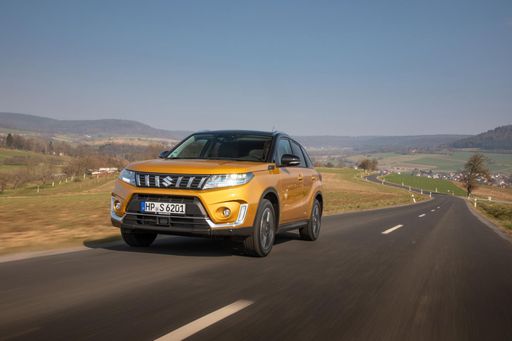
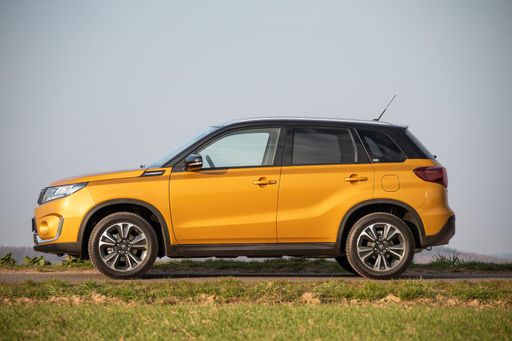
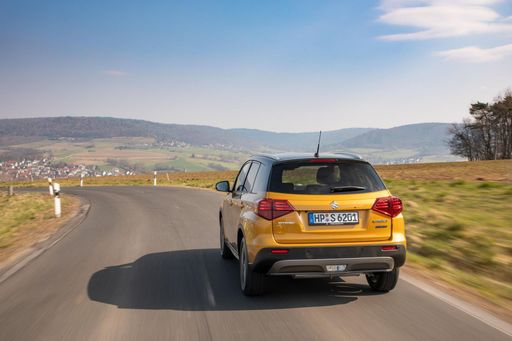
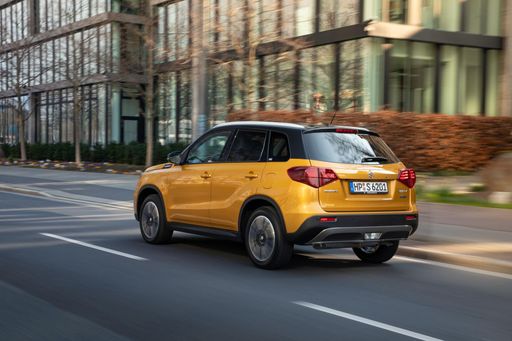
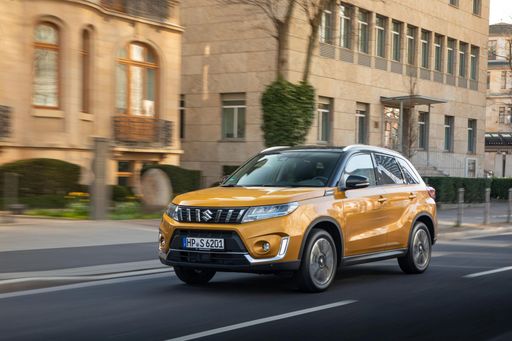
The Vitara is a city-smart SUV with a cheeky streak of off-road promise, perfect for drivers who want practicality without pretense. It’s honest, easy to live with and surprisingly likeable, a sensible companion for everyday adventures and weekend escapes.

details

Mitsubishi Eclipse Cross

Mitsubishi Eclipse Cross combines coupe-like looks with crossover practicality, so you get style without the showroom attitude. It’s an affable daily driver that hides a few quirks behind a confident grin, making it an easy pick for buyers who want personality without fuss.

details
Suzuki Vitara
Mitsubishi Eclipse Cross

Costs and Consumption

Price
23,600 - 36,800 £
Price
41,100 - 48,200 £
Consumption L/100km
5 - 5.9 L/100km
Consumption L/100km
-
Consumption kWh/100km
14.9 - 16.6 kWh/100km
Consumption kWh/100km
16.7 - 16.9 kWh/100km
Electric Range
344 - 426 km
Electric Range
635 km
Battery Capacity
-
Battery Capacity
-
co2
0 - 138 g/km
co2
0 g/km
Fuel tank capacity
47 L
Fuel tank capacity
-

Dimensions and Body

Body Type
SUV
Body Type
SUV
Seats
5
Seats
5
Doors
5
Doors
5
Curb weight
1,255 - 1,935 kg
Curb weight
-
Trunk capacity
289 - 375 L
Trunk capacity
487 L
Length
4,185 mm
Length
4,489 mm
Width
1,775 - 1,800 mm
Width
1,908 mm
Height
1,595 mm
Height
1,571 mm
Max trunk capacity
1,046 - 1,120 L
Max trunk capacity
1,670 L
Payload
375 - 425 kg
Payload
-

Engine and Performance

Engine Type
Petrol MHEV, Full Hybrid, Electric
Engine Type
Electric
Transmission
Manuel, Automatic
Transmission
Automatic
Transmission Detail
Manual Gearbox, Automated Manual, Automatic Gearbox
Transmission Detail
Reduction Gearbox
Drive Type
Front-Wheel Drive, All-Wheel Drive
Drive Type
Front-Wheel Drive
Power HP
110 - 184 HP
Power HP
218 HP
Acceleration 0-100km/h
7.4 - 12.7 s
Acceleration 0-100km/h
7.9 s
Max Speed
180 - 190 km/h
Max Speed
170 km/h
Torque
193 - 307 Nm
Torque
300 Nm
Number of Cylinders
4
Number of Cylinders
-
Power kW
81 - 135 kW
Power kW
160 kW
Engine capacity
1,373 - 1,462 cm3
Engine capacity
-

General

Model Year
2,024 - 2,026
Model Year
2,025
CO2 Efficiency Class
D, C, E, A
CO2 Efficiency Class
A
Brand
Suzuki
Brand
Mitsubishi
DriveDuel uses data analysis and artificial intelligence to evaluate vehicle data and create content. Content is regularly reviewed and improved. The displayed prices are estimates based on German list prices, adjusted to the respective country’s VAT. Country-specific registration taxes are not included. This information is not legally binding.