@ Toyota Motor Corporation
VS

Toyota C-HR vs Lynk & Co 02 – Which model is better for everyday use?

Two cars, one duel: Toyota C-HR meets Lynk & Co 02.
Which one wins in performance, efficiency and value for money? Find out now!

C-HR @ Toyota Motor Corporation

The automotive market is filled with options, especially when it comes to compact SUVs. In this comparison, we look closely at two standout models: the Toyota C-HR and the Lynk & Co 02. Each offers a unique blend of technology, performance, and innovative features, catering to different consumer preferences. Here, we’ll break down their key aspects to help you make an informed decision.
C-HR @ Toyota Motor Corporation

Design and Dimensions

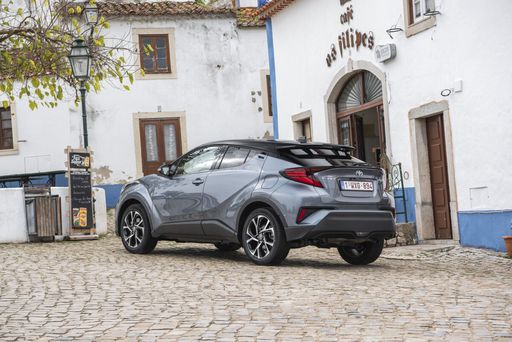
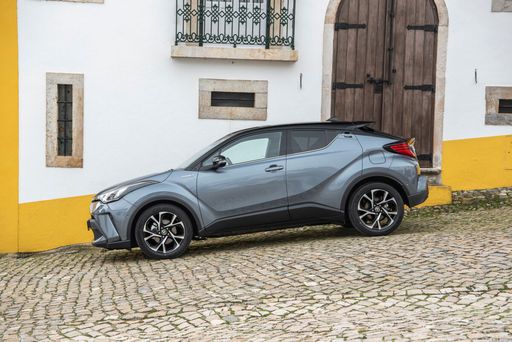
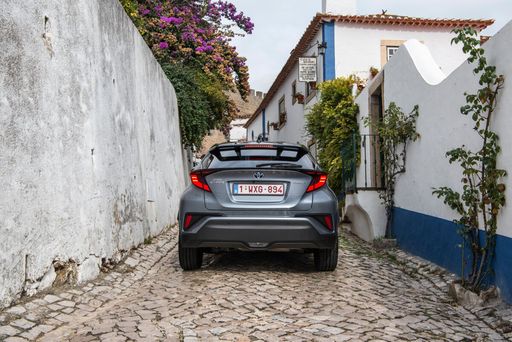
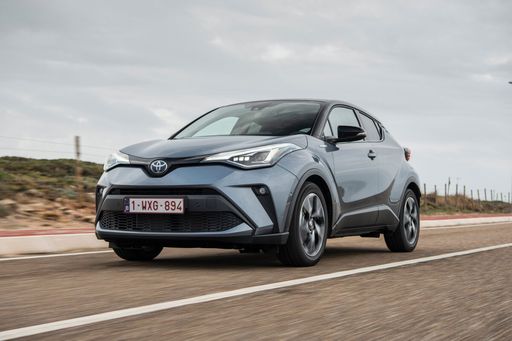
The Toyota C-HR boasts a bold, sculptured design that projects an assertive stance on the road. Measuring 4,362 mm in length and 1,832 mm in width, it emphasizes a sporty profile. The C-HR's height ranges from 1,558 mm to 1,564 mm, offering a commanding view of the road.

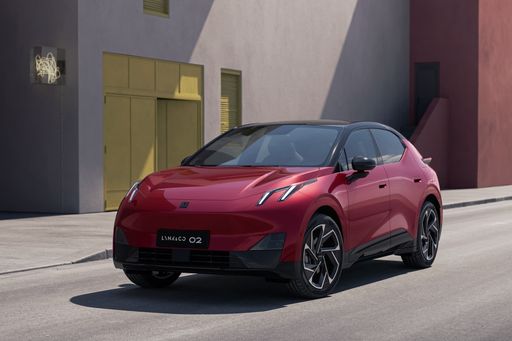
On the other hand, the Lynk & Co 02 presents a more modern and subtly aggressive look, with slightly larger dimensions at 4,460 mm in length and 1,845 mm in width. Its height is 1,573 mm, contributing to a robust appearance and a spacious interior that invites both style and comfort.

C-HR @ Toyota Motor Corporation

Powertrains and Performance

When it comes to performance, the Toyota C-HR offers a variety of engine options, including full hybrid and plug-in hybrid variants, with power outputs ranging from 140 HP to 223 HP. With a 0-100 km/h acceleration time ranging from 7.4 seconds to 9.9 seconds, it's a versatile choice for drivers who appreciate both efficiency and performance. The consumption figures also stand out, with the hybrid versions offering fuel economy as low as 4.7 L/100 km.

In contrast, the Lynk & Co 02 relies solely on an electric powertrain, providing an output of 272 HP and achieving a blistering 0-100 km/h time of just 5.5 seconds. Its electric range is impressive as well, clocking in at 435 to 445 km depending on the configuration, making it highly suitable for urban driving and longer journeys alike. Additionally, it maintains a consumption rate of 17.1 to 17.6 kWh/100 km, showcasing efficiency in an all-electric format.

C-HR @ Toyota Motor Corporation

Interior and Technology

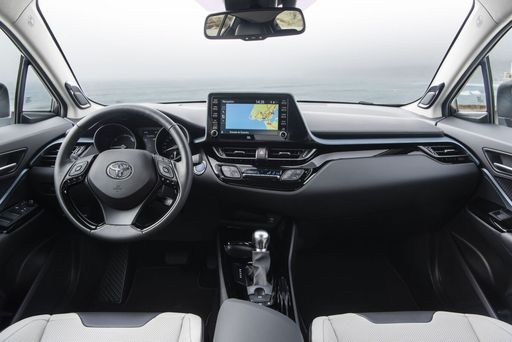
Inside the Toyota C-HR, the cabin is crafted with comfort and accessibility in mind. With seating for five and a trunk capacity of up to 447 liters, this SUV balances practicality with modern flair. The technology features are also noteworthy, including a user-friendly infotainment system that integrates seamlessly with smartphone connectivity.

The Lynk & Co 02 takes a slightly different approach to its interior, with a focus on connectivity and a clean, minimalist design. Its trunk capacity of 440 liters complements the spacious seating for five. The vehicle is equipped with a state-of-the-art infotainment system that is easy to navigate, featuring advanced connectivity options that resonate well with tech-savvy consumers.

C-HR @ Toyota Motor Corporation

Safety and Efficiency

Safety is a key consideration in today's automotive industry, and both vehicles meet high standards. The Toyota C-HR comes equipped with a range of advanced safety features, securing a CO2 efficiency class ranging from B to C, and CO2 emissions as low as 17 g/km for its hybrid variants. Its innovative safety tech includes adaptive cruise control, lane departure alerts, and automated emergency braking, making it a safe choice for families.

Meanwhile, the Lynk & Co 02 proudly holds a CO2 efficiency class rating of A with zero tailpipe emissions, thanks to its electric powertrain. This model includes an array of safety features and technology designed to keep occupants protected, further emphasizing its role as a forward-thinking electric vehicle.

Conclusion

The comparison between the Toyota C-HR and Lynk & Co 02 highlights the remarkable diversity in the SUV segment. While the C-HR stands out for its hybrid options, robust performance, and practicality, the Lynk & Co 02 impresses with its electric efficiency, modern styling, and high-tech features. Your choice will ultimately depend on your driving preferences and commitments to environmental sustainability. Each vehicle presents compelling reasons to be chosen as your next automotive companion, making this a vibrant segment to explore.

Here’s where it gets real: The technical differences in detail

Costs and Efficiency:

Price and efficiency are key factors when choosing a car – and this is often where the real differences emerge.

Toyota C-HR has a minimal advantage in terms of price – it starts at 29100 £, while the Lynk & Co 02 costs 30900 £. That’s a price difference of around 1718 £.

As for range, the Lynk & Co 02 performs clearly better – achieving up to 445 km, about 377 km more than the Toyota C-HR.

Engine and Performance:

Under the bonnet, it becomes clear which model is tuned for sportiness and which one takes the lead when you hit the accelerator.

When it comes to engine power, the Lynk & Co 02 has a somewhat edge – offering 272 HP compared to 223 HP. That’s roughly 49 HP more horsepower.

In acceleration from 0 to 100 km/h, the Lynk & Co 02 is evident quicker – completing the sprint in 5.50 s, while the Toyota C-HR takes 7.40 s. That’s about 1.90 s faster.

There’s no difference in top speed – both reach 180 km/h.

Space and Everyday Use:

Beyond pure performance, interior space and usability matter most in daily life. This is where you see which car is more practical and versatile.

Both vehicles offer seating for 5 people.

In curb weight, Toyota C-HR is evident lighter – 1505 kg compared to 1895 kg. The difference is around 390 kg.

In terms of boot space, the Toyota C-HR offers minimal more room – 447 L compared to 410 L. That’s a difference of about 37 L.

In maximum load capacity, the Lynk & Co 02 performs to a small extent better – up to 1349 L, which is about 194 L more than the Toyota C-HR.

When it comes to payload, Toyota C-HR to a small extent takes the win – 425 kg compared to 375 kg. That’s a difference of about 50 kg.

Who comes out on top?

Overall, the Lynk & Co 02 shows itself to be dominates this comparison and secures the title of DriveDuel Champion.
It convinces with the more balanced overall package and proves to be the more versatile choice for everyday use.

from about £30,900
default

Lynk & Co 02

  • Engine Type : Electric
  • Transmission : Automatic
  • Drive Type : Rear-Wheel Drive
  • Power HP : 272 HP
  • Consumption kWh/100km : 17.1 - 17.6 kWh
  • Electric Range : 435 - 445 km

Toyota C-HR

5 (1)
rate

The Toyota C-HR cuts a striking figure with its angular styling and coupe-like profile, so you’ll never go unnoticed in the supermarket car park. It balances everyday practicality with a nimble, city-friendly personality, making routine commutes feel a touch more fun without asking for forgiveness.

details

Lynk & Co 02

The car 02 has captured the hearts of enthusiasts with its iconic design and engaging driving dynamics. Known for its lightweight build, it delivers a spirited performance that makes every twist and turn exhilarating. With its classic styling and a cabin that balances retro charm with modern comfort, the car 02 remains a true icon in the automotive world.

details
Toyota C-HR
Lynk & Co 02
C-HR @ Toyota Motor Corporation

Costs and Consumption

Price
29100 - 42800 £
Price
30900 - 34300 £
Consumption L/100km
0.8 - 5.1 L
Consumption L/100km
-
Consumption kWh/100km
-
Consumption kWh/100km
17.1 - 17.6 kWh
Electric Range
68 km
Electric Range
435 - 445 km
Battery Capacity
-
Battery Capacity
-
co2
17 - 115 g/km
co2
0 g/km
Fuel tank capacity
43 L
Fuel tank capacity
-

Dimensions and Body

Body Type
SUV
Body Type
SUV
Seats
5
Seats
5
Doors
5
Doors
5
Curb weight
1505 - 1755 kg
Curb weight
1895 kg
Trunk capacity
350 - 447 L
Trunk capacity
410 L
Length
4362 mm
Length
4460 mm
Width
1832 mm
Width
1845 mm
Height
1558 - 1564 mm
Height
1573 mm
Max trunk capacity
1076 - 1155 L
Max trunk capacity
1349 L
Payload
375 - 425 kg
Payload
375 kg

Engine and Performance

Engine Type
Full Hybrid, Plugin Hybrid
Engine Type
Electric
Transmission
Automatic
Transmission
Automatic
Transmission Detail
CVT
Transmission Detail
Reduction Gearbox
Drive Type
Front-Wheel Drive, All-Wheel Drive
Drive Type
Rear-Wheel Drive
Power HP
140 - 223 HP
Power HP
272 HP
Acceleration 0-100km/h
7.4 - 9.9 s
Acceleration 0-100km/h
5.50 s
Max Speed
175 - 180 km/h
Max Speed
180 km/h
Torque
-
Torque
323 Nm
Number of Cylinders
4
Number of Cylinders
-
Power kW
103 - 164 kW
Power kW
200 kW
Engine capacity
1798 - 1987 cm3
Engine capacity
-

General

Model Year
2024 - 2025
Model Year
2024
CO2 Efficiency Class
C, B
CO2 Efficiency Class
A
Brand
Toyota
Brand
Lynk & Co
What drivetrain options does the Toyota C-HR have?

Available configurations include Front-Wheel Drive or All-Wheel Drive.

The prices and data displayed are estimates based on German list prices and may vary by country. This information is not legally binding.