VS

Toyota Corolla Cross vs Ford Kuga comparison

Compare performance (180 HP vs 243 HP), boot space and price (31,700 £ vs 34,200 £ ) at a glance. Find out which car is the better choice for you – Toyota Corolla Cross or Ford Kuga?

Toyota Corolla Cross vs Ford Kuga: Key differences

Toyota Corolla Cross

4.3 (8 Reviews)
rate
  • very slightly cheaper
  • slightly lighter
details

Ford Kuga

4.3 (7 Reviews)
rate
  • noticeably more power
  • considerably more efficient
  • very slightly quicker 0–100 km/h
details

All details on performance, efficiency, range and trunk space can be found in the technical comparison below – including user reviews for both models.

By Achim Sedelmaier

Corolla Cross

Quick comparison: Ford Kuga VS Toyota Corolla Cross

The Ford Kuga and the Toyota Corolla Cross go head-to-head in a comparison framed around real-world ownership rather than spec sheets. This Ford Kuga VS Toyota Corolla Cross guide cuts through the numbers to show how character, comfort, cabin feel and everyday usability differ when you actually live with these SUVs. You'll see where the Kuga's driver-focused edge matters, and where the Corolla Cross's calm, economical approach pays off. We focus on tangible trade-offs—how they behave on long trips, in tight city streets, and when you load the boot for family life.
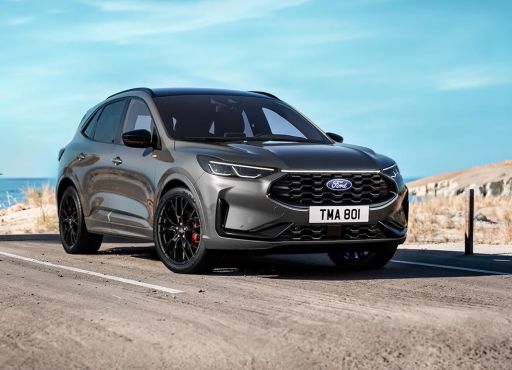
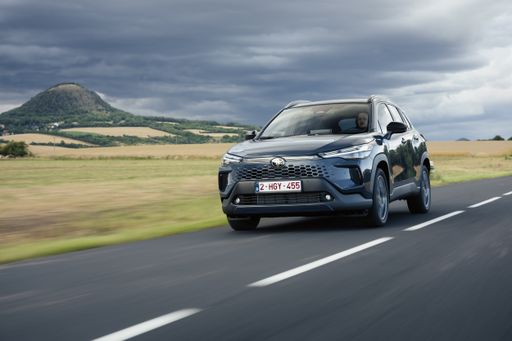
Kuga

Driving character and dynamics

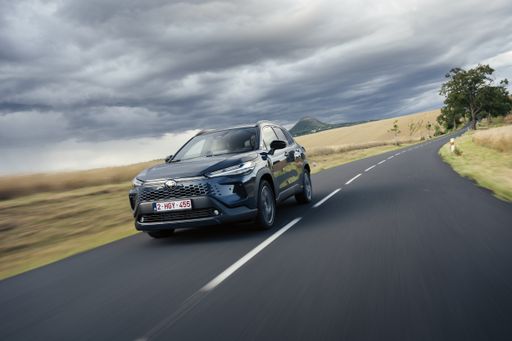
Character matters: the Ford Kuga is noticeably driver‑oriented while the Toyota Corolla Cross prefers a relaxed, no‑surprises demeanour. The Kuga steers sharper, rewards brisk inputs and feels more planted through corners, whereas the Corolla Cross trades enthusiasm for predictability and composure. Both use hybrid systems that can become vocal under full throttle, but the Kuga pairs that with a more assertive shove while the Corolla Cross smooths out urgency into a gentler response. If you enjoy engaging drives and quicker responses, the Kuga rewards you; if you prefer calm, easygoing commutes the Corolla Cross reduces stress.

Corolla Cross

Comfort and long‑distance behaviour

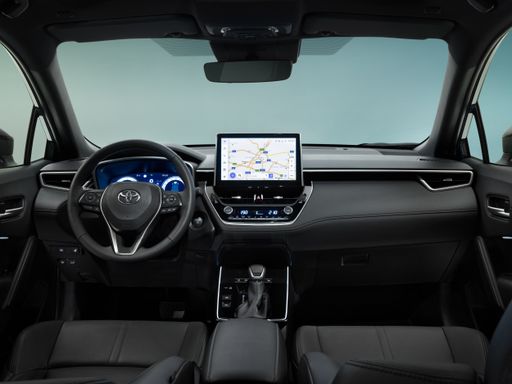
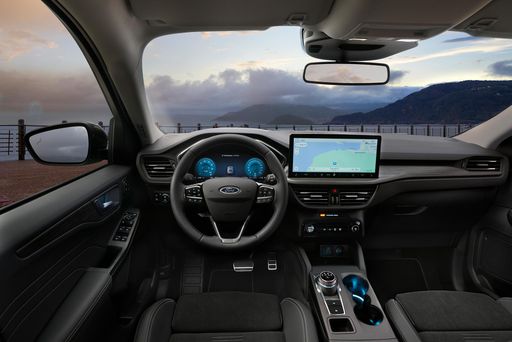
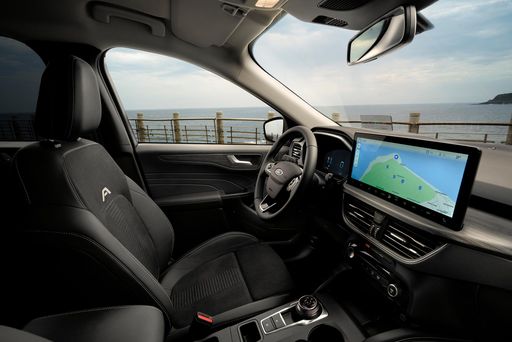
On long distances the two diverge: the Ford Kuga travels with low wind and road noise but can feel firm over poor surfaces, while the Toyota Corolla Cross trades a touch of road hush for a plusher ride. The Kuga's firmer damping sharpens handling but transmits sharper hits, whereas the Corolla Cross soaks up city potholes and stretches into a more lounging experience. Inside, the Kuga's cabin is tech-forward and functional but less plush, while the Corolla Cross presents a tidy, robust interior that reads as more comforting to many occupants. Both will be quiet at cruising speeds until you demand quick acceleration and the hybrid systems become noticeable.

Kuga

Practicality and family use

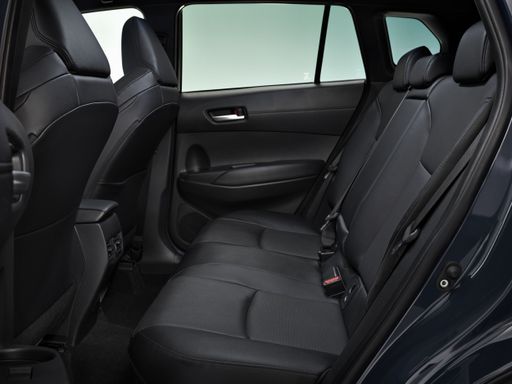
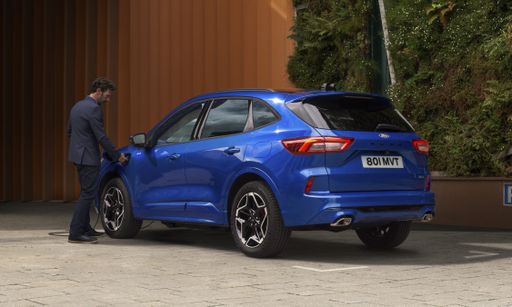
Family buyers will notice practical trade-offs: the Ford Kuga's sliding rear bench and generous legroom make fitting child seats and tall passengers easier than in the Toyota Corolla Cross. The Corolla Cross compensates with a wide-opening boot and a straightforward layout that makes everyday loading simple, but it doesn't create a flat load floor when the seats fold. The Kuga's rear versatility is useful for variable cargo needs, yet plug‑in variants reduce usable luggage space—a key consideration if you carry bulky loads regularly. Both carry a family comfortably, but the Kuga leans toward modular practicality while the Corolla Cross prioritises plain‑spoken, no‑fuss usability.

Corolla Cross

City life, running costs and efficiency

In the city the Toyota Corolla Cross shines for those who care about low running costs without the need to plug in, whereas the Ford Kuga rewards buyers who can charge and want stronger on‑road performance. Corolla Cross delivers dependable long‑term frugality and a reassuring safety profile, making it a low‑stress choice for mixed urban and suburban driving. Kuga's hybrid and plug‑in flexibility can yield very low urban consumption and a livelier drive, but charging limitations on some versions blunt everyday convenience. Visibility and parking are good in both cars, though the Kuga's driver‑focused cockpit feels more connected and the Corolla Cross feels lighter and easier to hustle around town.

Kuga

Buyer fit: who each car suits

Who should pick which? The Ford Kuga suits drivers who want a livelier, more modular family SUV with modern infotainment and the upside of plug‑in efficiency when charging is available. The Toyota Corolla Cross suits buyers who prize predictable running costs, high safety standards and a comfortable, fuss‑free cabin. Both cars make sense for families and commuters, but your routine decides the tilt: choose the Kuga for engagement and rear‑seat flexibility, choose the Corolla Cross for steady economy and straightforward packaging. Below we break down the technical differences that explain these real‑world contrasts so you can match the numbers to the day‑to‑day trade‑offs.

Here’s where it gets real: The technical differences in detail

Corolla Cross

Costs and Efficiency:

Looking at overall running costs, both models reveal some interesting differences in everyday economy.

Toyota Corolla Cross is very slightly cheaper – starting at 31,700 £ , while the Ford Kuga costs 34,200 £ . That’s a price difference of around 2,537 £.

Fuel consumption also shows a difference: the Ford Kuga uses 2.8 L/100km and is considerably more efficient than the Toyota Corolla Cross with 4.9 L/100km. The difference is about 2.1 L/100km.

Kuga

Engine and Performance:

Under the bonnet, it becomes clear which model is tuned for sportiness and which one takes the lead when you hit the accelerator.

When it comes to engine power, the Ford Kuga offers noticeably more power – delivering 243 HP compared to 180 HP. That’s roughly 63 HP more horsepower.

When accelerating from 0 to 100 km/h, the Ford Kuga is very slightly quicker – completing the sprint in 7.3 s, while the Toyota Corolla Cross takes 7.6 s. That’s about 0.3 s quicker.

Corolla Cross

Space and Everyday Use:

Beyond pure performance, interior space and usability matter most in daily life. This is where you see which car is more practical and versatile.

Both vehicles offer seating for 5 people.

In terms of curb weight, Toyota Corolla Cross is slightly lighter – 1,380 kg compared to 1,526 kg. The difference is around 146 kg.

When it comes to payload, the Toyota Corolla Cross carries marginally more – 560 kg compared to 550 kg. That’s a difference of about 10 kg.

Who wins the race in the data check?

The Ford Kuga is decisively ahead in the objective data comparison.
This result only shows which model scores more points on paper – not which of the two cars feels right for you.

from £34,200
Kuga

Ford Kuga

  • Engine Type Petrol, Full Hybrid, Plugin Hybrid
  • Transmission Manuel, Automatic
  • Drive Type Front-Wheel Drive, All-Wheel Drive
  • Power HP 150 - 243 HP
  • Consumption L/100km 2.8 - 6.8 L/100km
  • Electric Range 68 km
Toyota Corolla Cross
Ford Kuga

Costs and Consumption

View detailed analysis

Engine and Performance

View detailed analysis

Dimensions and Body

View detailed analysis

Toyota Corolla Cross

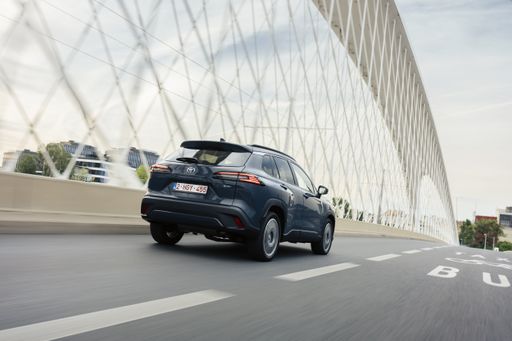
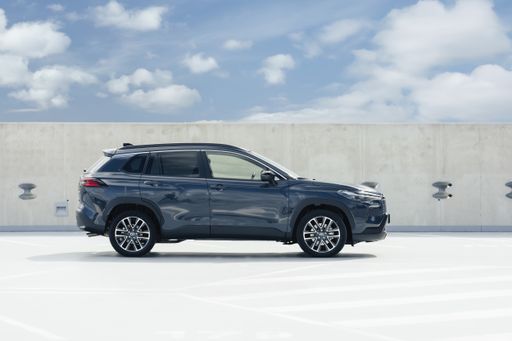
The Toyota Corolla Cross is a compact crossover that blends the practicality and reliability Toyota is known for with a comfortable, easygoing driving experience. It offers a roomy interior and sensible features that make it a strong choice for daily commuting and family outings.

details

Ford Kuga

The Ford Kuga is a practical and comfortable compact SUV that balances everyday usability with a composed ride and adaptable interior. It offers sensible tech and safety features, making it a solid choice for families or anyone seeking a versatile, easy-to-live-with crossover.

details
Toyota Corolla Cross
Ford Kuga

Costs and Consumption

Price
31,700 - 41,900 £
Price
34,200 - 46,300 £
Consumption L/100km
4.9 - 5.3 L/100km
Consumption L/100km
2.8 - 6.8 L/100km
Consumption kWh/100km
-
Consumption kWh/100km
-
Electric Range
-
Electric Range
68 km
Battery Capacity
-
Battery Capacity
-
co2
112 - 120 g/km
co2
55 - 154 g/km
Fuel tank capacity
-
Fuel tank capacity
-

Dimensions and Body

Body Type
SUV
Body Type
SUV
Seats
5
Seats
5
Doors
-
Doors
-
Curb weight
1,380 - 1,500 kg
Curb weight
1,526 - 1,859 kg
Trunk capacity
380 - 473 L
Trunk capacity
-
Length
-
Length
-
Width
1,825 mm
Width
1,882 mm
Height
-
Height
-
Max trunk capacity
-
Max trunk capacity
-
Payload
515 - 560 kg
Payload
541 - 550 kg

Engine and Performance

Engine Type
Full Hybrid
Engine Type
Petrol, Full Hybrid, Plugin Hybrid
Transmission
Automatic
Transmission
Manuel, Automatic
Transmission Detail
CVT
Transmission Detail
Manual Gearbox, CVT, Automatic Gearbox
Drive Type
Front-Wheel Drive, All-Wheel Drive
Drive Type
Front-Wheel Drive, All-Wheel Drive
Power HP
140 - 180 HP
Power HP
150 - 243 HP
Acceleration 0-100km/h
7.6 - 10 s
Acceleration 0-100km/h
7.3 - 9.9 s
Max Speed
-
Max Speed
-
Torque
-
Torque
240 Nm
Number of Cylinders
4
Number of Cylinders
3 - 4
Power kW
103 - 132 kW
Power kW
111 - 178 kW
Engine capacity
1,798 - 1,987 cm3
Engine capacity
1,496 - 2,488 cm3

General

Model Year
2025
Model Year
2025
CO2 Efficiency Class
C, D
CO2 Efficiency Class
E, D, B
Brand
Toyota
Brand
Ford
DriveDuel uses data analysis and artificial intelligence to evaluate vehicle data and create content. Content is regularly reviewed and improved. The displayed prices are estimates based on German list prices, adjusted to the respective country’s VAT. Country-specific registration taxes are not included. This information is not legally binding.