VS

Toyota Corolla Cross vs Mazda CX-30 comparison

Compare performance (180 HP vs 186 HP), boot space and price (31,700 £ vs 25,200 £ ) at a glance. Find out which car is the better choice for you – Toyota Corolla Cross or Mazda CX-30?

Toyota Corolla Cross vs Mazda CX-30: Key differences

Toyota Corolla Cross

4.9 (4 Reviews)
rate
  • moderately more efficient
  • very slightly quicker 0–100 km/h
  • only slightly lighter

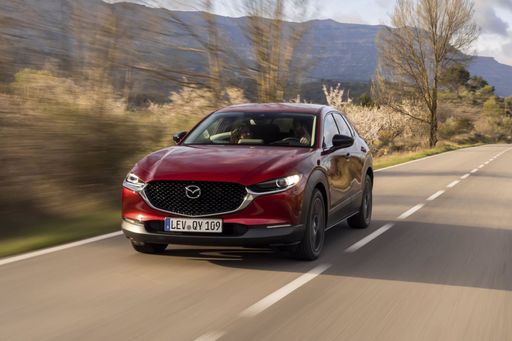
Mazda CX-30

4.6 (3 Reviews)
rate
  • markedly cheaper
  • only slightly more power
  • only slightly more trunk space

All details on performance, efficiency, range and trunk space can be found in the technical comparison below – including user reviews for both models.

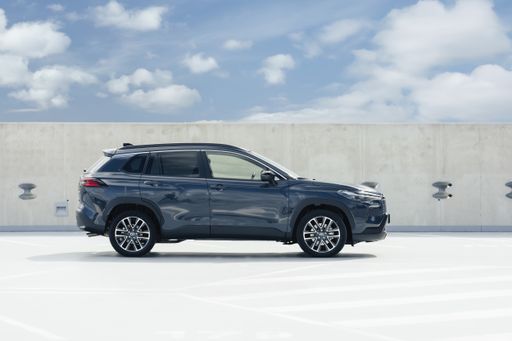
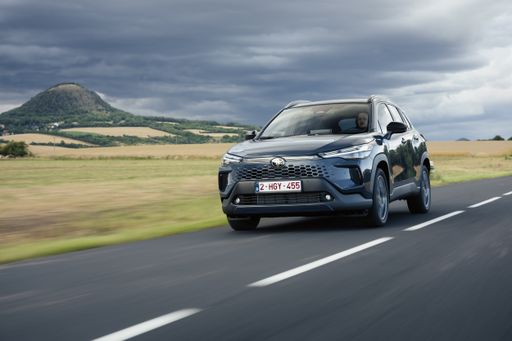
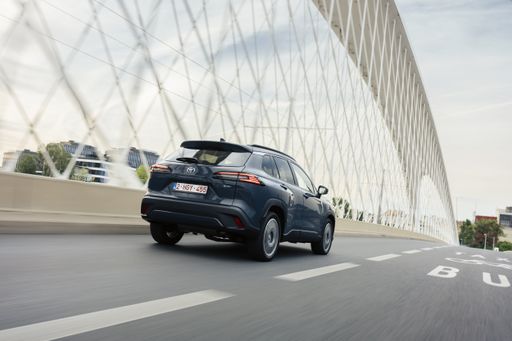
Corolla Cross

A Battle of Versatility: Mazda CX-30 vs. Toyota Corolla Cross

In the rapidly evolving automotive landscape, the compact SUV segment continues to gain traction among consumers seeking practicality without compromising style. The Mazda CX-30 and Toyota Corolla Cross are two prominent contenders in this realm, each boasting their own unique approach to performance, efficiency, and modern features. Let’s delve into the technical specifications and innovative features of both vehicles to determine which offers a better all-around package for discerning buyers.
CX-30

Powertrain and Performance

The Mazda CX-30 is equipped with a petrol MHEV (Mild Hybrid Electric Vehicle) engine that delivers up to 186 horsepower, achieving an impressive torque of 240 Nm. This model offers several options for transmission: a manual gearbox or an automatic gearbox, giving drivers the flexibility to choose their preferred driving experience. With options for both front-wheel drive and all-wheel drive, the CX-30 offers additional versatility, making it suitable for various road conditions.

In comparison, the Toyota Corolla Cross features a full hybrid engine, which varies in output between 140 hp and 197 hp, depending on the variant. The Corolla Cross employs a continuously variable transmission (CVT), ensuring smooth acceleration and adaptability to driving demands. Its front-wheel drive and all-wheel drive configurations further enhance its capability, particularly in diverse driving scenarios.

Corolla Cross

Efficiency and Environmental Impact

When it comes to fuel efficiency, the Mazda CX-30 shows solid performance with consumption figures ranging from 5.7 to 6.6 L/100km, depending on the engine variant. Its CO2 emissions place it in the D and E efficiency classes, with outputs between 129 g/km and 148 g/km.

On the other hand, the Toyota Corolla Cross shines as a leader in eco-friendliness. With an astonishing consumption rate as low as 5.1 L/100km, it ranks higher in efficiency with CO2 emissions ranging from 114 g/km to 121 g/km, placing it in the C and D efficiency classes. This makes the Corolla Cross a compelling option for eco-conscious consumers looking for a sustainable driving experience.

CX-30

Interior Space and Comfort

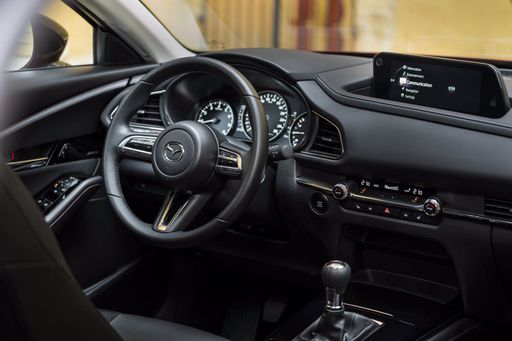
Both vehicles are designed to accommodate five passengers comfortably. The Mazda CX-30 boasts a trunk capacity of 430 liters, offering ample storage for luggage or groceries. Its interior is well-crafted, emphasizing a premium feel with high-quality materials and an intuitive infotainment system.

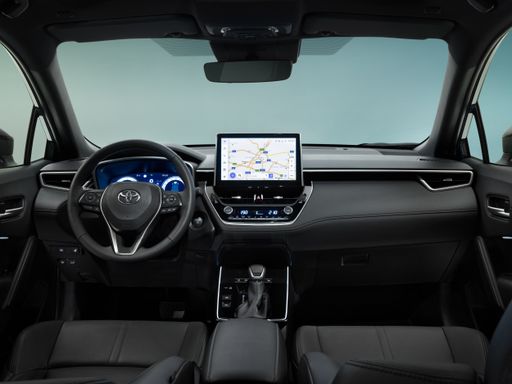
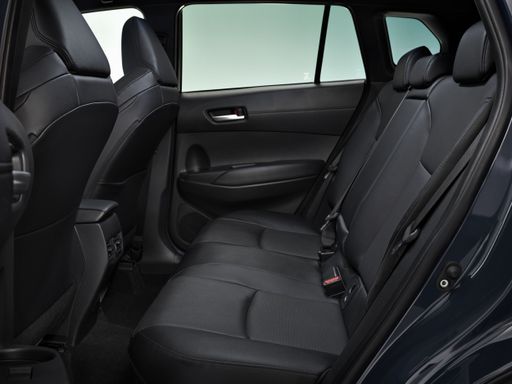
Meanwhile, the Toyota Corolla Cross features a slightly smaller trunk capacity, with options around 414 to 425 liters. However, the Corolla Cross excels in creating a spacious cabin environment that prioritizes passenger comfort, alongside a user-friendly interface that appeals to tech-savvy individuals.

Corolla Cross

Dimensions and Design

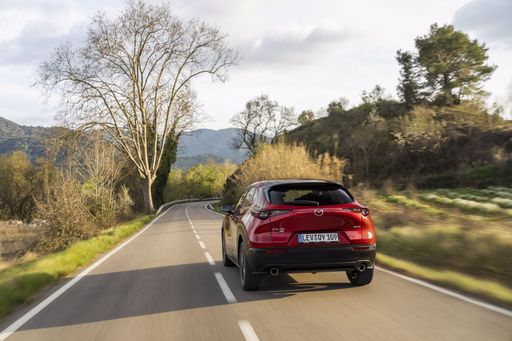
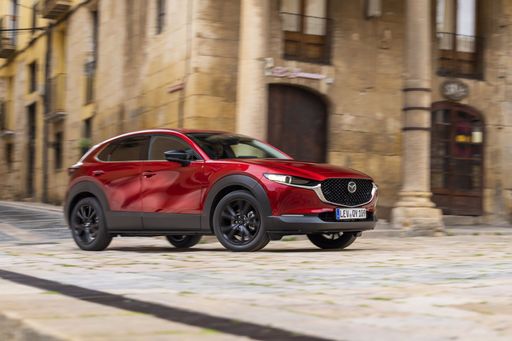
In terms of dimensions, the Mazda CX-30 is 4395 mm long, 1795 mm wide, and 1540 mm tall, granting it a sporty yet elegant silhouette. Its distinctly appealing design language reflects Mazda's Kodo design philosophy, characterized by sleek lines and an aggressive stance.

Conversely, the Toyota Corolla Cross measures 4460 mm in length, 1825 mm in width, and 1620 mm in height. Its robust design exudes confidence with a slightly taller profile, catering to those who prefer a commanding view of the road.

CX-30

Innovative Features

Modern SUVs are expected to showcase an array of technological innovations, and both the Mazda CX-30 and Toyota Corolla Cross deliver. The CX-30 comes equipped with Mazda's latest infotainment system, featuring an 8.8-inch display, smartphone integration, and advanced driver-assist features such as adaptive cruise control and lane-keeping assist.

The Toyota Corolla Cross also impresses with its tech offerings, including a standard touchscreen interface that supports Apple CarPlay and Android Auto. Additionally, its Toyota Safety Sense suite provides a comprehensive array of safety systems, promoting peace of mind on every journey.

Corolla Cross

Conclusion: Which SUV Comes Out on Top?

In the showdown between the Mazda CX-30 and the Toyota Corolla Cross, both vehicles present compelling arguments in the compact SUV marketplace. The CX-30 appeals with its dynamic performance, upscale interior, and striking design, making it a great choice for those valuing driving enjoyment. Meanwhile, the Corolla Cross promises exceptional fuel efficiency, advanced hybrid technology, and a comfortable ride, suiting the eco-conscious consumer. Ultimately, the choice between these two fantastic SUVs will hinge on individual priorities and preferences, ensuring that both models continue to thrive in the competitive automotive landscape.

Here’s where it gets real: The technical differences in detail

Corolla Cross

Costs and Efficiency:

Price and efficiency are often the first things buyers look at. Here it becomes clear which model has the long-term edge – whether at the pump, the plug, or in purchase price.

Mazda CX-30 is markedly cheaper – starting at 25,200 £ , while the Toyota Corolla Cross costs 31,700 £ . That’s a price difference of around 6,471 £.

Fuel consumption also shows a difference: the Toyota Corolla Cross uses 4.9 L/100km and is moderately more efficient than the Mazda CX-30 with 5.7 L/100km. The difference is about 0.8 L/100km.

CX-30

Engine and Performance:

Power, torque and acceleration say a lot about how a car feels on the road. This is where you see which model delivers more driving dynamics.

When it comes to engine power, the Mazda CX-30 offers only slightly more power – delivering 186 HP compared to 180 HP. That’s roughly 6 HP more horsepower.

When accelerating from 0 to 100 km/h, the Toyota Corolla Cross is very slightly quicker – completing the sprint in 7.6 s, while the Mazda CX-30 takes 8.3 s. That’s about 0.7 s quicker.

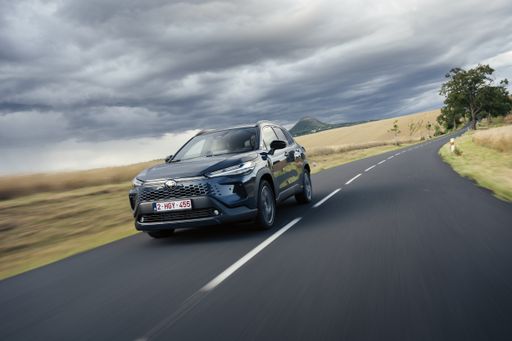
Corolla Cross

Space and Everyday Use:

Cabin size, boot volume and payload all play a role in everyday practicality. Here, comfort and flexibility make the difference.

Both vehicles offer seating for 5 people.

In terms of curb weight, Toyota Corolla Cross is only slightly lighter – 1,380 kg compared to 1,455 kg. The difference is around 75 kg.

Looking at boot space, the Mazda CX-30 offers only slightly more boot space – 430 L compared to 425 L. That’s a difference of about 5 L.

When it comes to payload, the Toyota Corolla Cross carries slightly more – 560 kg compared to 496 kg. That’s a difference of about 64 kg.

Who wins the race in the data check?

The Toyota Corolla Cross is narrowly ahead in the objective data comparison.
This result only shows which model scores more points on paper – not which of the two cars feels right for you.

from £31,700
Corolla Cross

Toyota Corolla Cross

  • Engine Type : Full Hybrid
  • Transmission : Automatic
  • Drive Type : Front-Wheel Drive, All-Wheel Drive
  • Power HP : 140 - 180 HP
  • Consumption L/100km : 4.9 - 5.3 L/100km
Toyota Corolla Cross
Mazda CX-30

Costs and Consumption

View detailed analysis

Engine and Performance

View detailed analysis

Dimensions and Body

View detailed analysis

Toyota Corolla Cross

The Toyota Corolla Cross takes the familiar Corolla recipe, lifts it up and dresses it in SUV clothes — sensible, comfortable and blessedly unflashy. It won’t thrill the enthusiast, but its easy manners, clever packaging and dependable feel make it an ideal everyday car for shoppers who prefer sense over sass.

details

Mazda CX-30

The Mazda CX-30 blends sleek coupe-like lines with the practicality of a compact crossover, feeling more premium than its price tag suggests. It’s a joy to drive for anyone who likes a taut chassis and an interior that treats daily commutes like a small luxury escape.

details
Toyota Corolla Cross
Mazda CX-30

Costs and Consumption

Price
31,700 - 41,900 £
Price
25,200 - 36,800 £
Consumption L/100km
4.9 - 5.3 L/100km
Consumption L/100km
5.7 - 6.6 L/100km
Consumption kWh/100km
-
Consumption kWh/100km
-
Electric Range
-
Electric Range
-
Battery Capacity
-
Battery Capacity
-
co2
112 - 120 g/km
co2
129 - 148 g/km
Fuel tank capacity
-
Fuel tank capacity
-

Dimensions and Body

Body Type
SUV
Body Type
SUV
Seats
5
Seats
5
Doors
-
Doors
-
Curb weight
1,380 - 1,500 kg
Curb weight
1,455 - 1,587 kg
Trunk capacity
414 - 425 L
Trunk capacity
422 - 430 L
Length
-
Length
-
Width
1,825 mm
Width
1,795 mm
Height
-
Height
-
Max trunk capacity
-
Max trunk capacity
-
Payload
515 - 560 kg
Payload
458 - 496 kg

Engine and Performance

Engine Type
Full Hybrid
Engine Type
Petrol MHEV
Transmission
Automatic
Transmission
Manuel, Automatic
Transmission Detail
CVT
Transmission Detail
Manual Gearbox, Automatic Gearbox
Drive Type
Front-Wheel Drive, All-Wheel Drive
Drive Type
Front-Wheel Drive, All-Wheel Drive
Power HP
140 - 180 HP
Power HP
140 - 186 HP
Acceleration 0-100km/h
7.6 - 10 s
Acceleration 0-100km/h
8.3 - 10.3 s
Max Speed
-
Max Speed
-
Torque
-
Torque
238 - 240 Nm
Number of Cylinders
4
Number of Cylinders
4
Power kW
103 - 132 kW
Power kW
103 - 137 kW
Engine capacity
1,798 - 1,987 cm3
Engine capacity
1,998 - 2,488 cm3

General

Model Year
2,025
Model Year
2,025
CO2 Efficiency Class
C, D
CO2 Efficiency Class
D, E
Brand
Toyota
Brand
Mazda
DriveDuel uses data analysis and artificial intelligence to evaluate vehicle data and create content. Content is regularly reviewed and improved. The displayed prices are estimates based on German list prices, adjusted to the respective country’s VAT. Country-specific registration taxes are not included. This information is not legally binding.