@ Toyota Motor Corporation
@ Volkswagen AG / VW Media
VS

Toyota Corolla vs VW Passat – Differences & prices compared

Compare performance, boot capacity, efficiency and price at a glance.
Find out which car is the better choice for you – Toyota Corolla or VW Passat?

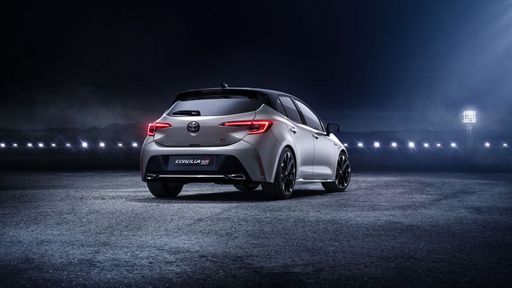
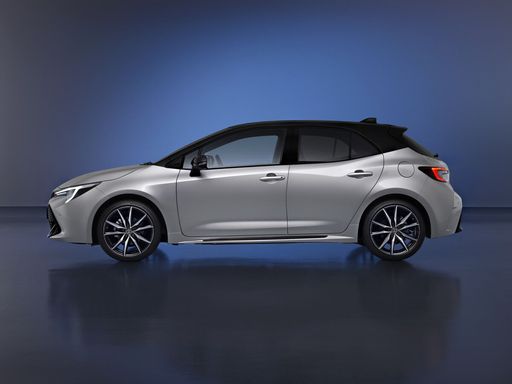
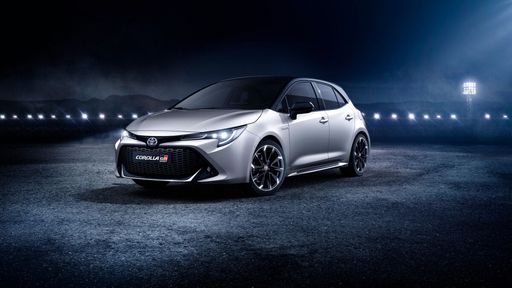
Corolla @ Toyota Motor Corporation

Unveiling the Titans: Toyota Corolla vs. VW Passat

In a world where diverse driving experiences rule, the Toyota Corolla and VW Passat step into the spotlight as stunning rivals. Both marques exude distinct character and boast a plethora of modern innovations. Whether you're considering a compact hatchback or a polished wagon, understanding their strengths can chart a decisive course for your next vehicle choice. Let's delve into an exploration of the Toyota Corolla and VW Passat, assessing their technical prowess, performance attributes, and groundbreaking innovations.
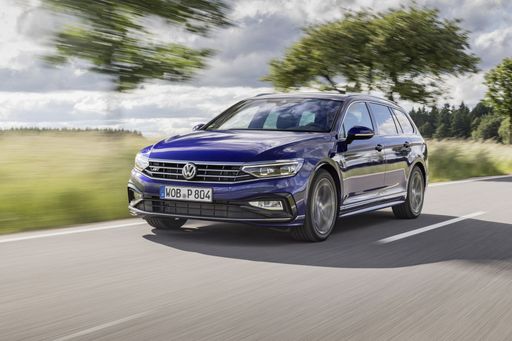
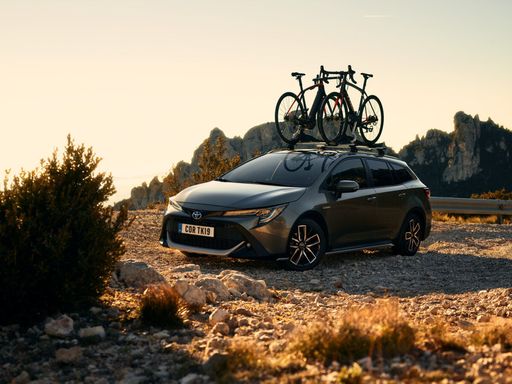
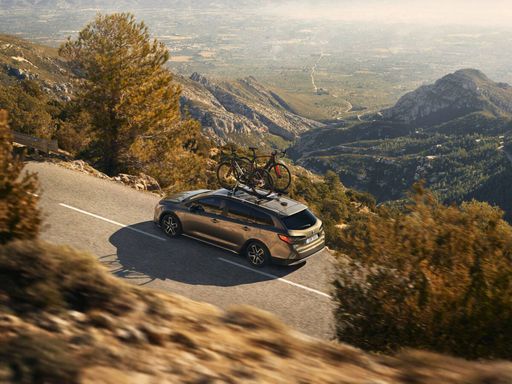
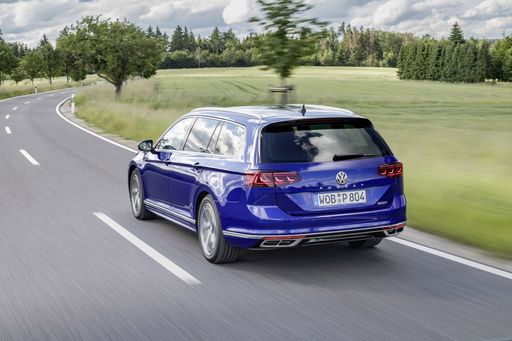
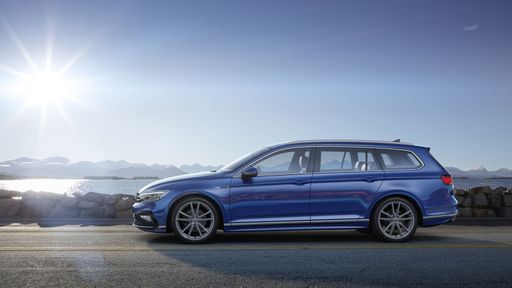
Passat @ Volkswagen AG / VW Media

Performance and Engine Varieties

The Toyota Corolla embraces the future with its full hybrid engine, promising both efficiency and spirited driving. Available with two power outputs, 140 HP and 196 HP, it navigates urban landscapes effortlessly. Fitted with a CVT automatic transmission, the Corolla delivers its power smoothly to the front wheels. In terms of performance, its acceleration ranges from 9.2 to 7.5 seconds to reach 100 km/h, emphasizing its balance between efficiency and energy.

Contrastingly, the VW Passat displays an array of engine options, appealing to both hybrid enthusiasts and traditional petrol and diesel purists. Its lineup includes a plug-in hybrid option delivering 204 HP and capable of 0.4 L/100km combined consumption with an electric range up to 126 km, leading the charge with efficiency. For petrol lovers, outputs soar up to 272 HP in top variants, cradling a more exhilarating drive with acceleration as quick as 5.8 seconds to 100 km/h.

Corolla @ Toyota Motor Corporation

Efficiency and Environmental Considerations

In terms of eco-friendliness, the Toyota Corolla demonstrates impressive figures with a low CO2 output of just 100 g/km, placing it in class C for CO2 efficiency. Its fuel consumption fluctuates between 4.4 and 4.6 L/100km, proving advantageous for environmentally-conscious drivers.

Meanwhile, the VW Passat balances efficiency with power. The plug-in hybrid model is particularly notable with a near-zero CO2 emission rate when operating electrically, while other variants span a broader range of efficiency classes. Its consumption varies from 0.4 L/100km in plug-in form up to 8.1 L/100km, granting flexibility across driving needs.

Passat @ Volkswagen AG / VW Media

Space and Comfort

The Corolla offers compact charm, with measurements including a length of 4370 mm and trunk capacity between 313 and 361 liters, ideal for nimble city driving. Despite its size, it comfortably seats five passengers and ensures a smooth, agile experience.

On the other hand, the Passat thrives on its spacious and accommodating design. At 4917 mm in length and with a trunk capacity reaching up to 690 liters in wagon form, it promises a comfortable journey for families and adventurers. The seating and ample cargo space make it the quintessential choice for those seeking roominess without sacrificing style or performance.

Corolla @ Toyota Motor Corporation

Innovative Features and Technologies

Both vehicles are equipped with a suite of innovative features, enhancing the driving experience. The Corolla boasts next-generation hybrid synergy drive technology, offering quiet operations and enhanced fuel savings. Safety innovations, like a pre-collision system and lane departure alerts, are standard, ensuring peace of mind on every journey.

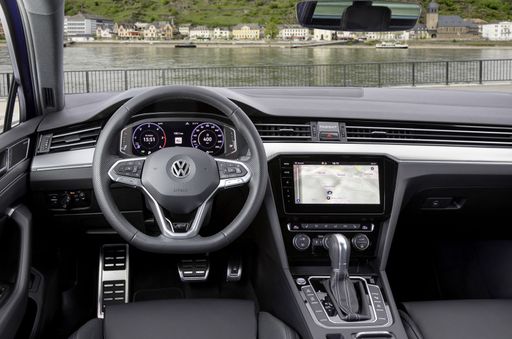
The Passat champions advanced connectivity and driver assistance systems. With its dual-clutch automatic transmission and all-wheel drive availability, it provides a harmonious blend of control and power. The variety of drivetrain options, along with tech-rich interfaces such as Apple CarPlay and Android Auto, positions it as a leader in intelligent design.

Passat @ Volkswagen AG / VW Media

Conclusion: Choosing Your Ideal Travel Companion

The decision between the Toyota Corolla and the VW Passat resides in personal priorities. The Corolla caters to efficiency-focused drivers, perfect for those prioritizing eco-friendliness and economical urban commuting. Meanwhile, the Passat wows with versatility, space, and performance variety, making it an excellent choice for those who value flexibility and luxurious comfort on long and diverse journeys.

As two titans of automotive engineering, the Corolla and Passat remind us that the right vehicle can transform not just a drive, but your relationship to the road itself.

Here’s where it gets real: The technical differences in detail

Corolla @ Toyota Motor Corporation

Costs and Efficiency:

When it comes to price and running costs, the biggest differences usually appear. This is often where you see which car fits your budget better in the long run.

Toyota Corolla has a evident advantage in terms of price – it starts at 28600 £, while the VW Passat costs 35700 £. That’s a price difference of around 7157 £.

Fuel consumption also shows a difference: VW Passat manages with 1.20 L and is therefore decisively more efficient than the Toyota Corolla with 4.40 L. The difference is about 3.20 L per 100 km.

Passat @ Volkswagen AG / VW Media

Engine and Performance:

Under the bonnet, it becomes clear which model is tuned for sportiness and which one takes the lead when you hit the accelerator.

When it comes to engine power, the VW Passat has a distinct edge – offering 272 HP compared to 178 HP. That’s roughly 94 HP more horsepower.

In acceleration from 0 to 100 km/h, the VW Passat is noticeable quicker – completing the sprint in 5.80 s, while the Toyota Corolla takes 7.50 s. That’s about 1.70 s faster.

In terms of top speed, the VW Passat performs clearly perceptible better – reaching 250 km/h, while the Toyota Corolla tops out at 180 km/h. The difference is around 70 km/h.

Corolla @ Toyota Motor Corporation

Space and Everyday Use:

Cabin size, boot volume and payload all play a role in everyday practicality. Here, comfort and flexibility make the difference.

Both vehicles offer seating for 5 people.

In curb weight, Toyota Corolla is slightly lighter – 1420 kg compared to 1573 kg. The difference is around 153 kg.

In terms of boot space, the VW Passat offers clearly more room – 690 L compared to 361 L. That’s a difference of about 329 L.

In maximum load capacity, the VW Passat performs significantly better – up to 1920 L, which is about 868 L more than the Toyota Corolla.

When it comes to payload, VW Passat evident takes the win – 577 kg compared to 450 kg. That’s a difference of about 127 kg.

Who wins the race?

The VW Passat proves to be dominates this comparison and therefore becomes our DriveDuel Champion!
VW Passat is the better all-rounder in this comparison.

from about £35,700
Passat @ Volkswagen AG / VW Media

VW Passat

  • Engine Type : Petrol, Petrol MHEV, Diesel, Plugin Hybrid
  • Transmission : Automatic
  • Drive Type : All-Wheel Drive, Front-Wheel Drive
  • Power HP : 122 - 272 HP
  • Consumption L/100km : 1.2 - 8 L
  • Electric Range : 124 - 135 km

Toyota Corolla

5 (1)
rate

The Toyota Corolla remains the steady, no-nonsense compact that puts reliability and low running costs at the top of your shopping list, with a comfortable, well-built interior that won't embarrass you at the supermarket. It won't set your pulse racing, but it's an honest, easy-to-live-with car that makes smart sense for buyers who want dependability and sensible value with a dash of modern tech.

details

VW Passat

The VW Passat is the grown-up family car that gets the basics absolutely right — roomy, comfortable and built to handle weekday commutes and weekend getaways without fuss. It won't set your pulse racing, but its calm composure and sensible packaging make it boring in the best possible way: a dependable, no‑drama choice for buyers who value practicality over flash.

details
Toyota Corolla
VW Passat
Corolla @ Toyota Motor Corporation
Passat @ Volkswagen AG / VW Media

Costs and Consumption

Price
28600 - 34900 £
Price
35700 - 58500 £
Consumption L/100km
4.40 L
Consumption L/100km
1.2 - 8 L
Consumption kWh/100km
-
Consumption kWh/100km
-
Electric Range
-
Electric Range
124 - 135 km
Battery Capacity
-
Battery Capacity
19.70 kWh
co2
100 g/km
co2
28 - 181 g/km
Fuel tank capacity
43 L
Fuel tank capacity
45 - 66 L

Dimensions and Body

Body Type
Hatchback
Body Type
Estate
Seats
5
Seats
5
Doors
5
Doors
5
Curb weight
1420 - 1460 kg
Curb weight
1573 - 1858 kg
Trunk capacity
313 - 361 L
Trunk capacity
510 - 690 L
Length
4370 mm
Length
4917 mm
Width
1790 mm
Width
1849 mm
Height
1435 mm
Height
1521 mm
Max trunk capacity
1004 - 1052 L
Max trunk capacity
1770 - 1920 L
Payload
400 - 450 kg
Payload
501 - 577 kg

Engine and Performance

Engine Type
Full Hybrid
Engine Type
Petrol, Petrol MHEV, Diesel, Plugin Hybrid
Transmission
Automatic
Transmission
Automatic
Transmission Detail
CVT
Transmission Detail
Dual-Clutch Automatic
Drive Type
Front-Wheel Drive
Drive Type
All-Wheel Drive, Front-Wheel Drive
Power HP
140 - 178 HP
Power HP
122 - 272 HP
Acceleration 0-100km/h
7.5 - 9.2 s
Acceleration 0-100km/h
5.8 - 10.7 s
Max Speed
180 km/h
Max Speed
212 - 250 km/h
Torque
-
Torque
250 - 400 Nm
Number of Cylinders
4
Number of Cylinders
4
Power kW
103 - 131 kW
Power kW
90 - 200 kW
Engine capacity
1798 - 1987 cm3
Engine capacity
1498 - 1984 cm3

General

Model Year
2025
Model Year
2024 - 2025
CO2 Efficiency Class
C
CO2 Efficiency Class
G, D, E, B
Brand
Toyota
Brand
VW
Is the Toyota Corolla offered with different drivetrains?

The Toyota Corolla is available as Front-Wheel Drive.

The prices and data displayed are estimates based on German list prices and may vary by country. This information is not legally binding.