VS

Toyota RAV4 vs BMW X1 comparison

Compare performance (306 HP vs 326 HP), boot space and price (35,100 £ vs 38,200 £ ) at a glance. Find out which car is the better choice for you – Toyota RAV4 or BMW X1?

Toyota RAV4 vs BMW X1: Key differences

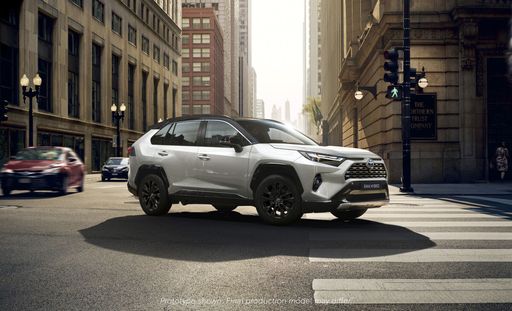
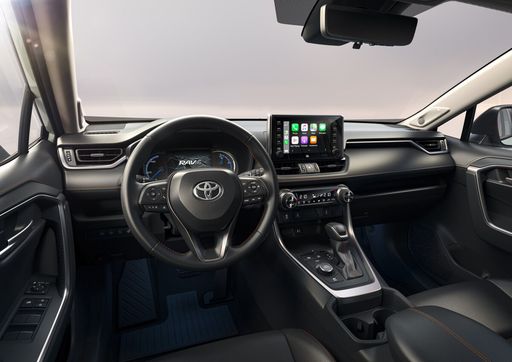
Toyota RAV4

4.8 (6 Reviews)
rate
  • very slightly cheaper
  • considerably more efficient
  • very slightly more trunk space

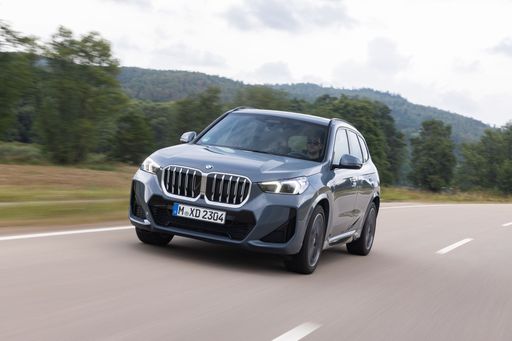
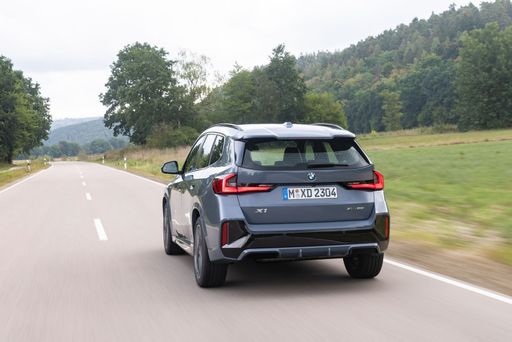
BMW X1

4.2 (6 Reviews)
rate
  • marginally more power
  • barely more electric range
  • moderately quicker 0–100 km/h
  • a bit lighter

All details on performance, efficiency, range and trunk space can be found in the technical comparison below – including user reviews for both models.

RAV4

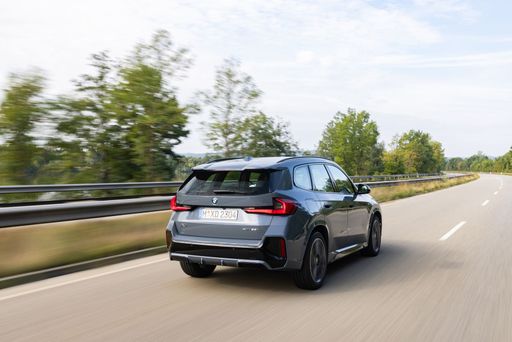
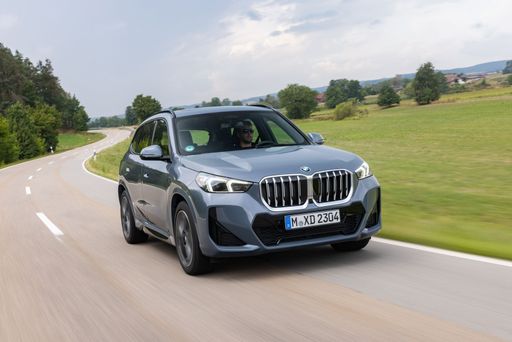
When it comes to the compact SUV segment, both the BMW X1 and the Toyota RAV4 have carved out their niches, attracting buyers with their unique offerings. In this article, we will delve into a detailed comparison of these two popular models, examining their technical specifications, performance metrics, and innovative features.
X1

Engine Options and Performance

The BMW X1 boasts a diverse range of engines, catering to different preferences and performance needs. With options including petrol, diesel, diesel mild hybrid (MHEV), and even plug-in hybrids, the X1 provides a variety of power outputs ranging from 136 to 326 horsepower. The thrilling acceleration capabilities are notable, as it can go from 0 to 100 km/h in as little as 5.4 seconds for the high-performance variant.

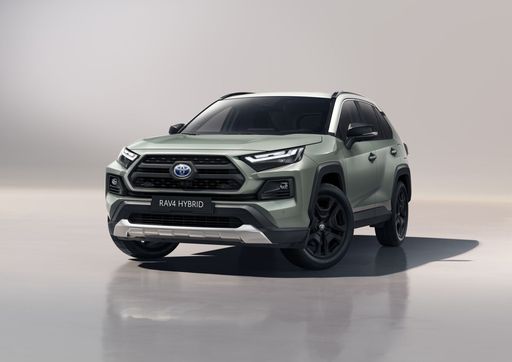
On the other hand, the Toyota RAV4 offers a more streamlined choice of engines, primarily focusing on hybrid technology. RAV4's full-hybrid and plug-in hybrid configurations provide power outputs between 218 and 306 horsepower. The RAV4's performance is commendable, with the quickest variant achieving 0 to 100 km/h in just 6 seconds, making it a sporty contender in its class.

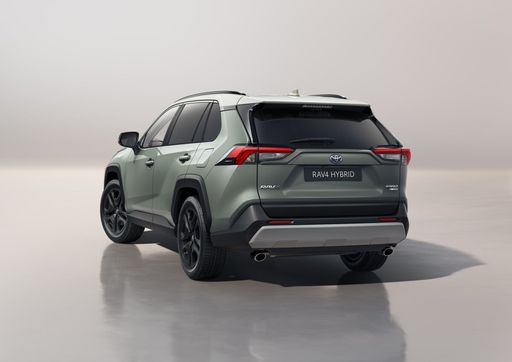
RAV4

Fuel Efficiency and Emissions

When comparing fuel efficiency, both models have their strengths. The BMW X1 has impressive consumption figures, with the most efficient variant recording numbers as low as 4.6 L/100 km. The plug-in hybrid option offers an electric range of 83 km, providing a sustainable driving option for urban environments.

The RAV4 is also competitive in terms of fuel consumption, particularly with its hybrid configurations that can achieve figures as low as 5.6 L/100 km. Its plug-in hybrid version achieves an exceptional electric range of 75 km, further emphasizing its eco-friendly credentials. Emissions-wise, the RAV4 has a slight edge, with CO2 figures reaching as low as 126 g/km compared to the X1's 120 g/km for some variants.

X1

Interior Space and Comfort

In the realm of interior space, the Toyota RAV4 leads with a trunk capacity of 580 liters, making it an excellent choice for families or anyone requiring ample cargo space. The interior dimensions are well-utilized, providing comfort for five passengers with generous leg and headroom.

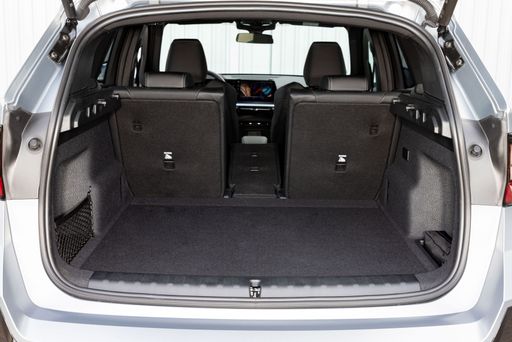
The BMW X1, while slightly more compact, still stands out with a trunk capacity of up to 540 liters. Its interior design reflects BMW's commitment to luxury, with high-quality materials and premium finishes that add to the driving experience. Both vehicles comfortably seat five passengers, but the premium feel of the BMW often sways buyers who prioritize luxury alongside practicality.

RAV4

Technological Innovations

BMW has integrated advanced technology in the X1, featuring the latest iDrive system with a comprehensive infotainment interface that includes navigation, smartphone connectivity, and driver assistance systems. The cabin benefits from high-resolution displays and optional augmented reality features, enhancing the driving experience significantly.

The Toyota RAV4 is well-equipped with its suite of safety and automation technologies, including the Toyota Safety Sense package, which offers adaptive cruise control, lane departure alerts, and automatic emergency braking. The infotainment system is intuitive and straightforward, ensuring a user-friendly experience with essential connectivity options.

X1

Drive and Handling

When it comes to driving dynamics, the BMW X1 delivers a sportier experience, attributed to its precise handling and the availability of all-wheel drive across several variants. It feels more engaged on winding roads and offers an enjoyable ride quality.

Conversely, the RAV4 tends to prioritize comfort over sportiness, providing a smooth ride that is particularly well-suited for family outings and daily commutes. Its all-wheel-drive system enhances its capability in various terrains, making it a versatile option for adventurous drivers.

RAV4

Conclusion: Which SUV Reigns Supreme?

Both the BMW X1 and the Toyota RAV4 present appealing choices for SUV enthusiasts, but the best option ultimately depends on individual preferences. The BMW X1 excels in luxury, performance, and driving dynamics, making it an ideal choice for those seeking an upscale and thrilling experience. In contrast, the Toyota RAV4 impresses with its practicality, fuel efficiency, and comprehensive safety features, appealing to families and environmentally-conscious buyers.

In the end, whether you favor the sporty allure of the X1 or the family-friendly conveniences of the RAV4, both SUVs promise a rewarding ownership experience that meets the diverse needs of today’s drivers.

Here’s where it gets real: The technical differences in detail

RAV4

Costs and Efficiency:

Price and efficiency are often the first things buyers look at. Here it becomes clear which model has the long-term edge – whether at the pump, the plug, or in purchase price.

Toyota RAV4 is very slightly cheaper – starting at 35,100 £ , while the BMW X1 costs 38,200 £ . That’s a price difference of around 3,094 £.

Fuel consumption also shows a difference: the Toyota RAV4 uses 1 L/100km and is considerably more efficient than the BMW X1 with 2.5 L/100km. The difference is about 1.5 L/100km.

As for electric range, the BMW X1 offers barely more range – reaching up to 81 km, about 6 km more than the Toyota RAV4.

X1

Engine and Performance:

Under the bonnet, it becomes clear which model is tuned for sportiness and which one takes the lead when you hit the accelerator.

When it comes to engine power, the BMW X1 offers marginally more power – delivering 326 HP compared to 306 HP. That’s roughly 20 HP more horsepower.

When accelerating from 0 to 100 km/h, the BMW X1 is moderately quicker – completing the sprint in 5.4 s, while the Toyota RAV4 takes 6 s. That’s about 0.6 s quicker.

Looking at top speed, the BMW X1 is noticeably faster – reaching 233 km/h, while the Toyota RAV4 tops out at 180 km/h. The difference is around 53 km/h.

RAV4

Space and Everyday Use:

Cabin size, boot volume and payload all play a role in everyday practicality. Here, comfort and flexibility make the difference.

Both vehicles offer seating for 5 people.

In terms of curb weight, BMW X1 is a bit lighter – 1,575 kg compared to 1,745 kg. The difference is around 170 kg.

Looking at boot space, the Toyota RAV4 offers very slightly more boot space – 580 L compared to 540 L. That’s a difference of about 40 L.

For maximum load capacity, the Toyota RAV4 offers very slightly more capacity – up to 1,690 L, about 145 L more than the BMW X1.

When it comes to payload, the Toyota RAV4 carries somewhat more – 600 kg compared to 500 kg. That’s a difference of about 100 kg.

Who wins the race in the data check?

The Toyota RAV4 is far ahead overall in the objective data comparison.
This result only shows which model scores more points on paper – not which of the two cars feels right for you.

from £35,100
RAV4

Toyota RAV4

  • Engine Type : Full Hybrid, Plugin Hybrid
  • Transmission : Automatic
  • Drive Type : Front-Wheel Drive, All-Wheel Drive
  • Power HP : 218 - 306 HP
  • Consumption L/100km : 1 - 5.6 L/100km
  • Electric Range : 75 km
Toyota RAV4
BMW X1

Costs and Consumption

View detailed analysis

Engine and Performance

View detailed analysis

Dimensions and Body

View detailed analysis

Toyota RAV4

The Toyota RAV4 feels like a sensible friend on the road, marrying dependable practicality with a dash of SUV personality that keeps daily driving from turning dull. Comfortable and easy to live with, it looks tough without shouting and quietly gets the job done — a sensible pick for buyers who want versatility without drama.

details

BMW X1

The BMW X1 brings a premium feel to compact crossover life, wrapping practical space and agile handling into a tidy, upscale package. It’s ideal for buyers who want BMW driving dynamics without the bulk, offering everyday comfort and a few clever tricks to keep the commute interesting.

details
Toyota RAV4
BMW X1

Costs and Consumption

Price
35,100 - 55,700 £
Price
38,200 - 55,500 £
Consumption L/100km
1 - 5.6 L/100km
Consumption L/100km
2.5 - 7.7 L/100km
Consumption kWh/100km
-
Consumption kWh/100km
-
Electric Range
75 km
Electric Range
81 km
Battery Capacity
-
Battery Capacity
14.2 kWh
co2
22 - 128 g/km
co2
57 - 175 g/km
Fuel tank capacity
55 L
Fuel tank capacity
47 - 54 L

Dimensions and Body

Body Type
SUV
Body Type
SUV
Seats
5
Seats
5
Doors
5
Doors
5
Curb weight
1,745 - 1,910 kg
Curb weight
1,575 - 1,935 kg
Trunk capacity
520 - 580 L
Trunk capacity
490 - 540 L
Length
4,600 mm
Length
4,500 mm
Width
1,855 mm
Width
1,845 mm
Height
1,685 mm
Height
1,630 - 1,642 mm
Max trunk capacity
1,604 - 1,690 L
Max trunk capacity
1,495 - 1,545 L
Payload
390 - 600 kg
Payload
490 - 500 kg

Engine and Performance

Engine Type
Full Hybrid, Plugin Hybrid
Engine Type
Diesel MHEV, Petrol MHEV, Petrol, Diesel, Plugin Hybrid
Transmission
Automatic
Transmission
Automatic
Transmission Detail
CVT
Transmission Detail
Dual-Clutch Automatic
Drive Type
Front-Wheel Drive, All-Wheel Drive
Drive Type
Front-Wheel Drive, All-Wheel Drive
Power HP
218 - 306 HP
Power HP
136 - 326 HP
Acceleration 0-100km/h
6 - 8.4 s
Acceleration 0-100km/h
5.4 - 9.2 s
Max Speed
180 km/h
Max Speed
190 - 233 km/h
Torque
-
Torque
230 - 477 Nm
Number of Cylinders
4
Number of Cylinders
3 - 4
Power kW
160 - 225 kW
Power kW
100 - 240 kW
Engine capacity
2,487 cm3
Engine capacity
1,499 - 1,998 cm3

General

Model Year
2,024 - 2,025
Model Year
2,024 - 2,025
CO2 Efficiency Class
D, B
CO2 Efficiency Class
D, E, F, B
Brand
Toyota
Brand
BMW
DriveDuel uses data analysis and artificial intelligence to evaluate vehicle data and create content. Content is regularly reviewed and improved. The displayed prices are estimates based on German list prices, adjusted to the respective country’s VAT. Country-specific registration taxes are not included. This information is not legally binding.