VS

Toyota RAV4 vs BYD Seal U comparison

Compare performance (306 HP vs 324 HP), boot space and price (35,100 £ vs 34,300 £ ) at a glance. Find out which car is the better choice for you – Toyota RAV4 or BYD Seal U?

Toyota RAV4 vs BYD Seal U: Key differences

Toyota RAV4

4.8 (6 Reviews)
rate
  • a bit lighter
  • very slightly more trunk space

BYD Seal U

4.1 (7 Reviews)
rate
  • only slightly cheaper
  • only slightly more power
  • significantly more electric range
  • very slightly quicker 0–100 km/h

All details on performance, efficiency, range and trunk space can be found in the technical comparison below – including user reviews for both models.

RAV4

Head-to-head: BYD Seal U vs Toyota RAV4 — coupe-like EV meets compact SUV

The BYD Seal U and the Toyota RAV4 go head-to-head in this direct comparison of a sleek electric fastback and a practical compact SUV, so you know exactly what’s being measured. This comparison lays out the real-world differences you’ll notice every day — from cabin feel and driving character to how they fit into your life. We’ll talk perceived comfort, usability, style, and where each car earns its keep rather than burying you in spec lists. If you’re choosing between the athletic, tech-forward Seal U and the familiar, capable RAV4, this guide frames the trade-offs in buyer language. Read on for how these two very different approaches translate to everyday ownership.
Seal U

Character clash: sleek assertiveness vs familiar utility

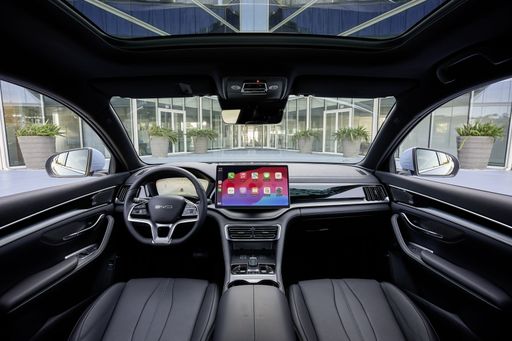
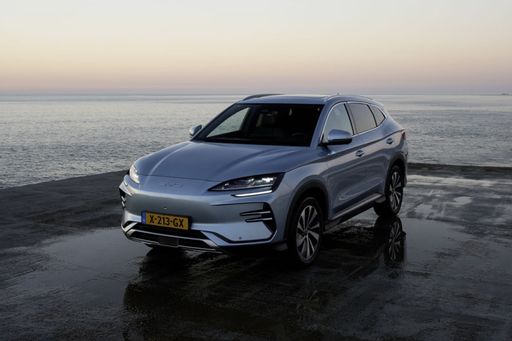
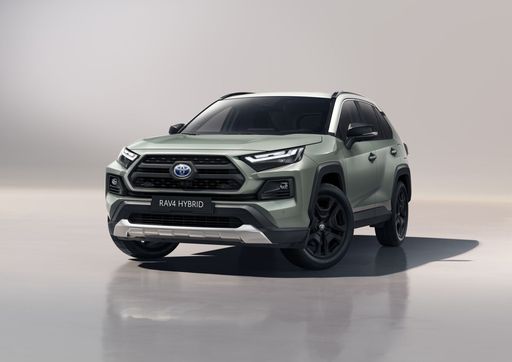
The BYD Seal U arrives like a statement — low-slung, tech-forward and tuned for a taut, engaging feel — while the Toyota RAV4 plays the dependable, do-it-all role with taller ride height and a more utilitarian stance. That difference isn’t just skin-deep: the Seal U codifies a modern, premium-coupe attitude, whereas the RAV4 signals practicality and all-weather confidence. Expect the Seal U to draw glances and conversations; expect the RAV4 to blend into family drives, weekend gear hauls and mixed road conditions. Both have clear personalities, so this is as much about self-expression as it is about transport.

RAV4

How they behave in the real world: daily commute, school runs and motorway miles

Put the BYD Seal U on a long motorway stretch and you’ll notice the calm, composed cruise and a cabin that feels more like a modern lounge; around town it’s nimble but asks you to live with a lower driving position. The Toyota RAV4 makes city life easier with higher seating, simpler ergonomics and a sense that it can carry more without fuss — ideal for school runs and bulky shopping. For long-distance trips the Seal U offers a refined highway demeanour and tech conveniences, while the RAV4 trades a touch of refinement for all-weather comfort and sensible packaging. Both are usable daily, but they reward different habits: efficiency and flair versus utility and reassurance.

Seal U

Buying it for pride, point-of-view or plain pragmatism?

If you’re weighing the BYD Seal U you’re likely attracted to modernity — the look, the tech and the idea of driving something that feels forward-looking, not conservative. Choosing the Toyota RAV4 often comes from a different logic: proven versatility, tidy ergonomics and a sense that it will handle family life without surprises. The Seal U gives you conversational design and a technology-first narrative to justify the purchase, while the RAV4 sells tranquillity, space and a reliable, unfussy ownership story. Both answers are valid; it simply depends whether you want to be seen as ahead of the curve or comfortably prepared for anything.

RAV4

Who should seriously consider the BYD Seal U?

The BYD Seal U suits drivers who put a high value on tech, design and a modern driving experience — think commuters who enjoy a lively, refined cabin and image-conscious urbanites who love cutting-edge equipment. If you want something that feels premium and enjoyable to pilot without being a traditional SUV, the Seal U rewards that choice with presence and a taut driving character. It’s less about hauling awkward loads and more about how the car makes you feel on the road and at the kerb. For buyers prioritising innovation and style over sheer utility, the Seal U is a strong, compelling pick.

Seal U

Who should lean towards the Toyota RAV4 (and when the BYD Seal U still tempts)?

The Toyota RAV4 is the go-to for buyers who need everyday practicality: comfortable seating height, easy ingress and room for family gear — the sort of car that makes the school run and weekend trips straightforward. If you prize a relaxed ride and predictability above headline-grabbing design, the RAV4 delivers reassurance and low-drama usability that many buyers will prefer. That said, if the shiny tech and sharper manners of the BYD Seal U appeal, you’ll trade a bit of utility for character and contemporary flair. Dive into the detailed numbers below to see how those trade-offs play out on paper and decide which compromise suits your life best.

Here’s where it gets real: The technical differences in detail

RAV4

Costs and Efficiency:

Price and efficiency are key factors when choosing a car – and this is often where the real differences emerge.

BYD Seal U is only slightly cheaper – starting at 34,300 £ , while the Toyota RAV4 costs 35,100 £ . That’s a price difference of around 857 £.

As for electric range, the BYD Seal U offers significantly more range – reaching up to 500 km, about 425 km more than the Toyota RAV4.

Seal U

Engine and Performance:

Under the bonnet, it becomes clear which model is tuned for sportiness and which one takes the lead when you hit the accelerator.

When it comes to engine power, the BYD Seal U offers only slightly more power – delivering 324 HP compared to 306 HP. That’s roughly 18 HP more horsepower.

When accelerating from 0 to 100 km/h, the BYD Seal U is very slightly quicker – completing the sprint in 5.9 s, while the Toyota RAV4 takes 6 s. That’s about 0.1 s quicker.

Looking at top speed, the Toyota RAV4 is very slightly faster – reaching 180 km/h, while the BYD Seal U tops out at 175 km/h. The difference is around 5 km/h.

RAV4

Space and Everyday Use:

Cabin size, boot volume and payload all play a role in everyday practicality. Here, comfort and flexibility make the difference.

Both vehicles offer seating for 5 people.

In terms of curb weight, Toyota RAV4 is a bit lighter – 1,745 kg compared to 1,940 kg. The difference is around 195 kg.

Looking at boot space, the Toyota RAV4 offers very slightly more boot space – 580 L compared to 552 L. That’s a difference of about 28 L.

For maximum load capacity, the Toyota RAV4 offers moderately more capacity – up to 1,690 L, about 250 L more than the BYD Seal U.

When it comes to payload, the Toyota RAV4 carries markedly more – 600 kg compared to 410 kg. That’s a difference of about 190 kg.

Who wins the race in the data check?

The BYD Seal U is far ahead overall in the objective data comparison.
This result only shows which model scores more points on paper – not which of the two cars feels right for you.

from £34,300
Seal U

BYD Seal U

  • Engine Type : Electric, Plugin Hybrid
  • Transmission : Automatic
  • Drive Type : Front-Wheel Drive, All-Wheel Drive
  • Power HP : 218 - 324 HP
  • Consumption kWh/100km : 12.1 - 20.5 kWh/100km
  • Electric Range : 70 - 500 km
Toyota RAV4
BYD Seal U

Costs and Consumption

View detailed analysis

Engine and Performance

View detailed analysis

Dimensions and Body

View detailed analysis

Toyota RAV4

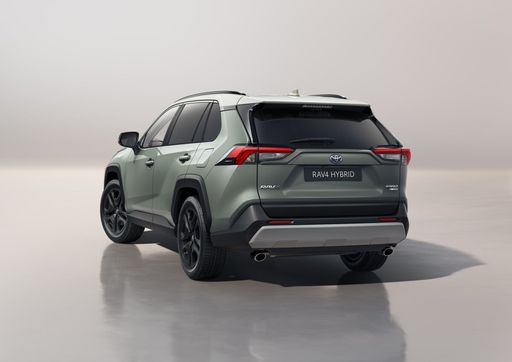
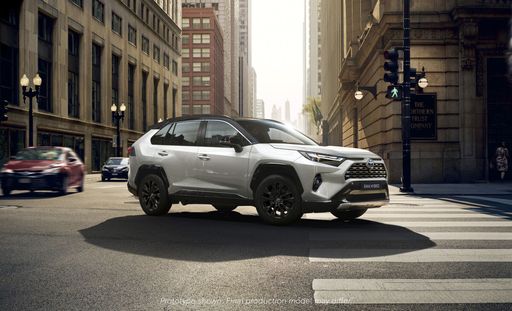
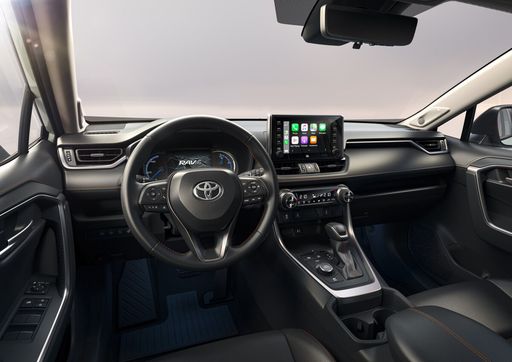
The Toyota RAV4 feels like a sensible friend on the road, marrying dependable practicality with a dash of SUV personality that keeps daily driving from turning dull. Comfortable and easy to live with, it looks tough without shouting and quietly gets the job done — a sensible pick for buyers who want versatility without drama.

details

BYD Seal U

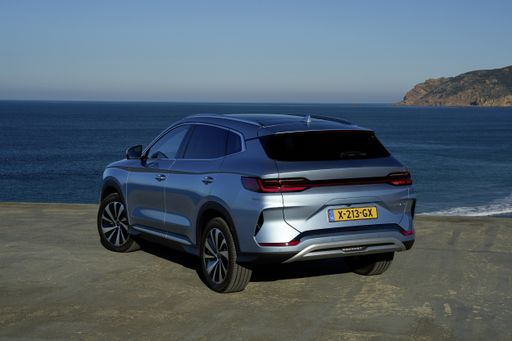
The BYD Seal U pairs a sleek fastback silhouette with a surprisingly roomy, tech-rich cabin, giving electric chic without the showroom pretension. It's a smart pick for buyers after confident handling, sensible practicality and standout value — all wrapped up with a cheeky grin when you put your foot down.

details
Toyota RAV4
BYD Seal U

Costs and Consumption

Price
35,100 - 55,700 £
Price
34,300 - 39,800 £
Consumption L/100km
1 - 5.6 L/100km
Consumption L/100km
-
Consumption kWh/100km
-
Consumption kWh/100km
12.1 - 20.5 kWh/100km
Electric Range
75 km
Electric Range
70 - 500 km
Battery Capacity
-
Battery Capacity
-
co2
22 - 128 g/km
co2
0 - 71 g/km
Fuel tank capacity
55 L
Fuel tank capacity
-

Dimensions and Body

Body Type
SUV
Body Type
SUV
Seats
5
Seats
5
Doors
5
Doors
5
Curb weight
1,745 - 1,910 kg
Curb weight
1,940 - 2,147 kg
Trunk capacity
520 - 580 L
Trunk capacity
425 - 552 L
Length
4,600 mm
Length
4,785 mm
Width
1,855 mm
Width
1,890 mm
Height
1,685 mm
Height
1,668 mm
Max trunk capacity
1,604 - 1,690 L
Max trunk capacity
1,440 L
Payload
390 - 600 kg
Payload
410 kg

Engine and Performance

Engine Type
Full Hybrid, Plugin Hybrid
Engine Type
Electric, Plugin Hybrid
Transmission
Automatic
Transmission
Automatic
Transmission Detail
CVT
Transmission Detail
Reduction Gearbox, Automatic Gearbox
Drive Type
Front-Wheel Drive, All-Wheel Drive
Drive Type
Front-Wheel Drive, All-Wheel Drive
Power HP
218 - 306 HP
Power HP
218 - 324 HP
Acceleration 0-100km/h
6 - 8.4 s
Acceleration 0-100km/h
5.9 - 9.6 s
Max Speed
180 km/h
Max Speed
175 km/h
Torque
-
Torque
300 - 550 Nm
Number of Cylinders
4
Number of Cylinders
4
Power kW
160 - 225 kW
Power kW
160 - 238 kW
Engine capacity
2,487 cm3
Engine capacity
1,497 - 1,498 cm3

General

Model Year
2,024 - 2,025
Model Year
2,024 - 2,026
CO2 Efficiency Class
D, B
CO2 Efficiency Class
A, B
Brand
Toyota
Brand
BYD
DriveDuel uses data analysis and artificial intelligence to evaluate vehicle data and create content. Content is regularly reviewed and improved. The displayed prices are estimates based on German list prices, adjusted to the respective country’s VAT. Country-specific registration taxes are not included. This information is not legally binding.