VS

Toyota RAV4 vs Nissan Qashqai comparison

Compare performance (306 HP vs 205 HP), boot space and price (35,100 £ vs 29,600 £ ) at a glance. Find out which car is the better choice for you – Toyota RAV4 or Nissan Qashqai?

Toyota RAV4 vs Nissan Qashqai: Key differences

Toyota RAV4

4.8 (6 Reviews)
rate
  • markedly more power
  • substantially more efficient
  • clearly quicker 0–100 km/h
  • moderately more trunk space

Nissan Qashqai

4.9 (3 Reviews)
rate
  • slightly cheaper
  • noticeably lighter

All details on performance, efficiency, range and trunk space can be found in the technical comparison below – including user reviews for both models.

RAV4

Head-to-Head: Nissan Qashqai VS Toyota RAV4 — the compact SUV face-off

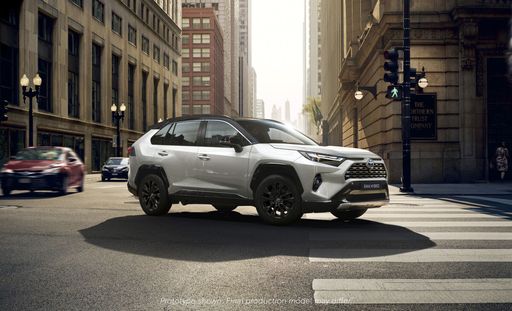
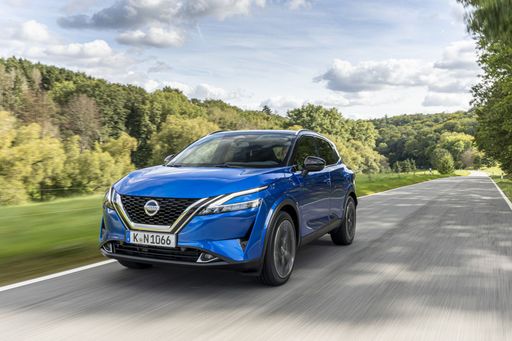
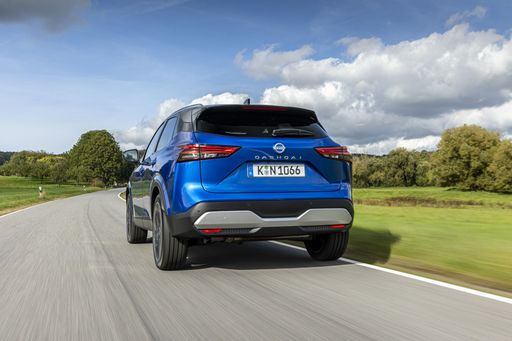
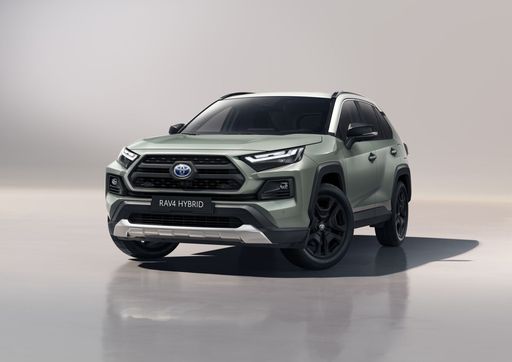
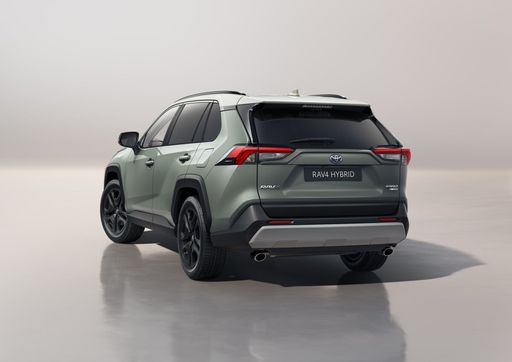
On paper and in the parking lot, the Nissan Qashqai and the Toyota RAV4 stand toe-to-toe as two of the most recognizable compact SUVs in their class, and this comparison peels back the gloss to show real-life differences. The Nissan Qashqai plays the modern urban card with a softer, more refined silhouette, while the Toyota RAV4 presents a chunkier, go-anywhere persona that hints at capability. For shoppers searching “Nissan Qashqai vs Toyota RAV4” this piece sorts the smoke from the mirrors: styling, daily usability, perceived comfort and the kind of driver each car will naturally attract. Read on to match mood and needs to metal before you dive into the spec sheet below.
Qashqai

Character clash: understated urbanite vs rugged all-rounder

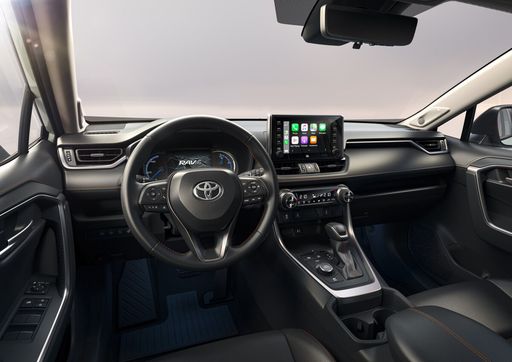
The Nissan Qashqai radiates a composed, city-friendly charm — think subtle curves, neat detailing and a cabin tuned for civilized motoring — whereas the Toyota RAV4 trades finesse for a more assertive, adventurous image that suggests wider horizons. Driving the Nissan Qashqai feels like choosing a quiet, efficient companion; the Toyota RAV4 feels like picking a badge that wants to be seen on gravel and motorway alike. Inside, materials and ergonomics in the Nissan Qashqai aim for accessible refinement, while the Toyota RAV4 leans into durable, purposeful surfaces that suit families and outdoor gear. The vibe you prefer — subtle sophistication or blunt utility — will tell you which car fits your personality before the keys even leave the counter.

RAV4

Daily life: city savvy or weekend hauler?

When the daily grind involves tight parking spaces, frequent stops and a heavier dose of urban driving, the Nissan Qashqai feels tailored to that rhythm with a lighter footprint and an easygoing ride that keeps stress low. By contrast, the Toyota RAV4 is more at home with longer trips, larger loads and the occasional trip off the beaten path, offering a more purposeful cargo area and a confidence-inspiring stance. For families juggling car seats, groceries and sports gear the Toyota RAV4 reads as the more practical partner, while couples and commuters who prize maneuverability will lean toward the Nissan Qashqai. Both are usable every day; the choice boils down to whether you prioritise nimble urban handling or flexible long-distance capability.

Qashqai

Buying it for the badge or the behaviour?

People choose the Nissan Qashqai because it looks modern without shouting, feels composed on city streets and comes across as a sensible, slightly upscale daily driver. Buyers who pick the Toyota RAV4 often want the reassurance of a tougher image and a car that promises versatility — it’s as much about projecting readiness as it is about hauling a pram or a bike. The Nissan Qashqai speaks to those who prefer understatement and efficient packaging, while the Toyota RAV4 answers to those who prioritise presence, perceived capability and a bit of adventurous swagger. Your friends’ reactions may differ, but the real question is how each car fits the life you actually live.

RAV4

Who should seriously consider the Nissan Qashqai?

The Nissan Qashqai suits buyers who value clever everyday usability and modest running costs — think city commuters, small families and anyone who prefers a refined, easy-to-live-with cabin over rugged theatrics. It appeals to the pragmatic buyer who wants a compact SUV that’s comfortable in traffic, pleasant on short trips and unobtrusive in suburban streets. If you prize a lighter footprint, easier parking and a calm interior atmosphere, the Nissan Qashqai will feel like a thought-through choice rather than a compromise. That said, if your life demands maximum cargo space or long-haul flexibility, the Toyota RAV4 is the alternative worth comparing in the numbers.

Qashqai

Who should strongly consider the Toyota RAV4 — and how the Qashqai stacks up

The Toyota RAV4 is aimed at buyers who prioritise space, confidence on long trips and a more rugged persona — families, weekend adventurers and those who want a visibly capable SUV. It’s a sensible pick if you regularly carry bulky items, enjoy road trips or like the idea of a vehicle that hints at off-road ability without being a specialist machine. If you’re torn, remember the Nissan Qashqai will likely reward you with easier urban living and a more refined daily drive, while the Toyota RAV4 answers a different brief: utility and presence. For the hard facts and where those lifestyle differences translate into real trade-offs, dive into the specification section next and see which compromises matter most to you.

Here’s where it gets real: The technical differences in detail

RAV4

Costs and Efficiency:

When it comes to price and running costs, the biggest differences usually appear. This is often where you see which car fits your budget better in the long run.

Nissan Qashqai is slightly cheaper – starting at 29,600 £ , while the Toyota RAV4 costs 35,100 £ . That’s a price difference of around 5,529 £.

Fuel consumption also shows a difference: the Toyota RAV4 uses 1 L/100km and is substantially more efficient than the Nissan Qashqai with 4.5 L/100km. The difference is about 3.5 L/100km.

Qashqai

Engine and Performance:

Power, torque and acceleration say a lot about how a car feels on the road. This is where you see which model delivers more driving dynamics.

When it comes to engine power, the Toyota RAV4 offers markedly more power – delivering 306 HP compared to 205 HP. That’s roughly 101 HP more horsepower.

When accelerating from 0 to 100 km/h, the Toyota RAV4 is clearly quicker – completing the sprint in 6 s, while the Nissan Qashqai takes 7.6 s. That’s about 1.6 s quicker.

Looking at top speed, the Nissan Qashqai is slightly faster – reaching 206 km/h, while the Toyota RAV4 tops out at 180 km/h. The difference is around 26 km/h.

RAV4

Space and Everyday Use:

Whether family car or daily driver – which one offers more room, flexibility and comfort?

Both vehicles offer seating for 5 people.

In terms of curb weight, Nissan Qashqai is noticeably lighter – 1,420 kg compared to 1,745 kg. The difference is around 325 kg.

Looking at boot space, the Toyota RAV4 offers moderately more boot space – 580 L compared to 504 L. That’s a difference of about 76 L.

For maximum load capacity, the Toyota RAV4 offers a bit more capacity – up to 1,690 L, about 243 L more than the Nissan Qashqai.

When it comes to payload, the Toyota RAV4 carries moderately more – 600 kg compared to 520 kg. That’s a difference of about 80 kg.

Who wins the race in the data check?

The Toyota RAV4 is far ahead overall in the objective data comparison.
This result only shows which model scores more points on paper – not which of the two cars feels right for you.

from £35,100
RAV4

Toyota RAV4

  • Engine Type : Full Hybrid, Plugin Hybrid
  • Transmission : Automatic
  • Drive Type : Front-Wheel Drive, All-Wheel Drive
  • Power HP : 218 - 306 HP
  • Consumption L/100km : 1 - 5.6 L/100km
  • Electric Range : 75 km
Toyota RAV4
Nissan Qashqai

Costs and Consumption

View detailed analysis

Engine and Performance

View detailed analysis

Dimensions and Body

View detailed analysis

Toyota RAV4

The Toyota RAV4 feels like a sensible friend on the road, marrying dependable practicality with a dash of SUV personality that keeps daily driving from turning dull. Comfortable and easy to live with, it looks tough without shouting and quietly gets the job done — a sensible pick for buyers who want versatility without drama.

details

Nissan Qashqai

The Nissan Qashqai blends practical, family-friendly packaging with SUV styling that refuses to shout, making it a sensible and dependable choice for everyday life. It’s comfortable to live with, economical on the road, and neatly equipped enough to feel modern without ever feeling precious — perfect if you want crossover versatility without the drama.

details
Toyota RAV4
Nissan Qashqai

Costs and Consumption

Price
35,100 - 55,700 £
Price
29,600 - 39,900 £
Consumption L/100km
1 - 5.6 L/100km
Consumption L/100km
4.5 - 6.8 L/100km
Consumption kWh/100km
-
Consumption kWh/100km
-
Electric Range
75 km
Electric Range
-
Battery Capacity
-
Battery Capacity
-
co2
22 - 128 g/km
co2
102 - 154 g/km
Fuel tank capacity
55 L
Fuel tank capacity
55 L

Dimensions and Body

Body Type
SUV
Body Type
SUV
Seats
5
Seats
5
Doors
5
Doors
5
Curb weight
1,745 - 1,910 kg
Curb weight
1,420 - 1,665 kg
Trunk capacity
520 - 580 L
Trunk capacity
479 - 504 L
Length
4,600 mm
Length
4,425 mm
Width
1,855 mm
Width
1,835 mm
Height
1,685 mm
Height
1,625 mm
Max trunk capacity
1,604 - 1,690 L
Max trunk capacity
1,422 - 1,447 L
Payload
390 - 600 kg
Payload
466 - 520 kg

Engine and Performance

Engine Type
Full Hybrid, Plugin Hybrid
Engine Type
Petrol MHEV, Full Hybrid
Transmission
Automatic
Transmission
Manuel, Automatic
Transmission Detail
CVT
Transmission Detail
Manual Gearbox, CVT, Reduction Gearbox
Drive Type
Front-Wheel Drive, All-Wheel Drive
Drive Type
Front-Wheel Drive, All-Wheel Drive
Power HP
218 - 306 HP
Power HP
140 - 205 HP
Acceleration 0-100km/h
6 - 8.4 s
Acceleration 0-100km/h
7.6 - 10.2 s
Max Speed
180 km/h
Max Speed
170 - 206 km/h
Torque
-
Torque
240 - 330 Nm
Number of Cylinders
4
Number of Cylinders
3 - 4
Power kW
160 - 225 kW
Power kW
103 - 151 kW
Engine capacity
2,487 cm3
Engine capacity
1,332 - 1,498 cm3

General

Model Year
2,024 - 2,025
Model Year
2,025 - 2,026
CO2 Efficiency Class
D, B
CO2 Efficiency Class
E, C
Brand
Toyota
Brand
Nissan
DriveDuel uses data analysis and artificial intelligence to evaluate vehicle data and create content. Content is regularly reviewed and improved. The displayed prices are estimates based on German list prices, adjusted to the respective country’s VAT. Country-specific registration taxes are not included. This information is not legally binding.