VS

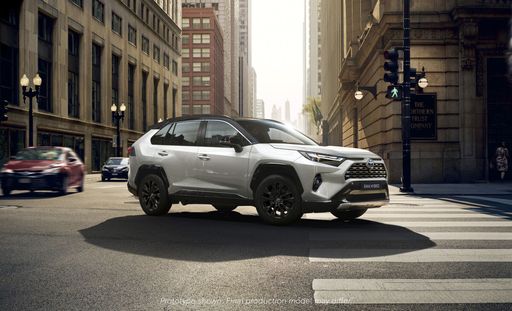
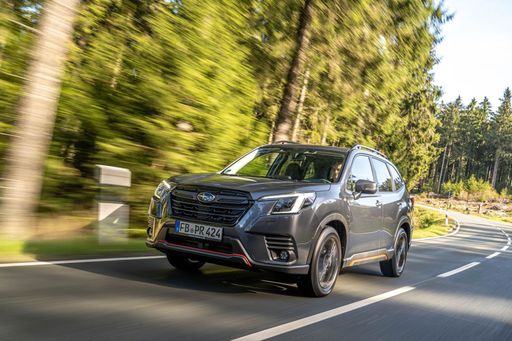
Toyota RAV4 vs Subaru Forester comparison

Compare performance (306 HP vs 136 HP), boot space and price (35,100 £ vs 34,700 £ ) at a glance. Find out which car is the better choice for you – Toyota RAV4 or Subaru Forester?

Toyota RAV4 vs Subaru Forester: Key differences

Toyota RAV4

4.8 (6 Reviews)
rate
  • substantially more power
  • considerably more efficient
  • substantially quicker 0–100 km/h
  • slightly more trunk space

Subaru Forester

4 (1 Reviews)
rate
  • marginally cheaper
  • barely lighter

All details on performance, efficiency, range and trunk space can be found in the technical comparison below – including user reviews for both models.

RAV4

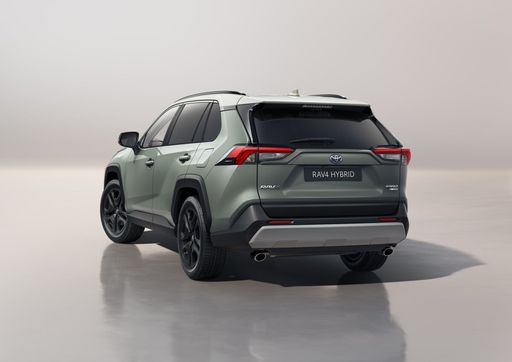
In the growing market of compact SUVs, the battle between the Subaru Forester and the Toyota RAV4 has taken center stage. Both vehicles offer a blend of reliability, versatility, and performance, appealing to a wide range of customers. In this comparison, we will explore their technical aspects, innovations, and overall performance to help you decide which SUV reigns supreme.
Forester

Powertrain and Performance

The Subaru Forester is equipped with a 2.0L petrol MHEV engine, delivering a power output of 150 HP and generating a torque of 194 Nm. It features an automatic CVT transmission and an all-wheel-drive system, which enhances its capability on diverse terrains. With a 0-100 km/h acceleration time of 11.8 seconds, the Forester balances decent power with efficiency, achieving a fuel consumption of 8.1 L/100km.

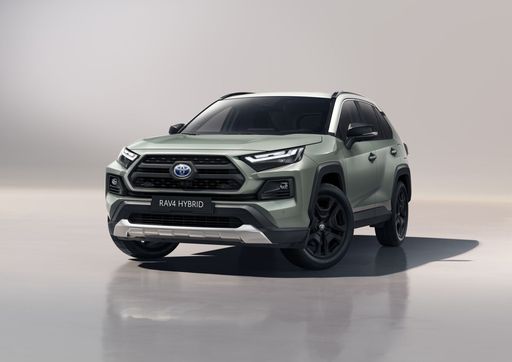
On the other hand, the Toyota RAV4 presents a more robust lineup of engines, including a full hybrid and a plugin hybrid variant. The conventional full hybrid engine produces between 218 to 306 HP, depending on the configuration. Notably, the RAV4 can accelerate from 0-100 km/h in as quick as 6 seconds, showcasing its performance edge over the Forester in this aspect. Furthermore, the RAV4 boasts an impressive fuel consumption range of just 1 L/100km in its most efficient plugin hybrid variant, making it an economical choice for eco-conscious drivers.

RAV4

Dimensions and Space

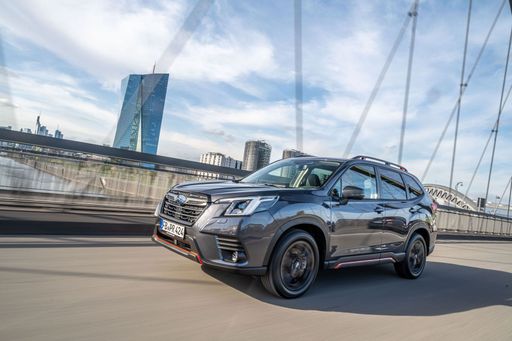
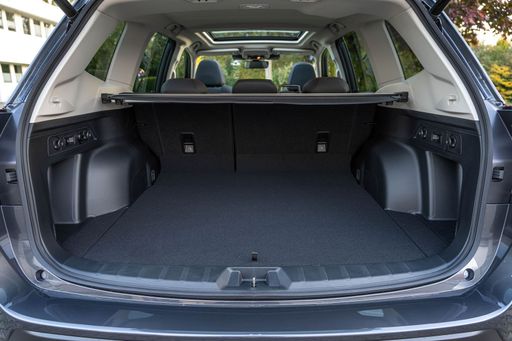
In terms of size, the Subaru Forester measures 4640 mm in length, 1815 mm in width, and stands at 1730 mm in height. It offers ample space, with a trunk capacity of 509 liters, enough for everyday needs and weekend adventures. With a curb weight ranging from 1658 kg to 1693 kg, it provides stability and safety without compromising on fuel efficiency.

The Toyota RAV4 slightly trails in length, measuring 4600 mm, but offers a broader width at 1855 mm and a slightly lower height of 1685 mm. Its trunk with a capacity of 580 liters proves advantageous for cargo space, especially for families. The RAV4's curb weight ranges from 1745 kg to 1910 kg, reflecting a different feel on the road but contributing to its performance dynamics.

Forester

Technological Innovations

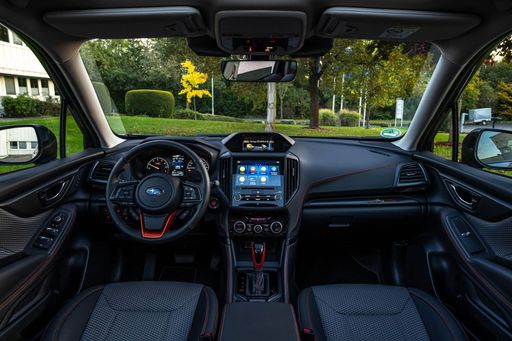
Both SUVs come loaded with advanced technology, enhancing safety, comfort, and connectivity. The Subaru Forester integrates Subaru's EyeSight driver-assist technology, which provides features like adaptive cruise control, lane departure warning, and pre-collision braking. This focus on safety has earned it high ratings in crash tests.

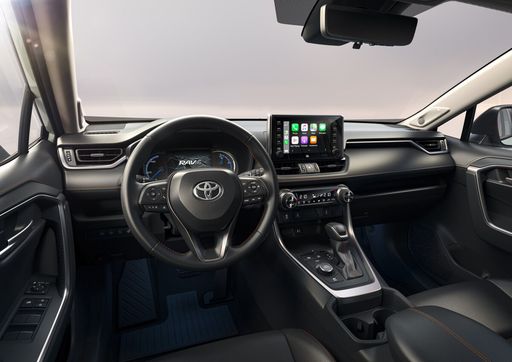
Meanwhile, the Toyota RAV4 offers cutting-edge technology in its Toyota Safety Sense package, which includes automated emergency braking, lane tracing assist, and dynamic radar cruise control. The RAV4 also excels with its multimedia system, featuring a larger touchscreen display and seamless smartphone integration, making connectivity a breeze.

RAV4

Environmental Impact

When discussing eco-friendliness, the RAV4's hybrid options take the lead. The RAV4's hybrids produce CO2 emissions as low as 22 g/km, showcasing Toyota’s commitment to reducing the environmental impact of their vehicles. The Forester, with a CO2 emission rating of 185 g/km, still offers good efficiency but lags behind in comparison to the RAV4 hybrids.

Forester

Conclusion: Which is Right for You?

Choosing between the Subaru Forester and the Toyota RAV4 ultimately depends on your priorities. The Forester stands out for its all-wheel-drive capabilities, excellent safety features, and spacious interior geared towards outdoor enthusiasts. However, the Toyota RAV4 seems to cater more to those who value hybrid efficiency, performance, and advanced technology.

Regardless of which vehicle you choose, both SUVs offer a dependable and enjoyable driving experience, backed by two of the best brands in the automotive market.

Here’s where it gets real: The technical differences in detail

RAV4

Costs and Efficiency:

Looking at overall running costs, both models reveal some interesting differences in everyday economy.

Subaru Forester is marginally cheaper – starting at 34,700 £ , while the Toyota RAV4 costs 35,100 £ . That’s a price difference of around 429 £.

Fuel consumption also shows a difference: the Toyota RAV4 uses 1 L/100km and is considerably more efficient than the Subaru Forester with 8.1 L/100km. The difference is about 7.1 L/100km.

Forester

Engine and Performance:

Power, torque and acceleration say a lot about how a car feels on the road. This is where you see which model delivers more driving dynamics.

When it comes to engine power, the Toyota RAV4 offers substantially more power – delivering 306 HP compared to 136 HP. That’s roughly 170 HP more horsepower.

When accelerating from 0 to 100 km/h, the Toyota RAV4 is substantially quicker – completing the sprint in 6 s, while the Subaru Forester takes 12.2 s. That’s about 6.2 s quicker.

RAV4

Space and Everyday Use:

Beyond pure performance, interior space and usability matter most in daily life. This is where you see which car is more practical and versatile.

Both vehicles offer seating for 5 people.

In terms of curb weight, Subaru Forester is barely lighter – 1,693 kg compared to 1,745 kg. The difference is around 52 kg.

Looking at boot space, the Toyota RAV4 offers slightly more boot space – 580 L compared to 508 L. That’s a difference of about 72 L.

When it comes to payload, the Toyota RAV4 carries slightly more – 600 kg compared to 492 kg. That’s a difference of about 108 kg.

Who wins the race in the data check?

The Toyota RAV4 is far ahead overall in the objective data comparison.
This result only shows which model scores more points on paper – not which of the two cars feels right for you.

from £35,100
RAV4

Toyota RAV4

  • Engine Type : Full Hybrid, Plugin Hybrid
  • Transmission : Automatic
  • Drive Type : Front-Wheel Drive, All-Wheel Drive
  • Power HP : 218 - 306 HP
  • Consumption L/100km : 1 - 5.6 L/100km
  • Electric Range : 75 km
Toyota RAV4
Subaru Forester

Costs and Consumption

View detailed analysis

Engine and Performance

View detailed analysis

Dimensions and Body

View detailed analysis

Toyota RAV4

The Toyota RAV4 feels like a sensible friend on the road, marrying dependable practicality with a dash of SUV personality that keeps daily driving from turning dull. Comfortable and easy to live with, it looks tough without shouting and quietly gets the job done — a sensible pick for buyers who want versatility without drama.

details

Subaru Forester

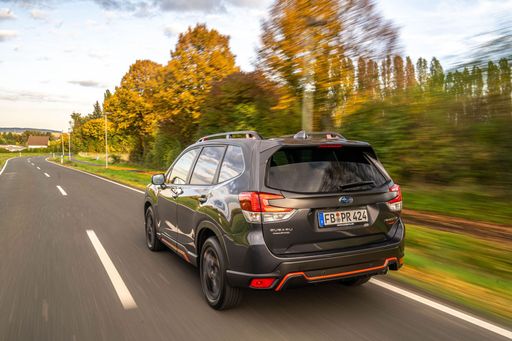
The Subaru Forester is a practical all-rounder that quietly does everything right, with roomy comfort, excellent visibility and a real fondness for weekend adventures off the beaten path. It won't set your pulse racing like a sports car, but for buyers who prize reliability, safety and sensible charm, it's a brilliantly steady companion with a cheeky streak.

details
Toyota RAV4
Subaru Forester

Costs and Consumption

Price
35,100 - 55,700 £
Price
34,700 - 42,200 £
Consumption L/100km
1 - 5.6 L/100km
Consumption L/100km
8.1 L/100km
Consumption kWh/100km
-
Consumption kWh/100km
-
Electric Range
75 km
Electric Range
-
Battery Capacity
-
Battery Capacity
-
co2
22 - 128 g/km
co2
183 g/km
Fuel tank capacity
55 L
Fuel tank capacity
-

Dimensions and Body

Body Type
SUV
Body Type
SUV
Seats
5
Seats
5
Doors
5
Doors
-
Curb weight
1,745 - 1,910 kg
Curb weight
1,693 - 1,739 kg
Trunk capacity
520 - 580 L
Trunk capacity
508 L
Length
4,600 mm
Length
-
Width
1,855 mm
Width
1,830 mm
Height
1,685 mm
Height
-
Max trunk capacity
1,604 - 1,690 L
Max trunk capacity
-
Payload
390 - 600 kg
Payload
446 - 492 kg

Engine and Performance

Engine Type
Full Hybrid, Plugin Hybrid
Engine Type
Petrol MHEV
Transmission
Automatic
Transmission
Automatic
Transmission Detail
CVT
Transmission Detail
CVT
Drive Type
Front-Wheel Drive, All-Wheel Drive
Drive Type
All-Wheel Drive
Power HP
218 - 306 HP
Power HP
136 HP
Acceleration 0-100km/h
6 - 8.4 s
Acceleration 0-100km/h
12.2 s
Max Speed
180 km/h
Max Speed
-
Torque
-
Torque
182 Nm
Number of Cylinders
4
Number of Cylinders
4
Power kW
160 - 225 kW
Power kW
100 kW
Engine capacity
2,487 cm3
Engine capacity
1,995 cm3

General

Model Year
2,024 - 2,025
Model Year
2,025
CO2 Efficiency Class
D, B
CO2 Efficiency Class
G
Brand
Toyota
Brand
Subaru
DriveDuel uses data analysis and artificial intelligence to evaluate vehicle data and create content. Content is regularly reviewed and improved. The displayed prices are estimates based on German list prices, adjusted to the respective country’s VAT. Country-specific registration taxes are not included. This information is not legally binding.