VS

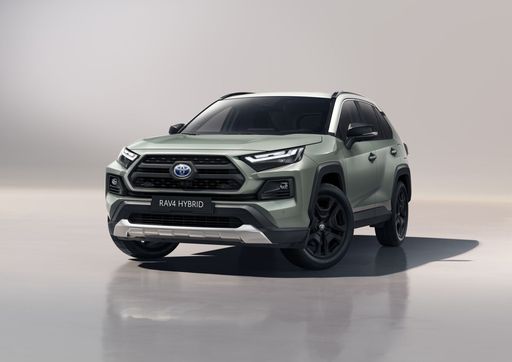
Toyota RAV4 vs Toyota C-HR+ comparison

Compare performance (309 HP vs 343 HP), boot space and price (37,700 £ vs 36,000 £ ) at a glance. Find out which car is the better choice for you – Toyota RAV4 or Toyota C-HR+?

Toyota RAV4 vs Toyota C-HR+: Key differences

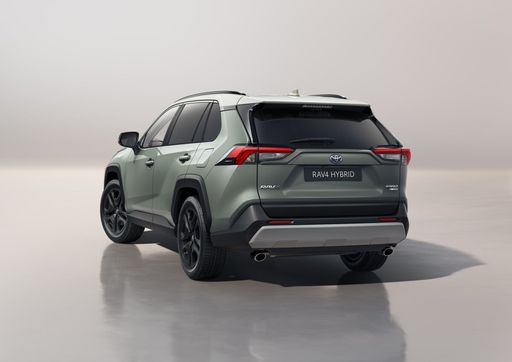
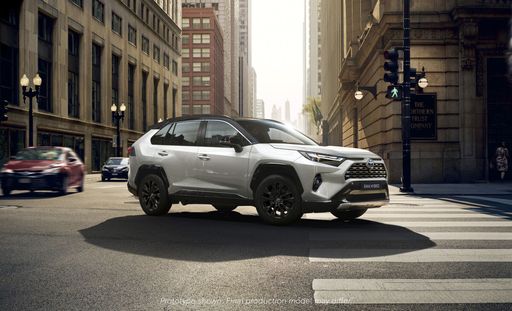
Toyota RAV4

4.8 (8 Reviews)
rate
  • only slightly lighter
  • slightly more trunk space
details

Toyota C-HR+

  • marginally cheaper
  • marginally more power
  • substantially more electric range
  • slightly quicker 0–100 km/h
details

All details on performance, efficiency, range and trunk space can be found in the technical comparison below – including user reviews for both models.

By Achim Sedelmaier

RAV4

Toyota RAV4 VS Toyota C-HR+: quick editorial summary

Toyota RAV4 VS Toyota C-HR+ pits a roomy, no‑nonsense family SUV against a compact, style‑forward crossover with a strong plug‑in emphasis. Both wear Toyota's hybrid logic, but they answer different questions: the RAV4 prioritises space, relaxed daily running and low real‑world costs, while the C‑HR+ prioritises cabin polish, urban agility and maximising electric driving. That means the RAV4 feels easier to live with for multi‑person households and long trips, and the C‑HR+ rewards owners who will regularly charge and value a more premium interior. The sections that follow make those trade‑offs concrete so you can see which matters for your routine.
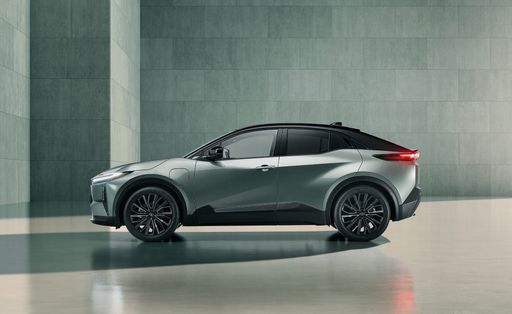
C-HR+

Character and driving personality

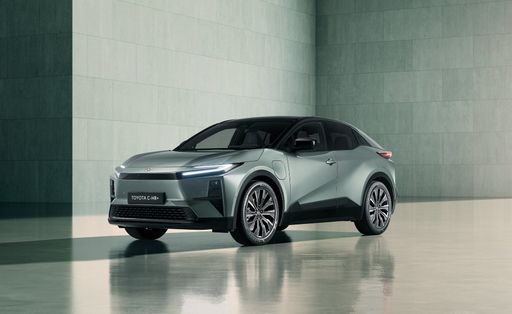
Character is where the contrast hits first: the Toyota RAV4 is calm, steady and deliberately undramatic, whereas the Toyota C-HR+ leans into a sharper, more contemporary persona. On the move the RAV4 settles into relaxed progress and predictable handling suited to cruising or towing light loads, while the C-HR+ feels brisker off the line and more willing to hustle through urban traffic. Both cars share hybrid transmissions that are whisper‑quiet most of the time but can become vocal when you ask for quick overtakes, with that effect more noticeable in the C‑HR+. If you want serenity and effortless long‑distance stability, the RAV4 is the natural fit; if you prefer a livelier, characterful crossover for city runs, the C‑HR+ will please.

RAV4

Cabin feel and everyday practicality

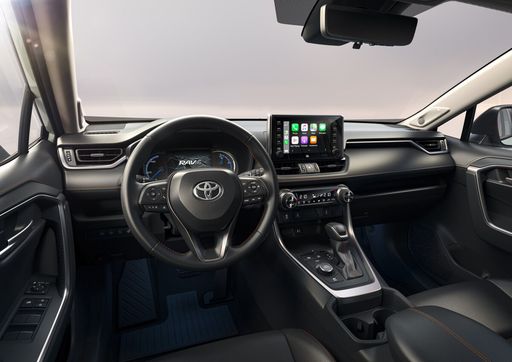
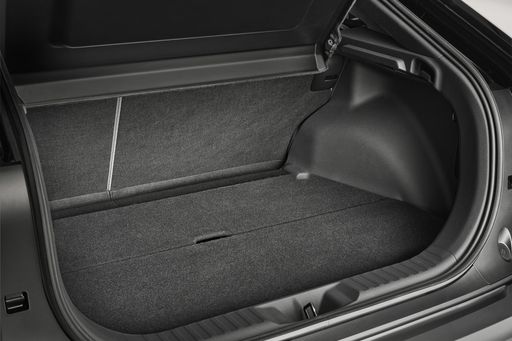
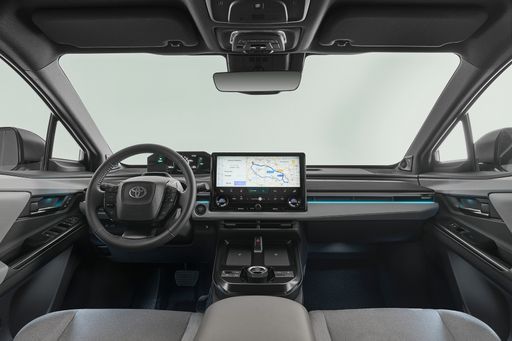
Inside the Toyota C-HR+ aims for a more premium atmosphere with refined surfaces and a contemporary cockpit, while the Toyota RAV4 opts for robust, pragmatic packaging that favours usability. The C‑HR+ makes a strong first impression, but the RAV4's wider openings, easier rear access and noticeably more rear legroom win out once you start loading passengers and child seats. Practical impact is clear: the RAV4's boot is squarer and easier to pack for weekend trips, whereas the C‑HR+'s cargo area and higher lip start to feel limiting when you carry bulky loads. Buyers who prioritize cabin flair and tech will prefer the C‑HR+, but families who need straightforward space and loading will appreciate the RAV4 every day.

C-HR+

Comfort and long‑distance behavior

For motorway miles the Toyota RAV4 is the more composed companion, delivering a forgiving ride and rear‑seat comfort that makes long stints less wearing for adults. The Toyota C-HR+ is comfortable too, but its compact footprint and lower roofline mean taller passengers notice the difference after prolonged travel. At constant speeds both cars are broadly quiet, yet heavy acceleration exposes drivetrain noise—an important reminder that neither behaves like a pure electric cruiser when pushed. If your driving includes frequent long journeys with family or passengers, the RAV4’s settled manners are the safer choice; if your trips are shorter or you value interior ambience, the C‑HR+ still offers a pleasant touring experience.

RAV4

City friendliness, tech and daily usability

In town the Toyota C-HR+ scores for compact dimensions, a tight turning circle and plentiful driver aids that make parking and congested streets easier to master. The Toyota RAV4, by contrast, gives you a higher seating position and broader visibility that simplify junctions and give confidence in traffic, though it feels larger when squeezing into tight bays. Both benefit from their hybrid drivetrains in stop‑start traffic, but the C‑HR+ pays off most if you can charge regularly and use its electric bias around town. Day‑to‑day, child‑seat installation, bulk shopping and loading are more forgiving in the RAV4, while the C‑HR+ suits solo commuters and style‑minded couples who prioritise tech and urban efficiency.

C-HR+

Who should consider which car and what to check next

Choose the Toyota RAV4 if your priorities are space, family usability, long‑distance comfort and low operating costs — it’s the more practical, less fussy companion for real life. Consider the Toyota C-HR+ if a premium cabin feel, striking styling and maximising electric‑first urban use are higher priorities and you can accept tighter rear space and boot practicality. Both make sense as efficient, well‑equipped Toyotas, but the decisive trade‑offs are room and relaxed long‑distance manners versus interior polish, urban agility and plug‑in capability. Read the technical comparison that follows to see how range, power delivery and luggage volumes quantify these differences for your purchase decision.

Here’s where it gets real: The technical differences in detail

RAV4

Costs and Efficiency:

Price and efficiency are key factors when choosing a car – and this is often where the real differences emerge.

Toyota C-HR+ is marginally cheaper – starting at 36,000 £ , while the Toyota RAV4 costs 37,700 £ . That’s a price difference of around 1,714 £.

As for electric range, the Toyota C-HR+ offers substantially more range – reaching up to 607 km, about 470 km more than the Toyota RAV4.

C-HR+

Engine and Performance:

Power, torque and acceleration say a lot about how a car feels on the road. This is where you see which model delivers more driving dynamics.

When it comes to engine power, the Toyota C-HR+ offers marginally more power – delivering 343 HP compared to 309 HP. That’s roughly 34 HP more horsepower.

When accelerating from 0 to 100 km/h, the Toyota C-HR+ is slightly quicker – completing the sprint in 5.2 s, while the Toyota RAV4 takes 5.8 s. That’s about 0.6 s quicker.

RAV4

Space and Everyday Use:

Beyond pure performance, interior space and usability matter most in daily life. This is where you see which car is more practical and versatile.

Both vehicles offer seating for 5 people.

In terms of curb weight, Toyota RAV4 is only slightly lighter – 1,655 kg compared to 1,810 kg. The difference is around 155 kg.

Looking at boot space, the Toyota RAV4 offers slightly more boot space – 514 L compared to 416 L. That’s a difference of about 98 L.

When it comes to payload, the Toyota C-HR+ carries marginally more – 655 kg compared to 610 kg. That’s a difference of about 45 kg.

Who wins the race in the data check?

The Toyota C-HR+ is clearly superior overall in the objective data comparison.
This result only shows which model scores more points on paper – not which of the two cars feels right for you.

from £36,000
C-HR+

Toyota C-HR+

  • Engine Type : Electric
  • Transmission : Automatic
  • Drive Type : Front-Wheel Drive, All-Wheel Drive
  • Power HP : 167 - 343 HP
  • Consumption kWh/100km : 13.4 - 15.5 kWh/100km
  • Electric Range : 458 - 607 km
Toyota RAV4
Toyota C-HR+

Costs and Consumption

View detailed analysis

Engine and Performance

View detailed analysis

Dimensions and Body

View detailed analysis

Toyota RAV4

The Toyota RAV4 is a well-rounded compact SUV that pairs everyday practicality with a comfortable, composed ride and generous cargo space, making it a sensible choice for families and active lifestyles. Its strong reputation for reliability, efficient drivetrains, and straightforward technology gives it wide appeal whether you value economy, comfort, or capability.

details

Toyota C-HR+

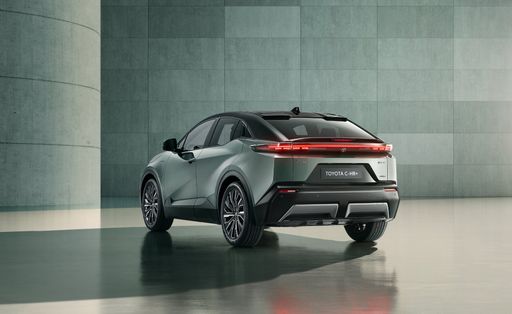
The Toyota C‑HR is a distinctive crossover that pairs bold, coupe‑like styling with a comfortable, composed ride suited to daily city and suburban driving. It appeals to buyers who value standout design, practical cabin packaging and a refined, easy‑to‑use experience rather than outright performance or rugged off‑road ability.

details
Toyota RAV4
Toyota C-HR+

Costs and Consumption

Price
37,700 - 54,200 £
Price
36,000 - 46,300 £
Consumption L/100km
1.3 - 5.3 L/100km
Consumption L/100km
-
Consumption kWh/100km
-
Consumption kWh/100km
13.4 - 15.5 kWh/100km
Electric Range
133 - 137 km
Electric Range
458 - 607 km
Battery Capacity
-
Battery Capacity
-
co2
30 - 121 g/km
co2
0 g/km
Fuel tank capacity
-
Fuel tank capacity
-

Dimensions and Body

Body Type
SUV
Body Type
SUV
Seats
5
Seats
5
Doors
-
Doors
-
Curb weight
1,655 - 1,960 kg
Curb weight
1,810 - 2,010 kg
Trunk capacity
446 - 514 L
Trunk capacity
416 L
Length
-
Length
-
Width
1,880 mm
Width
1,870 mm
Height
-
Height
-
Max trunk capacity
-
Max trunk capacity
-
Payload
515 - 610 kg
Payload
550 - 655 kg

Engine and Performance

Engine Type
Full Hybrid, Plugin Hybrid
Engine Type
Electric
Transmission
Automatic
Transmission
Automatic
Transmission Detail
CVT
Transmission Detail
Reduction Gearbox
Drive Type
Front-Wheel Drive, All-Wheel Drive
Drive Type
Front-Wheel Drive, All-Wheel Drive
Power HP
185 - 309 HP
Power HP
167 - 343 HP
Acceleration 0-100km/h
5.8 - 8 s
Acceleration 0-100km/h
5.2 - 8.4 s
Max Speed
-
Max Speed
-
Torque
-
Torque
268 - 338 Nm
Number of Cylinders
4
Number of Cylinders
-
Power kW
136 - 227 kW
Power kW
123 - 252 kW
Engine capacity
2,487 cm3
Engine capacity
-

General

Model Year
2026
Model Year
2026
CO2 Efficiency Class
C, D, B
CO2 Efficiency Class
A
Brand
Toyota
Brand
Toyota
DriveDuel uses data analysis and artificial intelligence to evaluate vehicle data and create content. Content is regularly reviewed and improved. The displayed prices are estimates based on German list prices, adjusted to the respective country’s VAT. Country-specific registration taxes are not included. This information is not legally binding.