VS

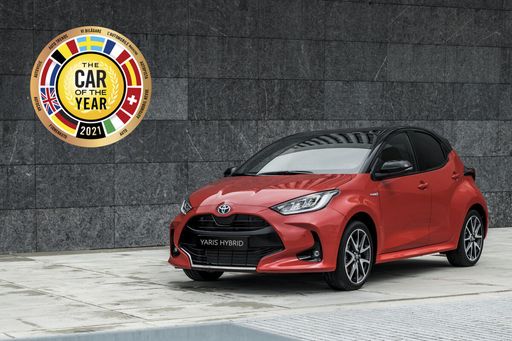
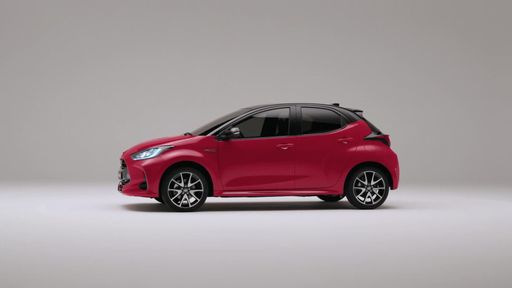
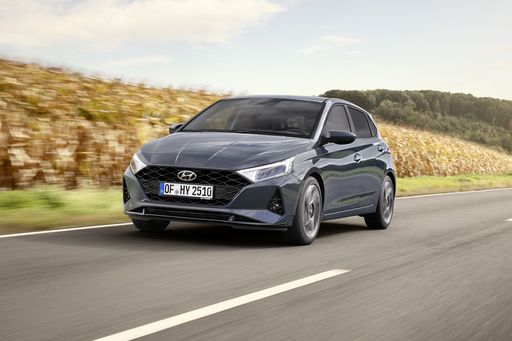
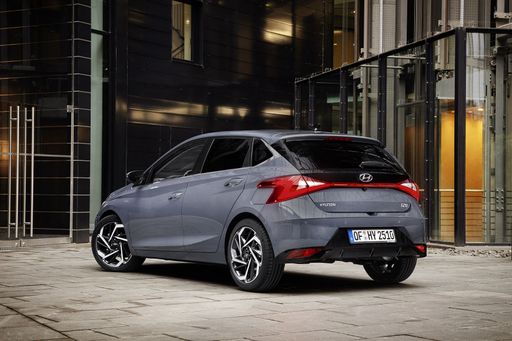
Toyota Yaris vs Hyundai i20 comparison

Compare performance (280 HP vs 90 HP), boot space and price (21,900 £ vs 18,600 £ ) at a glance. Find out which car is the better choice for you – Toyota Yaris or Hyundai i20?

Toyota Yaris vs Hyundai i20: Key differences

Toyota Yaris

3.9 (3 Reviews)
rate
  • significantly more power
  • considerably more efficient
  • clearly quicker 0–100 km/h
  • barely lighter

Hyundai i20

4 (1 Reviews)
rate
  • moderately cheaper
  • slightly more trunk space

All details on performance, efficiency, range and trunk space can be found in the technical comparison below – including user reviews for both models.

Yaris

Hyundai i20 VS Toyota Yaris — the hatchback head-to-head

If you’re weighing the Hyundai i20 against the Toyota Yaris, you’re looking at two of the most persuasive names in the small hatchback segment. This direct comparison pits the i20’s bold, value-driven package against the Yaris’s efficiency- and safety-first reputation, so shoppers can see the differences at a glance. Think of this as a side-by-side taste test: styling, day-to-day practicality, perceived comfort and real-world usability take centre stage rather than headline figures. Read on and you’ll get a feel for which car settles better into the life you actually live — city runs, school runs or longer outings.

i20

Two personalities: street-smart style vs measured refinement

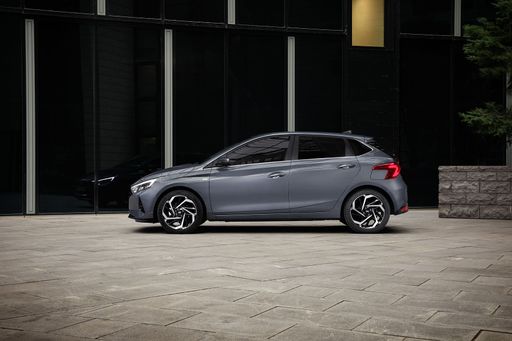
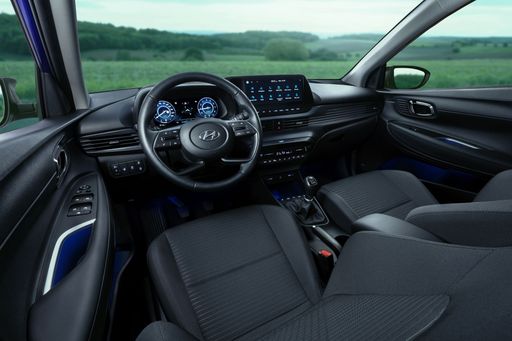
The Hyundai i20 plays the confident younger sibling — crisp exterior lines, bright interior choices and a cockpit that feels fresh for the price; it wants to be noticed. The Toyota Yaris trades flash for a calmer, more restrained presence, projecting careful engineering and quiet competence instead of bravado. That contrast is visible the moment you open the doors: the i20 aims for a slightly more youthful, lively atmosphere while the Yaris emphasises subtlety and composure. If attitude matters as much as practicality, you’ll feel it: one is a wink, the other a steady handshake.

Yaris

How they behave when you actually use them

On everyday runs the Hyundai i20 rewards busy lives with a roomier feel in the luggage area and straightforward practicality that makes loading groceries or weekend kit less fiddly. The Toyota Yaris excels where economy and urban agility matter most, feeling relaxed around town and proving kinder on long stints if low running cost is a priority. Drivers who ferry people and cargo will appreciate the i20’s packaging, while city commuters and those who value predictable, composed behaviour will lean toward the Yaris. Both are user-friendly, but they solve slightly different daily headaches.

i20

Choosing one says something about you

Pick the Hyundai i20 and you’re signalling you want freshness and bang-for-buck: you like a car that looks contemporary and makes smart use of space without demanding a premium. Choose the Toyota Yaris if you prefer the reassurance of conservative engineering and low running fuss — it’s the kind of car someone buys because it’s sensible and keeps surprises to a minimum. Style-conscious drivers will enjoy the i20’s character, while the Yaris attracts people who justify a purchase through efficiency and reliability. Either way, the choice is as much emotional as it is practical.

Who should test-drive the Hyundai i20?

If you’re hunting for value and everyday usability, the Hyundai i20 answers most practical questions with charm rather than compromise; it suits shoppers who want style without stretching their budget. Small families, active singles and urban crews who regularly need usable boot space will find its layout and user-friendly controls appealing when stacked against the Toyota Yaris. It’s the sensible pick for buyers who prioritise visible equipment, accessible tech and a slightly more extroverted design. Take it for a drive if you want a car that earns personality points without demanding a premium.

Who should test-drive the Toyota Yaris?

The Toyota Yaris is aimed at peace-of-mind buyers who prize low running cost, calm long-distance manners and a reassuringly engineered package — it’s ideal for commuters and those who see a car as a practical tool. If you compare it to the Hyundai i20, the Yaris’s quieter demeanour and emphasis on efficiency and safety will appeal to the comfort- and tech-minded shopper. It’s a smart choice for anyone who puts predictability and economy high on their checklist, while still wanting a tidy, well-built hatchback. Read the technical delta below to see how the measurable differences line up with these real-world impressions.

Here’s where it gets real: The technical differences in detail

Yaris

Costs and Efficiency:

Price and efficiency are often the first things buyers look at. Here it becomes clear which model has the long-term edge – whether at the pump, the plug, or in purchase price.

Hyundai i20 is moderately cheaper – starting at 18,600 £ , while the Toyota Yaris costs 21,900 £ . That’s a price difference of around 3,257 £.

Fuel consumption also shows a difference: the Toyota Yaris uses 3.8 L/100km and is considerably more efficient than the Hyundai i20 with 5.7 L/100km. The difference is about 1.9 L/100km.

i20

Engine and Performance:

Power, torque and acceleration are the classic benchmarks for car enthusiasts – and here, some clear differences start to show.

When it comes to engine power, the Toyota Yaris offers significantly more power – delivering 280 HP compared to 90 HP. That’s roughly 190 HP more horsepower.

When accelerating from 0 to 100 km/h, the Toyota Yaris is clearly quicker – completing the sprint in 5.5 s, while the Hyundai i20 takes 11.5 s. That’s about 6 s quicker.

There’s also a difference in torque: the Toyota Yaris delivers considerably more torque with 390 Nm compared to 172 Nm. That’s about 218 Nm more.

Yaris

Space and Everyday Use:

Whether family car or daily driver – which one offers more room, flexibility and comfort?

Both vehicles offer seating for 5 people.

In terms of curb weight, Toyota Yaris is barely lighter – 1,090 kg compared to 1,145 kg. The difference is around 55 kg.

Looking at boot space, the Hyundai i20 offers slightly more boot space – 352 L compared to 286 L. That’s a difference of about 66 L.

When it comes to payload, the Toyota Yaris carries a bit more – 525 kg compared to 465 kg. That’s a difference of about 60 kg.

Who wins the race in the data check?

The Toyota Yaris is decisively ahead in the objective data comparison.
This result only shows which model scores more points on paper – not which of the two cars feels right for you.

from £21,900
Yaris

Toyota Yaris

  • Engine Type : Full Hybrid, Petrol
  • Transmission : Automatic, Manuel
  • Drive Type : Front-Wheel Drive, All-Wheel Drive
  • Power HP : 116 - 280 HP
  • Consumption L/100km : 3.8 - 8.7 L/100km
Toyota Yaris
Hyundai i20

Costs and Consumption

View detailed analysis

Engine and Performance

View detailed analysis

Dimensions and Body

View detailed analysis

Toyota Yaris

The Toyota Yaris is a sprightly city hatch that packs clever packaging, surprising comfort and fuel-sipping manners into a neat, easy-to-park package. It rewards sensible buyers with low running costs, friendly ergonomics and a forgiving drive, delivered with Japanese reliability and just enough personality to make errands feel a little less ordinary.

details

Hyundai i20

The Hyundai i20 is a cheeky small car that mixes smart styling with sensible practicality, feeling more polished and roomy than you might expect for the money. It’s an easy car to live with, offering engaging handling, a comfy cabin and useful equipment that make daily commutes and weekend errands notably less dull.

details
Toyota Yaris
Hyundai i20

Costs and Consumption

Price
21,900 - 40,800 £
Price
18,600 - 24,000 £
Consumption L/100km
3.8 - 8.7 L/100km
Consumption L/100km
5.7 L/100km
Consumption kWh/100km
-
Consumption kWh/100km
-
Electric Range
-
Electric Range
-
Battery Capacity
-
Battery Capacity
-
co2
87 - 197 g/km
co2
128 - 129 g/km
Fuel tank capacity
-
Fuel tank capacity
-

Dimensions and Body

Body Type
Hatchback
Body Type
Hatchback
Seats
4 - 5
Seats
5
Doors
-
Doors
-
Curb weight
1,090 - 1,356 kg
Curb weight
1,145 - 1,170 kg
Trunk capacity
141 - 286 L
Trunk capacity
352 L
Length
-
Length
-
Width
1,745 - 1,805 mm
Width
1,775 mm
Height
-
Height
-
Max trunk capacity
-
Max trunk capacity
-
Payload
289 - 525 kg
Payload
455 - 465 kg

Engine and Performance

Engine Type
Full Hybrid, Petrol
Engine Type
Petrol
Transmission
Automatic, Manuel
Transmission
Manuel, Automatic
Transmission Detail
CVT, Manual Gearbox
Transmission Detail
Manual Gearbox, Dual-Clutch Automatic
Drive Type
Front-Wheel Drive, All-Wheel Drive
Drive Type
Front-Wheel Drive
Power HP
116 - 280 HP
Power HP
90 HP
Acceleration 0-100km/h
5.5 - 9.7 s
Acceleration 0-100km/h
11.5 - 12.8 s
Max Speed
-
Max Speed
-
Torque
390 Nm
Torque
172 Nm
Number of Cylinders
3
Number of Cylinders
3
Power kW
85 - 206 kW
Power kW
66 kW
Engine capacity
1,490 - 1,618 cm3
Engine capacity
998 cm3

General

Model Year
2,026
Model Year
2,025
CO2 Efficiency Class
B, G
CO2 Efficiency Class
D
Brand
Toyota
Brand
Hyundai
DriveDuel uses data analysis and artificial intelligence to evaluate vehicle data and create content. Content is regularly reviewed and improved. The displayed prices are estimates based on German list prices, adjusted to the respective country’s VAT. Country-specific registration taxes are not included. This information is not legally binding.