VS

Toyota Yaris vs Kia Picanto comparison

Compare performance (280 HP vs 68 HP), boot space and price (21,900 £ vs 15,300 £ ) at a glance. Find out which car is the better choice for you – Toyota Yaris or Kia Picanto?

Toyota Yaris vs Kia Picanto: Key differences

Toyota Yaris

3.9 (3 Reviews)
rate
  • substantially more power
  • substantially more efficient
  • substantially quicker 0–100 km/h
  • very slightly lighter

Kia Picanto

4.7 (2 Reviews)
rate
  • substantially cheaper

All details on performance, efficiency, range and trunk space can be found in the technical comparison below – including user reviews for both models.

Yaris

Urban rivals: Kia Picanto VS Toyota Yaris — which small hatchback suits you?

Kia Picanto and the Toyota Yaris sit on the same short list for city-friendly buyers, but they play very different roles in town and on the open road. This comparison pits the Picanto’s pint-sized charm against the Yaris’s more grown-up ambitions so you can see the practical and emotional differences at a glance. If your search intent includes words like city hatchback, compact car comparison or urban commuter, this head-to-head is exactly the page you want. Read on to separate streetwise personality from sensible substance before you dig into the technical details below.
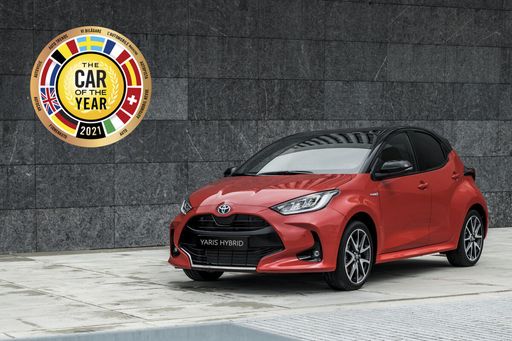
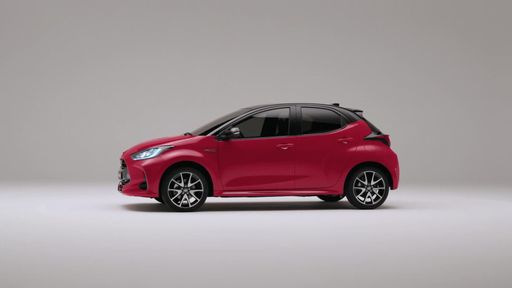
Picanto

Character check: cheeky city sprite or composed small car?

The Kia Picanto feels like the extrovert of the neighborhood — bubbly design, bright colour options and a setup that rewards short, nimble trips with a smile. By contrast, the Toyota Yaris arrives with a quieter, more measured presence that leans toward refinement over flash; it’s the one that looks just as comfortable at the supermarket as on a cross-country run. The Picanto sells personality; the Yaris sells composure, and that shows in how each car rides and responds when you push them a little. If you want theatre in the city, the Picanto delivers; if you want low-key competence, the Yaris does the reassuring nod instead of the wink.

Yaris

Real-world use: tight parking lots or longer errands?

For tight lanes, short hops and kerb-side parking, the Kia Picanto is the obvious urban weapon — light-footed and easy to place where space is at a premium. The Toyota Yaris stretches that urban brief into something more versatile, offering a calmer cabin and a composure that suits longer commutes or weekend drives with luggage. Families who need a practical little runner will feel the Yaris’s greater everyday flexibility, while single-city commuters or style-first buyers will appreciate the Picanto’s city-focused agility. In plain terms: Picanto excels in stop-and-go urban life, Yaris takes the lead when trips get longer or the load gets heavier.

Picanto

Why you’d justify one over the other to yourself (or your partner)

Choose the Kia Picanto if you like the idea of a car that’s cheap to live with, easy to drive and full of personality — it’s an emotional buy that still makes sense for urban budgets. Pick the Toyota Yaris if you want a small car that quietly prioritises efficiency, usable space and a more grown-up driving experience you can live with every day. The Picanto lets you express yourself without breaking the bank; the Yaris lets you rationalise the purchase on long-term comfort and low-stress ownership. Both choices are defendable — one is louder in character, the other more pragmatic in promise.

Who should consider the Kia Picanto?

If you’re a city dweller who values manoeuvrability, colourful styling and a low entry price, the Kia Picanto will match that lifestyle neatly — think tight streets, frequent short trips and easy parking. The Picanto also appeals to drivers who want a car that feels fresh and personal without the overhead of extra space or complexity, so it suits those who prize urban practicality and a bit of flair. It’s an excellent pick for the Pragmatist who lives in the city and the Design-minded buyer who wants visual pep. Compared with the Toyota Yaris, the Picanto is the smaller, cheekier option rather than the long-haul companion.

Who should consider the Toyota Yaris (and where the Picanto still makes sense)

The Toyota Yaris is aimed at buyers who prioritise efficiency, a composed ride and a measured sense of modernity — perfect for commuters who expect comfortable daily miles and low running fuss. It’s also attractive to buyers concerned with proven reliability and safety-minded features, making the Yaris a sensible choice for small families or those who do longer stretches of motorway or mixed driving. Meanwhile, if your world is predominantly inner-city errands and you like to stand out, remember the Kia Picanto still undercuts the Yaris on sheer urban cheek and ease of use. No outright winner here — just two distinct small cars for two clear mindsets; keep reading into the data below to see how their numbers back up these impressions.

Here’s where it gets real: The technical differences in detail

Yaris

Costs and Efficiency:

Price and efficiency are key factors when choosing a car – and this is often where the real differences emerge.

Kia Picanto is substantially cheaper – starting at 15,300 £ , while the Toyota Yaris costs 21,900 £ . That’s a price difference of around 6,557 £.

Fuel consumption also shows a difference: the Toyota Yaris uses 3.8 L/100km and is substantially more efficient than the Kia Picanto with 5.5 L/100km. The difference is about 1.7 L/100km.

Picanto

Engine and Performance:

Power, torque and acceleration are the classic benchmarks for car enthusiasts – and here, some clear differences start to show.

When it comes to engine power, the Toyota Yaris offers substantially more power – delivering 280 HP compared to 68 HP. That’s roughly 212 HP more horsepower.

When accelerating from 0 to 100 km/h, the Toyota Yaris is substantially quicker – completing the sprint in 5.5 s, while the Kia Picanto takes 14.6 s. That’s about 9.1 s quicker.

There’s also a difference in torque: the Toyota Yaris delivers significantly more torque with 390 Nm compared to 96 Nm. That’s about 294 Nm more.

Yaris

Space and Everyday Use:

Beyond pure performance, interior space and usability matter most in daily life. This is where you see which car is more practical and versatile.

Both vehicles offer seating for 5 people.

In terms of curb weight, Toyota Yaris is very slightly lighter – 1,090 kg compared to 1,124 kg. The difference is around 34 kg.

When it comes to payload, the Toyota Yaris carries visibly more – 525 kg compared to 332 kg. That’s a difference of about 193 kg.

Who wins the race in the data check?

The Toyota Yaris is clearly superior overall in the objective data comparison.
This result only shows which model scores more points on paper – not which of the two cars feels right for you.

from £21,900
Yaris

Toyota Yaris

  • Engine Type : Full Hybrid, Petrol
  • Transmission : Automatic, Manuel
  • Drive Type : Front-Wheel Drive, All-Wheel Drive
  • Power HP : 116 - 280 HP
  • Consumption L/100km : 3.8 - 8.7 L/100km
Toyota Yaris
Kia Picanto

Costs and Consumption

View detailed analysis

Engine and Performance

View detailed analysis

Dimensions and Body

View detailed analysis

Toyota Yaris

The Toyota Yaris is a sprightly city hatch that packs clever packaging, surprising comfort and fuel-sipping manners into a neat, easy-to-park package. It rewards sensible buyers with low running costs, friendly ergonomics and a forgiving drive, delivered with Japanese reliability and just enough personality to make errands feel a little less ordinary.

details

Kia Picanto

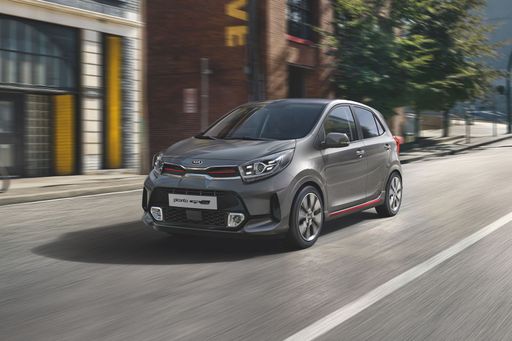
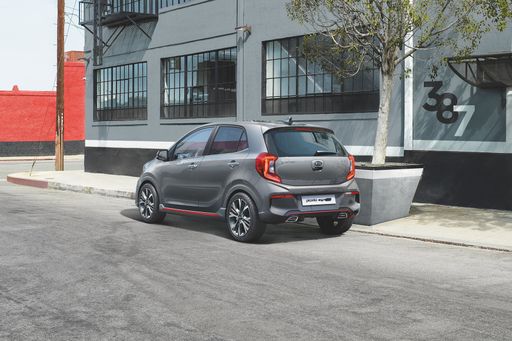
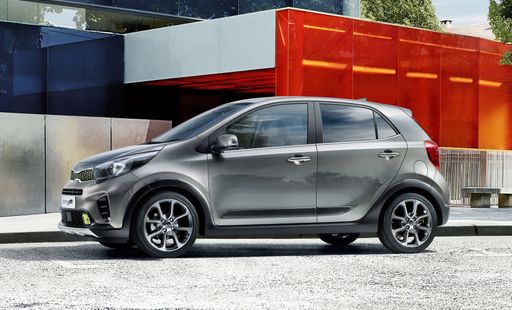
Kia Picanto is a cheeky city hatch that squeezes surprising style, practicality and a smile-inducing drive into a pocket-friendly package. It’s ideal for urban buyers who want fuss-free running, effortless parking and a car that punches above its class without pretending to be anything it’s not.

details
Toyota Yaris
Kia Picanto

Costs and Consumption

Price
21,900 - 40,800 £
Price
15,300 - 19,300 £
Consumption L/100km
3.8 - 8.7 L/100km
Consumption L/100km
5.5 - 5.9 L/100km
Consumption kWh/100km
-
Consumption kWh/100km
-
Electric Range
-
Electric Range
-
Battery Capacity
-
Battery Capacity
-
co2
87 - 197 g/km
co2
126 - 134 g/km
Fuel tank capacity
-
Fuel tank capacity
-

Dimensions and Body

Body Type
Hatchback
Body Type
Hatchback
Seats
4 - 5
Seats
4 - 5
Doors
-
Doors
-
Curb weight
1,090 - 1,356 kg
Curb weight
1,124 - 1,131 kg
Trunk capacity
141 - 286 L
Trunk capacity
-
Length
-
Length
-
Width
1,745 - 1,805 mm
Width
1,595 mm
Height
-
Height
-
Max trunk capacity
-
Max trunk capacity
-
Payload
289 - 525 kg
Payload
253 - 332 kg

Engine and Performance

Engine Type
Full Hybrid, Petrol
Engine Type
Petrol
Transmission
Automatic, Manuel
Transmission
Manuel, Automatic
Transmission Detail
CVT, Manual Gearbox
Transmission Detail
Manual Gearbox, Automated Manual
Drive Type
Front-Wheel Drive, All-Wheel Drive
Drive Type
Front-Wheel Drive
Power HP
116 - 280 HP
Power HP
68 HP
Acceleration 0-100km/h
5.5 - 9.7 s
Acceleration 0-100km/h
14.6 - 17.2 s
Max Speed
-
Max Speed
-
Torque
390 Nm
Torque
96 Nm
Number of Cylinders
3
Number of Cylinders
3
Power kW
85 - 206 kW
Power kW
50 kW
Engine capacity
1,490 - 1,618 cm3
Engine capacity
998 cm3

General

Model Year
2,026
Model Year
2,025
CO2 Efficiency Class
B, G
CO2 Efficiency Class
D
Brand
Toyota
Brand
Kia
DriveDuel uses data analysis and artificial intelligence to evaluate vehicle data and create content. Content is regularly reviewed and improved. The displayed prices are estimates based on German list prices, adjusted to the respective country’s VAT. Country-specific registration taxes are not included. This information is not legally binding.