VS

Toyota Yaris vs Vauxhall Corsa comparison

Compare performance (280 HP vs 156 HP), boot space and price (21,900 £ vs 19,600 £ ) at a glance. Find out which car is the better choice for you – Toyota Yaris or Vauxhall Corsa?

Toyota Yaris vs Vauxhall Corsa: Key differences

Toyota Yaris

4 (5 Reviews)
rate
  • considerably more power
  • moderately more efficient
  • considerably quicker 0–100 km/h
  • marginally lighter
details

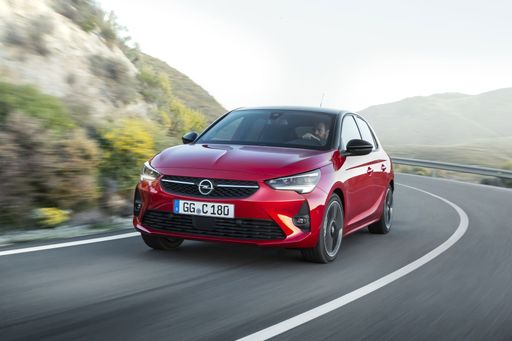
Vauxhall Corsa

  • a bit cheaper
  • barely more trunk space
details

All details on performance, efficiency, range and trunk space can be found in the technical comparison below – including user reviews for both models.

By Achim Sedelmaier

Yaris

Vauxhall Corsa VS Toyota Yaris — concise comparison for small‑car buyers

Vauxhall Corsa VS Toyota Yaris open the conversation where everyday usability meets economy, and this comparison focuses on what owners actually feel day to day. The Vauxhall Corsa leans toward a taut, driver's‑oriented character while the Toyota Yaris aims for ultra‑low running costs and an undemanding, safe demeanour. Both pack modern infotainment and driver aids, but they deliver them with different ergonomics and priorities that shape ownership. Read on to see how those priorities change the daily experience of driving, loading and living with each car. This is about fit and trade‑offs, not spec sheets — the technical details come after these practical impressions.
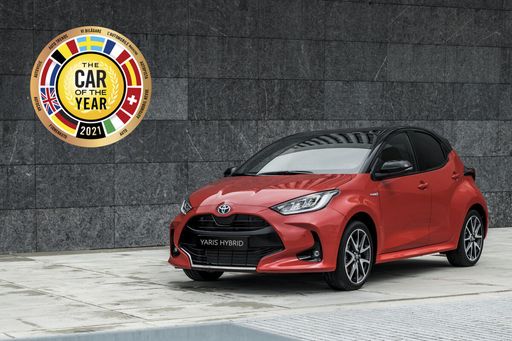
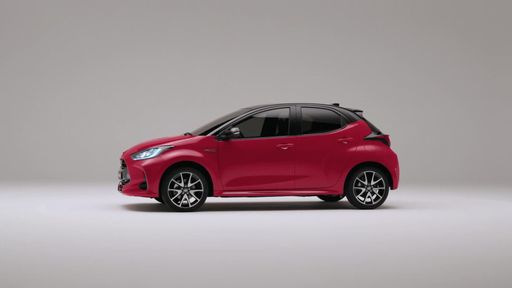
Corsa

Driving character and on‑road manners

The Vauxhall Corsa drives with a firmer, more controlled feel that rewards corrective steering and precise inputs, whereas the Toyota Yaris favours calm, predictable responses that smooth city traffic and lower stress. Corsa owners will notice a more direct steering and a chassis that holds its line through corners, which makes it feel livelier on twisty country lanes. Toyota Yaris prioritises efficiency in its hybrid setup and feels quieter and more relaxed at low speeds, but the CVT‑like behaviour and engine note under load can feel less refined on hard acceleration. In short, choose Corsa if you want sharper feedback and crisper responses; pick Yaris if you want relaxed, economical commuting with minimal fuss. Both are competent, but the way they deliver competence is clearly different.

Yaris

Comfort and cabin atmosphere

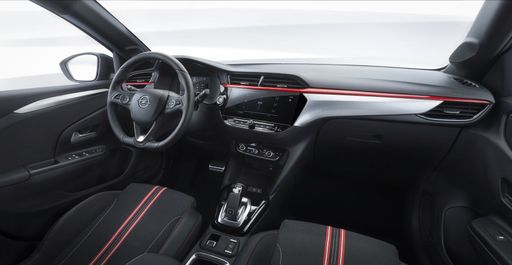
Inside, the Vauxhall Corsa presents a practical, somewhat utilitarian cabin with firm seats up front that support longer stints, while the Toyota Yaris offers a tidier, more conservative interior that feels slightly more refined at a glance. Corsa’s physical climate controls and straightforward layout are a boon for usability, yet plastics and finishes remind you it’s a pragmatic car rather than a premium cocoon. Yaris counters with a cleaner dashboard and a recent infotainment uplift that makes technology feel smoother, though rear occupants still face the same squeeze in both cars. For long trips the Corsa’s front seats will please drivers who value support, while the Yaris keeps things calm for occupants who value quiet low‑speed cruising. The net effect: Corsa leans into driver comfort and function, Yaris into a composed, cost‑focused passenger environment.

Corsa

Practicality and day‑to‑day usability

Both cars are compact, but the Vauxhall Corsa usually wins the argument where boot access and loadability matter, offering a more user‑friendly opening and a marginally more practical luggage bay for everyday shopping and weekend bags. The Toyota Yaris hides its utility in a taller, shallower boot and a cabin layout that prioritises packaging over outright cargo flexibility, so bulky items can feel trickier to arrange. Rear seat space is snug in both — adults will find knee and headroom limited — yet Corsa’s seat comfort makes short to medium trips easier for taller passengers. Storage around the cabin follows the same split: Corsa gives intuitive control placement and useful cubbyholes, Yaris trades some of that for a neater dash and slightly smaller door pockets. If you regularly carry folded prams, sports kit or awkward boxes, the Corsa’s practicality edges ahead; if you carry light daily loads, Yaris keeps it neat and efficient.

City living, fuel economy and running costs

In urban life the Toyota Yaris stands out: its hybrid system often moves you silently on electric power, delivering exceptional fuel consumption and low operating costs without the hassle of charging. The Vauxhall Corsa is very city‑capable too, particularly in its mild‑hybrid or electric variants, and it feels nimbler to park and manoeuvre thanks to a small turning circle and crisp steering. For buyers focused on every‑day pennies, the Yaris’s real‑world thriftiness and low service demands make it hard to beat; for those who want a livelier drive while still keeping fuel bills reasonable, the Corsa is a fair compromise. Both manage town traffic well, but Yaris will repay a commuter’s wallet more consistently while Corsa rewards the driver who values feel. Choose based on whether you prioritise running costs (Yaris) or a sharper small‑car experience (Corsa).

Buyer fit and how this matchup should guide your choice

If your life is built around short urban commutes, strict budgets and lots of stop‑start traffic, the Toyota Yaris is tailored to that use with its hybrid ease, strong safety kit and very low consumption. The Vauxhall Corsa suits buyers who want a compact that feels engaging to drive, offers slightly better load practicality and gives more tactile controls — a better pick for drivers who spend a mix of city and country miles and want sharper feedback. Families with frequent bulky luggage or taller rear passengers will feel the limitations of both, but the Corsa’s marginally better boot usability helps; solo commuters and economical fleet buyers will value the Yaris’s frugality. Neither car is perfect for long, quiet motorway cruising, but each car’s strengths map cleanly to different owner priorities — drive preference and daily needs should decide which one you test first before diving into the technical specs. The detailed technical comparison that follows will make those trade‑offs even clearer for your exact usage pattern.

Here’s where it gets real: The technical differences in detail

Yaris

Costs and Efficiency:

Price and efficiency are often the first things buyers look at. Here it becomes clear which model has the long-term edge – whether at the pump, the plug, or in purchase price.

Vauxhall Corsa is a bit cheaper – starting at 19,600 £ , while the Toyota Yaris costs 21,900 £ . That’s a price difference of around 2,237 £.

Fuel consumption also shows a difference: the Toyota Yaris uses 3.8 L/100km and is moderately more efficient than the Vauxhall Corsa with 4.5 L/100km. The difference is about 0.7 L/100km.

Corsa

Engine and Performance:

Power, torque and acceleration are the classic benchmarks for car enthusiasts – and here, some clear differences start to show.

When it comes to engine power, the Toyota Yaris offers considerably more power – delivering 280 HP compared to 156 HP. That’s roughly 124 HP more horsepower.

When accelerating from 0 to 100 km/h, the Toyota Yaris is considerably quicker – completing the sprint in 5.5 s, while the Vauxhall Corsa takes 7.9 s. That’s about 2.4 s quicker.

There’s also a difference in torque: the Toyota Yaris delivers visibly more torque with 390 Nm compared to 260 Nm. That’s about 130 Nm more.

Yaris

Space and Everyday Use:

Beyond pure performance, interior space and usability matter most in daily life. This is where you see which car is more practical and versatile.

Both vehicles offer seating for 5 people.

In terms of curb weight, Toyota Yaris is marginally lighter – 1,090 kg compared to 1,175 kg. The difference is around 85 kg.

Looking at boot space, the Vauxhall Corsa offers barely more boot space – 309 L compared to 286 L. That’s a difference of about 23 L.

When it comes to payload, the Toyota Yaris carries moderately more – 525 kg compared to 445 kg. That’s a difference of about 80 kg.

Who wins the race in the data check?

The Toyota Yaris is decisively ahead in the objective data comparison.
This result only shows which model scores more points on paper – not which of the two cars feels right for you.

from £21,900
Yaris

Toyota Yaris

  • Engine Type : Full Hybrid, Petrol
  • Transmission : Automatic, Manuel
  • Drive Type : Front-Wheel Drive, All-Wheel Drive
  • Power HP : 116 - 280 HP
  • Consumption L/100km : 3.8 - 8.7 L/100km
Toyota Yaris
Vauxhall Corsa

Costs and Consumption

View detailed analysis

Engine and Performance

View detailed analysis

Dimensions and Body

View detailed analysis

Toyota Yaris

The Yaris is a compact hatchback that blends everyday practicality with Toyota’s long-standing reputation for reliability, making it easy to live with in city traffic. Its nimble handling and sensible interior make the Yaris a smart choice for drivers who want straightforward, fuss-free transport.

details

Vauxhall Corsa

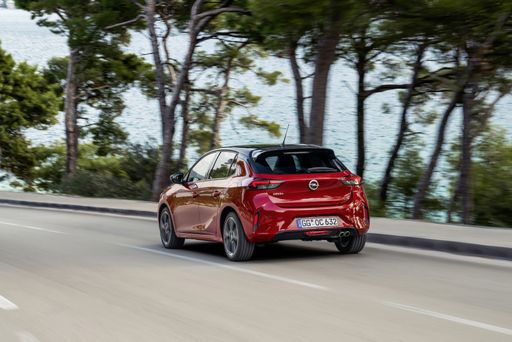
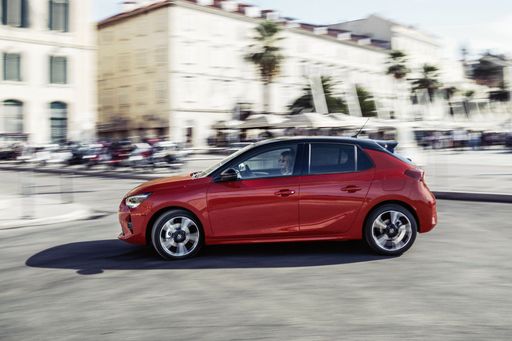
The Opel Corsa is a tidy little package that blends cheeky styling with sensible practicality, perfect for city streets and weekend escapes alike. It’s easy to live with, economical to run and just lively enough to make daily driving a bit more fun.

details
Toyota Yaris
Vauxhall Corsa

Costs and Consumption

Price
21,900 - 40,800 £
Price
19,600 - 30,600 £
Consumption L/100km
3.8 - 8.7 L/100km
Consumption L/100km
4.5 - 5.2 L/100km
Consumption kWh/100km
-
Consumption kWh/100km
14.2 - 15.7 kWh/100km
Electric Range
-
Electric Range
357 - 429 km
Battery Capacity
-
Battery Capacity
-
co2
87 - 197 g/km
co2
0 - 116 g/km
Fuel tank capacity
-
Fuel tank capacity
-

Dimensions and Body

Body Type
Hatchback
Body Type
Hatchback
Seats
4 - 5
Seats
5
Doors
-
Doors
-
Curb weight
1,090 - 1,356 kg
Curb weight
1,175 - 1,544 kg
Trunk capacity
141 - 286 L
Trunk capacity
267 - 309 L
Length
-
Length
-
Width
1,745 - 1,805 mm
Width
1,765 mm
Height
-
Height
-
Max trunk capacity
-
Max trunk capacity
-
Payload
289 - 525 kg
Payload
376 - 445 kg

Engine and Performance

Engine Type
Full Hybrid, Petrol
Engine Type
Electric, Petrol MHEV, Petrol
Transmission
Automatic, Manuel
Transmission
Automatic, Manuel
Transmission Detail
CVT, Manual Gearbox
Transmission Detail
Reduction Gearbox, Dual-Clutch Automatic, Manual Gearbox
Drive Type
Front-Wheel Drive, All-Wheel Drive
Drive Type
Front-Wheel Drive
Power HP
116 - 280 HP
Power HP
100 - 156 HP
Acceleration 0-100km/h
5.5 - 9.7 s
Acceleration 0-100km/h
7.9 - 9.9 s
Max Speed
-
Max Speed
-
Torque
390 Nm
Torque
205 - 260 Nm
Number of Cylinders
3
Number of Cylinders
3
Power kW
85 - 206 kW
Power kW
74 - 115 kW
Engine capacity
1,490 - 1,618 cm3
Engine capacity
1,199 cm3

General

Model Year
2026
Model Year
2,024 - 2,025
CO2 Efficiency Class
B, G
CO2 Efficiency Class
A, C, D
Brand
Toyota
Brand
Vauxhall
DriveDuel uses data analysis and artificial intelligence to evaluate vehicle data and create content. Content is regularly reviewed and improved. The displayed prices are estimates based on German list prices, adjusted to the respective country’s VAT. Country-specific registration taxes are not included. This information is not legally binding.