VS

Volvo EX30 vs Lynk & Co 02 - Differences and prices compared

Compare performance (428 HP vs 272 HP), boot space and price (33000 £ vs 30900 £ ) at a glance. Find out which car is the better choice for you – Volvo EX30 or Lynk & Co 02?

EX30

The Battle of Compact Electric SUVs: Volvo EX30 vs. Lynk & Co 02

In the increasingly competitive world of electric vehicles, compact SUVs have become the battleground for innovation and efficiency. Two compelling contenders in this space are the Volvo EX30 and the Lynk & Co 02. These vehicles not only embody cutting-edge technology but also cater to environmentally conscious consumers. Let's dive into their technical aspects, innovations, and how they stand against each other.

EX30

Design and Dimensions: A Look at Aesthetics and Practicality

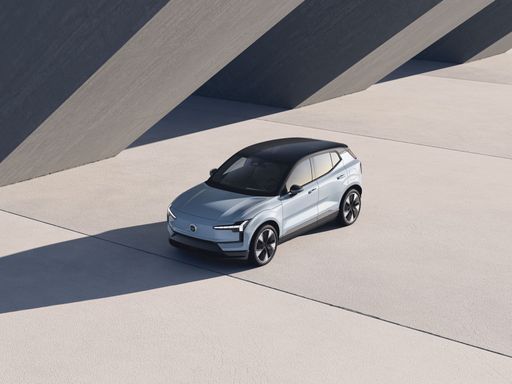
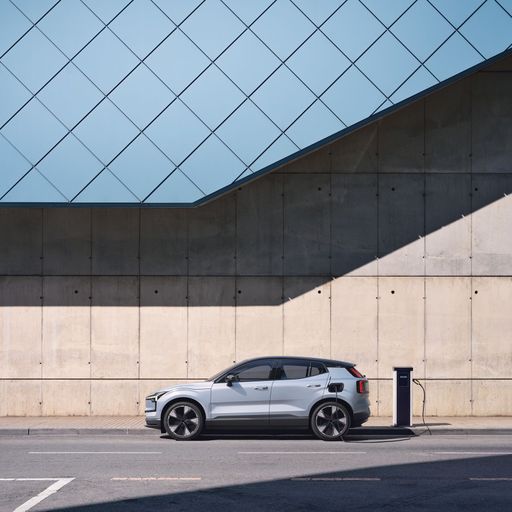
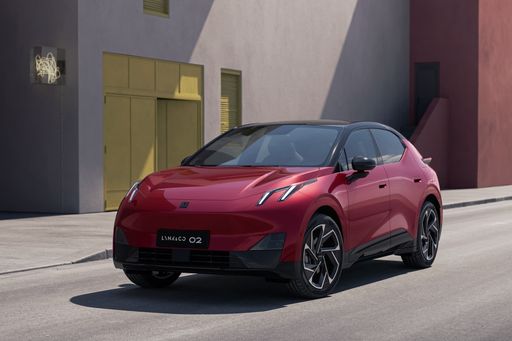
The Volvo EX30 and Lynk & Co 02 are designed to please both the eye and the practical-minded driver. The EX30 measures 4233 mm in length, 1837 mm in width, and a height range of 1549 to 1567 mm. It offers a trunk capacity of 318 liters. In contrast, the Lynk & Co 02 stands slightly taller and longer, with dimensions of 4460 mm in length, 1845 mm in width, and a consistent height of 1573 mm, paired with a more spacious trunk capacity of 440 liters.

EX30

Power, Performance, and Efficiency: A Comparison of Electric Might

Under the hood, or rather beneath the chassis, both vehicles boast impressive electric engines. The Volvo EX30 offers considerable flexibility with two powertrain options: a 272 HP rear-wheel drive and a high-performance 428 HP all-wheel drive variant. The vehicle offers an acceleration range from 0 to 100 km/h between an impressive 3.6 to 5.7 seconds, depending on the powertrain configuration.

The Lynk & Co 02 keeps it straightforward with a single 272 HP rear-wheel-drive setup, achieving the 0 to 100 km/h sprint in 5.5 seconds, closely aligning with the EX30's entry-level performance. Both SUVs share a top speed of 180 km/h.

In terms of efficiency, the Volvo EX30 consumes between 17 to 18.7 kWh/100 km, supporting ranges from 339 to 476 km, thanks to its 49 to 65 kWh battery capacity. Meanwhile, the Lynk & Co 02 delivers slightly better range efficiency at 17.1 to 17.6 kWh/100 km and a driving range between 435 and 445 km.

EX30

Interior and Technology: Innovation Inside

Both the Volvo EX30 and Lynk & Co 02 are designed with modern drivers in mind, providing seating for five and a suite of advanced technologies. Volvo’s hallmark lies in its seamless integration of safety and convenience features, while Lynk & Co takes the approach of connectivity and user-friendly technology to new heights.

Volvo's offering is notable for its advanced ergonomic design and high-quality material selections. On the other hand, Lynk & Co prides itself on offering flexibility, such as subscription models for ownership, which can be appealing to tech-savvy and younger audiences. Both cars feature advanced driver-assist technologies and infotainment systems designed for the modern road.

EX30

Conclusion: A Matter of Preference

The choice between the Volvo EX30 and Lynk & Co 02 boils down to personal preference and priorities. If a more dynamic performance and the prestige of a storied brand like Volvo appeal to you, the EX30 may be your ideal choice. However, if cutting-edge connectivity, practicality, and slightly better range are more in tune with your lifestyle, then the Lynk & Co 02 stands as an enticing alternative.

In the end, both vehicles represent the future of automotive innovation, offering something unique for different kinds of drivers. The decision will ultimately rest with those behind the wheel, navigating the electrified roads of tomorrow.

Volvo EX30

3.6 (5 Reviews)
rate

Lynk & Co 02

5 (1 Reviews)
rate

Here’s where it gets real: The technical differences in detail

Costs and Efficiency:

Price and efficiency are often the first things buyers look at. Here it becomes clear which model has the long-term edge – whether at the pump, the plug, or in purchase price.

Lynk & Co 02 has a hardly perceptible advantage in terms of price – it starts at 30900 £ , while the Volvo EX30 costs 33000 £ . That’s a price difference of around 2139 £.

In terms of energy consumption, the advantage goes to the Volvo EX30: with 17 kWh per 100 km, it’s barely noticeable more efficient than the Lynk & Co 02 with 17.10 kWh. That’s a difference of about 0.10 kWh.

As for electric range, the Volvo EX30 performs minimal better – achieving up to 476 km, about 31 km more than the Lynk & Co 02.

Engine and Performance:

Power, torque and acceleration are the classic benchmarks for car enthusiasts – and here, some clear differences start to show.

When it comes to engine power, the Volvo EX30 has a clearly perceptible edge – offering 428 HP compared to 272 HP. That’s roughly 156 HP more horsepower.

In acceleration from 0 to 100 km/h, the Volvo EX30 is significantly quicker – completing the sprint in 3.60 s, while the Lynk & Co 02 takes 5.50 s. That’s about 1.90 s faster.

There’s no difference in top speed – both reach 180 km/h.

There’s also a difference in torque: Volvo EX30 pulls convincingly stronger with 543 Nm compared to 323 Nm. That’s about 220 Nm difference.

Space and Everyday Use:

Whether family car or daily driver – which one offers more room, flexibility and comfort?

Both vehicles offer seating for 5 people.

In curb weight, Volvo EX30 is slight lighter – 1840 kg compared to 1895 kg. The difference is around 55 kg.

In terms of boot space, the Lynk & Co 02 offers noticeable more room – 410 L compared to 318 L. That’s a difference of about 92 L.

In maximum load capacity, the Lynk & Co 02 performs clearly perceptible better – up to 1349 L, which is about 349 L more than the Volvo EX30.

When it comes to payload, Volvo EX30 slight takes the win – 390 kg compared to 375 kg. That’s a difference of about 15 kg.

Who wins the race in the data check?

The Volvo EX30 holds a decisive overall lead in the objective data comparison.
This result only shows which model scores more points on paper – not which of the two cars feels right for you.

Volvo EX30
Lynk & Co 02

Costs and Consumption

View detailed analysis

Engine and Performance

View detailed analysis

Dimensions and Body

View detailed analysis
from about £33,000
EX30

Volvo EX30

  • Engine Type : Electric
  • Transmission : Automatic
  • Drive Type : Rear-Wheel Drive, All-Wheel Drive
  • Power HP : 272 - 428 HP
  • Consumption kWh/100km : 17 - 18.7 kWh
  • Electric Range : 339 - 476 km

Volvo EX30

3.6 (5 Reviews)
rate

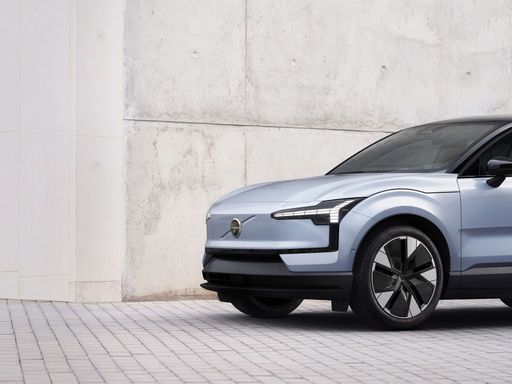
The Volvo EX30 arrives as a compact electric with crisp Scandinavian design and a cheeky personality, proving you can be serious about safety and still enjoy a grin on your commute. Its cabin is cleverly packaged and delightfully easy to live with, offering smart tech and practical touches that make it feel like a grown-up's city car with a sense of fun.

details

Lynk & Co 02

5 (1 Reviews)
rate

The Lynk & Co 02 wears its attitude like a leather jacket—bold styling and a youthful cabin that punches above its class, appealing to buyers who want personality as well as practicality. It's a genuinely engaging compact with everyday usability, offering enough flair and refinement to stand out in a crowded market without trying too hard.

details
Volvo EX30
Lynk & Co 02

Costs and Consumption

Price
33000 - 49100 £
Price
30900 - 34300 £
Consumption L/100km
-
Consumption L/100km
-
Consumption kWh/100km
17 - 18.7 kWh
Consumption kWh/100km
17.1 - 17.6 kWh
Electric Range
339 - 476 km
Electric Range
435 - 445 km
Battery Capacity
49 - 65 kWh
Battery Capacity
-
co2
0 g/km
co2
0 g/km
Fuel tank capacity
-
Fuel tank capacity
-

Dimensions and Body

Body Type
SUV
Body Type
SUV
Seats
5
Seats
5
Doors
5
Doors
5
Curb weight
1840 - 1960 kg
Curb weight
1895 kg
Trunk capacity
318 L
Trunk capacity
410 L
Length
4233 mm
Length
4460 mm
Width
1838 mm
Width
1845 mm
Height
1550 - 1567 mm
Height
1573 mm
Max trunk capacity
1000 L
Max trunk capacity
1349 L
Payload
370 - 390 kg
Payload
375 kg

Engine and Performance

Engine Type
Electric
Engine Type
Electric
Transmission
Automatic
Transmission
Automatic
Transmission Detail
Reduction Gearbox
Transmission Detail
Reduction Gearbox
Drive Type
Rear-Wheel Drive, All-Wheel Drive
Drive Type
Rear-Wheel Drive
Power HP
272 - 428 HP
Power HP
272 HP
Acceleration 0-100km/h
3.6 - 5.7 s
Acceleration 0-100km/h
5.50 s
Max Speed
180 km/h
Max Speed
180 km/h
Torque
343 - 543 Nm
Torque
323 Nm
Number of Cylinders
-
Number of Cylinders
-
Power kW
200 - 315 kW
Power kW
200 kW
Engine capacity
-
Engine capacity
-

General

Model Year
2024 - 2025
Model Year
2024
CO2 Efficiency Class
A
CO2 Efficiency Class
A
Brand
Volvo
Brand
Lynk & Co
What drivetrain options does the Volvo EX30 have?

The Volvo EX30 is offered with Rear-Wheel Drive or All-Wheel Drive.

The prices shown are estimates based on German list prices, adjusted for local VAT. Local registration taxes (e.g. NoVA, BPM or CO2 malus) are not included. This information is not legally binding.