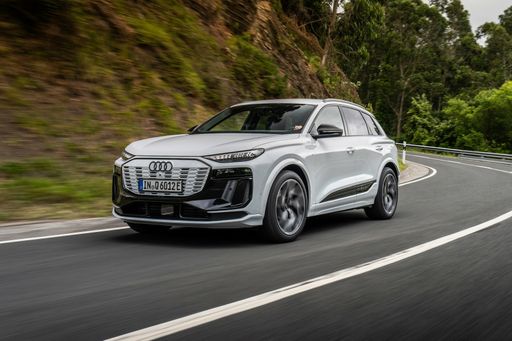
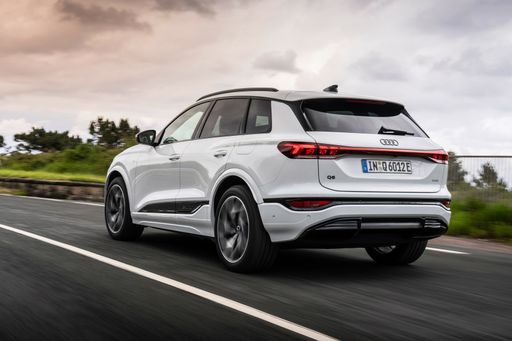
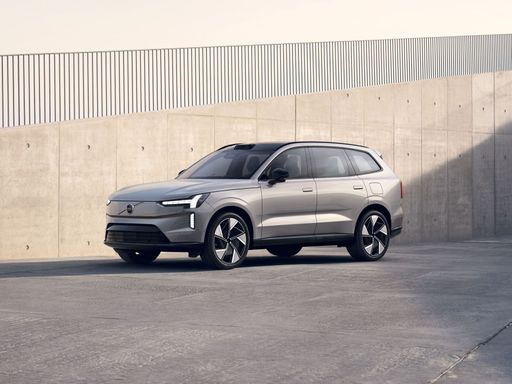
VS

Volvo EX90 vs Audi Q6 e-tron comparison

Compare performance (680 HP vs 490 HP), boot space and price (73,700 £ vs 54,400 £ ) at a glance. Find out which car is the better choice for you – Volvo EX90 or Audi Q6 e-tron?

Volvo EX90 vs Audi Q6 e-tron: Key differences

Volvo EX90

  • visibly more power
  • very slightly quicker 0–100 km/h

Audi Q6 e-tron

4.9 (3 Reviews)
rate
  • noticeably cheaper
  • slightly more efficient
  • marginally more electric range
  • slightly lighter

All details on performance, efficiency, range and trunk space can be found in the technical comparison below – including user reviews for both models.

EX90

An Automotive Matchup: Audi Q6 e-tron vs. Volvo EX90

As the automotive world gradually shifts towards electrification, two heavyweights, the Audi Q6 e-tron and the Volvo EX90, emerge as compelling contenders in the electric SUV segment. Both vehicles promise advanced technology, sustainability, and performance. In this article, we dive deep into the specifications, innovations, and features of each model to guide potential buyers and enthusiasts alike.
Q6 e-tron

Power and Performance

The Audi Q6 e-tron flaunts an impressive range of power outputs, varying from 292 HP to a staggering 516 HP across different configurations. It features both Rear-Wheel Drive (RWD) and All-Wheel Drive (AWD) options, providing flexibility to suit diverse driving preferences. Acceleration is another noteworthy aspect, with the ability to sprint from 0-100 km/h in as little as 4.3 seconds for those opting for the more powerful variants. Remarkably, the Q6 e-tron also achieves a top speed of 230 km/h, showcasing its performance-oriented nature.

In contrast, the specifications for the Volvo EX90 are still under wraps, but Volvo has made significant strides towards enhancing electric powertrains with its recent models. The brand focuses on promoting safety and sustainability, ensuring that performance doesn’t come at the cost of environmental impact. As such, we expect the Volvo EX90 to deliver similar dynamic experiences, with an emphasis on straight-line stability and efficient power delivery.

EX90

Battery Life and Range

One of the standout features of the Audi Q6 e-tron is its several battery options, with capacities ranging from 75.8 kWh to an impressive 94.9 kWh. The range per charge is also commendable, with some models achieving an electric range of up to 637 km. This highlights the Q6 e-tron's potential for longer journeys without frequent charging stops, making it a compelling choice for daily commuters and adventurous road-trippers alike.

While detailed battery specifications for the Volvo EX90 remain undisclosed, Volvo has been a pioneer in electric vehicle technology, often integrating high-efficiency batteries that align with their commitment to sustainability. It is anticipated that the EX90 will offer competitive range capabilities, potentially mirroring or enhancing the offerings seen in the Q6 e-tron.

Q6 e-tron

Interior and Tech Innovations

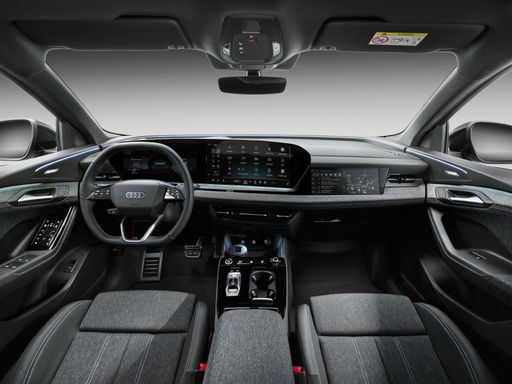
Step inside the Audi Q6 e-tron and you'll find a luxurious cabin adorned with premium materials and advanced technology. Audi's MMI infotainment system stands out with its intuitive interface and sharp graphics, integrating features such as Virtual Cockpit and extensive connectivity options like Apple CarPlay and Android Auto. The interior is spacious, comfortably seating five passengers with ample trunk capacity ranging from 499 to 526 liters, depending on the configuration. The Q6 e-tron balances a functional yet chic aesthetic that is synonymous with the brand.

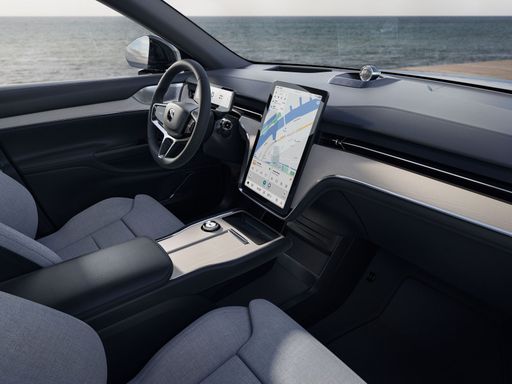
Volvo's focus on Scandinavian design principles offers a minimalist yet elegant interior in the EX90. Known for its meticulous attention to detail, we can expect luxurious materials and a user-friendly interface powered by the latest in infotainment technology. Volvo's vehicles frequently emphasize safety features, and the EX90 is likely to incorporate cutting-edge assistance systems, setting a high benchmark for the category.

EX90

Sustainability and Environmental Impact

Both Audi and Volvo are dedicated to reducing their carbon footprints, with the Q6 e-tron receiving commendable ratings in its CO2 efficiency class. Featuring no tailpipe emissions, it supports a lifestyle that honors environmental consciousness. Alternatives in battery production and a focus on sustainability in supply chains illustrate Audi's commitment.

Volvo has long championed sustainability, pledging to become a fully electric car manufacturer by 2030. This commitment extends beyond the vehicles themselves; Volvo scrutinizes the entire lifecycle of its products to ensure environmental friendliness. Expect the EX90 to not only be an electric vehicle but also one derived from responsibly sourced materials.

Q6 e-tron

Final Thoughts

The Audi Q6 e-tron and Volvo EX90 are both positioning themselves as leaders in the electric SUV market. While the Q6 e-tron offers an exciting blend of performance, range, and luxurious features, the EX90 is shaping up to continue Volvo's legacy of safety, sustainability, and elegant design. For consumers, the choice may ultimately boil down to brand loyalty and personal preference in terms of aesthetics and performance attributes.

As electrification becomes more ubiquitous, these models represent the significant strides both Audi and Volvo are taking towards a greener future. Whether you value high performance, advanced technology, or eco-friendly operation, either option is sure to impress.

Here’s where it gets real: The technical differences in detail

EX90

Costs and Efficiency:

When it comes to price and running costs, the biggest differences usually appear. This is often where you see which car fits your budget better in the long run.

Audi Q6 e-tron is noticeably cheaper – starting at 54,400 £ , while the Volvo EX90 costs 73,700 £ . That’s a price difference of around 19,277 £.

In terms of energy consumption, the Audi Q6 e-tron is slightly more efficient: consuming 15.6 kWh/100km compared to 17.8 kWh/100km for the Volvo EX90. That’s a difference of about 2.2 kWh/100km.

As for electric range, the Audi Q6 e-tron offers marginally more range – reaching up to 656 km, about 36 km more than the Volvo EX90.

Q6 e-tron

Engine and Performance:

Power, torque and acceleration are the classic benchmarks for car enthusiasts – and here, some clear differences start to show.

When it comes to engine power, the Volvo EX90 offers visibly more power – delivering 680 HP compared to 490 HP. That’s roughly 190 HP more horsepower.

When accelerating from 0 to 100 km/h, the Volvo EX90 is very slightly quicker – completing the sprint in 4.2 s, while the Audi Q6 e-tron takes 4.4 s. That’s about 0.2 s quicker.

There’s also a difference in torque: the Volvo EX90 delivers marginally more torque with 870 Nm compared to 855 Nm. That’s about 15 Nm more.

EX90

Space and Everyday Use:

Whether family car or daily driver – which one offers more room, flexibility and comfort?

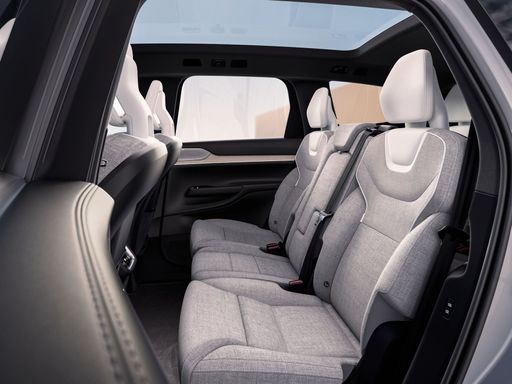
Seats: Volvo EX90 offers more seats – 7 vs 5.

In terms of curb weight, Audi Q6 e-tron is slightly lighter – 2,200 kg compared to 2,555 kg. The difference is around 355 kg.

When it comes to payload, the Volvo EX90 carries marginally more – 585 kg compared to 540 kg. That’s a difference of about 45 kg.

Who wins the race in the data check?

The Volvo EX90 has the upper hand in the objective data comparison.
This result only shows which model scores more points on paper – not which of the two cars feels right for you.

from £73,700
EX90

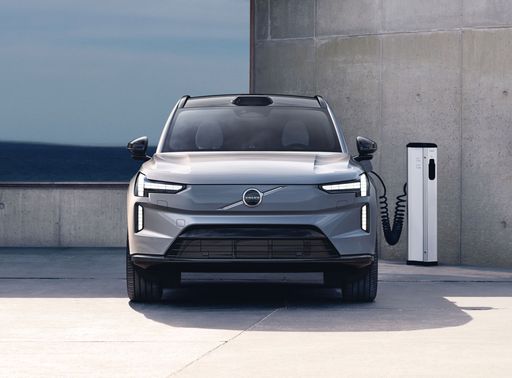
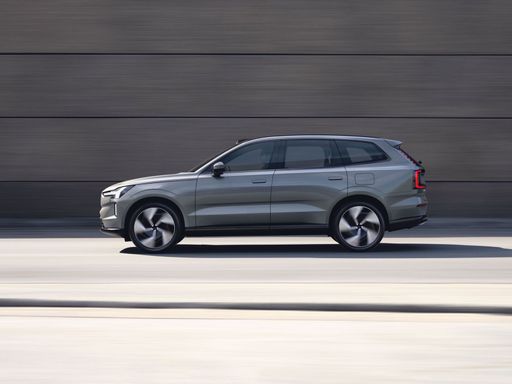
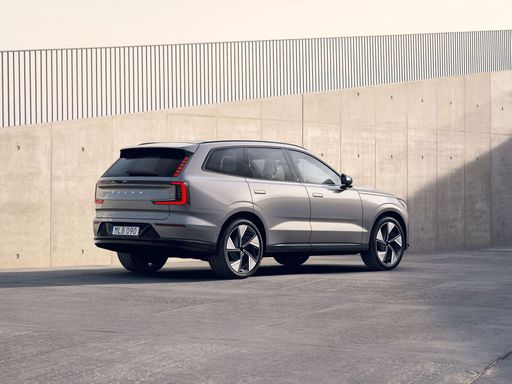
Volvo EX90

  • Engine Type : Electric
  • Transmission : Automatic
  • Drive Type : Rear-Wheel Drive, All-Wheel Drive
  • Power HP : 333 - 680 HP
  • Consumption kWh/100km : 17.8 - 19.3 kWh/100km
  • Electric Range : 570 - 620 km
Volvo EX90
Audi Q6 e-tron

Costs and Consumption

View detailed analysis

Engine and Performance

View detailed analysis

Dimensions and Body

View detailed analysis

Volvo EX90

The Volvo EX90 feels like a Scandinavian fortress on wheels, combining serene luxury with smart safety features that make everyday driving remarkably calm and confident. It dresses cutting-edge electric technology in understated elegance, so buyers who want peace of mind without shouting about it will find it hard to resist.

details

Audi Q6 e-tron

The Audi Q6 e-tron balances sleek, coupe-like styling with a roomy, upscale interior that feels modern without being showy. It delivers refined electric performance and smart tech that make daily driving effortless — the sort of EV that might make petrolheads grudgingly admit they fancy the future.

details
Volvo EX90
Audi Q6 e-tron

Costs and Consumption

Price
73,700 - 91,700 £
Price
54,400 - 82,500 £
Consumption L/100km
-
Consumption L/100km
-
Consumption kWh/100km
17.8 - 19.3 kWh/100km
Consumption kWh/100km
15.6 - 18.4 kWh/100km
Electric Range
570 - 620 km
Electric Range
529 - 656 km
Battery Capacity
-
Battery Capacity
75.8 - 94.9 kWh
co2
0 g/km
co2
0 g/km
Fuel tank capacity
-
Fuel tank capacity
-

Dimensions and Body

Body Type
SUV
Body Type
SUV
Seats
6 - 7
Seats
5
Doors
-
Doors
5
Curb weight
2,555 - 2,764 kg
Curb weight
2,200 - 2,425 kg
Trunk capacity
-
Trunk capacity
499 - 526 L
Length
-
Length
4,771 mm
Width
1,964 mm
Width
1,939 - 1,965 mm
Height
-
Height
1,665 - 1,685 mm
Max trunk capacity
-
Max trunk capacity
1,361 - 1,529 L
Payload
544 - 585 kg
Payload
540 kg

Engine and Performance

Engine Type
Electric
Engine Type
Electric
Transmission
Automatic
Transmission
Automatic
Transmission Detail
Reduction Gearbox
Transmission Detail
Reduction Gearbox
Drive Type
Rear-Wheel Drive, All-Wheel Drive
Drive Type
Rear-Wheel Drive, All-Wheel Drive
Power HP
333 - 680 HP
Power HP
252 - 490 HP
Acceleration 0-100km/h
4.2 - 6.8 s
Acceleration 0-100km/h
4.4 - 7.6 s
Max Speed
-
Max Speed
210 - 230 km/h
Torque
480 - 870 Nm
Torque
450 - 855 Nm
Number of Cylinders
-
Number of Cylinders
-
Power kW
245 - 500 kW
Power kW
185 - 360 kW
Engine capacity
-
Engine capacity
-

General

Model Year
2,025
Model Year
2,024 - 2,025
CO2 Efficiency Class
A
CO2 Efficiency Class
A
Brand
Volvo
Brand
Audi
DriveDuel uses data analysis and artificial intelligence to evaluate vehicle data and create content. Content is regularly reviewed and improved. The displayed prices are estimates based on German list prices, adjusted to the respective country’s VAT. Country-specific registration taxes are not included. This information is not legally binding.