VS

Volvo EX90 vs VW Tayron comparison

Compare performance (680 HP vs 272 HP), boot space and price (73700 £ vs 39600 £ ) at a glance. Find out which car is the better choice for you – Volvo EX90 or VW Tayron?

EX90

Volvo EX90 vs VW Tayron: Battle of the Modern SUVs

In the ever-evolving automotive landscape, SUVs remain a popular choice for their versatility and commanding presence. This article delves into two innovative contenders: the Volvo EX90 and the Volkswagen (VW) Tayron. Each model showcases unique strengths, technological advancements, and engineering mastery. Let's explore how they stack up against each other in the realm of contemporary SUVs.
Tayron

Power and Performance

The Volvo EX90, a fully electric SUV, is a nod to the future of clean energy vehicles. It offers an impressive array of powertrains, with horsepower ranging from 279 to a striking 517 HP. The EX90's acceleration from 0-100 km/h in just 4.9 seconds, depending on the motor configuration, positions it as a formidable force on the road. Its electric range extends up to 614 km, perfect for long drives without frequent charging stops.

On the other hand, the VW Tayron provides a variety of engine options, including petrol, diesel, and plug-in hybrid variants. The petrol engine tops the lineup with up to 272 HP, achieving a respectable 0-100 km/h time of 6.1 seconds. While its performance may seem conventional compared to the EX90, the Tayron offers versatility through diverse powertrain options, catering to different preferences and needs.

EX90

Efficiency and Sustainability

The EX90 excels in sustainability with a zero-emission profile, earning an A in CO2 efficiency class. Its electric consumption ranges from 19.9 to 20.8 kWh/100km, underlining its efficiency in the electric vehicle category. Meanwhile, the Tayron, despite its advanced MHEV and hybrid options, emits between 9 to 174 g/km of CO2, reflecting its diverse powertrain range.

Tayron

Design and Space

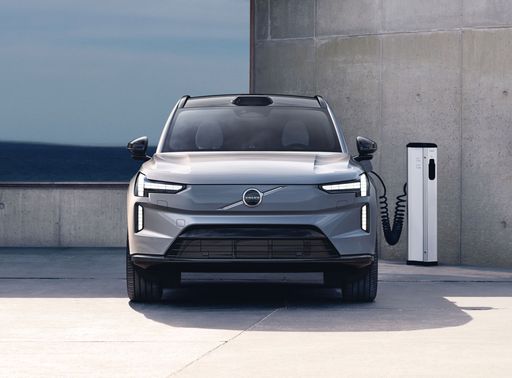
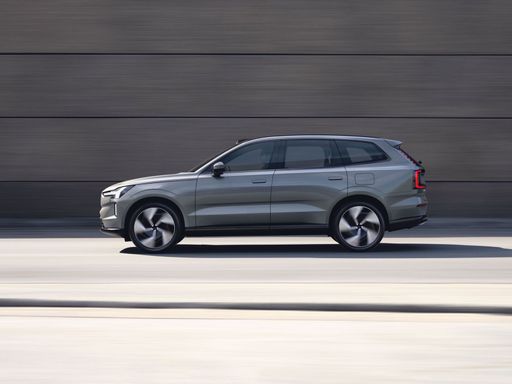
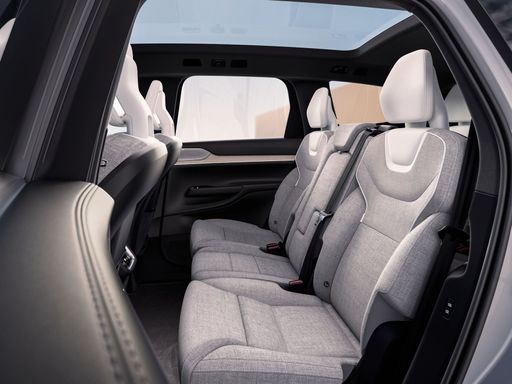
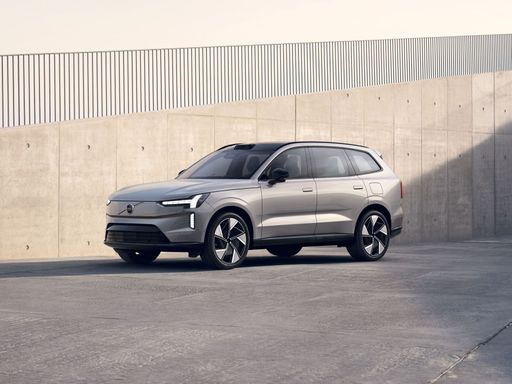
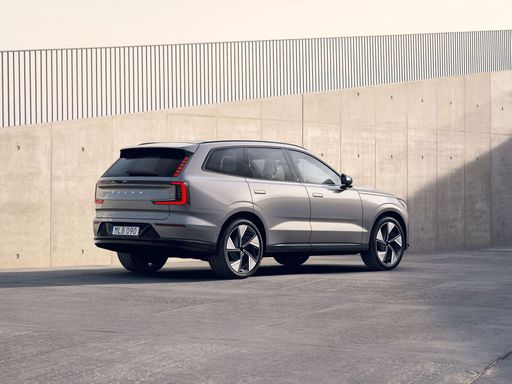
Volvo’s EX90 boasts a modern and sleek design, accentuated by its generous dimensions: 5037 mm in length, 1964 mm in width, and 1744 mm in height. With five to six seats and a trunk capacity of 310 liters, the EX90 provides ample space for family adventures.

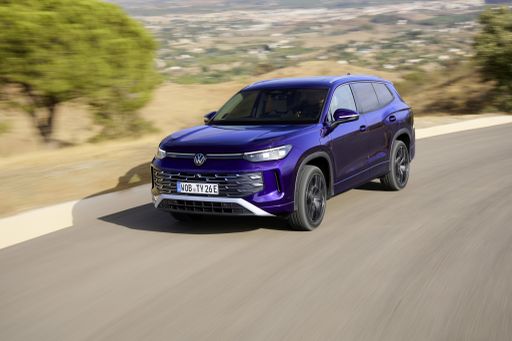
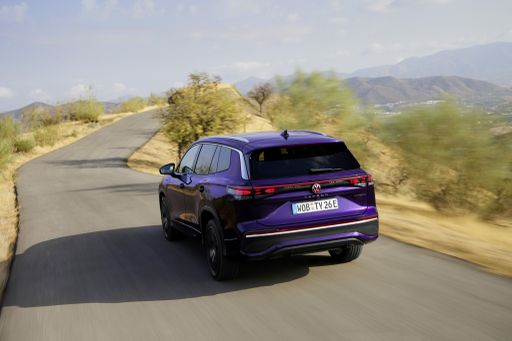
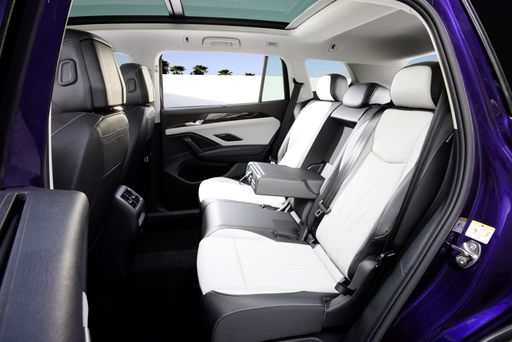
In contrast, the Tayron measures slightly smaller at 4792 mm in length and 1853 mm in width, yet compensates with an impressive 885 liters of trunk capacity, ideal for those requiring expansive cargo space. Its traditional SUV design coupled with VW's commitment to craft quality appeals to a wide range of customers.

EX90

Technological Innovations

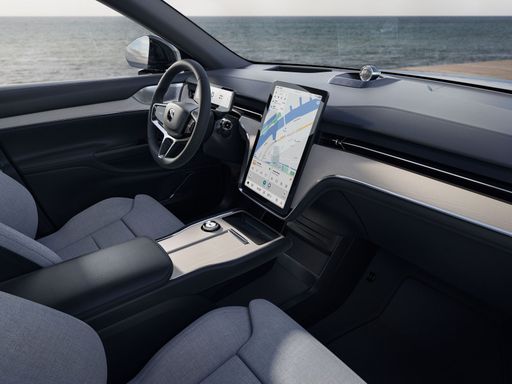
Both models embrace cutting-edge technology. The EX90 harnesses Volvo's latest innovations in autonomous driving features and connectivity, ensuring a state-of-the-art driving experience. Enhanced safety systems and an intuitive infotainment interface contribute to its high-tech appeal.

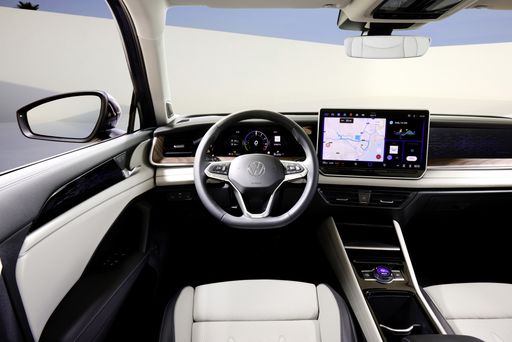
The Tayron, while more traditional in powertrain offerings, doesn't shy away from technology. VW's Digital Cockpit and advanced driver assistance systems cater to tech-savvy drivers, delivering a seamless driving experience.

Tayron

Conclusion: A Choice of Preference

The choice between the Volvo EX90 and VW Tayron ultimately boils down to individual preferences and priorities. Those inclined towards sustainability and the latest in electric vehicle technology will find the EX90 a compelling option. Meanwhile, buyers seeking versatility in engine options and impressive cargo space might prefer the traditional yet innovative flair of the Tayron. Both SUVs, however, stand testament to the evolving dynamics of the automotive world.

Volvo EX90 vs VW Tayron: Key differences

Volvo EX90

  • significantly more power
  • significantly more electric range
  • clearly quicker from 0–100 km/h

VW Tayron

5 (1 Reviews)
rate
  • decisively cheaper
  • convincingly lighter
  • significantly more trunk space

Here’s where it gets real: The technical differences in detail

EX90

Costs and Efficiency:

When it comes to price and running costs, the biggest differences usually appear. This is often where you see which car fits your budget better in the long run.

VW Tayron has a decisively advantage in terms of price – it starts at 39600 £ , while the Volvo EX90 costs 73700 £ . That’s a price difference of around 34093 £.

As for electric range, the Volvo EX90 performs significantly better – achieving up to 620 km, about 497 km more than the VW Tayron.

Tayron

Engine and Performance:

Power, torque and acceleration are the classic benchmarks for car enthusiasts – and here, some clear differences start to show.

When it comes to engine power, the Volvo EX90 has a significantly edge – offering 680 HP compared to 272 HP. That’s roughly 408 HP more horsepower.

In acceleration from 0 to 100 km/h, the Volvo EX90 is clearly quicker – completing the sprint in 4.20 s, while the VW Tayron takes 6.10 s. That’s about 1.90 s faster.

In terms of top speed, the VW Tayron performs to a small extent better – reaching 221 km/h, while the Volvo EX90 tops out at 180 km/h. The difference is around 41 km/h.

There’s also a difference in torque: Volvo EX90 pulls significantly stronger with 870 Nm compared to 400 Nm. That’s about 470 Nm difference.

EX90

Space and Everyday Use:

Cabin size, boot volume and payload all play a role in everyday practicality. Here, comfort and flexibility make the difference.

Seats: Volvo EX90 offers clearly perceptible more seating capacity – 7 vs 5.

In curb weight, VW Tayron is convincingly lighter – 1682 kg compared to 2556 kg. The difference is around 874 kg.

In terms of boot space, the VW Tayron offers significantly more room – 885 L compared to 324 L. That’s a difference of about 561 L.

In maximum load capacity, the Volvo EX90 performs barely noticeable better – up to 2135 L, which is about 45 L more than the VW Tayron.

When it comes to payload, Volvo EX90 minimal takes the win – 585 kg compared to 566 kg. That’s a difference of about 19 kg.

Who wins the race in the data check?

The Volvo EX90 holds a decisive overall lead in the objective data comparison.
This result only shows which model scores more points on paper – not which of the two cars feels right for you.

Volvo EX90
VW Tayron

Costs and Consumption

View detailed analysis

Engine and Performance

View detailed analysis

Dimensions and Body

View detailed analysis
from about £73,700
EX90

Volvo EX90

  • Engine Type : Electric
  • Transmission : Automatic
  • Drive Type : Rear-Wheel Drive, All-Wheel Drive
  • Power HP : 333 - 680 HP
  • Consumption kWh/100km : 17.8 - 19.3 kWh
  • Electric Range : 570 - 620 km

Volvo EX90

The Volvo EX90 feels like a Scandinavian fortress on wheels, combining serene luxury with smart safety features that make everyday driving remarkably calm and confident. It dresses cutting-edge electric technology in understated elegance, so buyers who want peace of mind without shouting about it will find it hard to resist.

details

VW Tayron

5 (1 Reviews)
rate

The VW Tayron is Volkswagen's roomy, no-nonsense SUV that pairs clean, familiar styling with a practical cabin built for families and everyday use. It rides comfortably, packs sensible tech and creature comforts, and feels like the sensible sweater of SUVs for buyers who prefer steady value over headline-grabbing drama.

details
Volvo EX90
VW Tayron

Costs and Consumption

Price
73700 - 94100 £
Price
39600 - 56000 £
Consumption L/100km
-
Consumption L/100km
1.5 - 8.5 L
Consumption kWh/100km
17.8 - 19.3 kWh
Consumption kWh/100km
-
Electric Range
570 - 620 km
Electric Range
116 - 123 km
Battery Capacity
88 - 102 kWh
Battery Capacity
19.70 kWh
co2
0 g/km
co2
33 - 192 g/km
Fuel tank capacity
-
Fuel tank capacity
45 - 58 L

Dimensions and Body

Body Type
SUV
Body Type
SUV
Seats
6 - 7
Seats
5
Doors
5
Doors
5
Curb weight
2556 - 2764 kg
Curb weight
1682 - 1948 kg
Trunk capacity
324 L
Trunk capacity
705 - 885 L
Length
5037 mm
Length
4792 mm
Width
1964 mm
Width
1853 - 1866 mm
Height
1744 mm
Height
1666 - 1668 mm
Max trunk capacity
2082 - 2135 L
Max trunk capacity
1915 - 2090 L
Payload
375 - 585 kg
Payload
489 - 566 kg

Engine and Performance

Engine Type
Electric
Engine Type
Petrol MHEV, Diesel, Petrol, Plugin Hybrid
Transmission
Automatic
Transmission
Automatic
Transmission Detail
Reduction Gearbox
Transmission Detail
Dual-Clutch Automatic
Drive Type
Rear-Wheel Drive, All-Wheel Drive
Drive Type
Front-Wheel Drive, All-Wheel Drive
Power HP
333 - 680 HP
Power HP
150 - 272 HP
Acceleration 0-100km/h
4.2 - 6.8 s
Acceleration 0-100km/h
6.1 - 9.7 s
Max Speed
180 km/h
Max Speed
204 - 221 km/h
Torque
480 - 870 Nm
Torque
250 - 400 Nm
Number of Cylinders
-
Number of Cylinders
4
Power kW
245 - 500 kW
Power kW
110 - 200 kW
Engine capacity
-
Engine capacity
1498 - 1984 cm3

General

Model Year
2025
Model Year
2025 - 2026
CO2 Efficiency Class
A
CO2 Efficiency Class
E, F, G, B
Brand
Volvo
Brand
VW
What drivetrain options does the Volvo EX90 have?

The Volvo EX90 is offered with Rear-Wheel Drive or All-Wheel Drive.

The prices shown are estimates based on German list prices, adjusted for local VAT. Local registration taxes (e.g. NoVA, BPM or CO2 malus) are not included. This information is not legally binding.