VS

Volvo XC40 vs Hyundai Tucson comparison

Compare performance (197 HP vs 288 HP), boot space and price (41,900 £ vs 20,900 £ ) at a glance. Find out which car is the better choice for you – Volvo XC40 or Hyundai Tucson?

Volvo XC40 vs Hyundai Tucson: Key differences

Volvo XC40

5 (5 Reviews)
rate
details

Hyundai Tucson

4.6 (4 Reviews)
rate
  • considerably cheaper
  • visibly more power
  • significantly more efficient
  • marginally quicker 0–100 km/h
  • marginally lighter
details

All details on performance, efficiency, range and trunk space can be found in the technical comparison below – including user reviews for both models.

By Achim Sedelmaier

XC40

Meet the contenders

In one corner sits the Hyundai Tucson, a confident, no-nonsense compact SUV that promises practicality with a dash of swagger; in the other, the Volvo XC40, a compact Swede wrapped in minimalist design and premium intent. This is less about crowning a conqueror and more about spotting which personality fits your driveway. Think of this as a style-versus-substance sparring match with everyday life as the referee.
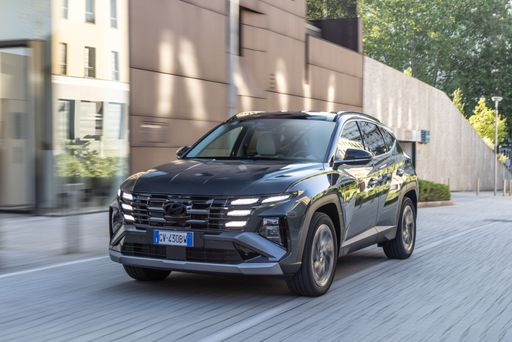
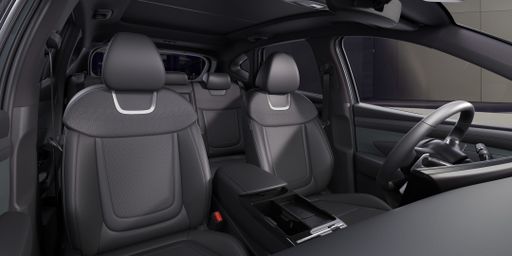
Tucson

Street attitude: bold vs. composed

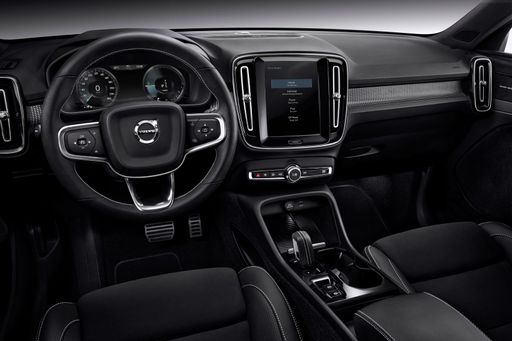
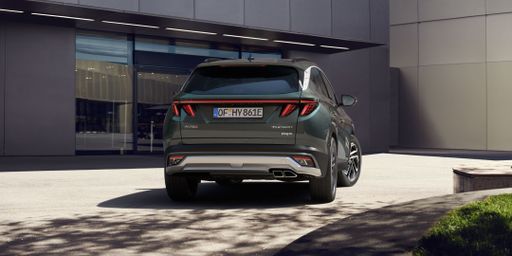
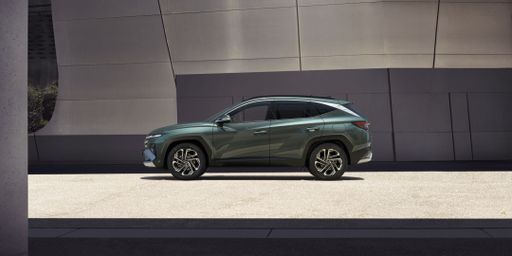
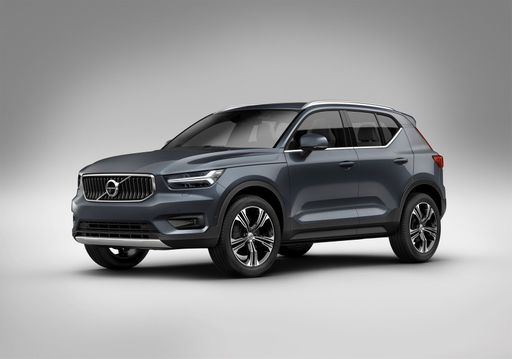
The Tucson wears its presence on its sleeve — deliberate lines, a stance that suggests capability and a willingness to tackle family duty or weekend escape without fuss. The XC40, by contrast, plays the cool urban sophisticate: clean surfaces, calm cabin, and an air of considered refinement that feels engineered to reassure. One makes an entrance by size and posture, the other by detail and restraint, and both choices tell a different story before the engine even starts.

XC40

Living with it day to day

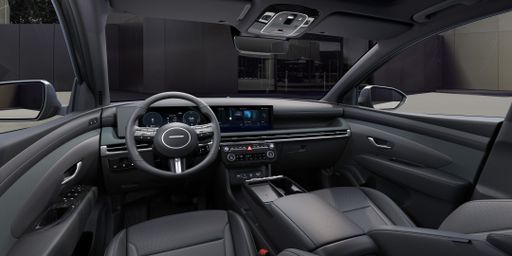
For routine life the Tucson leans into usability: easy loading, forgiving manners, and a layout that accommodates gear, kids or a hobby without drama. The XC40 prioritizes a cocooned passenger experience, intuitive controls and a composure that suits tight streets and long commutes where refinement matters. Both aim to reduce hassle, but they go about it with different priorities — one loud and practical, the other quiet and curated.

Tucson

Buying it for the image you want

Picking the Tucson often says you value sensible choices and tangible utility — you want a car that works hard and looks confident doing it, without fussing over badges. Choosing the XC40 broadcasts an appetite for design, perceived quality and that Scandinavian calm that signals careful taste and a desire for reassurance. Neither decision needs apologizing: one leans into function, the other into presence, and both are perfectly defensible ways to justify a new set of keys.

XC40

Who should be checking the Tucson first

The Tucson will appeal to the Rational Decision-Maker and the Pragmatist who prioritise value, predictable usability and straightforward comfort for daily life and longer hauls. If your life revolves around commutes, weekend kit and a sensible running cost, this is the kind of all-rounder that simplifies the checklist. It’s for buyers who prefer their choices to deliver usefulness without theatrical flair.

Tucson

Who should be looking at the XC40 instead

If you care as much about the way a car presents you as how it moves you, the XC40 courts the Design & Brand-Oriented Buyer and the Safety & Risk Minimizer with equal skill, offering a polished cockpit and that reassuring sense of engineered calm — and yes, it offers a different kind of appeal than the Tucson. Consider it if interior finish, perceived quality and a composed urban presence matter as much as practicality. Read on to see how those character differences stack up when the details get laid out.

Here’s where it gets real: The technical differences in detail

XC40

Costs and Efficiency:

Price and efficiency are key factors when choosing a car – and this is often where the real differences emerge.

Hyundai Tucson is considerably cheaper – starting at 20,900 £ , while the Volvo XC40 costs 41,900 £ . That’s a price difference of around 21,008 £.

Fuel consumption also shows a difference: the Hyundai Tucson uses 2.7 L/100km and is significantly more efficient than the Volvo XC40 with 6.5 L/100km. The difference is about 3.8 L/100km.

Tucson

Engine and Performance:

Power, torque and acceleration are the classic benchmarks for car enthusiasts – and here, some clear differences start to show.

When it comes to engine power, the Hyundai Tucson offers visibly more power – delivering 288 HP compared to 197 HP. That’s roughly 91 HP more horsepower.

When accelerating from 0 to 100 km/h, the Hyundai Tucson is marginally quicker – completing the sprint in 7.5 s, while the Volvo XC40 takes 7.6 s. That’s about 0.1 s quicker.

There’s also a difference in torque: the Hyundai Tucson delivers clearly more torque with 379 Nm compared to 300 Nm. That’s about 79 Nm more.

XC40

Space and Everyday Use:

Cabin size, boot volume and payload all play a role in everyday practicality. Here, comfort and flexibility make the difference.

Both vehicles offer seating for 5 people.

In terms of curb weight, Hyundai Tucson is marginally lighter – 1,542 kg compared to 1,688 kg. The difference is around 146 kg.

When it comes to payload, the Hyundai Tucson carries barely more – 545 kg compared to 532 kg. That’s a difference of about 13 kg.

Who wins the race in the data check?

The Hyundai Tucson is clearly superior overall in the objective data comparison.
This result only shows which model scores more points on paper – not which of the two cars feels right for you.

from £20,900
Tucson

Hyundai Tucson

  • Engine Type : Petrol, Full Hybrid, Plugin Hybrid, Diesel MHEV
  • Transmission : Manuel, Automatic
  • Drive Type : Front-Wheel Drive, All-Wheel Drive
  • Power HP : 136 - 288 HP
  • Consumption L/100km : 2.7 - 7.6 L/100km
  • Electric Range : 63 - 70 km
Volvo XC40
Hyundai Tucson

Costs and Consumption

View detailed analysis

Engine and Performance

View detailed analysis

Dimensions and Body

View detailed analysis

Volvo XC40

The Volvo XC40 wraps Scandinavian minimalism into a compact, city-ready SUV with a premium cabin that feels both practical and grown-up. It will suit buyers who prize safety, clever storage and a composed ride, proving that small dimensions don't mean small personality.

details

Hyundai Tucson

Hyundai Tucson marries bold, sculpted looks with a clever, roomy cabin that feels smarter than its price tag suggests. It's composed on the road, easy to live with day-to-day, and a sensible choice for buyers who want SUV style without the showroom theatrics.

details
Volvo XC40
Hyundai Tucson

Costs and Consumption

Price
41,900 - 46,100 £
Price
20,900 - 47,900 £
Consumption L/100km
6.5 L/100km
Consumption L/100km
2.7 - 7.6 L/100km
Consumption kWh/100km
-
Consumption kWh/100km
-
Electric Range
-
Electric Range
63 - 70 km
Battery Capacity
-
Battery Capacity
-
co2
148 g/km
co2
62 - 172 g/km
Fuel tank capacity
-
Fuel tank capacity
52 - 54 L

Dimensions and Body

Body Type
SUV
Body Type
SUV
Seats
5
Seats
5
Doors
-
Doors
5
Curb weight
1,688 kg
Curb weight
1,542 - 1,893 kg
Trunk capacity
-
Trunk capacity
546 - 620 L
Length
-
Length
4,525 - 4,535 mm
Width
1,863 mm
Width
1,865 mm
Height
-
Height
1,650 mm
Max trunk capacity
-
Max trunk capacity
1,795 - 1,799 L
Payload
532 kg
Payload
518 - 545 kg

Engine and Performance

Engine Type
Petrol MHEV
Engine Type
Petrol, Full Hybrid, Plugin Hybrid, Diesel MHEV
Transmission
Automatic
Transmission
Manuel, Automatic
Transmission Detail
Dual-Clutch Automatic
Transmission Detail
Manual Gearbox, Dual-Clutch Automatic, Automatic Gearbox
Drive Type
Front-Wheel Drive
Drive Type
Front-Wheel Drive, All-Wheel Drive
Power HP
163 - 197 HP
Power HP
136 - 288 HP
Acceleration 0-100km/h
7.6 - 8.6 s
Acceleration 0-100km/h
7.5 - 11.6 s
Max Speed
-
Max Speed
196 - 204 km/h
Torque
265 - 300 Nm
Torque
250 - 379 Nm
Number of Cylinders
4
Number of Cylinders
4
Power kW
120 - 145 kW
Power kW
100 - 212 kW
Engine capacity
1,969 cm3
Engine capacity
1,598 cm3

General

Model Year
2026
Model Year
2025
CO2 Efficiency Class
E
CO2 Efficiency Class
F, D, E, B
Brand
Volvo
Brand
Hyundai
DriveDuel uses data analysis and artificial intelligence to evaluate vehicle data and create content. Content is regularly reviewed and improved. The displayed prices are estimates based on German list prices, adjusted to the respective country’s VAT. Country-specific registration taxes are not included. This information is not legally binding.