VS

Volvo XC40 vs Jaguar E-Pace comparison

Compare performance (197 HP vs 269 HP), boot space and price (36,800 £ vs 32,400 £ ) at a glance. Find out which car is the better choice for you – Volvo XC40 or Jaguar E-Pace?

Volvo XC40 vs Jaguar E-Pace: Key differences

Volvo XC40

5 (4 Reviews)
rate
  • only slightly lighter

Jaguar E-Pace

  • slightly cheaper
  • noticeably more power
  • significantly more efficient
  • barely quicker 0–100 km/h
  • only slightly more trunk space
XC40

Jaguar E-Pace vs Volvo XC40: A Clash of Compact Luxury SUVs

The compact luxury SUV segment has seen intense competition, and two standout contenders are the Jaguar E-Pace and the Volvo XC40. Both vehicles offer a blend of style, technology, and performance, but they cater to different preferences. In this article, we will delve into the technical aspects and innovations of both models to help buyers make an informed choice.
E-Pace

Design and Dimensions: Elegant Versus Functional

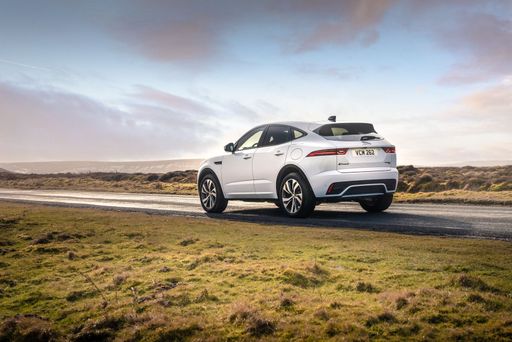
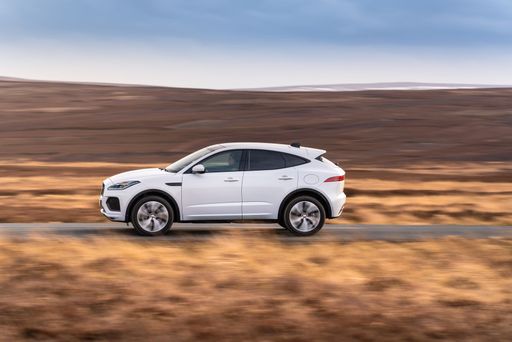
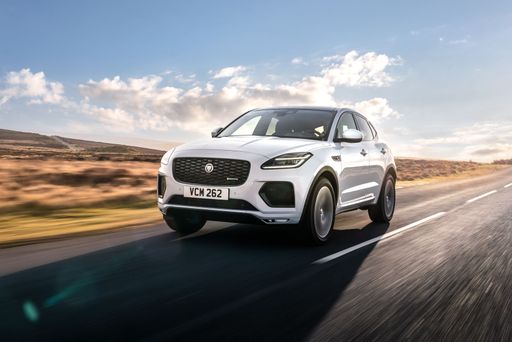
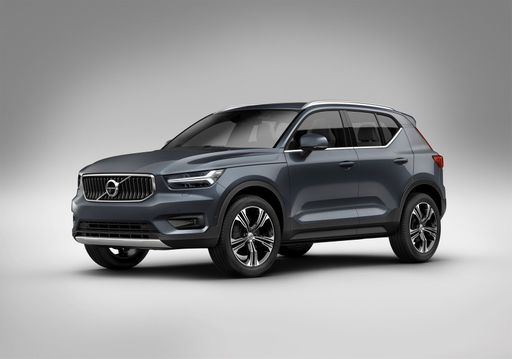
When it comes to design, the Jaguar E-Pace exudes a sporty and dynamic presence. With a length of 4395 mm and a width of 1984 mm, it conveys a sense of power and agility. The vehicle stands 1648 mm tall, providing a commanding view of the road. In contrast, the Volvo XC40 measures slightly longer at 4425 mm, while its width is narrower at 1863 mm, giving it a more compact and urban-friendly profile. The XC40's height of 1652 mm adds to its robust stance, which is characteristic of Volvo's design philosophy.

XC40

Performance and Engine Options

Performance is where both vehicles differentiate themselves significantly. The Jaguar E-Pace offers a range of engines, including a plug-in hybrid variant and MHEV options, providing a power output between 160 to 269 HP. It boasts various drive types, including all-wheel drive for those seeking enhanced traction, alongside fuel consumption ranging from a mere 1.4 L/100 km in hybrid mode to around 8.2 L/100 km in petrol variants.

The Volvo XC40, on the other hand, focuses solely on petrol MHEV engines. With a maximum output of 197 HP and a more modest fuel consumption of about 6.5 L/100 km, it prioritizes efficiency. The XC40 is equipped with a dual-clutch automatic transmission, providing smooth and responsive shifts during an engaging driving experience.

E-Pace

Acceleration and Top Speed: Pushing the Limits

For those who crave speed, the Jaguar E-Pace takes the upper hand with an acceleration of 0-100 km/h in as little as 7.3 seconds in its most powerful configuration. Its top speed also impressively reaches 211 km/h, cementing its status as a sporty SUV. The XC40, while competent, falls short with an acceleration time of 7.6 to 8.6 seconds, and a top speed of 180 km/h.

XC40

Interior Comfort and Technology

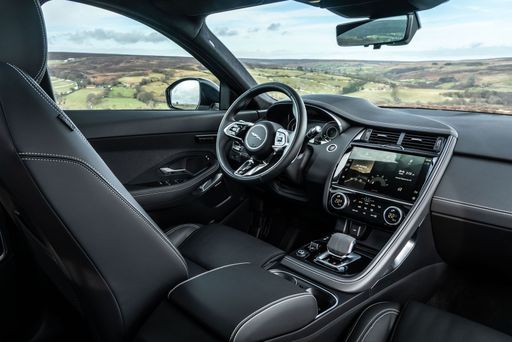
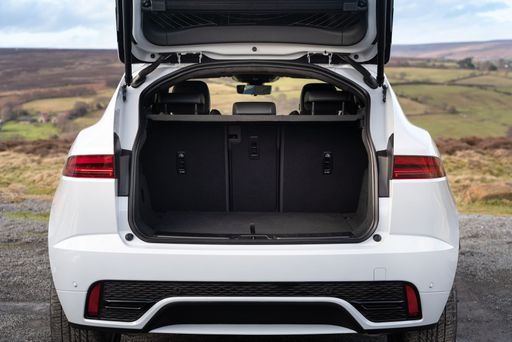
Both the E-Pace and XC40 offer premium interiors designed for maximum comfort and technology integration. The E-Pace supports five seats and boasts a trunk capacity of 494 liters, making it quite versatile for storage. The cabin features high-quality materials and cutting-edge infotainment systems, easily navigable via touchscreens.

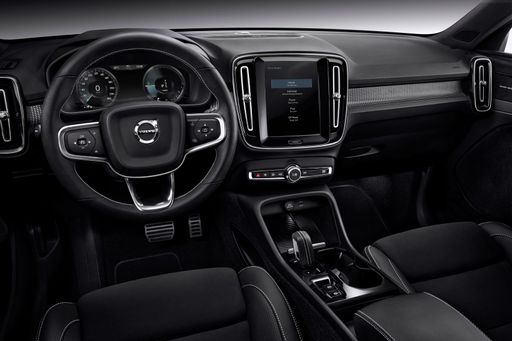
The Volvo XC40 also seats five comfortably but has a slightly smaller trunk capacity of 452 liters. The interior focus is on minimalist Scandinavian design, with an emphasis on user-friendly technology. Volvo's infotainment system is intuitive, which enhances the driving experience overall.

E-Pace

Safety Innovations

Safety is paramount, and both brands have equipped their vehicles with advanced safety features. The XC40 shines with its array of driver assistance technologies, including a semi-autonomous driving feature that adds to its appeal for safety-conscious buyers. Meanwhile, the Jaguar E-Pace integrates various innovative safety systems, ensuring that passengers are protected on all fronts.

XC40

Conclusion: Choosing Your Champion

In conclusion, the choice between the Jaguar E-Pace and the Volvo XC40 hinges on the buyer's needs and preferences. The E-Pace is the sportier option with powerful engines and a dynamic design, ideal for those prioritizing performance. Conversely, the XC40 excels in efficiency, advanced safety features, and a modern interior, appealing to buyers who value a balanced approach to luxury SUV ownership. Whichever you choose, both vehicles undoubtedly represent the best in their class.

Here’s where it gets real: The technical differences in detail

XC40

Costs and Efficiency:

Looking at overall running costs, both models reveal some interesting differences in everyday economy.

Jaguar E-Pace is slightly cheaper – starting at 32,400 £ , while the Volvo XC40 costs 36,800 £ . That’s a price difference of around 4,362 £.

Fuel consumption also shows a difference: the Jaguar E-Pace uses 1.4 L/100km and is significantly more efficient than the Volvo XC40 with 6.5 L/100km. The difference is about 5.1 L/100km.

E-Pace

Engine and Performance:

Power, torque and acceleration are the classic benchmarks for car enthusiasts – and here, some clear differences start to show.

When it comes to engine power, the Jaguar E-Pace offers noticeably more power – delivering 269 HP compared to 197 HP. That’s roughly 72 HP more horsepower.

When accelerating from 0 to 100 km/h, the Jaguar E-Pace is barely quicker – completing the sprint in 7.3 s, while the Volvo XC40 takes 7.6 s. That’s about 0.3 s quicker.

Looking at top speed, the Jaguar E-Pace is a bit faster – reaching 211 km/h, while the Volvo XC40 tops out at 180 km/h. The difference is around 31 km/h.

There’s also a difference in torque: the Jaguar E-Pace delivers substantially more torque with 540 Nm compared to 300 Nm. That’s about 240 Nm more.

XC40

Space and Everyday Use:

Whether family car or daily driver – which one offers more room, flexibility and comfort?

Both vehicles offer seating for 5 people.

In terms of curb weight, Volvo XC40 is only slightly lighter – 1,688 kg compared to 1,783 kg. The difference is around 95 kg.

Looking at boot space, the Jaguar E-Pace offers only slightly more boot space – 494 L compared to 452 L. That’s a difference of about 42 L.

For maximum load capacity, the Volvo XC40 offers slightly more capacity – up to 1,328 L, about 158 L more than the Jaguar E-Pace.

When it comes to payload, the Jaguar E-Pace carries only slightly more – 554 kg compared to 532 kg. That’s a difference of about 22 kg.

Who wins the race in the data check?

The Jaguar E-Pace is decisively ahead in the objective data comparison.
This result only shows which model scores more points on paper – not which of the two cars feels right for you.

from £32,400
E-Pace

Jaguar E-Pace

  • Engine Type : Plugin Hybrid, Diesel MHEV, Petrol MHEV
  • Transmission : Automatic
  • Drive Type : All-Wheel Drive, Front-Wheel Drive
  • Power HP : 160 - 269 HP
  • Consumption L/100km : 1.4 - 8.2 L/100km
  • Electric Range : 69 km
Volvo XC40
Jaguar E-Pace

Costs and Consumption

View detailed analysis

Engine and Performance

View detailed analysis

Dimensions and Body

View detailed analysis

Volvo XC40

The Volvo XC40 wraps Scandinavian minimalism into a compact, city-ready SUV with a premium cabin that feels both practical and grown-up. It will suit buyers who prize safety, clever storage and a composed ride, proving that small dimensions don't mean small personality.

details

Jaguar E-Pace

The Jaguar E-Pace brings compact SUV practicality together with taut, sporty design and unmistakable British charm, helping it stand out in a crowded class. Inside, the cabin feels premium and the driving manners are engaging enough to keep a grin on your face, making it a tempting choice for buyers who want Jaguar style without the bulk.

details
Volvo XC40
Jaguar E-Pace

Costs and Consumption

Price
36,800 - 47,200 £
Price
32,400 - 56,100 £
Consumption L/100km
6.5 L/100km
Consumption L/100km
1.4 - 8.2 L/100km
Consumption kWh/100km
-
Consumption kWh/100km
-
Electric Range
-
Electric Range
69 km
Battery Capacity
-
Battery Capacity
11.5 kWh
co2
147 - 148 g/km
co2
33 - 185 g/km
Fuel tank capacity
54 L
Fuel tank capacity
56 - 67 L

Dimensions and Body

Body Type
SUV
Body Type
SUV
Seats
5
Seats
5
Doors
5
Doors
5
Curb weight
1,688 kg
Curb weight
1,783 - 2,173 kg
Trunk capacity
452 L
Trunk capacity
494 L
Length
4,425 mm
Length
4,395 mm
Width
1,863 mm
Width
1,984 mm
Height
1,652 mm
Height
1,648 mm
Max trunk capacity
1,328 L
Max trunk capacity
1,170 L
Payload
532 kg
Payload
497 - 554 kg

Engine and Performance

Engine Type
Petrol MHEV
Engine Type
Plugin Hybrid, Diesel MHEV, Petrol MHEV
Transmission
Automatic
Transmission
Automatic
Transmission Detail
Dual-Clutch Automatic
Transmission Detail
Automatic Gearbox
Drive Type
Front-Wheel Drive
Drive Type
All-Wheel Drive, Front-Wheel Drive
Power HP
163 - 197 HP
Power HP
160 - 269 HP
Acceleration 0-100km/h
7.6 - 8.6 s
Acceleration 0-100km/h
7.3 - 10.5 s
Max Speed
180 km/h
Max Speed
190 - 211 km/h
Torque
265 - 300 Nm
Torque
260 - 540 Nm
Number of Cylinders
4
Number of Cylinders
3 - 4
Power kW
120 - 145 kW
Power kW
118 - 198 kW
Engine capacity
1,969 cm3
Engine capacity
1,498 - 1,998 cm3

General

Model Year
2,024
Model Year
2,024
CO2 Efficiency Class
E
CO2 Efficiency Class
B, G
Brand
Volvo
Brand
Jaguar
DriveDuel uses data analysis and artificial intelligence to evaluate vehicle data and create content. Content is regularly reviewed and improved. The displayed prices are estimates based on German list prices, adjusted to the respective country’s VAT. Country-specific registration taxes are not included. This information is not legally binding.