VS

Volvo XC40 vs Mercedes EQA comparison

Compare performance (197 HP vs 228 HP), boot space and price (41,900 £ vs 45,900 £ ) at a glance. Find out which car is the better choice for you – Volvo XC40 or Mercedes EQA?

Volvo XC40 vs Mercedes EQA: Key differences

Volvo XC40

4.9 (8 Reviews)
rate
  • only slightly cheaper
  • marginally quicker 0–100 km/h
  • clearly lighter
details

Mercedes EQA

5 (1 Reviews)
rate
  • moderately more power
details

All details on performance, efficiency, range and trunk space can be found in the technical comparison below – including user reviews for both models.

By Achim Sedelmaier

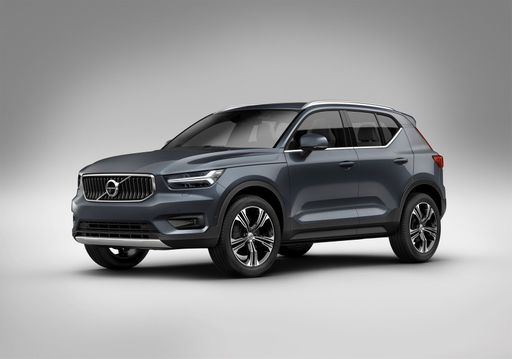
XC40

Electric Elegance Meets Scandinavian Power: Mercedes EQA vs. Volvo XC40

In the ever-evolving landscape of luxury compact SUVs, the Mercedes EQA and Volvo XC40 stand as compelling representations of electric elegance and Scandinavian power, respectively. Both vehicles encapsulate their brand's identity while offering unique innovations and technical aspects that appeal to discerning car enthusiasts. Let's delve into a detailed comparison of these two remarkable automobiles.
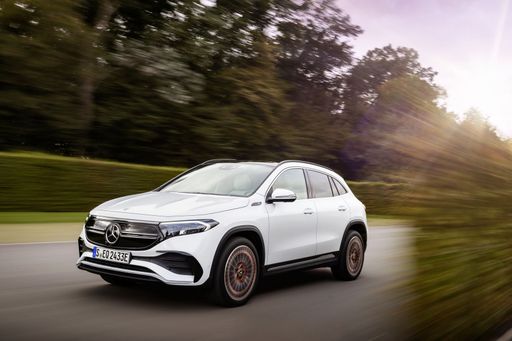
EQA

Performance and Power

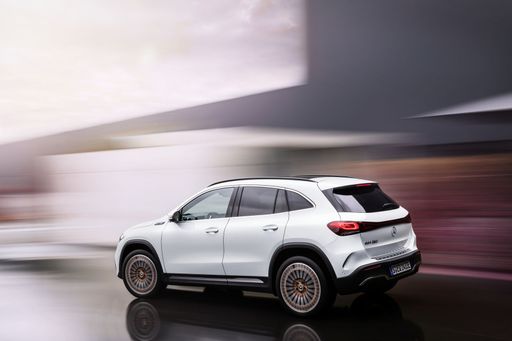
The Mercedes EQA impresses with its fully electric capabilities, featuring options with various power outputs: 190 HP, 228 HP, and a thrilling 292 HP. Offering both front-wheel drive and all-wheel drive configurations, this SUV reaches from 0 to 100 km/h in as little as 6 seconds, showcasing the agile performance expected from Mercedes-Benz. In contrast, the Volvo XC40, equipped with a 1969 cm3 petrol mild hybrid engine, offers power outputs of 163 HP and 197 HP. Its acceleration figures are competitive, going from 0 to 100 km/h in 7.6 seconds, emphasizing a smooth and resilient ride courtesy of its dual-clutch automatic transmission.

XC40

Efficiency and Range

As an electric vehicle, the Mercedes EQA leads in efficiency with a consumption range of 14.4 to 16.9 kWh per 100 km, providing a generous electric range between 458 km and 561 km depending on the model. The battery capacities are 66.5 kWh and 70.5 kWh, focusing on maximizing travel distances while minimizing environmental impact with zero CO2 emissions. On the other hand, the Volvo XC40, consuming 6.5 liters per 100 km, aligns with traditional fuel efficiencies but carries a higher CO2 emission range of 147 to 148 g/km, attributed to its petrol engine.

EQA

Innovations and Technology

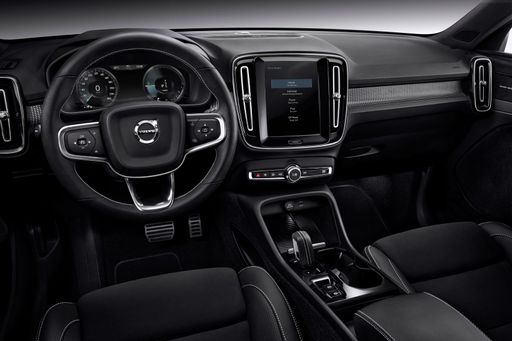
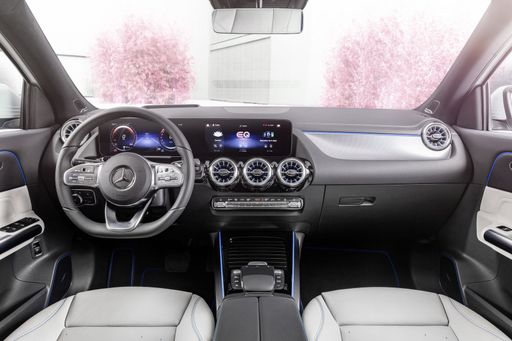
The Mercedes EQA, embodying the brand's forward-thinking ethos, integrates cutting-edge technologies, including advanced driver assistance systems and a sophisticated infotainment system. Its futuristic design, coupled with a reduction gearbox, enhances the driving experience. Meanwhile, the Volvo XC40, staying true to Volvo's reputation for safety and minimalistic elegance, incorporates state-of-the-art safety features and a user-friendly infotainment interface, solidifying its position as a reliable and tech-savvy vehicle.

XC40

Dimensions and Space

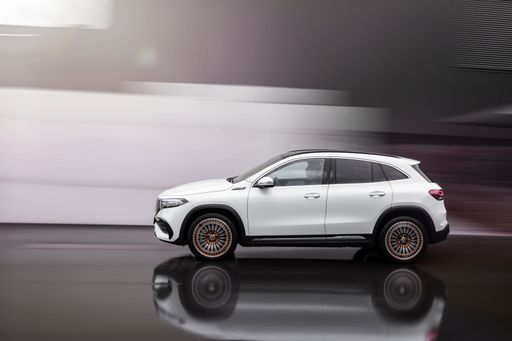
Dimensionally, the Volvo XC40 slightly surpasses the EQA in terms of trunk capacity, providing a more spacious 452 liters compared to the EQA's 340 liters. The EQA, measuring 4463 mm in length, offers a sleek and compact design ideal for urban environments, while the XC40, slightly shorter at 4425 mm, brings a robust yet elegant appearance to the table. Both SUVs comfortably seat five passengers, ensuring a blend of luxury and practicality.

EQA

Conclusion

When choosing between the Mercedes EQA and Volvo XC40, the decision largely depends on preferences towards electric mobility versus traditional powertrains. The EQA shines with its advanced electric efficiency and zero emissions, appealing to eco-conscious buyers, whereas the XC40 combines conventional power with modern luxury, catering to enthusiasts of petrol performance. Both models prove to be formidable players in the compact SUV market, reflecting their brands' heritage and innovation.

Here’s where it gets real: The technical differences in detail

XC40

Costs and Efficiency:

Price and efficiency are often the first things buyers look at. Here it becomes clear which model has the long-term edge – whether at the pump, the plug, or in purchase price.

Volvo XC40 is only slightly cheaper – starting at 41,900 £ , while the Mercedes EQA costs 45,900 £ . That’s a price difference of around 3,969 £.

EQA

Engine and Performance:

Under the bonnet, it becomes clear which model is tuned for sportiness and which one takes the lead when you hit the accelerator.

When it comes to engine power, the Mercedes EQA offers moderately more power – delivering 228 HP compared to 197 HP. That’s roughly 31 HP more horsepower.

When accelerating from 0 to 100 km/h, the Volvo XC40 is marginally quicker – completing the sprint in 7.6 s, while the Mercedes EQA takes 7.7 s. That’s about 0.1 s quicker.

There’s also a difference in torque: the Mercedes EQA delivers markedly more torque with 390 Nm compared to 300 Nm. That’s about 90 Nm more.

XC40

Space and Everyday Use:

Beyond pure performance, interior space and usability matter most in daily life. This is where you see which car is more practical and versatile.

Both vehicles offer seating for 5 people.

In terms of curb weight, Volvo XC40 is clearly lighter – 1,688 kg compared to 2,115 kg. The difference is around 427 kg.

When it comes to payload, the Volvo XC40 carries markedly more – 532 kg compared to 425 kg. That’s a difference of about 107 kg.

Who wins the race in the data check?

The Mercedes EQA is decisively ahead in the objective data comparison.
This result only shows which model scores more points on paper – not which of the two cars feels right for you.

from £45,900
EQA

Mercedes EQA

  • Engine Type Electric
  • Transmission Automatic
  • Drive Type All-Wheel Drive
  • Power HP 228 HP
  • Consumption kWh/100km 16.9 kWh/100km
  • Electric Range 476 km
Volvo XC40
Mercedes EQA

Costs and Consumption

View detailed analysis

Engine and Performance

View detailed analysis

Dimensions and Body

View detailed analysis

Volvo XC40

The Volvo XC40 blends Scandinavian design with practical versatility, offering a compact luxury crossover that feels composed and easy to live with. It’s refined and focused on safety with a high-quality interior, making it a smart choice for daily city driving and weekend escapes.

details

Mercedes EQA

The Mercedes EQA slips into the electric crossover ranks with the brand’s familiar luxury polish, offering a quiet, fuss-free drive that feels perfectly at home in the city or on a country escape. Inside it’s neatly finished and tech-forward, projecting grown-up refinement even if it plays things a bit safe for anyone chasing outright excitement.

details
Volvo XC40
Mercedes EQA

Costs and Consumption

Price
41,900 - 46,100 £
Price
45,900 - 54,900 £
Consumption L/100km
6.5 L/100km
Consumption L/100km
-
Consumption kWh/100km
-
Consumption kWh/100km
16.9 kWh/100km
Electric Range
-
Electric Range
476 km
Battery Capacity
-
Battery Capacity
-
co2
148 g/km
co2
0 g/km
Fuel tank capacity
-
Fuel tank capacity
-

Dimensions and Body

Body Type
SUV
Body Type
SUV
Seats
5
Seats
5
Doors
-
Doors
-
Curb weight
1,688 kg
Curb weight
2,115 kg
Trunk capacity
-
Trunk capacity
340 L
Length
-
Length
-
Width
1,863 mm
Width
1,834 mm
Height
-
Height
-
Max trunk capacity
-
Max trunk capacity
-
Payload
532 kg
Payload
425 kg

Engine and Performance

Engine Type
Petrol MHEV
Engine Type
Electric
Transmission
Automatic
Transmission
Automatic
Transmission Detail
Dual-Clutch Automatic
Transmission Detail
Reduction Gearbox
Drive Type
Front-Wheel Drive
Drive Type
All-Wheel Drive
Power HP
163 - 197 HP
Power HP
228 HP
Acceleration 0-100km/h
7.6 - 8.6 s
Acceleration 0-100km/h
7.7 s
Max Speed
-
Max Speed
-
Torque
265 - 300 Nm
Torque
390 Nm
Number of Cylinders
4
Number of Cylinders
-
Power kW
120 - 145 kW
Power kW
168 kW
Engine capacity
1,969 cm3
Engine capacity
-

General

Model Year
2026
Model Year
2025
CO2 Efficiency Class
E
CO2 Efficiency Class
A
Brand
Volvo
Brand
Mercedes-Benz
DriveDuel uses data analysis and artificial intelligence to evaluate vehicle data and create content. Content is regularly reviewed and improved. The displayed prices are estimates based on German list prices, adjusted to the respective country’s VAT. Country-specific registration taxes are not included. This information is not legally binding.