VS

Volvo XC40 vs Nissan Qashqai comparison

Compare performance (197 HP vs 205 HP), boot space and price (36,800 £ vs 29,600 £ ) at a glance. Find out which car is the better choice for you – Volvo XC40 or Nissan Qashqai?

Volvo XC40 vs Nissan Qashqai: Key differences

Volvo XC40

5 (4 Reviews)
rate

Nissan Qashqai

4.9 (3 Reviews)
rate
  • noticeably cheaper
  • very slightly more power
  • substantially more efficient
  • a bit lighter
  • slightly more trunk space
XC40

Streetwise Personality

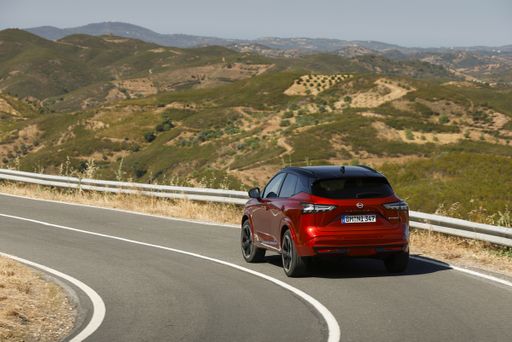
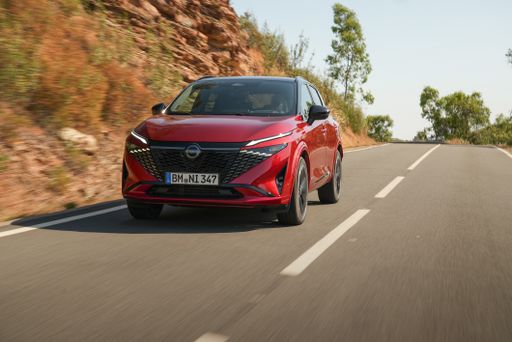
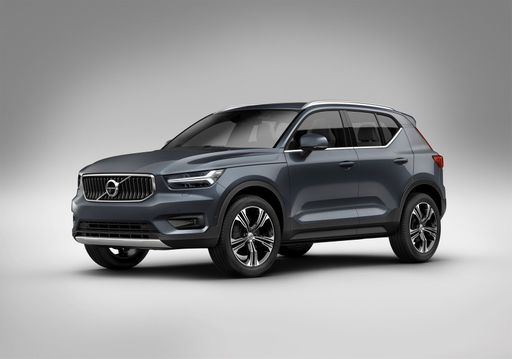
The Qashqai plays the pragmatic card with a confident, mass-appeal look that feels reassuringly familiar on suburban streets, while the XC40 leans into Scandinavian character with sharper lines and a sense of premium quirkiness. One reads as the sensible choice for buyers who want a modern, functional compact crossover; the other makes a quiet fashion statement that will turn heads at the school run and the café. Both wear their identities well, but they speak to different tastes—one mainstream and unflashy, the other a touch more design-led and distinctive.
Qashqai

How They Move

Behind the wheel the Qashqai favours comfort and composure, smoothing out everyday imperfections and delivering relaxed progress without fuss. The XC40, by contrast, feels more planted and willing to engage the driver, with firmer responses that reward a brisker pace but can be less yielding on rough surfaces. If you prioritise serene cruising you’ll appreciate the Qashqai’s diplomacy; if you want a compact that feels more driver-oriented, the XC40 has the edge.

XC40

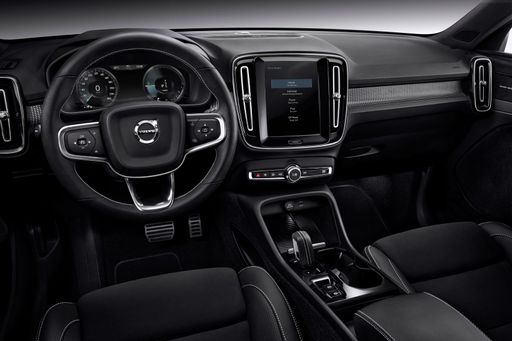
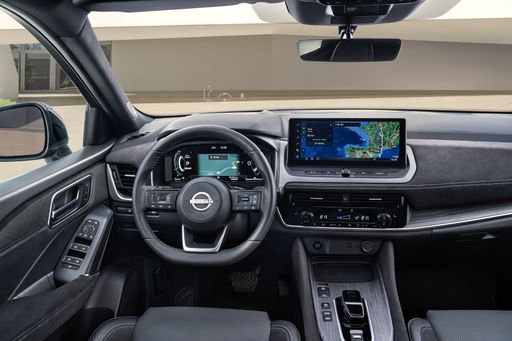
Inside: Comfort and Controls

The Qashqai’s cabin is cleverly organised for real life—intuitive controls, comfortable seating and a layout aimed squarely at hassle-free daily use. The XC40 elevates the experience with tactile materials and a minimalist, premium ambience that feels grown-up and slightly more special. Both cabins work well, but the choice comes down to whether you value pragmatic ergonomics or a more premium interior mood.

Qashqai

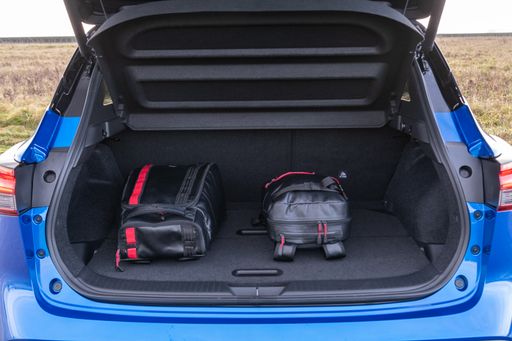
Everyday Practicality

When it comes to hauling stuff and moving people, the Qashqai prioritises utility with clever storage and a user-friendly load area that makes family life easier. The XC40 counters with smart solutions and a tidy, well-finished cargo space that suits owners who want practicality without compromising style. In short, one leans toward everyday versatility while the other balances utility with a premium feel.

XC40

Ownership: Daily Costs and Ease

Living with the Qashqai tends to feel straightforward and budget-friendly, with an emphasis on low fuss and dependable running characteristics that suit routine motoring. The XC40 brings a touch more polish to ownership, including a sense of premium service and finishes that some buyers will happily pay for. Your priorities—frugal practicality or a more elevated ownership experience—will steer which one makes more sense for you.

Qashqai

Who Should Drive Which

Choose the Qashqai if you’re a family-focused buyer or commuter who values comfort, sensible packaging and uncomplicated everyday usability; it’s the kind of car that quietly handles the daily grind. The XC40 is aimed at style-conscious drivers who want a compact SUV with a premium presence, engaging road manners and an interior that feels a step up. Flip a coin if you must, but read on — the DriveDuel Champion will be revealed next and you won’t want to miss who takes the crown.

Here’s where it gets real: The technical differences in detail

XC40

Costs and Efficiency:

When it comes to price and running costs, the biggest differences usually appear. This is often where you see which car fits your budget better in the long run.

Nissan Qashqai is noticeably cheaper – starting at 29,600 £ , while the Volvo XC40 costs 36,800 £ . That’s a price difference of around 7,157 £.

Fuel consumption also shows a difference: the Nissan Qashqai uses 4.5 L/100km and is substantially more efficient than the Volvo XC40 with 6.5 L/100km. The difference is about 2 L/100km.

Qashqai

Engine and Performance:

Under the bonnet, it becomes clear which model is tuned for sportiness and which one takes the lead when you hit the accelerator.

When it comes to engine power, the Nissan Qashqai offers very slightly more power – delivering 205 HP compared to 197 HP. That’s roughly 8 HP more horsepower.

Both models accelerate almost equally fast – 7.6 s from 0 to 100 km/h.

Looking at top speed, the Nissan Qashqai is slightly faster – reaching 206 km/h, while the Volvo XC40 tops out at 180 km/h. The difference is around 26 km/h.

There’s also a difference in torque: the Nissan Qashqai delivers barely more torque with 330 Nm compared to 300 Nm. That’s about 30 Nm more.

XC40

Space and Everyday Use:

Beyond pure performance, interior space and usability matter most in daily life. This is where you see which car is more practical and versatile.

Both vehicles offer seating for 5 people.

In terms of curb weight, Nissan Qashqai is a bit lighter – 1,420 kg compared to 1,688 kg. The difference is around 268 kg.

Looking at boot space, the Nissan Qashqai offers slightly more boot space – 504 L compared to 452 L. That’s a difference of about 52 L.

For maximum load capacity, the Nissan Qashqai offers barely more capacity – up to 1,447 L, about 119 L more than the Volvo XC40.

When it comes to payload, the Volvo XC40 carries marginally more – 532 kg compared to 520 kg. That’s a difference of about 12 kg.

Who wins the race in the data check?

The Nissan Qashqai is decisively ahead in the objective data comparison.
This result only shows which model scores more points on paper – not which of the two cars feels right for you.

from £29,600
Qashqai

Nissan Qashqai

  • Engine Type : Petrol MHEV, Full Hybrid
  • Transmission : Manuel, Automatic
  • Drive Type : Front-Wheel Drive, All-Wheel Drive
  • Power HP : 140 - 205 HP
  • Consumption L/100km : 4.5 - 6.8 L/100km
Volvo XC40
Nissan Qashqai

Costs and Consumption

View detailed analysis

Engine and Performance

View detailed analysis

Dimensions and Body

View detailed analysis

Volvo XC40

The Volvo XC40 wraps Scandinavian minimalism into a compact, city-ready SUV with a premium cabin that feels both practical and grown-up. It will suit buyers who prize safety, clever storage and a composed ride, proving that small dimensions don't mean small personality.

details

Nissan Qashqai

The Nissan Qashqai blends practical, family-friendly packaging with SUV styling that refuses to shout, making it a sensible and dependable choice for everyday life. It’s comfortable to live with, economical on the road, and neatly equipped enough to feel modern without ever feeling precious — perfect if you want crossover versatility without the drama.

details
Volvo XC40
Nissan Qashqai

Costs and Consumption

Price
36,800 - 47,200 £
Price
29,600 - 39,900 £
Consumption L/100km
6.5 L/100km
Consumption L/100km
4.5 - 6.8 L/100km
Consumption kWh/100km
-
Consumption kWh/100km
-
Electric Range
-
Electric Range
-
Battery Capacity
-
Battery Capacity
-
co2
147 - 148 g/km
co2
102 - 154 g/km
Fuel tank capacity
54 L
Fuel tank capacity
55 L

Dimensions and Body

Body Type
SUV
Body Type
SUV
Seats
5
Seats
5
Doors
5
Doors
5
Curb weight
1,688 kg
Curb weight
1,420 - 1,665 kg
Trunk capacity
452 L
Trunk capacity
479 - 504 L
Length
4,425 mm
Length
4,425 mm
Width
1,863 mm
Width
1,835 mm
Height
1,652 mm
Height
1,625 mm
Max trunk capacity
1,328 L
Max trunk capacity
1,422 - 1,447 L
Payload
532 kg
Payload
466 - 520 kg

Engine and Performance

Engine Type
Petrol MHEV
Engine Type
Petrol MHEV, Full Hybrid
Transmission
Automatic
Transmission
Manuel, Automatic
Transmission Detail
Dual-Clutch Automatic
Transmission Detail
Manual Gearbox, CVT, Reduction Gearbox
Drive Type
Front-Wheel Drive
Drive Type
Front-Wheel Drive, All-Wheel Drive
Power HP
163 - 197 HP
Power HP
140 - 205 HP
Acceleration 0-100km/h
7.6 - 8.6 s
Acceleration 0-100km/h
7.6 - 10.2 s
Max Speed
180 km/h
Max Speed
170 - 206 km/h
Torque
265 - 300 Nm
Torque
240 - 330 Nm
Number of Cylinders
4
Number of Cylinders
3 - 4
Power kW
120 - 145 kW
Power kW
103 - 151 kW
Engine capacity
1,969 cm3
Engine capacity
1,332 - 1,498 cm3

General

Model Year
2,024
Model Year
2,025 - 2,026
CO2 Efficiency Class
E
CO2 Efficiency Class
E, C
Brand
Volvo
Brand
Nissan
DriveDuel uses data analysis and artificial intelligence to evaluate vehicle data and create content. Content is regularly reviewed and improved. The displayed prices are estimates based on German list prices, adjusted to the respective country’s VAT. Country-specific registration taxes are not included. This information is not legally binding.