VS

Volvo XC40 vs Skoda Karoq comparison

Compare performance (197 HP vs 190 HP), boot space and price (36,800 £ vs 29,100 £ ) at a glance. Find out which car is the better choice for you – Volvo XC40 or Skoda Karoq?

Volvo XC40 vs Skoda Karoq: Key differences

Volvo XC40

5 (4 Reviews)
rate
  • barely more power

Skoda Karoq

4.6 (2 Reviews)
rate
  • noticeably cheaper
  • markedly more efficient
  • barely quicker 0–100 km/h
  • noticeably lighter
  • slightly more trunk space
XC40

First impressions: city magnet or understated workhorse?

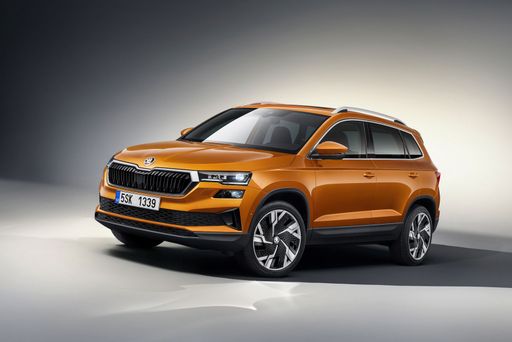
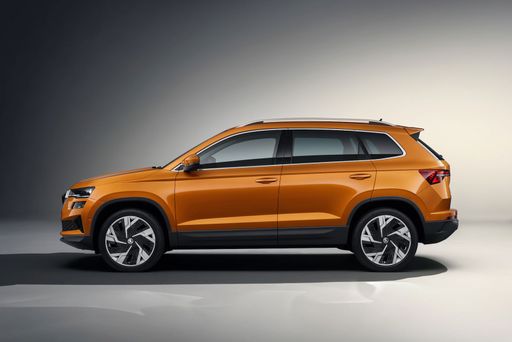
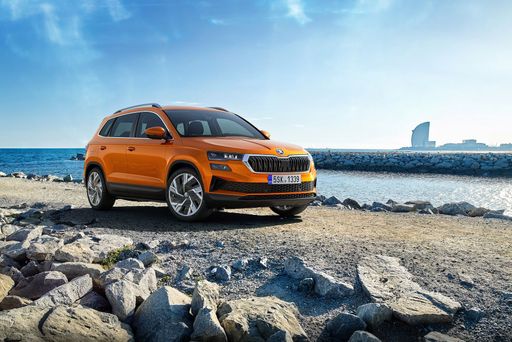
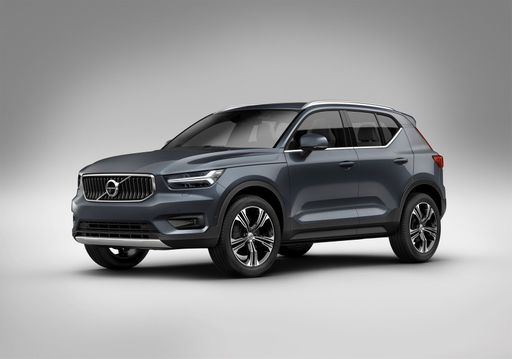
At a glance the Volvo XC40 announces itself with a distinctive, modern swagger — sharp angles, Swedish restraint turned stylish — while the Skoda Karoq arrives as a deliberately practical companion, tidy and sensible rather than showy. The XC40 wants to be noticed in the urban jungle; the Karoq prefers to blend in and quietly do its job exceptionally well. That contrast sets the tone for everything that follows: one prioritises personality, the other prioritises purpose.
Karoq

Life inside: materials and everyday comfort

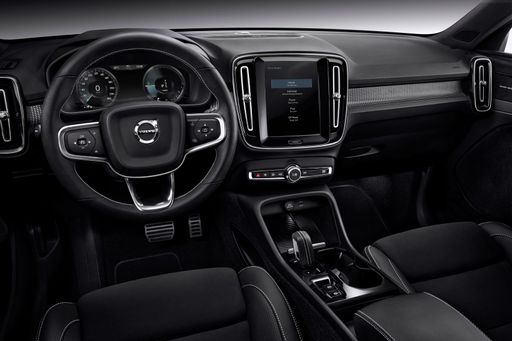
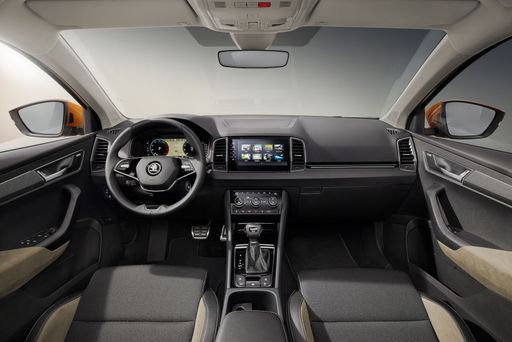
Step into the XC40 and you feel the premium intent in materials and layout, a cabin that leans into Scandinavian minimalism with a cosseting sense of refinement; the Karoq answers with straightforward ergonomics, solid surfaces and controls that are instantly familiar. For long stretches behind the wheel the Volvo tends to impress with a slightly more luxurious ambience, while the Skoda wins points for intuitive control placement and passenger-friendly practicality. Both will carry you in comfort, but they create different moods for the daily commute.

XC40

How they handle the tarmac: feel and city manners

On winding backroads the XC40 often feels composed and confident, steering with a precise, assured character that rewards drivers who like a bit of interaction from their SUV; the Karoq is more neutral and predictable, tuned toward stability and comfort rather than sportiness. In town the smaller, honest Karoq is a forgiving companion with good visibility and polite manners, whereas the XC40’s firmer set-up and crisp turn-in make urban manoeuvres feel composed and engaging. If you prefer a car that talks to you, the Volvo has more personality; if you want predictability and ease, the Skoda will keep life simple.

Karoq

Practicalities that shape family life

When real-world usability matters the Karoq’s pragmatic layout, flexible storage spots and family-friendly ergonomics make it a standout choice for shopping runs, school duties and the odd impromptu build-it-yourself weekend. The XC40 brings clever cubby space and a sense of polish that elevates everyday chores into a more premium experience, but its emphasis is less about maximum cargo practicality and more about smart execution. Either way, both are sensible for family life — it’s a question of whether you want function first or a touch of luxury with it.

XC40

Infotainment and creature comforts: who’s easier to live with?

The Skoda keeps things pleasantly old-school where it matters, favouring tactile switches and a straightforward interface that most users will find less fiddly on the move; the Volvo leans into a modern touchscreen-led experience that looks great and packs safety tech, but sometimes asks for menu navigation. Connectivity and convenience features are abundant in both cabins, yet the XC40’s approach is more curated while the Karoq trades flash for practical clarity. Choose your preference: immediate simplicity or a sleeker, slightly more button-light modernity.

Karoq

Who should put which in the driveway?

If your day is dominated by hauling family, kit and the occasional awkward load, or if value and fuss-free usability top your list, the practical virtues of the Karoq will appeal strongly; if you prize design, a more premium ambience and a car that reads as contemporary and a little more distinctive, the XC40 will speak to you. Commuters and families who want reliable, uncomplicated transport will like the Skoda, while style-conscious buyers and those who relish a refined cabin will drift toward the Volvo. Either way, both machines have clear, confident personalities tailored to different kinds of owners.

XC40

The final tease

Both cars delight in their own ways and make compelling cases depending on what you value most — practicality and common-sense packaging on one side, premium feel and personality on the other — so keep reading to see which model we crown the DriveDuel Champion and which one might just be your next garage favourite.

Here’s where it gets real: The technical differences in detail

XC40

Costs and Efficiency:

Price and efficiency are often the first things buyers look at. Here it becomes clear which model has the long-term edge – whether at the pump, the plug, or in purchase price.

Skoda Karoq is noticeably cheaper – starting at 29,100 £ , while the Volvo XC40 costs 36,800 £ . That’s a price difference of around 7,680 £.

Fuel consumption also shows a difference: the Skoda Karoq uses 4.9 L/100km and is markedly more efficient than the Volvo XC40 with 6.5 L/100km. The difference is about 1.6 L/100km.

Karoq

Engine and Performance:

Under the bonnet, it becomes clear which model is tuned for sportiness and which one takes the lead when you hit the accelerator.

When it comes to engine power, the Volvo XC40 offers barely more power – delivering 197 HP compared to 190 HP. That’s roughly 7 HP more horsepower.

When accelerating from 0 to 100 km/h, the Skoda Karoq is barely quicker – completing the sprint in 7 s, while the Volvo XC40 takes 7.6 s. That’s about 0.6 s quicker.

Looking at top speed, the Skoda Karoq is slightly faster – reaching 210 km/h, while the Volvo XC40 tops out at 180 km/h. The difference is around 30 km/h.

There’s also a difference in torque: the Skoda Karoq delivers moderately more torque with 360 Nm compared to 300 Nm. That’s about 60 Nm more.

XC40

Space and Everyday Use:

Cabin size, boot volume and payload all play a role in everyday practicality. Here, comfort and flexibility make the difference.

Both vehicles offer seating for 5 people.

In terms of curb weight, Skoda Karoq is noticeably lighter – 1,380 kg compared to 1,688 kg. The difference is around 308 kg.

Looking at boot space, the Skoda Karoq offers slightly more boot space – 521 L compared to 452 L. That’s a difference of about 69 L.

For maximum load capacity, the Skoda Karoq offers somewhat more capacity – up to 1,630 L, about 302 L more than the Volvo XC40.

When it comes to payload, the Skoda Karoq carries very slightly more – 549 kg compared to 532 kg. That’s a difference of about 17 kg.

Who wins the race in the data check?

The Skoda Karoq stands well ahead of its rival in the objective data comparison.
This result only shows which model scores more points on paper – not which of the two cars feels right for you.

from £29,100
Karoq

Skoda Karoq

  • Engine Type : Petrol, Diesel
  • Transmission : Manuel, Automatic
  • Drive Type : Front-Wheel Drive, All-Wheel Drive
  • Power HP : 115 - 190 HP
  • Consumption L/100km : 4.9 - 7.6 L/100km
Volvo XC40
Skoda Karoq

Costs and Consumption

View detailed analysis

Engine and Performance

View detailed analysis

Dimensions and Body

View detailed analysis

Volvo XC40

The Volvo XC40 wraps Scandinavian minimalism into a compact, city-ready SUV with a premium cabin that feels both practical and grown-up. It will suit buyers who prize safety, clever storage and a composed ride, proving that small dimensions don't mean small personality.

details

Skoda Karoq

The Skoda Karoq is a smart, unfussy compact SUV that blends roomy practicality with a pleasantly composed driving character. It won’t turn heads at a car meet, but it will make daily life easier with clever storage, sensible ergonomics and a reassuringly grown-up ride.

details
Volvo XC40
Skoda Karoq

Costs and Consumption

Price
36,800 - 47,200 £
Price
29,100 - 41,700 £
Consumption L/100km
6.5 L/100km
Consumption L/100km
4.9 - 7.6 L/100km
Consumption kWh/100km
-
Consumption kWh/100km
-
Electric Range
-
Electric Range
-
Battery Capacity
-
Battery Capacity
-
co2
147 - 148 g/km
co2
128 - 173 g/km
Fuel tank capacity
54 L
Fuel tank capacity
50 - 55 L

Dimensions and Body

Body Type
SUV
Body Type
SUV
Seats
5
Seats
5
Doors
5
Doors
5
Curb weight
1,688 kg
Curb weight
1,380 - 1,655 kg
Trunk capacity
452 L
Trunk capacity
521 L
Length
4,425 mm
Length
4,390 mm
Width
1,863 mm
Width
1,841 mm
Height
1,652 mm
Height
1,624 mm
Max trunk capacity
1,328 L
Max trunk capacity
1,630 L
Payload
532 kg
Payload
456 - 549 kg

Engine and Performance

Engine Type
Petrol MHEV
Engine Type
Petrol, Diesel
Transmission
Automatic
Transmission
Manuel, Automatic
Transmission Detail
Dual-Clutch Automatic
Transmission Detail
Manual Gearbox, Dual-Clutch Automatic
Drive Type
Front-Wheel Drive
Drive Type
Front-Wheel Drive, All-Wheel Drive
Power HP
163 - 197 HP
Power HP
115 - 190 HP
Acceleration 0-100km/h
7.6 - 8.6 s
Acceleration 0-100km/h
7 - 11.2 s
Max Speed
180 km/h
Max Speed
192 - 210 km/h
Torque
265 - 300 Nm
Torque
200 - 360 Nm
Number of Cylinders
4
Number of Cylinders
3 - 4
Power kW
120 - 145 kW
Power kW
85 - 140 kW
Engine capacity
1,969 cm3
Engine capacity
999 - 1,984 cm3

General

Model Year
2,024
Model Year
2,025
CO2 Efficiency Class
E
CO2 Efficiency Class
D, E, F
Brand
Volvo
Brand
Skoda
DriveDuel uses data analysis and artificial intelligence to evaluate vehicle data and create content. Content is regularly reviewed and improved. The displayed prices are estimates based on German list prices, adjusted to the respective country’s VAT. Country-specific registration taxes are not included. This information is not legally binding.