VS

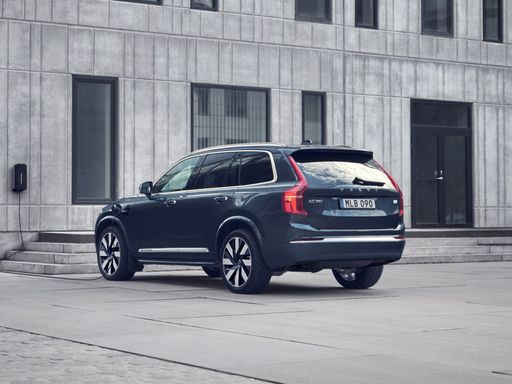
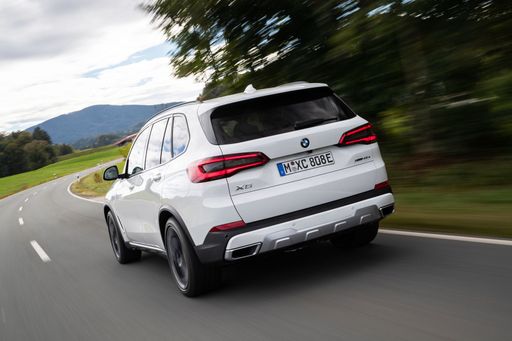
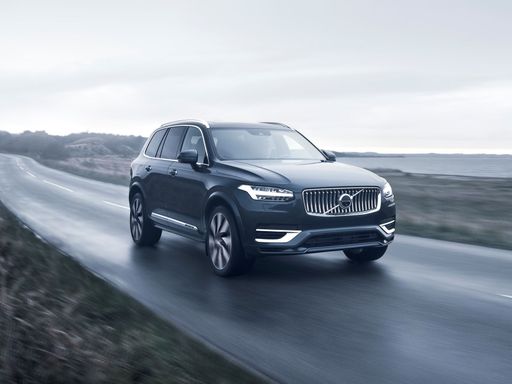
Volvo XC90 vs BMW X5 comparison

Compare performance (455 HP vs 625 HP), boot space and price (69,800 £ vs 77,100 £ ) at a glance. Find out which car is the better choice for you – Volvo XC90 or BMW X5?

Volvo XC90 vs BMW X5: Key differences

Volvo XC90

5 (1 Reviews)
rate
  • slightly cheaper
  • barely lighter

BMW X5

  • visibly more power
  • moderately more efficient
  • visibly more electric range
  • clearly quicker 0–100 km/h
  • considerably more trunk space

All details on performance, efficiency, range and trunk space can be found in the technical comparison below – including user reviews for both models.

XC90

The BMW X5 and the Volvo XC90 are two of the most sought-after luxury SUVs, combining performance, comfort, and cutting-edge technology. While each vehicle has its unique strengths, this comparison will highlight their technical aspects, innovations, and overall appeal.
X5

Performance and Powertrain

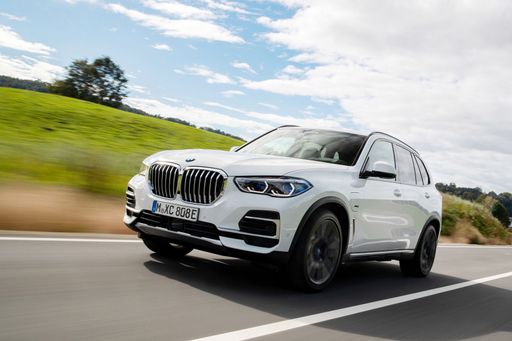
The BMW X5 offers a diverse range of engine options, including Diesel MHEV, Petrol MHEV, and Plugin Hybrid variants. Power outputs kick off at 298 HP and soar up to a staggering 625 HP in the high-performance model. The 0-100 km/h acceleration times span from a brisk 6.1 seconds to a blistering 3.9 seconds, demonstrating the X5's capability to deliver thrilling performance.

In comparison, the Volvo XC90 features a more streamlined engine lineup with Petrol MHEV and Plugin Hybrid options. Its power ranges from 250 HP to 455 HP, with a respectable acceleration of 7.7 seconds for the base model and 5.4 seconds for the high-end variant. While the XC90 may not achieve the power metrics of the X5, it still offers a satisfying driving experience.

XC90

Fuel Efficiency and Environmental Impact

When it comes to efficiency, the BMW X5 showcases notable figures, especially in its hybrid configurations, with consumption figures as low as 0.9 L/100 km. The diesel variant also maintains a solid economy at 7.4 L/100 km. With an electric range of up to 97 km thanks to a battery capacity of 25.7 kWh, it caters well to eco-conscious drivers.

The Volvo XC90 also performs admirably in this category, especially with its Plugin Hybrid, boasting consumption figures as low as 1.2 L/100 km and an electric range of 71 km with a smaller 14.7 kWh battery. Both manufacturers have been mindful of their carbon footprint, with CO2 emissions for the XC90 ranging between 30 to 191 g/km and the X5 ranging from 194 to 291 g/km.

X5

Interior Comfort and Space

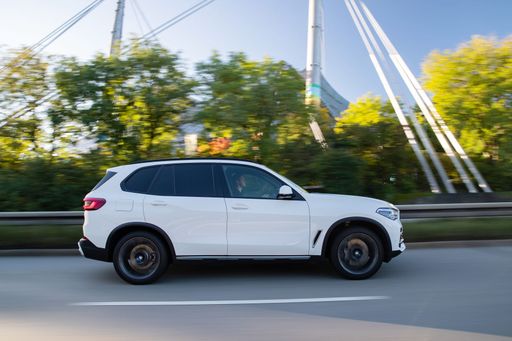
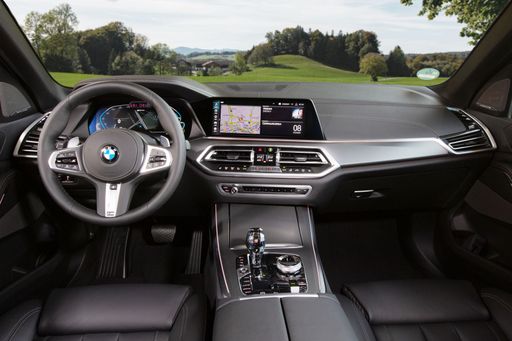
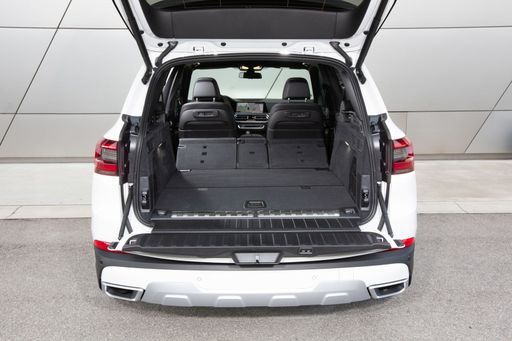
The BMW X5 comfortably seats five and offers a generous trunk capacity of 650 liters. Its interior is a blend of luxury and technology, featuring high-grade materials, an intuitive infotainment system, and adjustable seating arrangements. With dimensions measuring 4935 mm in length and 2004 mm in width, the X5 provides ample room for passengers and luggage alike.

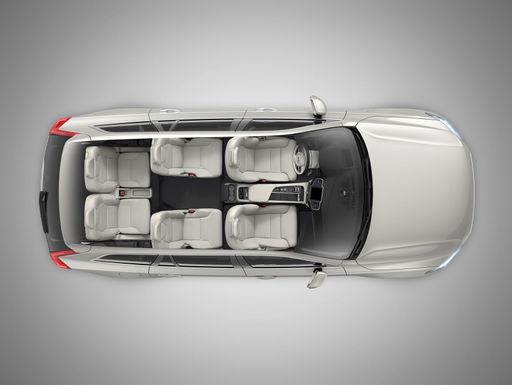
On the other hand, the Volvo XC90 is designed to accommodate seven passengers, catering to families looking for versatility. Despite its slightly smaller trunk space of 302 liters, the XC90 excels in overall cabin quality and user-friendly technology. It measures 4953 mm in length and 1923 mm in width, providing a spacious and comfortable environment for all occupants.

XC90

Innovative Features and Technologies

The BMW X5 is laden with modern tech, including advanced driver-assistance systems, adaptive cruise control, and a spacious head-up display that enhances safety and driving convenience. Additionally, the latest X5 integrates connectivity features supporting smartphones and a premium audio system for superior sound quality.

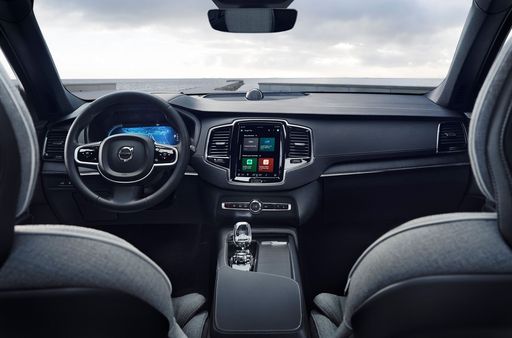
The Volvo XC90 is also equipped with innovative safety features, including Volvo's signature Pilot Assist, which provides semi-autonomous driving capabilities. Its Infotainment system operates on Android-based software, offering seamless integration with Google services and a user-friendly interface. The XC90 takes pride in its commitment to safety and practicality, making it a family favorite.

X5

Conclusion: Which SUV Reigns Supreme?

Choosing between the BMW X5 and the Volvo XC90 ultimately boils down to personal preference and priorities. The X5 stands out for its exhilarating performance and luxury finish, making it an excellent choice for those who seek sports SUV dynamics. Conversely, the XC90 shines with its family-oriented features, superior interior space, and strong focus on safety.

Both SUVs represent the pinnacle of modern automotive engineering, offering a wealth of technology and performance. In the end, your choice will depend on whether you prioritize agility and power over space and safety, but either way, you will be making an excellent investment in luxury and performance.

Here’s where it gets real: The technical differences in detail

XC90

Costs and Efficiency:

Price and efficiency are often the first things buyers look at. Here it becomes clear which model has the long-term edge – whether at the pump, the plug, or in purchase price.

Volvo XC90 is slightly cheaper – starting at 69,800 £ , while the BMW X5 costs 77,100 £ . That’s a price difference of around 7,295 £.

Fuel consumption also shows a difference: the BMW X5 uses 3 L/100km and is moderately more efficient than the Volvo XC90 with 3.5 L/100km. The difference is about 0.5 L/100km.

As for electric range, the BMW X5 offers visibly more range – reaching up to 105 km, about 34 km more than the Volvo XC90.

X5

Engine and Performance:

Under the bonnet, it becomes clear which model is tuned for sportiness and which one takes the lead when you hit the accelerator.

When it comes to engine power, the BMW X5 offers visibly more power – delivering 625 HP compared to 455 HP. That’s roughly 170 HP more horsepower.

When accelerating from 0 to 100 km/h, the BMW X5 is clearly quicker – completing the sprint in 3.9 s, while the Volvo XC90 takes 5.4 s. That’s about 1.5 s quicker.

Looking at top speed, the BMW X5 is noticeably faster – reaching 250 km/h, while the Volvo XC90 tops out at 180 km/h. The difference is around 70 km/h.

There’s also a difference in torque: the BMW X5 delivers very slightly more torque with 750 Nm compared to 709 Nm. That’s about 41 Nm more.

XC90

Space and Everyday Use:

Cabin size, boot volume and payload all play a role in everyday practicality. Here, comfort and flexibility make the difference.

Seats: Volvo XC90 offers more seats – 7 vs 5.

In terms of curb weight, Volvo XC90 is barely lighter – 2,080 kg compared to 2,240 kg. The difference is around 160 kg.

Looking at boot space, the BMW X5 offers considerably more boot space – 650 L compared to 302 L. That’s a difference of about 348 L.

For maximum load capacity, the BMW X5 offers marginally more capacity – up to 1,870 L, about 14 L more than the Volvo XC90.

When it comes to payload, the Volvo XC90 carries only slightly more – 710 kg compared to 705 kg. That’s a difference of about 5 kg.

Who wins the race in the data check?

The BMW X5 is decisively ahead in the objective data comparison.
This result only shows which model scores more points on paper – not which of the two cars feels right for you.

from £77,100
X5

BMW X5

  • Engine Type : Petrol MHEV, Diesel MHEV, Plugin Hybrid
  • Transmission : Automatic
  • Drive Type : All-Wheel Drive
  • Power HP : 298 - 625 HP
  • Consumption L/100km : 3 - 12.8 L/100km
  • Electric Range : 105 km
Volvo XC90
BMW X5

Costs and Consumption

View detailed analysis

Engine and Performance

View detailed analysis

Dimensions and Body

View detailed analysis

Volvo XC90

The Volvo XC90 is a serene Scandinavian SUV that mixes minimalist luxury with a composed, confidence-inspiring presence — ideal for buyers who want family practicality without sacrificing style. Inside it serves up a calm, well-crafted cabin and user-friendly tech that keeps long journeys pleasant and tantrums to a minimum, making the XC90 a smart, stylish pick for sensible drivers.

details

BMW X5

The BMW X5 blends athletic handling with a roomy, premium interior, feeling equally at home on twisty country roads and the school-run car park. Its executive-lounge cabin and confident road presence make it a tempting choice for buyers who want comfort, capability and just a little bit of bragging rights.

details
Volvo XC90
BMW X5

Costs and Consumption

Price
69,800 - 84,600 £
Price
77,100 - 143,500 £
Consumption L/100km
3.5 - 8.5 L/100km
Consumption L/100km
3 - 12.8 L/100km
Consumption kWh/100km
-
Consumption kWh/100km
-
Electric Range
71 km
Electric Range
105 km
Battery Capacity
-
Battery Capacity
25.7 kWh
co2
79 - 191 g/km
co2
68 - 289 g/km
Fuel tank capacity
71 L
Fuel tank capacity
69 - 83 L

Dimensions and Body

Body Type
SUV
Body Type
SUV
Seats
7
Seats
5
Doors
5
Doors
5
Curb weight
2,080 - 2,297 kg
Curb weight
2,240 - 2,495 kg
Trunk capacity
262 - 302 L
Trunk capacity
500 - 650 L
Length
4,953 mm
Length
4,935 mm
Width
1,923 mm
Width
2,004 - 2,015 mm
Height
1,771 mm
Height
1,755 - 1,765 mm
Max trunk capacity
1,856 L
Max trunk capacity
1,720 - 1,870 L
Payload
653 - 710 kg
Payload
565 - 705 kg

Engine and Performance

Engine Type
Petrol MHEV, Plugin Hybrid
Engine Type
Petrol MHEV, Diesel MHEV, Plugin Hybrid
Transmission
Automatic
Transmission
Automatic
Transmission Detail
Automatic Gearbox
Transmission Detail
Automatic Gearbox
Drive Type
All-Wheel Drive
Drive Type
All-Wheel Drive
Power HP
250 - 455 HP
Power HP
298 - 625 HP
Acceleration 0-100km/h
5.4 - 7.7 s
Acceleration 0-100km/h
3.9 - 6.1 s
Max Speed
180 km/h
Max Speed
250 km/h
Torque
360 - 709 Nm
Torque
540 - 750 Nm
Number of Cylinders
4
Number of Cylinders
6 - 8
Power kW
184 - 335 kW
Power kW
219 - 460 kW
Engine capacity
1,969 cm3
Engine capacity
2,993 - 4,395 cm3

General

Model Year
2,024 - 2,025
Model Year
2,025
CO2 Efficiency Class
G, B
CO2 Efficiency Class
G, B
Brand
Volvo
Brand
BMW
DriveDuel uses data analysis and artificial intelligence to evaluate vehicle data and create content. Content is regularly reviewed and improved. The displayed prices are estimates based on German list prices, adjusted to the respective country’s VAT. Country-specific registration taxes are not included. This information is not legally binding.