VS

Volvo XC90 vs Mercedes GLS comparison

Compare performance (455 HP vs 634 HP), boot space and price (69,800 £ vs 96,100 £ ) at a glance. Find out which car is the better choice for you – Volvo XC90 or Mercedes GLS?

Volvo XC90 vs Mercedes GLS: Key differences

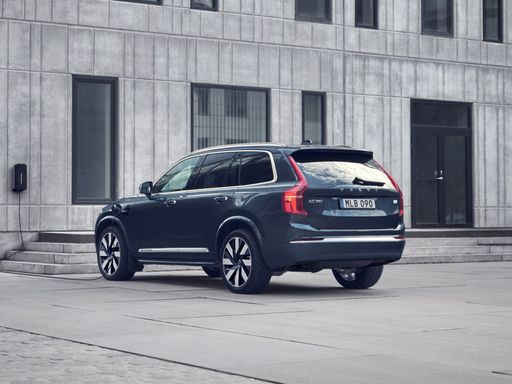
Volvo XC90

5 (1 Reviews)
rate
  • visibly cheaper
  • clearly more efficient
  • clearly lighter

Mercedes GLS

  • markedly more power
  • markedly quicker 0–100 km/h
  • a bit more trunk space

All details on performance, efficiency, range and trunk space can be found in the technical comparison below – including user reviews for both models.

XC90

Luxury SUV Showdown: Mercedes GLS vs. Volvo XC90

The luxury SUV segment is a fiercely competitive arena, with manufacturers vying to offer the best blend of style, performance, and technology. In this comparison, we delve into the specifications, features, and innovations of two titans: the Mercedes GLS and the Volvo XC90. Both SUVs promise comfort and capability but differentiate themselves with unique technical aspects and design philosophies.
GLS

Power and Performance

Starting with the powertrains, the Mercedes GLS offers a range of engine options, including several mild hybrid variants. The power output varies from 333 HP to a staggering 634 HP, thanks to its available 8-cylinder engines. This range of power allows for impressive acceleration, with the top variant achieving 0 to 100 km/h in just 4.2 seconds. The GLS's all-wheel-drive system ensures that this power is delivered seamlessly across various driving conditions.

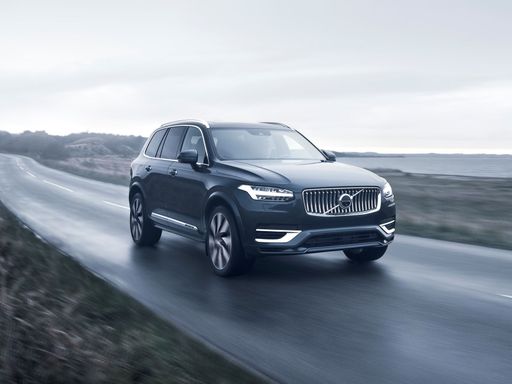
The Volvo XC90, on the other hand, stands out with its focus on efficiency. It features a 4-cylinder engine lineup that produces up to 455 HP in its plug-in hybrid configuration. Although the acceleration is slightly less thrilling at 0 to 100 km/h in 5.4 seconds for the top variant, the XC90 prides itself on low consumption figures, with a remarkable 1.2 L/100 km while in hybrid mode, thanks to its electric range of 71 km provided by a 14.7 kWh battery.

XC90

Dimensions and Interior Space

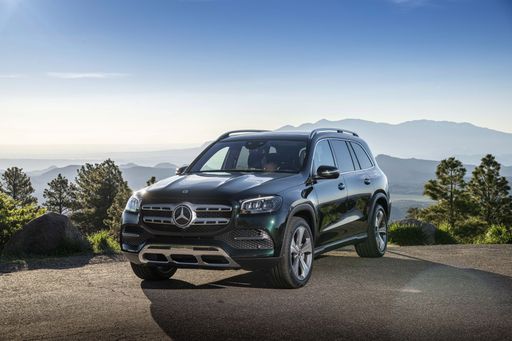
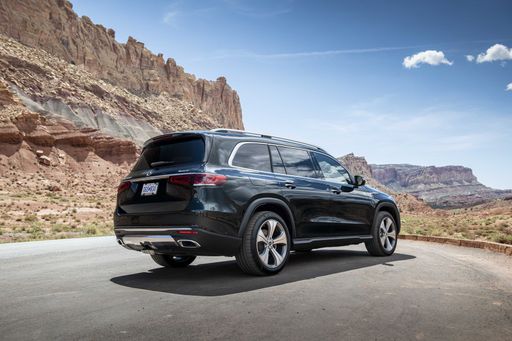
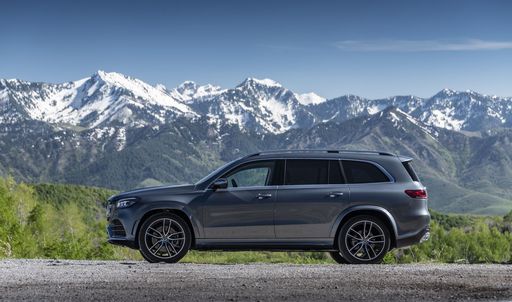
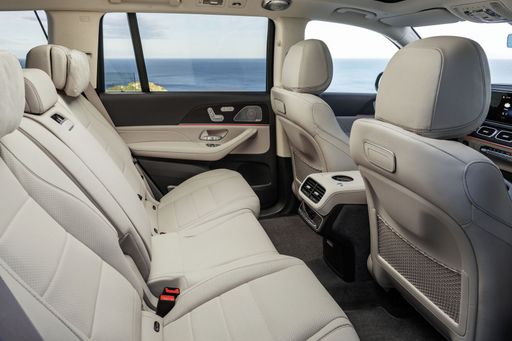
When it comes to size, the Mercedes GLS outshines the XC90. Measuring approximately 5209 mm in length, the GLS provides a spacious interior designed for seven occupants. The trunk capacity also impresses, offering up to 355 liters of cargo space.

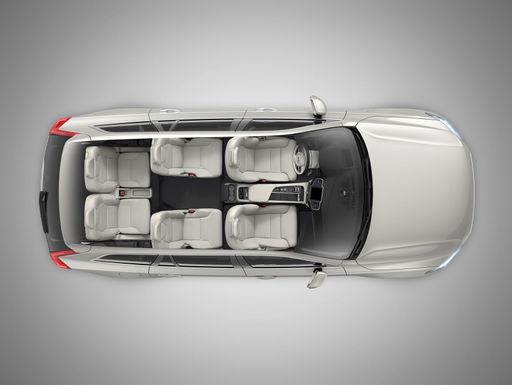
The Volvo XC90, shorter at 4953 mm, manages to accommodate seven passengers but has less trunk space, peaking at 302 liters. Nonetheless, it employs a clever interior design that maximizes space utilization and provides a premium feel, indicative of Volvo's Scandinavian design ethos.

GLS

Innovation and Technology

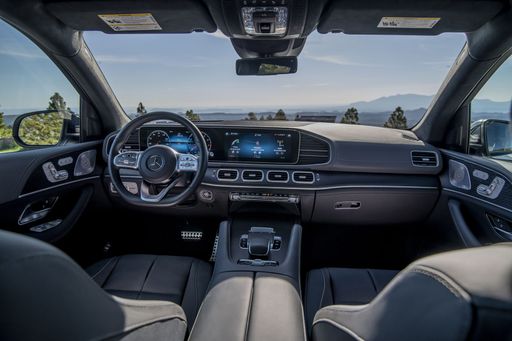
Both vehicles are equipped with state-of-the-art technology, but they take different approaches. The Mercedes GLS features an advanced MBUX infotainment system, complete with voice-activated controls and a multi-screen layout that integrates navigation, media, and vehicle settings intuitively. Safety features include Active Stop-and-Go Assist and the innovative Pre-Safe system that prepares for an impending collision.

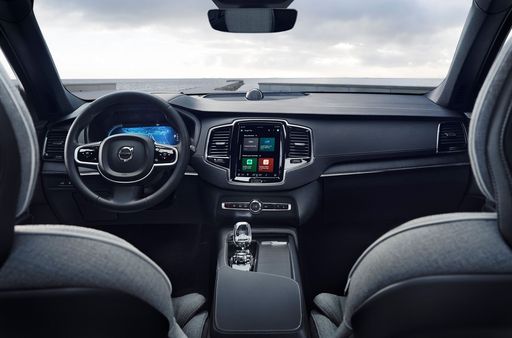
Volvo, renowned for its commitment to safety, outfits the XC90 with an array of safety technologies such as City Safety and Pilot Assist, which offer semi-autonomous driving capabilities. The Sensus infotainment system is robust but leans more towards minimalism and usability, providing a clean interface with a smartphone-like experience.

XC90

Environmental Considerations

In the current automotive landscape, environmental considerations are pivotal. The GLS carries a CO2 emission rating that reaches up to 310 g/km in its more powerful variants. Conversely, the XC90 makes a strong case for sustainability, especially with its plug-in hybrid option, which emits only 30 g/km in hybrid mode. This difference highlights Volvo’s initiative towards greener motoring.

GLS

Final Thoughts

In conclusion, both the Mercedes GLS and Volvo XC90 present compelling arguments for potential buyers in the luxury SUV market. The GLS leans towards sheer power and technological sophistication, while the XC90 champions fuel efficiency and safety innovation. The choice ultimately hinges on personal preferences—whether one prioritizes exhilarating performance and luxury amenities or eco-friendliness and safety features. Each model embodies the ethos of its brand, making this comparison not just about technical numbers, but about lifestyle and values.

Here’s where it gets real: The technical differences in detail

XC90

Costs and Efficiency:

When it comes to price and running costs, the biggest differences usually appear. This is often where you see which car fits your budget better in the long run.

Volvo XC90 is visibly cheaper – starting at 69,800 £ , while the Mercedes GLS costs 96,100 £ . That’s a price difference of around 26,358 £.

Fuel consumption also shows a difference: the Volvo XC90 uses 3.5 L/100km and is clearly more efficient than the Mercedes GLS with 7.8 L/100km. The difference is about 4.3 L/100km.

GLS

Engine and Performance:

Power, torque and acceleration are the classic benchmarks for car enthusiasts – and here, some clear differences start to show.

When it comes to engine power, the Mercedes GLS offers markedly more power – delivering 634 HP compared to 455 HP. That’s roughly 179 HP more horsepower.

When accelerating from 0 to 100 km/h, the Mercedes GLS is markedly quicker – completing the sprint in 4.2 s, while the Volvo XC90 takes 5.4 s. That’s about 1.2 s quicker.

Looking at top speed, the Mercedes GLS is visibly faster – reaching 280 km/h, while the Volvo XC90 tops out at 180 km/h. The difference is around 100 km/h.

There’s also a difference in torque: the Mercedes GLS delivers somewhat more torque with 850 Nm compared to 709 Nm. That’s about 141 Nm more.

XC90

Space and Everyday Use:

Beyond pure performance, interior space and usability matter most in daily life. This is where you see which car is more practical and versatile.

Both vehicles offer seating for 7 people.

In terms of curb weight, Volvo XC90 is clearly lighter – 2,080 kg compared to 2,550 kg. The difference is around 470 kg.

Looking at boot space, the Mercedes GLS offers a bit more boot space – 355 L compared to 302 L. That’s a difference of about 53 L.

For maximum load capacity, the Mercedes GLS offers visibly more capacity – up to 2,400 L, about 544 L more than the Volvo XC90.

When it comes to payload, the Volvo XC90 carries very slightly more – 710 kg compared to 695 kg. That’s a difference of about 15 kg.

Who wins the race in the data check?

The Volvo XC90 comes out clearly ahead in the objective data comparison.
This result only shows which model scores more points on paper – not which of the two cars feels right for you.

from £69,800
XC90

Volvo XC90

  • Engine Type : Petrol MHEV, Plugin Hybrid
  • Transmission : Automatic
  • Drive Type : All-Wheel Drive
  • Power HP : 250 - 455 HP
  • Consumption L/100km : 3.5 - 8.5 L/100km
  • Electric Range : 71 km
Volvo XC90
Mercedes GLS

Costs and Consumption

View detailed analysis

Engine and Performance

View detailed analysis

Dimensions and Body

View detailed analysis

Volvo XC90

The Volvo XC90 is a serene Scandinavian SUV that mixes minimalist luxury with a composed, confidence-inspiring presence — ideal for buyers who want family practicality without sacrificing style. Inside it serves up a calm, well-crafted cabin and user-friendly tech that keeps long journeys pleasant and tantrums to a minimum, making the XC90 a smart, stylish pick for sensible drivers.

details

Mercedes GLS

The GLS — usually just called the GLS — is Mercedes' flagship SUV, wrapping limousine-like comfort and commanding road presence into a smart, family-ready package. It pampers occupants with a hushed cabin, premium materials and intuitive tech, while still managing to feel confident and a little indulgent on the daily commute.

details
Volvo XC90
Mercedes GLS

Costs and Consumption

Price
69,800 - 84,600 £
Price
96,100 - 208,500 £
Consumption L/100km
3.5 - 8.5 L/100km
Consumption L/100km
7.8 - 13.7 L/100km
Consumption kWh/100km
-
Consumption kWh/100km
-
Electric Range
71 km
Electric Range
-
Battery Capacity
-
Battery Capacity
-
co2
79 - 191 g/km
co2
204 - 310 g/km
Fuel tank capacity
71 L
Fuel tank capacity
90 L

Dimensions and Body

Body Type
SUV
Body Type
SUV
Seats
7
Seats
7
Doors
5
Doors
5
Curb weight
2,080 - 2,297 kg
Curb weight
2,550 - 2,825 kg
Trunk capacity
262 - 302 L
Trunk capacity
355 L
Length
4,953 mm
Length
5,208 - 5,233 mm
Width
1,923 mm
Width
1,956 mm
Height
1,771 mm
Height
1,782 - 1,838 mm
Max trunk capacity
1,856 L
Max trunk capacity
2,400 L
Payload
653 - 710 kg
Payload
445 - 695 kg

Engine and Performance

Engine Type
Petrol MHEV, Plugin Hybrid
Engine Type
Petrol MHEV, Diesel MHEV
Transmission
Automatic
Transmission
Automatic
Transmission Detail
Automatic Gearbox
Transmission Detail
Automatic Gearbox
Drive Type
All-Wheel Drive
Drive Type
All-Wheel Drive
Power HP
250 - 455 HP
Power HP
333 - 634 HP
Acceleration 0-100km/h
5.4 - 7.7 s
Acceleration 0-100km/h
4.2 - 6.7 s
Max Speed
180 km/h
Max Speed
238 - 280 km/h
Torque
360 - 709 Nm
Torque
500 - 850 Nm
Number of Cylinders
4
Number of Cylinders
6 - 8
Power kW
184 - 335 kW
Power kW
245 - 466 kW
Engine capacity
1,969 cm3
Engine capacity
2,989 - 3,982 cm3

General

Model Year
2,024 - 2,025
Model Year
2,024 - 2,025
CO2 Efficiency Class
G, B
CO2 Efficiency Class
G
Brand
Volvo
Brand
Mercedes-Benz
DriveDuel uses data analysis and artificial intelligence to evaluate vehicle data and create content. Content is regularly reviewed and improved. The displayed prices are estimates based on German list prices, adjusted to the respective country’s VAT. Country-specific registration taxes are not included. This information is not legally binding.