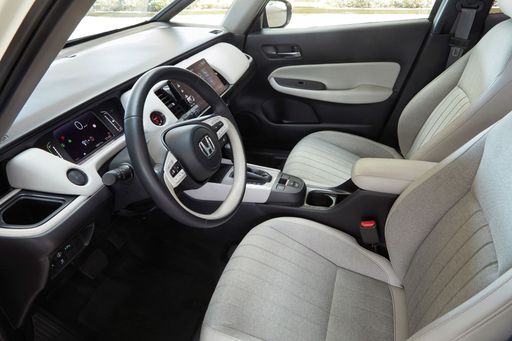
VS

VW Golf vs Honda Jazz comparison

Compare performance (333 HP vs 122 HP), boot space and price (25,200 £ vs 23,100 £ ) at a glance. Find out which car is the better choice for you – VW Golf or Honda Jazz?

VW Golf vs Honda Jazz: Key differences

VW Golf

4.6 (1 Reviews)
rate
  • clearly more power
  • clearly more efficient
  • clearly quicker 0–100 km/h
  • noticeably more trunk space

Honda Jazz

4.8 (3 Reviews)
rate
  • marginally cheaper
  • barely lighter

All details on performance, efficiency, range and trunk space can be found in the technical comparison below – including user reviews for both models.

Golf

The Compact Clash: Honda Jazz vs VW Golf

As the automotive world continues to evolve, choosing the perfect hatchback becomes more engaging and challenging. Today, we pit the 2023 Honda Jazz against the 2024 VW Golf, both icons in their own right, to discover which hatchback performs better in terms of technology, comfort, and innovation.
Jazz

Powertrain and Performance

The Honda Jazz boasts a full hybrid engine delivering 122 HP and 90 kW of power, which pairs with a CVT automatic transmission for a smooth ride. With its front-wheel drive, the Jazz accelerates from 0-100 km/h in approximately 9.6 seconds. Given its hybrid nature, it's remarkably efficient, consuming between 4.5 and 4.8 L/100km.

In contrast, the VW Golf offers a range of engine choices. The petrol engines alone range from 116 to a robust 333 HP. It features both automatic and manual transmissions, including the sophisticated dual-clutch automatic. The fastest variant of the Golf races from 0-100 km/h in a mere 4.6 seconds, underlining its sporty prowess. Fuel consumption varies between 0.3 to 8.5 L/100km, largely depending on the engine configuration.

Golf

Design and Dimensions

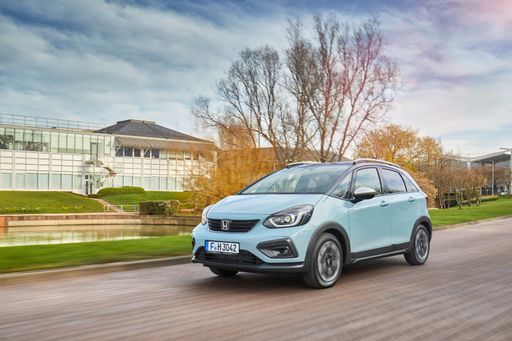
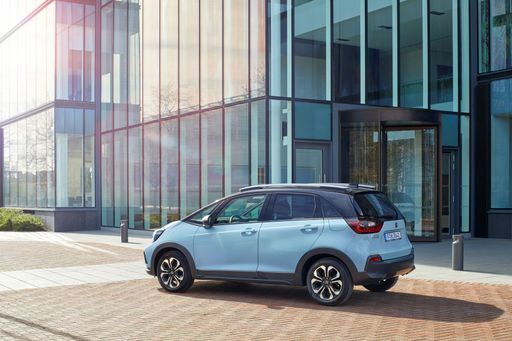
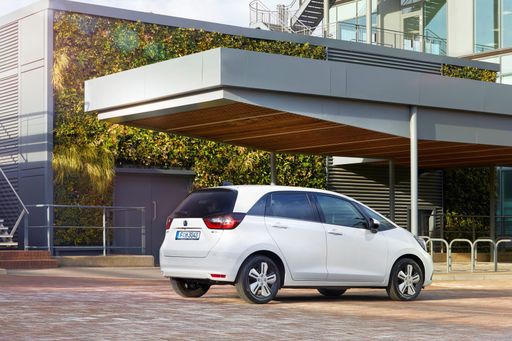
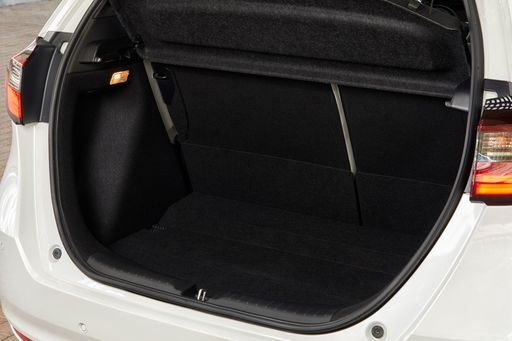
The Honda Jazz, with its clever design, emphasizes practicality. It stretches to a length between 4089 mm and 4105 mm and stands tall between 1526 mm and 1556 mm, making it spacious but still compact enough for city drives. The trunk capacity of 304 liters, although decent, falls short compared to larger hatchbacks.

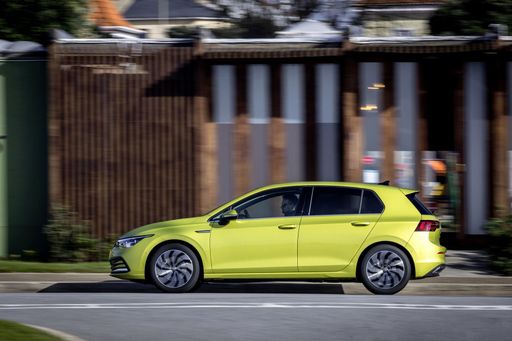
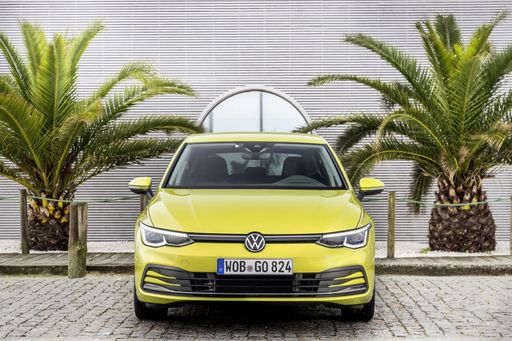
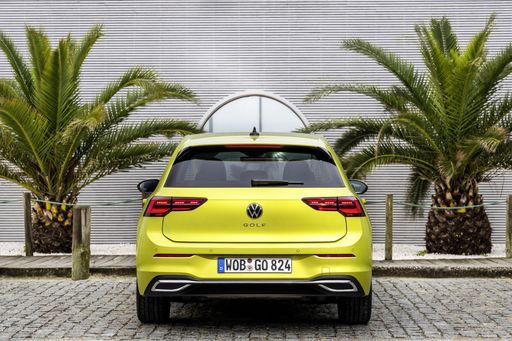
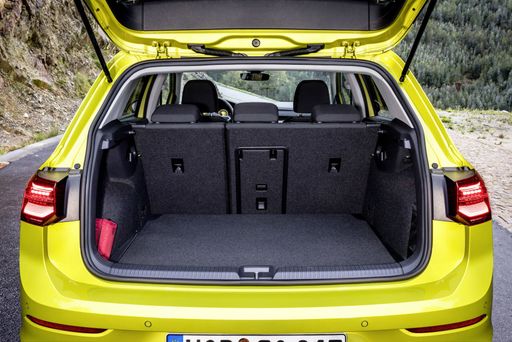
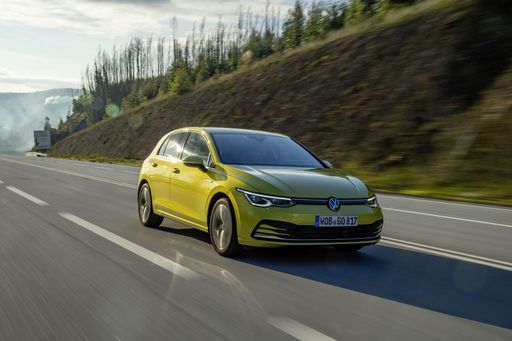
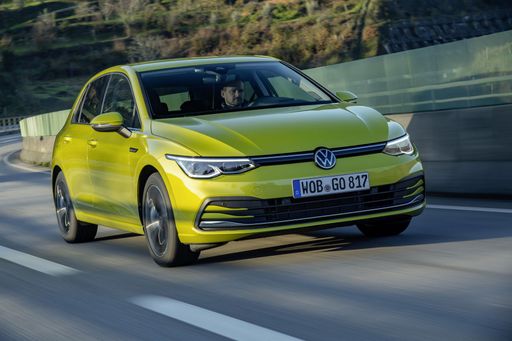
The VW Golf, known for its sleek, modern design, measures longer at approximately 4282 mm to 4292 mm and maintains a slightly lower height, offering a sportier profile. The Golf's trunk space stands out at 381 liters, ensuring ample room for your luggage or grocery needs.

Jazz

Efficiency and Environmental Credentials

With CO2 emissions ranging from 102 to 108 g/km, the Honda Jazz stands out for its eco-friendliness thanks to its hybrid drive train. It achieves an impressive fuel efficiency rating, making it an economical choice for the environmentally conscious urban commuter.

Conversely, the VW Golf offers a spectrum of CO2 emissions, from a low 6 g/km for plug-in hybrid variants to 192 g/km for high-performance versions. The diversity in engine styles allows buyers to choose based on their energy and environmental preferences.

Golf

Advanced Features and Innovations

The Jazz is engineered for urban adaptability with its hybrid technology. While it might not boast groundbreaking driver aids, it offers the essential features needed for a comfortable drive.

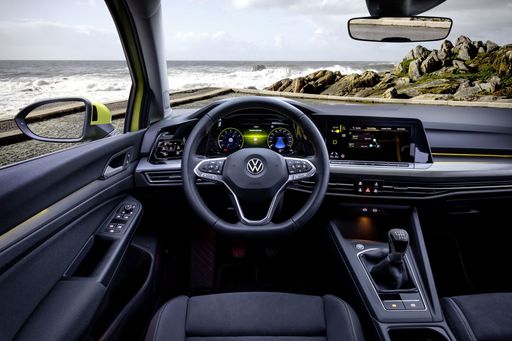
The VW Golf shines in the innovation department. Equipped with the latest tech, it offers various driver aids and connectivity options, making it a tech-savvy choice. With options like adaptive cruise control, advanced infotainment systems, and more, the Golf is tailored for those who appreciate modern conveniences.

Jazz

Conclusion: City Slicker vs. Dynamic Performer

When deciding between the Honda Jazz and the VW Golf, it ultimately boils down to individual needs and preferences. The Honda Jazz excels with its hybrid efficiency, making it a great choice for those concerned with fuel economy and environmental footprint in urban settings. Meanwhile, the VW Golf provides robust performance options and cutting-edge technology, catering to those who relish a more spirited drive.

In this face-off, both the Jazz and Golf hold their ground, yet they cater to different sets of priorities. Whether you’re drawn to the Jazz’s eco-conscious design or the Golf’s vast array of options and features, each hatchback offers its unique set of advantages.

Here’s where it gets real: The technical differences in detail

Golf

Costs and Efficiency:

When it comes to price and running costs, the biggest differences usually appear. This is often where you see which car fits your budget better in the long run.

Honda Jazz is marginally cheaper – starting at 23,100 £ , while the VW Golf costs 25,200 £ . That’s a price difference of around 2,095 £.

Fuel consumption also shows a difference: the VW Golf uses 1.1 L/100km and is clearly more efficient than the Honda Jazz with 4.5 L/100km. The difference is about 3.4 L/100km.

Jazz

Engine and Performance:

Power, torque and acceleration are the classic benchmarks for car enthusiasts – and here, some clear differences start to show.

When it comes to engine power, the VW Golf offers clearly more power – delivering 333 HP compared to 122 HP. That’s roughly 211 HP more horsepower.

When accelerating from 0 to 100 km/h, the VW Golf is clearly quicker – completing the sprint in 4.6 s, while the Honda Jazz takes 9.4 s. That’s about 4.8 s quicker.

There’s also a difference in torque: the VW Golf delivers visibly more torque with 420 Nm compared to 253 Nm. That’s about 167 Nm more.

Golf

Space and Everyday Use:

Beyond pure performance, interior space and usability matter most in daily life. This is where you see which car is more practical and versatile.

Both vehicles offer seating for 5 people.

In terms of curb weight, Honda Jazz is barely lighter – 1,302 kg compared to 1,307 kg. The difference is around 5 kg.

Looking at boot space, the VW Golf offers noticeably more boot space – 381 L compared to 304 L. That’s a difference of about 77 L.

When it comes to payload, the VW Golf carries visibly more – 508 kg compared to 388 kg. That’s a difference of about 120 kg.

Who wins the race in the data check?

The VW Golf is decisively ahead in the objective data comparison.
This result only shows which model scores more points on paper – not which of the two cars feels right for you.

from £25,200
Golf

VW Golf

  • Engine Type : Petrol MHEV, Petrol, Diesel, Plugin Hybrid
  • Transmission : Automatic, Manuel
  • Drive Type : Front-Wheel Drive, All-Wheel Drive
  • Power HP : 116 - 333 HP
  • Consumption L/100km : 1.1 - 8.1 L/100km
  • Electric Range : 131 - 143 km
VW Golf
Honda Jazz

Costs and Consumption

View detailed analysis

Engine and Performance

View detailed analysis

Dimensions and Body

View detailed analysis

VW Golf

The VW Golf remains the everyman’s favourite — cleverly balanced, composed and just posh enough to feel grown-up without pretending to be something it’s not. It slips through town and eats up longer trips with a refined cabin, practical layout and a kindly, capable character that turns everyday driving into something a little bit special.

details

Honda Jazz

The Honda Jazz is a supremely practical small hatch that hides clever packaging and more usable space than it lets on, with friendly styling and an unfussy charm. It’s economical to run, easy to park and perfect for buyers who want reliable, versatile daily motoring without the hassle.

details
VW Golf
Honda Jazz

Costs and Consumption

Price
25,200 - 47,600 £
Price
23,100 - 26,700 £
Consumption L/100km
1.1 - 8.1 L/100km
Consumption L/100km
4.5 - 4.8 L/100km
Consumption kWh/100km
-
Consumption kWh/100km
-
Electric Range
131 - 143 km
Electric Range
-
Battery Capacity
19.7 kWh
Battery Capacity
-
co2
25 - 184 g/km
co2
102 - 108 g/km
Fuel tank capacity
40 - 55 L
Fuel tank capacity
-

Dimensions and Body

Body Type
Hatchback
Body Type
Hatchback
Seats
5
Seats
5
Doors
5
Doors
-
Curb weight
1,307 - 1,662 kg
Curb weight
1,302 - 1,321 kg
Trunk capacity
273 - 381 L
Trunk capacity
304 L
Length
4,282 - 4,296 mm
Length
-
Width
1,789 mm
Width
-
Height
1,454 - 1,483 mm
Height
-
Max trunk capacity
1,129 - 1,237 L
Max trunk capacity
-
Payload
438 - 508 kg
Payload
369 - 388 kg

Engine and Performance

Engine Type
Petrol MHEV, Petrol, Diesel, Plugin Hybrid
Engine Type
Full Hybrid
Transmission
Automatic, Manuel
Transmission
Automatic
Transmission Detail
Dual-Clutch Automatic, Manual Gearbox
Transmission Detail
CVT
Drive Type
Front-Wheel Drive, All-Wheel Drive
Drive Type
Front-Wheel Drive
Power HP
116 - 333 HP
Power HP
122 HP
Acceleration 0-100km/h
4.6 - 10.2 s
Acceleration 0-100km/h
9.4 - 9.7 s
Max Speed
203 - 270 km/h
Max Speed
-
Torque
220 - 420 Nm
Torque
253 Nm
Number of Cylinders
4
Number of Cylinders
4
Power kW
85 - 245 kW
Power kW
90 kW
Engine capacity
1,498 - 1,984 cm3
Engine capacity
1,498 cm3

General

Model Year
2,024 - 2,025
Model Year
2,025
CO2 Efficiency Class
D, F, G, C, B
CO2 Efficiency Class
C
Brand
VW
Brand
Honda
DriveDuel uses data analysis and artificial intelligence to evaluate vehicle data and create content. Content is regularly reviewed and improved. The displayed prices are estimates based on German list prices, adjusted to the respective country’s VAT. Country-specific registration taxes are not included. This information is not legally binding.