VS

VW Golf vs Renault Clio comparison

Compare performance (333 HP vs 158 HP), boot space and price (25,200 £ vs 17,100 £ ) at a glance. Find out which car is the better choice for you – VW Golf or Renault Clio?

VW Golf vs Renault Clio: Key differences

VW Golf

4.6 (1 Reviews)
rate
  • significantly more power
  • substantially more efficient
  • significantly quicker 0–100 km/h
  • slightly more trunk space

Renault Clio

4.7 (1 Reviews)
rate
  • considerably cheaper
  • barely lighter

All details on performance, efficiency, range and trunk space can be found in the technical comparison below – including user reviews for both models.

Golf

The Battle of the Hatchbacks: Renault Clio vs VW Golf

In the crowded segment of hatchbacks, the Renault Clio and VW Golf have long been favorites, each bringing unique qualities to the fore. The 2023 Renault Clio and 2024 VW Golf models promise innovation and performance. But how do they truly compare in terms of technical specifications and innovations? Let's dive into the details.
Clio

Design and Dimensions

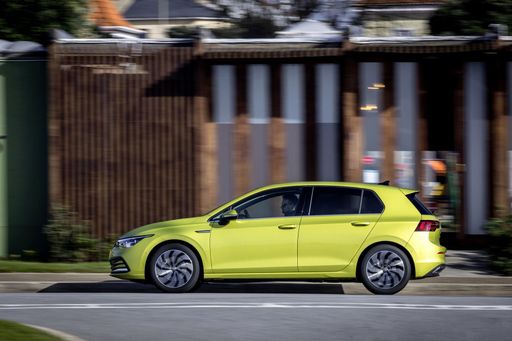
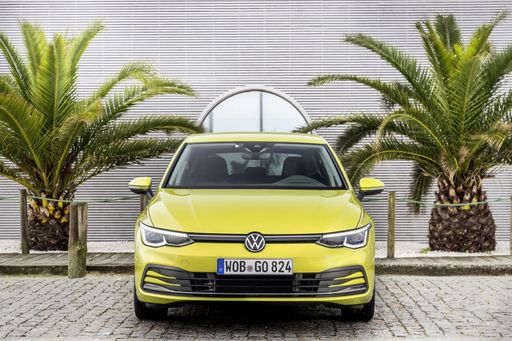
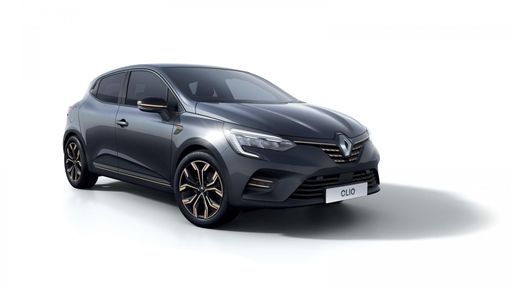
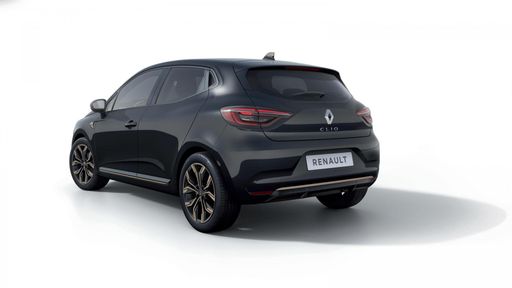
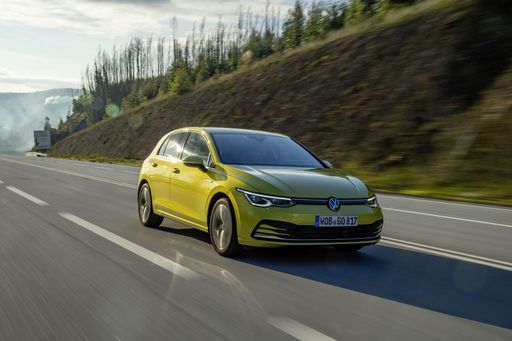
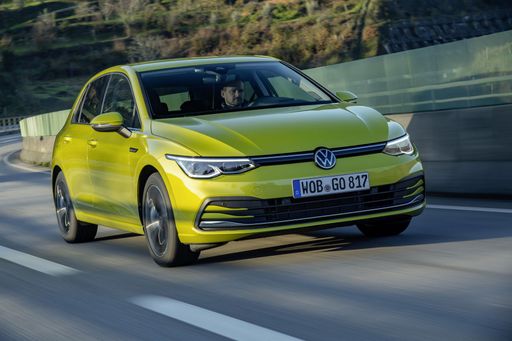
Both the Renault Clio and VW Golf boast the classic hatchback body type with compact dimensions ideal for city driving. The Clio measures at 4,053 mm in length, with a width of 1,798 mm and a height of 1,440 mm. The Golf, meanwhile, stretches slightly longer, with a maximum length of 4,292 mm, a width of 1,789 mm, and a height of up to 1,483 mm, allowing for a roomier interior.

Golf

Engine and Performance

Under the hood, the Renault Clio offers a diverse selection of engine types, including full hybrid, petrol, and LPG, with a power range between 67 to 143 HP. The Golf steps up the game with petrol, diesel, and plugin hybrid options, and an impressive power range from 116 HP to a whopping 333 HP.

The Clio's acceleration from 0 to 100 km/h ranges from 9.3 to 17.1 seconds, showing a focus on efficiency. Conversely, the Golf is not just about power; with an acceleration spectrum from an agile 4.6 to a modest 10.2 seconds, it's built for both speed enthusiasts and everyday drivers.

Clio

Fuel Efficiency and Environmental Impact

Both cars prioritize fuel efficiency. The Clio's economy in consumption ranges from 4.3 to 7 L/100km, with CO2 emissions spanning 97 to 130 g/km. The Golf, with its diverse engine lineup, yields consumption between 0.3 to 8.5 L/100km, showcasing plugin hybrid efficiencies and traditional engine performance, with emissions between 6 to 192 g/km. This range highlights the Golf's ability to cater to environmentally conscious drivers through its plugin hybrid variants, which boast an electric range up to 143 km.

Golf

Innovations and Features

Renault has equipped the Clio with flex-fuel technology, allowing LPG versatility, while VW highlights the Golf's dual-clutch automatic transmission, enhancing driving dynamics. In terms of drive type, the Clio sticks to the reliable front-wheel drive, whereas the Golf extends options with its all-wheel drive variant, catering to drivers seeking extra traction and stability.

Clio

Interior and Practicality

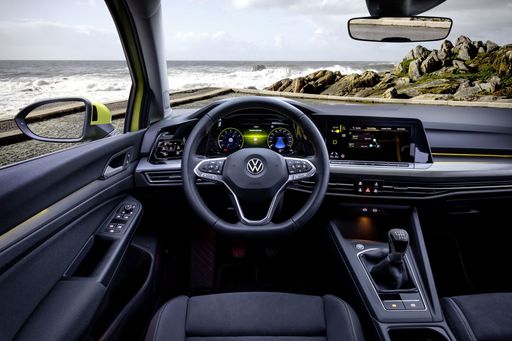
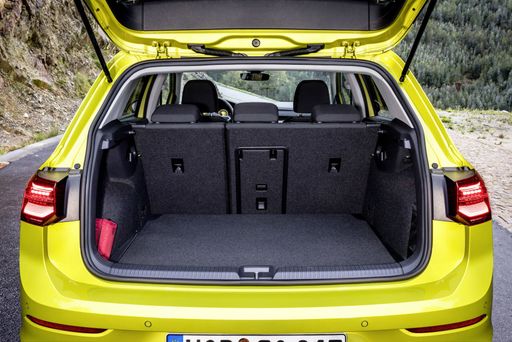
Both vehicles accommodate five passengers comfortably. The Clio offers a trunk capacity of 301 to 391 liters, while the Golf provides a comparable space of 273 to 381 liters. These figures reflect their tight competition in providing practical storage solutions for everyday needs.

Golf

Final Verdict

Deciding between the Renault Clio and VW Golf boils down to specific needs. The Clio offers great versatility for urban environments and those prioritizing efficiency and hybrid technology. On the other hand, the Golf stands out for its broader spectrum of powertrains and performance levels, appealing to those who seek both speed and economy in one package.

In conclusion, both models showcase a blend of reliability, innovative technology, and practical design, making them leading contenders in the hatchback arena. Your choice will depend on where your priorities lie—whether it’s eco-friendliness, power, or a blend of both.

Here’s where it gets real: The technical differences in detail

Golf

Costs and Efficiency:

Looking at overall running costs, both models reveal some interesting differences in everyday economy.

Renault Clio is considerably cheaper – starting at 17,100 £ , while the VW Golf costs 25,200 £ . That’s a price difference of around 8,138 £.

Fuel consumption also shows a difference: the VW Golf uses 1.1 L/100km and is substantially more efficient than the Renault Clio with 4.1 L/100km. The difference is about 3 L/100km.

Clio

Engine and Performance:

Under the bonnet, it becomes clear which model is tuned for sportiness and which one takes the lead when you hit the accelerator.

When it comes to engine power, the VW Golf offers significantly more power – delivering 333 HP compared to 158 HP. That’s roughly 175 HP more horsepower.

When accelerating from 0 to 100 km/h, the VW Golf is significantly quicker – completing the sprint in 4.6 s, while the Renault Clio takes 8.3 s. That’s about 3.7 s quicker.

Looking at top speed, the VW Golf is visibly faster – reaching 270 km/h, while the Renault Clio tops out at 180 km/h. The difference is around 90 km/h.

There’s also a difference in torque: the VW Golf delivers significantly more torque with 420 Nm compared to 190 Nm. That’s about 230 Nm more.

Golf

Space and Everyday Use:

Cabin size, boot volume and payload all play a role in everyday practicality. Here, comfort and flexibility make the difference.

Both vehicles offer seating for 5 people.

In terms of curb weight, Renault Clio is barely lighter – 1,202 kg compared to 1,307 kg. The difference is around 105 kg.

Looking at boot space, the VW Golf offers slightly more boot space – 381 L compared to 327 L. That’s a difference of about 54 L.

For maximum load capacity, the VW Golf offers marginally more capacity – up to 1,237 L, about 61 L more than the Renault Clio.

When it comes to payload, the VW Golf carries only slightly more – 508 kg compared to 463 kg. That’s a difference of about 45 kg.

Who wins the race in the data check?

The VW Golf is far ahead overall in the objective data comparison.
This result only shows which model scores more points on paper – not which of the two cars feels right for you.

from £25,200
Golf

VW Golf

  • Engine Type : Petrol MHEV, Petrol, Diesel, Plugin Hybrid
  • Transmission : Automatic, Manuel
  • Drive Type : Front-Wheel Drive, All-Wheel Drive
  • Power HP : 116 - 333 HP
  • Consumption L/100km : 1.1 - 8.1 L/100km
  • Electric Range : 131 - 143 km
VW Golf
Renault Clio

Costs and Consumption

View detailed analysis

Engine and Performance

View detailed analysis

Dimensions and Body

View detailed analysis

VW Golf

The VW Golf remains the everyman’s favourite — cleverly balanced, composed and just posh enough to feel grown-up without pretending to be something it’s not. It slips through town and eats up longer trips with a refined cabin, practical layout and a kindly, capable character that turns everyday driving into something a little bit special.

details

Renault Clio

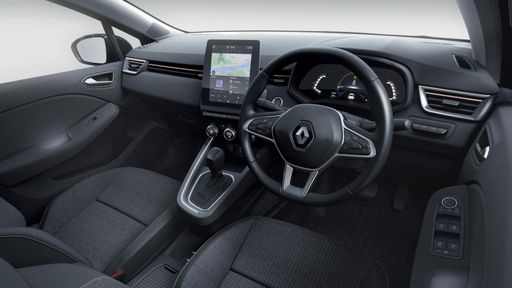
The Clio punches above its weight with chic French styling and a surprisingly grown-up cabin that makes city driving feel effortlessly stylish. It's an easy-to-live-with choice that keeps ownership simple and even manages to put a grin on your face when the traffic gets dull.

details
VW Golf
Renault Clio

Costs and Consumption

Price
25,200 - 47,600 £
Price
17,100 - 23,700 £
Consumption L/100km
1.1 - 8.1 L/100km
Consumption L/100km
4.1 - 5.1 L/100km
Consumption kWh/100km
-
Consumption kWh/100km
-
Electric Range
131 - 143 km
Electric Range
-
Battery Capacity
19.7 kWh
Battery Capacity
-
co2
25 - 184 g/km
co2
92 - 115 g/km
Fuel tank capacity
40 - 55 L
Fuel tank capacity
39 - 42 L

Dimensions and Body

Body Type
Hatchback
Body Type
Hatchback
Seats
5
Seats
5
Doors
5
Doors
5
Curb weight
1,307 - 1,662 kg
Curb weight
1,202 - 1,316 kg
Trunk capacity
273 - 381 L
Trunk capacity
301 - 327 L
Length
4,282 - 4,296 mm
Length
4,116 mm
Width
1,789 mm
Width
1,768 mm
Height
1,454 - 1,483 mm
Height
1,451 mm
Max trunk capacity
1,129 - 1,237 L
Max trunk capacity
1,094 - 1,176 L
Payload
438 - 508 kg
Payload
453 - 463 kg

Engine and Performance

Engine Type
Petrol MHEV, Petrol, Diesel, Plugin Hybrid
Engine Type
Petrol, Full Hybrid
Transmission
Automatic, Manuel
Transmission
Manuel, Automatic
Transmission Detail
Dual-Clutch Automatic, Manual Gearbox
Transmission Detail
Manual Gearbox, Dual-Clutch Automatic, Automatic Gearbox
Drive Type
Front-Wheel Drive, All-Wheel Drive
Drive Type
Front-Wheel Drive
Power HP
116 - 333 HP
Power HP
115 - 158 HP
Acceleration 0-100km/h
4.6 - 10.2 s
Acceleration 0-100km/h
8.3 - 10.1 s
Max Speed
203 - 270 km/h
Max Speed
180 km/h
Torque
220 - 420 Nm
Torque
190 Nm
Number of Cylinders
4
Number of Cylinders
3 - 4
Power kW
85 - 245 kW
Power kW
84 - 116 kW
Engine capacity
1,498 - 1,984 cm3
Engine capacity
1,199 - 1,789 cm3

General

Model Year
2,024 - 2,025
Model Year
2,026
CO2 Efficiency Class
D, F, G, C, B
CO2 Efficiency Class
C, B
Brand
VW
Brand
Renault
DriveDuel uses data analysis and artificial intelligence to evaluate vehicle data and create content. Content is regularly reviewed and improved. The displayed prices are estimates based on German list prices, adjusted to the respective country’s VAT. Country-specific registration taxes are not included. This information is not legally binding.