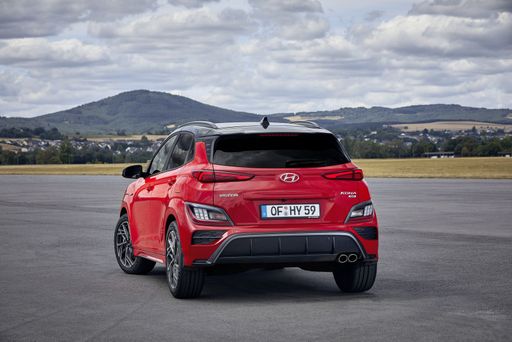
VS

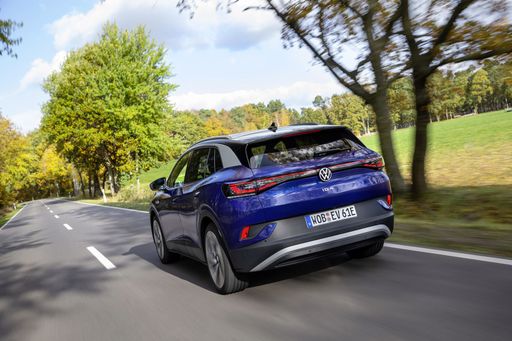
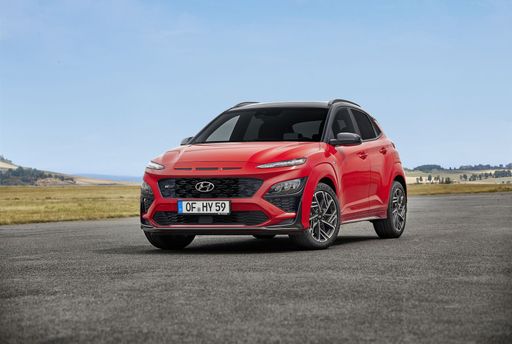
VW ID.4 vs Hyundai Kona comparison

Compare performance (299 HP vs 204 HP), boot space and price (34,800 £ vs 23,100 £ ) at a glance. Find out which car is the better choice for you – VW ID.4 or Hyundai Kona?

VW ID.4 vs Hyundai Kona: Key differences

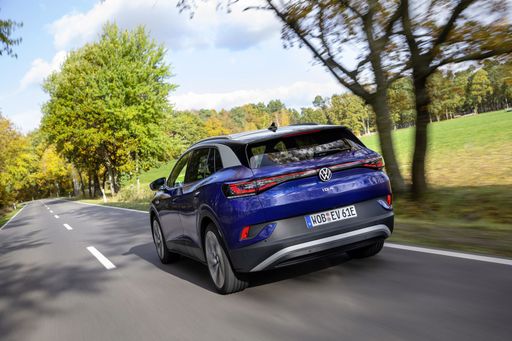
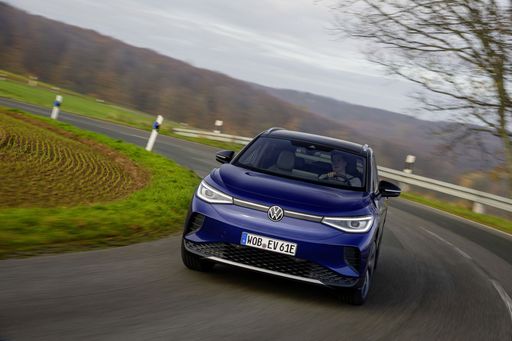
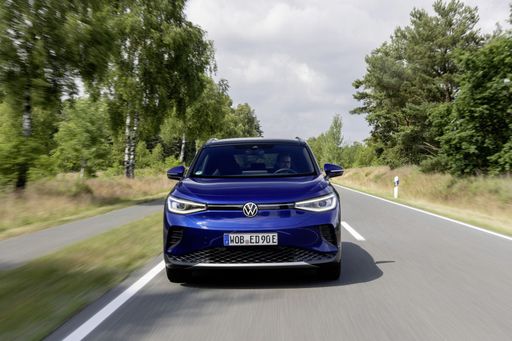
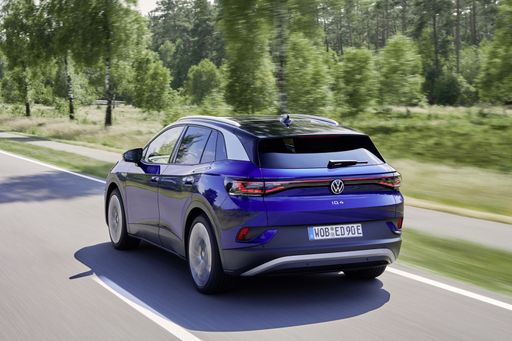
VW ID.4

4.4 (9 Reviews)
rate
  • clearly more power
  • slightly more electric range
  • visibly quicker 0–100 km/h
details

Hyundai Kona

4.4 (7 Reviews)
rate
  • substantially cheaper
  • only slightly more efficient
  • considerably lighter
details

All details on performance, efficiency, range and trunk space can be found in the technical comparison below – including user reviews for both models.

By Achim Sedelmaier

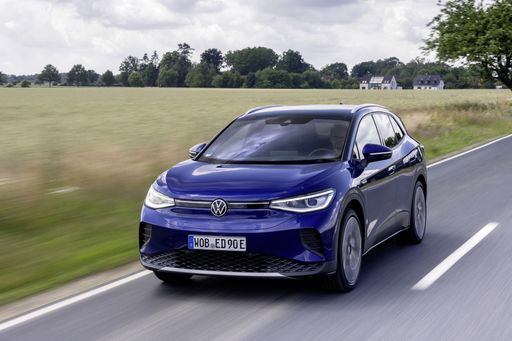
ID.4

The Battle of the Electric SUVs: Hyundai Kona vs. VW ID.4

The electric vehicle market is booming, and among the frontrunners are the Hyundai Kona and the VW ID.4. Both models bring a mix of technology, efficiency, and style to the table. But which one stands out? Let's delve into the technical nuances and innovations of these two electric SUVs to see how they compare.
Kona

Performance and Power

The Hyundai Kona comes with a choice of petrol, full hybrid, and electric engines, offering versatility in powertrain options. Specifically, the electric versions provide up to 218 HP and an acceleration of as fast as 7.8 seconds to go from 0-100 km/h. The Kona's maximum speed reaches up to 208 km/h, appealing to those who favor a swift ride.

On the other hand, the VW ID.4 is exclusively electric, delivering up to 340 HP and a quicker sprint at 5.4 seconds from 0-100 km/h for its most powerful variant. Even the least powerful ID.4 model (170 HP) starts strong at 9 seconds for the same acceleration benchmark. Its top speed is slightly lower at 180 km/h, but it compensates with remarkably smooth power delivery.

ID.4

Electric Range and Efficiency

Range anxiety is a common concern for electric vehicle owners. Here, the ID.4 shines with a maximum range of 572 km, thanks to its efficient electric system and the option of a substantial 77 kWh battery capacity. Its consumption hovers around 15.8 to 16.8 kWh/100km, making it an efficient choice.

The Hyundai Kona offers a range between 377 km to 514 km, depending on the battery pack chosen, which includes a 48.4 or 65.4 kWh capacity. Its consumption figures are comparably efficient, ranging from 14.6 to 16.8 kWh/100km.

Kona

Dimensions and Practicality

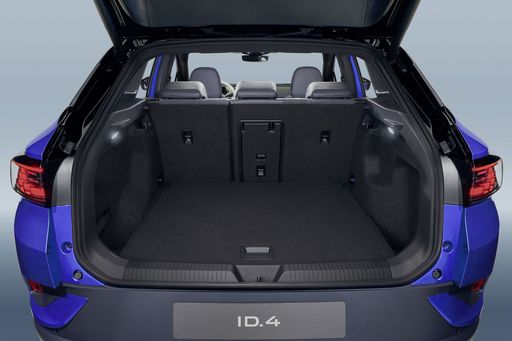
In terms of size, the VW ID.4 is larger with a length of 4584 mm and offers a spacious trunk capacity of 543 liters. It stands tall at a height of up to 1634 mm, providing a roomy feel for passengers and cargo alike.

The Hyundai Kona, though slightly more compact at 4355 mm in length, does not fall short on practicality. Its trunk capacity is 466 liters, which is ample for daily needs and small excursions. The Kona's design is tailored to urban maneuverability and style.

ID.4

Environmental Impact

The Hyundai Kona hybrid and petrol variants emit CO2, classified between A and E in efficiency classes, highlighting its blend of traditional and modern powertrains. Its fully electric models carry a commendable CO2 score of 0 g/km.

Conversely, as a fully electric model, the VW ID.4 boasts a flawless CO2 efficiency class at A, with zero emissions throughout its lineup, showcasing VW's commitment to a sustainable future.

Kona

Conclusion: Embracing Innovation

Both the Hyundai Kona and VW ID.4 are exemplary in their own rights, appealing to different segments of the market. The choice between them boils down to personal preference for performance, styling, and environmental considerations. The Kona, with its range of engine options, is perfect for those who value flexibility, while the ID.4 excels for pure electric enthusiasts looking for range and cutting-edge innovation. In this fast-evolving automotive landscape, both models make a compelling case for themselves.

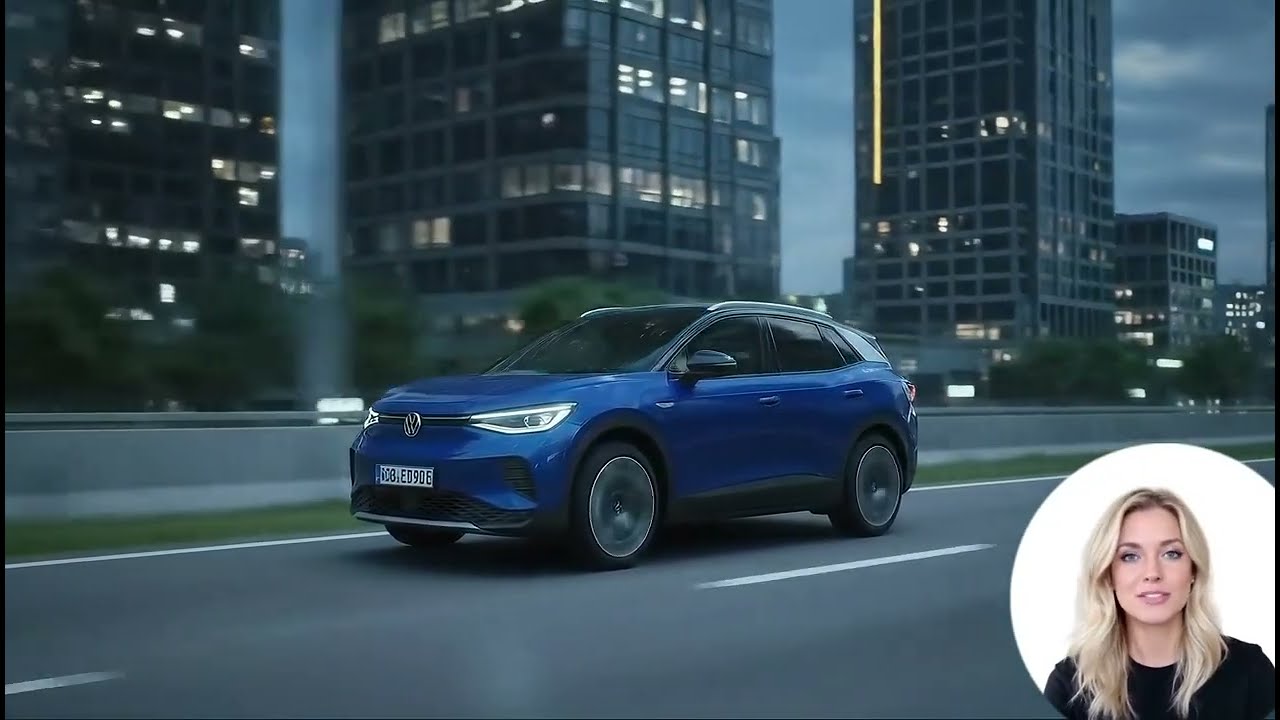
Video - VW ID.4

Video Thumbnail

Here’s where it gets real: The technical differences in detail

ID.4

Costs and Efficiency:

Looking at overall running costs, both models reveal some interesting differences in everyday economy.

Hyundai Kona is substantially cheaper – starting at 23,100 £ , while the VW ID.4 costs 34,800 £ . That’s a price difference of around 11,725 £.

In terms of energy consumption, the Hyundai Kona is only slightly more efficient: consuming 14.6 kWh/100km compared to 15.4 kWh/100km for the VW ID.4. That’s a difference of about 0.8 kWh/100km.

As for electric range, the VW ID.4 offers slightly more range – reaching up to 570 km, about 60 km more than the Hyundai Kona.

Kona

Engine and Performance:

Under the bonnet, it becomes clear which model is tuned for sportiness and which one takes the lead when you hit the accelerator.

When it comes to engine power, the VW ID.4 offers clearly more power – delivering 299 HP compared to 204 HP. That’s roughly 95 HP more horsepower.

When accelerating from 0 to 100 km/h, the VW ID.4 is visibly quicker – completing the sprint in 6.1 s, while the Hyundai Kona takes 8.1 s. That’s about 2 s quicker.

There’s also a difference in torque: the VW ID.4 delivers significantly more torque with 545 Nm compared to 265 Nm. That’s about 280 Nm more.

ID.4

Space and Everyday Use:

Whether family car or daily driver – which one offers more room, flexibility and comfort?

Both vehicles offer seating for 5 people.

In terms of curb weight, Hyundai Kona is considerably lighter – 1,370 kg compared to 2,065 kg. The difference is around 695 kg.

When it comes to payload, the VW ID.4 carries a bit more – 554 kg compared to 490 kg. That’s a difference of about 64 kg.

Who wins the race in the data check?

The VW ID.4 is far ahead overall in the objective data comparison.
This result only shows which model scores more points on paper – not which of the two cars feels right for you.

from £34,800
ID.4

VW ID.4

  • Engine Type : Electric
  • Transmission : Automatic
  • Drive Type : Rear-Wheel Drive, All-Wheel Drive
  • Power HP : 190 - 299 HP
  • Consumption kWh/100km : 15.4 - 16.6 kWh/100km
  • Electric Range : 425 - 570 km
VW ID.4
Hyundai Kona

Costs and Consumption

View detailed analysis

Engine and Performance

View detailed analysis

Dimensions and Body

View detailed analysis

VW ID.4

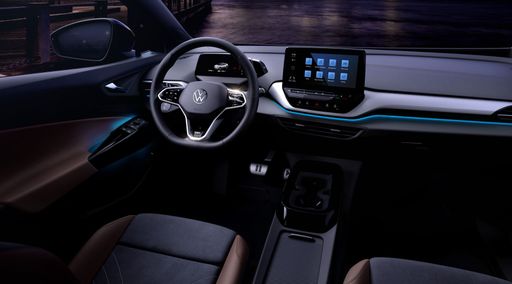
The VW ID.4 is a practical, family-friendly electric SUV that balances everyday usability with a calm, composed driving character. It pairs a roomy, well-finished cabin and easy-to-use tech with predictable handling and convenient charging options, making it a sensible choice for buyers switching to electric.

details

Hyundai Kona

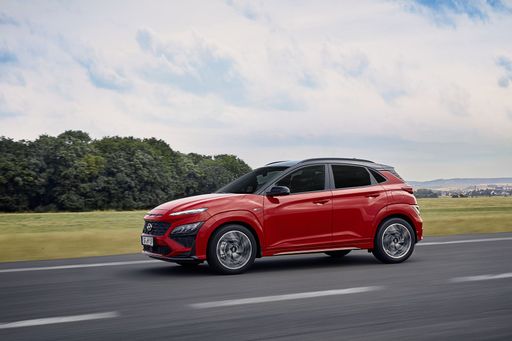
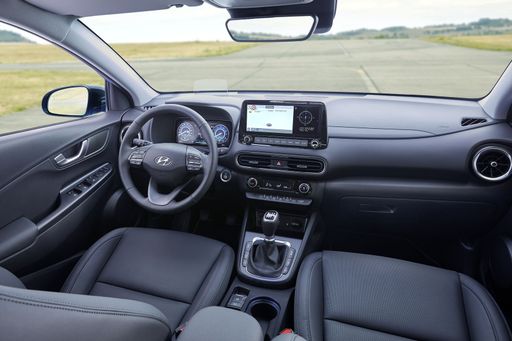
The Hyundai Kona is a compact crossover that pairs bold styling with practical everyday usability, offering a comfortable cabin and intuitive tech for modern drivers. Available in both conventional and electrified versions, Kona brings lively handling and strong value for buyers who want crossover versatility and standout character.

details
VW ID.4
Hyundai Kona

Costs and Consumption

Price
34,800 - 47,600 £
Price
23,100 - 41,900 £
Consumption L/100km
-
Consumption L/100km
4.6 - 7 L/100km
Consumption kWh/100km
15.4 - 16.6 kWh/100km
Consumption kWh/100km
14.6 - 16.1 kWh/100km
Electric Range
425 - 570 km
Electric Range
380 - 510 km
Battery Capacity
-
Battery Capacity
-
co2
0 g/km
co2
0 - 163 g/km
Fuel tank capacity
-
Fuel tank capacity
-

Dimensions and Body

Body Type
SUV
Body Type
SUV
Seats
5
Seats
5
Doors
-
Doors
-
Curb weight
2,065 - 2,219 kg
Curb weight
1,370 - 1,773 kg
Trunk capacity
-
Trunk capacity
466 L
Length
-
Length
-
Width
1,852 mm
Width
1,825 mm
Height
-
Height
-
Max trunk capacity
-
Max trunk capacity
-
Payload
525 - 554 kg
Payload
420 - 490 kg

Engine and Performance

Engine Type
Electric
Engine Type
Petrol, Full Hybrid, Electric
Transmission
Automatic
Transmission
Manuel, Automatic
Transmission Detail
Reduction Gearbox
Transmission Detail
Manual Gearbox, Dual-Clutch Automatic, Reduction Gearbox
Drive Type
Rear-Wheel Drive, All-Wheel Drive
Drive Type
Front-Wheel Drive, All-Wheel Drive
Power HP
190 - 299 HP
Power HP
115 - 204 HP
Acceleration 0-100km/h
6.1 - 8.5 s
Acceleration 0-100km/h
8.1 - 11.9 s
Max Speed
-
Max Speed
-
Torque
310 - 545 Nm
Torque
200 - 265 Nm
Number of Cylinders
-
Number of Cylinders
3 - 4
Power kW
140 - 220 kW
Power kW
85 - 150 kW
Engine capacity
-
Engine capacity
998 - 1,598 cm3

General

Model Year
2026
Model Year
2025
CO2 Efficiency Class
A
CO2 Efficiency Class
D, C, E, F, A
Brand
VW
Brand
Hyundai
DriveDuel uses data analysis and artificial intelligence to evaluate vehicle data and create content. Content is regularly reviewed and improved. The displayed prices are estimates based on German list prices, adjusted to the respective country’s VAT. Country-specific registration taxes are not included. This information is not legally binding.