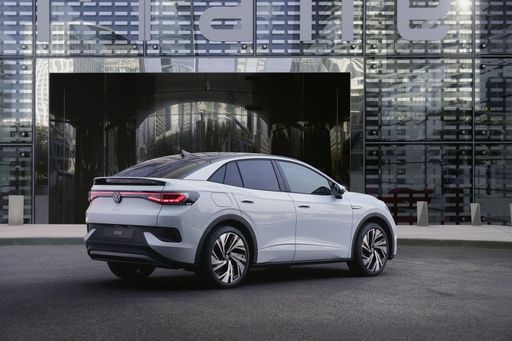
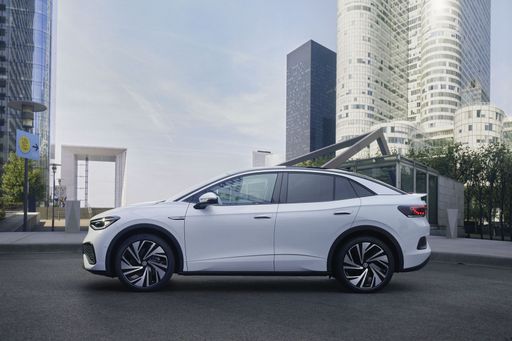
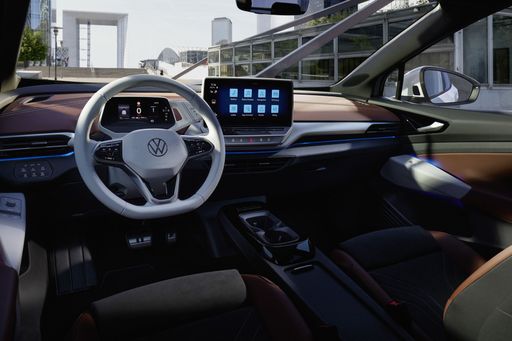
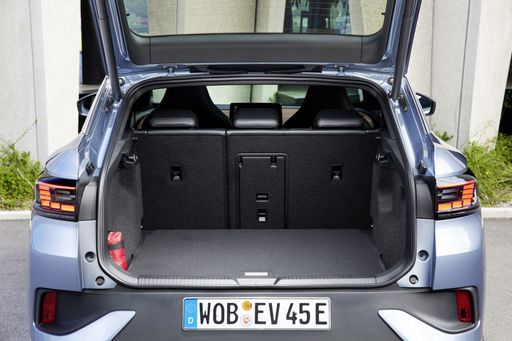
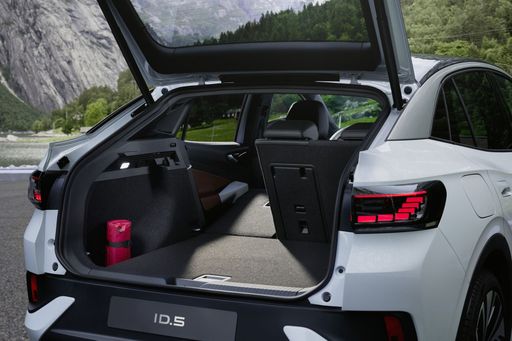
@ Volkswagen AG / VW Media
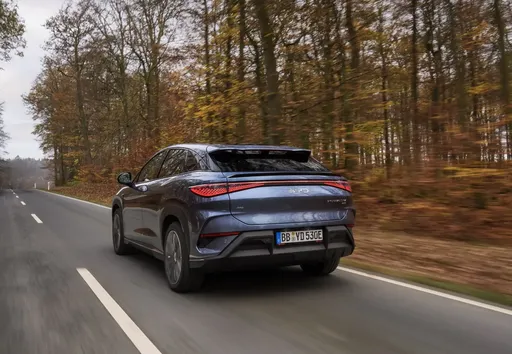
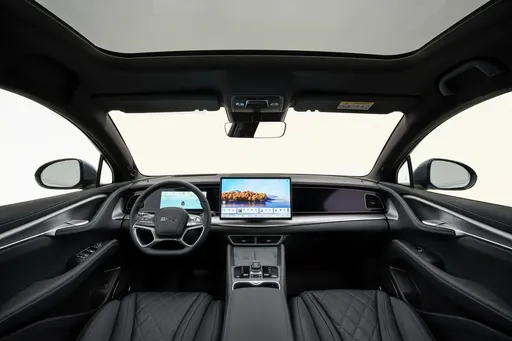
@ BYD Auto / BYD Global Media
VS

VW ID.5 vs BYD Sealion 7 – Which car suits you better?

Both models have their strengths – but which one suits you more?
Compare performance, efficiency, price and space directly: VW ID.5 or BYD Sealion 7?

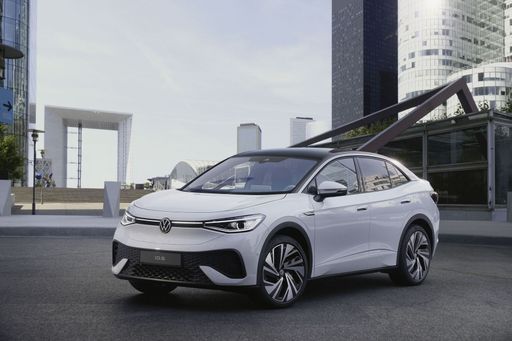
ID.5 @ Volkswagen AG / VW Media

The Showdown of Electric SUVs: VW ID.5 vs BYD Sealion 7

Electric vehicles are swiftly redefining mobility, and in the realm of SUVs, two models are making significant waves: the Volkswagen ID.5 and the BYD Sealion 7. Both offer cutting-edge technology, impressive performance, and eco-friendly credentials. Let’s dive into a detailed comparison of these two electric titans, examining their strengths and unique features.
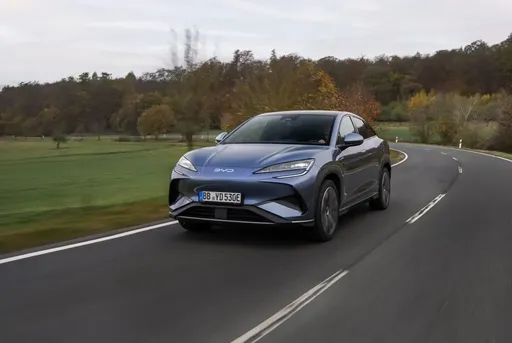
Sealion 7 @ BYD Auto / BYD Global Media

Design and Dimensions

The VW ID.5 presents a sleek, aerodynamic profile defined by its modern design language typical of Volkswagen's ID series. With a length of 4599 mm, width of 1852 mm, and height of 1618 mm, it strikes a balance between functionality and style. The BYD Sealion 7, on the other hand, offers a more robust stance with its larger dimensions: 4830 mm in length, 1925 mm in width, and 1620 mm in height, reflecting a bolder appearance suitable for those who prefer a more commanding presence on the road.

ID.5 @ Volkswagen AG / VW Media

Performance and Powertrain

When it comes to powertrains, both vehicles embrace electrification with automatic transmissions and reduction gearboxes. The Volkswagen ID.5's power range spans from 170 HP to an impressive 340 HP, capable of rear-wheel and all-wheel drives. Its acceleration ranges from 8.9 seconds to a brisk 5.4 seconds for 0-100 km/h. The BYD Sealion 7, conversely, offers a mightier power spectrum of 313 HP to a substantial 530 HP, with an impressive acceleration time of 4.5 seconds for 0-100 km/h, underscoring its formidable performance credentials.

Sealion 7 @ BYD Auto / BYD Global Media

Range and Efficiency

The ID.5 showcases its efficiency with a consumption rate varying between 15.6 to 16.6 kWh/100 km, achieving a maximum electric range of up to 563 km depending on the variant. BYD's Sealion 7 demands more energy, with a consumption rate ranging from 19.9 to 21.9 kWh/100 km, offering a range up to 502 km. Despite the higher consumption, the Sealion 7 compensates with higher battery capacities and more potent outputs for its range.

ID.5 @ Volkswagen AG / VW Media

Interior and Comfort

Inside, both vehicles accommodate five passengers, offering ample space and premium comfort. The ID.5 provides a trunk capacity of 549 liters, plenty for everyday storage needs. The Sealion 7 trails slightly, with 520 liters of trunk space, yet compensates with a thoughtfully designed interior layout for enhanced passenger comfort.

Sealion 7 @ BYD Auto / BYD Global Media

Sustainability and Environmental Impact

Both the VW ID.5 and BYD Sealion 7 proudly carry a CO2 efficiency class of A, effectively operating with zero tailpipe emissions, exemplifying their commitment to sustainable driving. This shared attribute makes both SUVs attractive options for environmentally-conscious consumers.

ID.5 @ Volkswagen AG / VW Media

Conclusion: A Choice of Priorities

The choice between the VW ID.5 and the BYD Sealion 7 hinges on what the potential buyer values most. For those who prioritize a balance of efficiency and familiar European styling, the Volkswagen ID.5 stands out. Meanwhile, the Sealion 7 caters to those who desire a more powerful performance and a commanding road presence. Each vehicle brings its own set of strengths to the electric SUV landscape, pushing the boundaries of innovation and sustainability further than ever before.

Here’s where it gets real: The technical differences in detail

Costs and Efficiency:

Price and efficiency are often the first things buyers look at. Here it becomes clear which model has the long-term edge – whether at the pump, the plug, or in purchase price.

VW ID.5 has a slightly advantage in terms of price – it starts at 36800 £, while the BYD Sealion 7 costs 42800 £. That’s a price difference of around 6017 £.

In terms of energy consumption, the advantage goes to the VW ID.5: with 15.70 kWh per 100 km, it’s clearly perceptible more efficient than the BYD Sealion 7 with 19.90 kWh. That’s a difference of about 4.20 kWh.

As for range, the VW ID.5 performs a bit better – achieving up to 559 km, about 57 km more than the BYD Sealion 7.

Engine and Performance:

Under the bonnet, it becomes clear which model is tuned for sportiness and which one takes the lead when you hit the accelerator.

When it comes to engine power, the BYD Sealion 7 has a distinct edge – offering 530 HP compared to 340 HP. That’s roughly 190 HP more horsepower.

In acceleration from 0 to 100 km/h, the BYD Sealion 7 is distinct quicker – completing the sprint in 4.50 s, while the VW ID.5 takes 5.40 s. That’s about 0.90 s faster.

In terms of top speed, the BYD Sealion 7 performs slightly better – reaching 215 km/h, while the VW ID.5 tops out at 180 km/h. The difference is around 35 km/h.

There’s also a difference in torque: BYD Sealion 7 pulls minimal stronger with 690 Nm compared to 679 Nm. That’s about 11 Nm difference.

Space and Everyday Use:

Cabin size, boot volume and payload all play a role in everyday practicality. Here, comfort and flexibility make the difference.

Both vehicles offer seating for 5 people.

In curb weight, VW ID.5 is slightly lighter – 1963 kg compared to 2225 kg. The difference is around 262 kg.

In terms of boot space, the VW ID.5 offers slight more room – 549 L compared to 520 L. That’s a difference of about 29 L.

In maximum load capacity, the BYD Sealion 7 performs a bit better – up to 1789 L, which is about 228 L more than the VW ID.5.

When it comes to payload, VW ID.5 evident takes the win – 549 kg compared to 410 kg. That’s a difference of about 139 kg.

Who comes out on top?

Overall, the BYD Sealion 7 shows itself to be shows small but notable strengths and secures the title of DriveDuel Champion.
It convinces with the more balanced overall package and proves to be the more versatile choice for everyday use.

from about £42,800
Sealion 7 @ BYD Auto / BYD Global Media

BYD Sealion 7

  • Engine Type : Electric
  • Transmission : Automatic
  • Drive Type : Rear-Wheel Drive, All-Wheel Drive
  • Power HP : 313 - 530 HP
  • Consumption kWh/100km : 19.9 - 21.9 kWh
  • Electric Range : 456 - 502 km

VW ID.5

VW ID.5 dresses electric power in a sleek, coupe-like profile that turns sensible motoring into something a touch more stylish and smug. Inside it’s spacious and user-friendly, with calm, confidence-inspiring driving that suits buyers who want EV simplicity without the sci‑fi theatrics.

details

BYD Sealion 7

5 (1)
rate

The Sealion 7 captivates with its striking design and impressive performance that appeals to both enthusiasts and casual drivers alike. With a focus on comfort and advanced technology, this model redefines the driving experience, making every journey enjoyable. Its sleek silhouette coupled with an innovative interior showcases the perfect blend of style and functionality.

details
VW ID.5
BYD Sealion 7
ID.5 @ Volkswagen AG / VW Media
Sealion 7 @ BYD Auto / BYD Global Media

Costs and Consumption

Price
36800 - 48400 £
Price
42800 - 52300 £
Consumption L/100km
-
Consumption L/100km
-
Consumption kWh/100km
15.7 - 16.6 kWh
Consumption kWh/100km
19.9 - 21.9 kWh
Electric Range
363 - 559 km
Electric Range
456 - 502 km
Battery Capacity
52 - 79 kWh
Battery Capacity
-
co2
0 g/km
co2
0 g/km
Fuel tank capacity
-
Fuel tank capacity
-

Dimensions and Body

Body Type
SUV
Body Type
SUV
Seats
5
Seats
5
Doors
5
Doors
4
Curb weight
1963 - 2233 kg
Curb weight
2225 - 2435 kg
Trunk capacity
549 L
Trunk capacity
520 L
Length
4582 - 4599 mm
Length
4830 mm
Width
1852 mm
Width
1925 mm
Height
1601 - 1618 mm
Height
1620 mm
Max trunk capacity
1561 L
Max trunk capacity
1789 L
Payload
517 - 549 kg
Payload
410 kg

Engine and Performance

Engine Type
Electric
Engine Type
Electric
Transmission
Automatic
Transmission
Automatic
Transmission Detail
Reduction Gearbox
Transmission Detail
Reduction Gearbox
Drive Type
Rear-Wheel Drive, All-Wheel Drive
Drive Type
Rear-Wheel Drive, All-Wheel Drive
Power HP
170 - 340 HP
Power HP
313 - 530 HP
Acceleration 0-100km/h
5.4 - 8.9 s
Acceleration 0-100km/h
4.5 - 6.7 s
Max Speed
160 - 180 km/h
Max Speed
215 km/h
Torque
310 - 679 Nm
Torque
380 - 690 Nm
Number of Cylinders
-
Number of Cylinders
-
Power kW
125 - 250 kW
Power kW
230 - 390 kW
Engine capacity
-
Engine capacity
-

General

Model Year
2024 - 2025
Model Year
2024
CO2 Efficiency Class
A
CO2 Efficiency Class
A
Brand
VW
Brand
BYD
What drive types are available for the VW ID.5?

The VW ID.5 is available as Rear-Wheel Drive or All-Wheel Drive.

The prices and data displayed are estimates based on German list prices and may vary by country. This information is not legally binding.