VS

VW ID.7 Touring vs Kia EV6 comparison

Compare performance (340 HP vs 609 HP), boot space and price (47,100 £ vs 38,600 £ ) at a glance. Find out which car is the better choice for you – VW ID.7 Touring or Kia EV6?

VW ID.7 Touring vs Kia EV6: Key differences

VW ID.7 Touring

5 (2 Reviews)
rate
  • a bit more efficient
  • slightly more electric range
  • a bit more trunk space
details

Kia EV6

5 (3 Reviews)
rate
  • markedly cheaper
  • significantly more power
  • clearly quicker 0–100 km/h
  • a bit lighter
details

All details on performance, efficiency, range and trunk space can be found in the technical comparison below – including user reviews for both models.

By Achim Sedelmaier

ID.7 Touring

A Clash of the Titans: Kia EV6 vs. VW ID.7 Touring

As the automotive industry shifts gears towards electric power, two models have taken center stage in the EV realm: the Kia EV6 and the VW ID.7 Touring. These vehicles embody innovation, efficiency, and futuristic design, catering to a growing market of eco-conscious consumers. In this article, we will dive deep into their technical specifications, innovations, and how they stack up against each other in this intense competition.

EV6

Design and Body Type

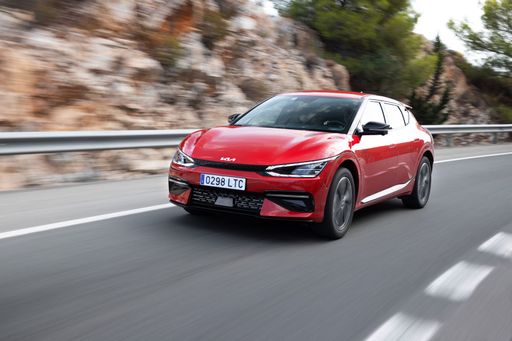
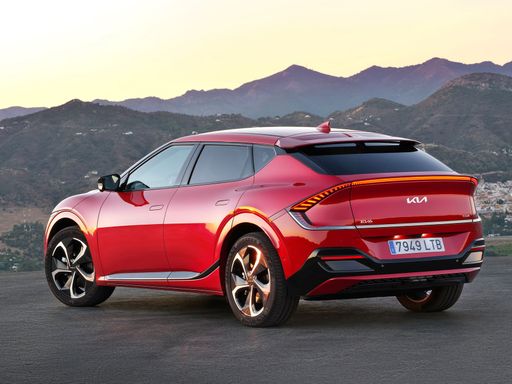
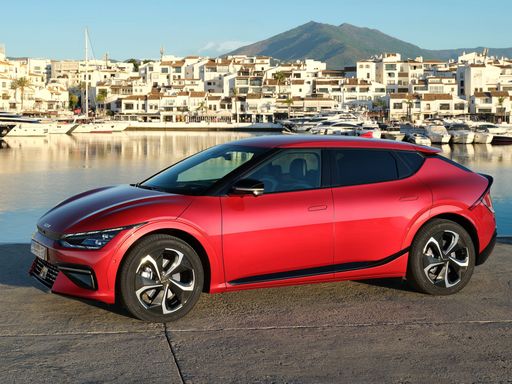
The Kia EV6 showcases a modern SUV design with sleek lines and an aggressive stance. Its compact yet robust structure allows for both aesthetic appeal and functionality, perfectly suited for urban environments and adventures alike.

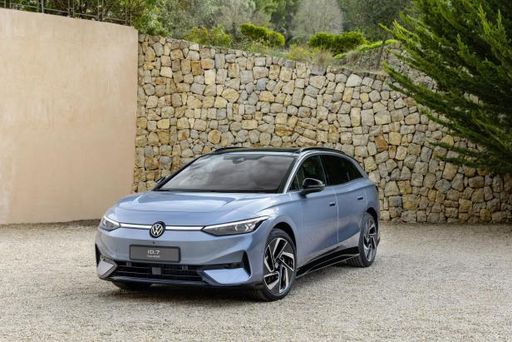
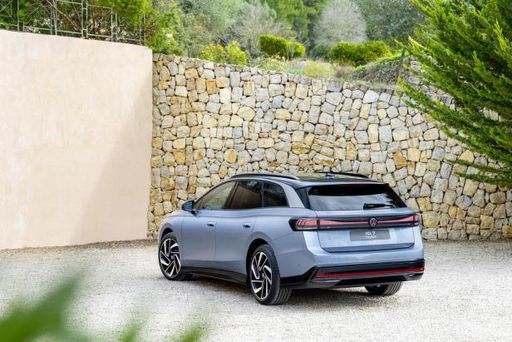
On the other hand, the VW ID.7 Touring presents a sophisticated wagon alternative. Its elongated body emphasizes spaciousness, while the aerodynamic design promotes efficiency. This vehicle is designed for those who prioritize cargo space and family comfort.

ID.7 Touring

Engine Specifications and Performance

When it comes to power, the Kia EV6 offers a range of performance options, with power outputs ranging from 170 to a formidable 325 HP. The EV6's torque peaks at 605 Nm, enabling brisk acceleration times—whichever variant you choose. The power is available in both Rear-Wheel Drive (RWD) and All-Wheel Drive (AWD) configurations, providing versatility based on driving preference.

The VW ID.7 Touring boasts a robust powertrain with outputs between 286 HP and 340 HP, along with an impressive torque of 679 Nm on the higher-end variant. Similar to the EV6, the ID.7 offers RWD and AWD options, ensuring an engaging driving experience while maintaining stability.

EV6

Electric Range and Efficiency

In a head-to-head for efficiency, the ID.7 Touring takes the lead with an impressive electric range of up to 690 km, powered by a larger 86 kWh battery in its highest specification. This makes it an excellent option for long-distance travelers.

The Kia EV6 isn't far behind, offering a range of up to 582 km with its 84 kWh battery. With a consumption rate ranging from 15.9 to 17 kWh/100km, the EV6 still provides impressive efficiency, especially considering its sporty nature.

ID.7 Touring

Acceleration and Speed

Speed enthusiasts will appreciate the acceleration capabilities of both machines. The Kia EV6 can sprint from 0-100 km/h in as little as 5.3 seconds with its highest power variant—a noteworthy figure for an electric vehicle. The top speed can reach 188 km/h, again reflecting its sporty pedigree.

Conversely, the ID.7 Touring accelerates from 0-100 km/h in 5.5 seconds at its peak performance, just a hair slower than the EV6. Its maximum speed is slightly lower, peaking at 180 km/h, but still offers a satisfying performance for most drivers.

EV6

Interior, Technology, and Comfort

Both the Kia EV6 and VW ID.7 Touring provide spacious interiors designed for comfort and modernity. The EV6 features a futuristic cockpit with dual curved displays, offering seamless connectivity options and advanced driver-assistance systems as standard. The focus on sustainability and eco-friendliness is evident, with materials that reflect a commitment to reducing the vehicle's carbon footprint.

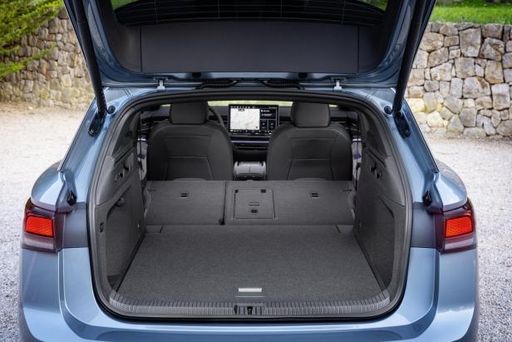
In comparison, the ID.7 Touring comes equipped with VW's latest infotainment system, featuring a 15-inch touchscreen. The innovative control interface, combined with spacious legroom and large cargo capacity of 605 liters, enhances the overall driving experience. The materials used within the ID.7 echo VW's commitment to comfort and quality.

Conclusion: Which One Reigns Supreme?

Ultimately, the choice between the Kia EV6 and VW ID.7 Touring will depend on personal preferences and priorities. If sportiness, quick acceleration, and stylish SUV design are essential, then the Kia EV6 might be your best bet. However, for those who value an extended electric range and spacious interior for families, the ID.7 Touring stands out with its practicality and comfort.

Both of these electric vehicles highlight how far the automotive industry has come and pave the way for the future of sustainable driving. Whether you choose the electric prowess of the Kia EV6 or the practical efficiency of the VW ID.7 Touring, you will certainly enjoy the benefits of modern electric driving.

Here’s where it gets real: The technical differences in detail

ID.7 Touring

Costs and Efficiency:

When it comes to price and running costs, the biggest differences usually appear. This is often where you see which car fits your budget better in the long run.

Kia EV6 is markedly cheaper – starting at 38,600 £ , while the VW ID.7 Touring costs 47,100 £ . That’s a price difference of around 8,499 £.

In terms of energy consumption, the VW ID.7 Touring is a bit more efficient: consuming 14 kWh/100km compared to 15.9 kWh/100km for the Kia EV6. That’s a difference of about 1.9 kWh/100km.

As for electric range, the VW ID.7 Touring offers slightly more range – reaching up to 689 km, about 107 km more than the Kia EV6.

EV6

Engine and Performance:

Power, torque and acceleration are the classic benchmarks for car enthusiasts – and here, some clear differences start to show.

When it comes to engine power, the Kia EV6 offers significantly more power – delivering 609 HP compared to 340 HP. That’s roughly 269 HP more horsepower.

When accelerating from 0 to 100 km/h, the Kia EV6 is clearly quicker – completing the sprint in 3.5 s, while the VW ID.7 Touring takes 5.5 s. That’s about 2 s quicker.

Looking at top speed, the Kia EV6 is barely faster – reaching 188 km/h, while the VW ID.7 Touring tops out at 180 km/h. The difference is around 8 km/h.

There’s also a difference in torque: the Kia EV6 delivers moderately more torque with 770 Nm compared to 679 Nm. That’s about 91 Nm more.

ID.7 Touring

Space and Everyday Use:

Whether family car or daily driver – which one offers more room, flexibility and comfort?

Both vehicles offer seating for 5 people.

In terms of curb weight, Kia EV6 is a bit lighter – 1,955 kg compared to 2,191 kg. The difference is around 236 kg.

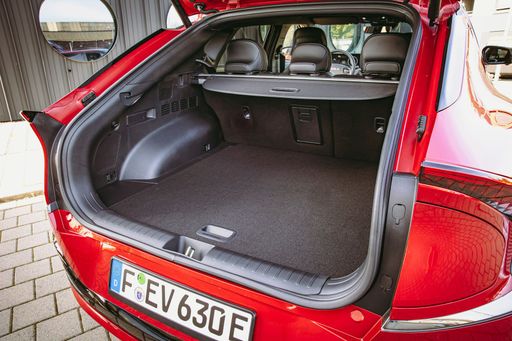
Looking at boot space, the VW ID.7 Touring offers a bit more boot space – 605 L compared to 490 L. That’s a difference of about 115 L.

For maximum load capacity, the VW ID.7 Touring offers clearly more capacity – up to 1,714 L, about 424 L more than the Kia EV6.

When it comes to payload, the VW ID.7 Touring carries only slightly more – 465 kg compared to 450 kg. That’s a difference of about 15 kg.

Who wins the race in the data check?

The Kia EV6 is far ahead overall in the objective data comparison.
This result only shows which model scores more points on paper – not which of the two cars feels right for you.

from £38,600
EV6

Kia EV6

  • Engine Type : Electric
  • Transmission : Automatic
  • Drive Type : Rear-Wheel Drive, All-Wheel Drive
  • Power HP : 170 - 609 HP
  • Consumption kWh/100km : 15.9 - 20.9 kWh/100km
  • Electric Range : 428 - 582 km
VW ID.7 Touring
Kia EV6

Costs and Consumption

View detailed analysis

Engine and Performance

View detailed analysis

Dimensions and Body

View detailed analysis

VW ID.7 Touring

The VW ID.7 Touring blends sleek, aerodynamic fastback looks with estate practicality, delivering an electric family car that looks grown-up and feels refined. Inside it's calm and spacious with clever storage and modern tech, swallowing suitcases and weekend plans with ease — a sensible, slightly flashy choice for buyers who want electric comfort without giving up practicality.

details

Kia EV6

The Kia EV6 looks like it sprinted off a concept stage, its bold, futuristic lines wrapping a surprisingly spacious and grown-up cabin. On the road it delivers crisp, immediate thrust and composed handling, with enough everyday practicality and slick tech to make ditching petrol feel like an upgrade rather than a compromise.

details
VW ID.7 Touring
Kia EV6

Costs and Consumption

Price
47,100 - 54,900 £
Price
38,600 - 60,000 £
Consumption L/100km
-
Consumption L/100km
-
Consumption kWh/100km
14 - 16.6 kWh/100km
Consumption kWh/100km
15.9 - 20.9 kWh/100km
Electric Range
584 - 689 km
Electric Range
428 - 582 km
Battery Capacity
77 - 86 kWh
Battery Capacity
63 - 84 kWh
co2
0 g/km
co2
0 g/km
Fuel tank capacity
-
Fuel tank capacity
-

Dimensions and Body

Body Type
Estate
Body Type
SUV
Seats
5
Seats
5
Doors
5
Doors
5
Curb weight
2,191 - 2,336 kg
Curb weight
1,955 - 2,220 kg
Trunk capacity
605 L
Trunk capacity
480 - 490 L
Length
4,961 mm
Length
4,695 mm
Width
1,862 mm
Width
1,880 - 1,890 mm
Height
1,549 - 1,551 mm
Height
1,550 mm
Max trunk capacity
1,714 L
Max trunk capacity
1,290 L
Payload
459 - 465 kg
Payload
440 - 450 kg

Engine and Performance

Engine Type
Electric
Engine Type
Electric
Transmission
Automatic
Transmission
Automatic
Transmission Detail
Reduction Gearbox
Transmission Detail
Reduction Gearbox
Drive Type
Rear-Wheel Drive, All-Wheel Drive
Drive Type
Rear-Wheel Drive, All-Wheel Drive
Power HP
286 - 340 HP
Power HP
170 - 609 HP
Acceleration 0-100km/h
5.5 - 6.7 s
Acceleration 0-100km/h
3.5 - 8.7 s
Max Speed
180 km/h
Max Speed
185 - 188 km/h
Torque
545 - 679 Nm
Torque
350 - 770 Nm
Number of Cylinders
-
Number of Cylinders
-
Power kW
210 - 250 kW
Power kW
125 - 448 kW
Engine capacity
-
Engine capacity
-

General

Model Year
2024
Model Year
2,024 - 2,025
CO2 Efficiency Class
A
CO2 Efficiency Class
A
Brand
VW
Brand
Kia
DriveDuel uses data analysis and artificial intelligence to evaluate vehicle data and create content. Content is regularly reviewed and improved. The displayed prices are estimates based on German list prices, adjusted to the respective country’s VAT. Country-specific registration taxes are not included. This information is not legally binding.