VS

VW ID.7 Touring vs Toyota bZ4X comparison

Compare performance (340 HP vs 380 HP), boot space and price (47,100 £ vs 36,800 £ ) at a glance. Find out which car is the better choice for you – VW ID.7 Touring or Toyota bZ4X?

VW ID.7 Touring vs Toyota bZ4X: Key differences

VW ID.7 Touring

5 (2 Reviews)
rate
  • slightly more electric range
details

Toyota bZ4X

4.5 (11 Reviews)
rate
  • markedly cheaper
  • somewhat more power
  • only slightly more efficient
  • visibly quicker 0–100 km/h
  • slightly lighter
  • very slightly more trunk space
details

All details on performance, efficiency, range and trunk space can be found in the technical comparison below – including user reviews for both models.

By Achim Sedelmaier

ID.7 Touring

Overview: Toyota bZ4X VS VW ID.7 Touring

Toyota bZ4X and VW ID.7 Touring sit in the same electric conversation but play very different roles: the bZ4X pitches itself as a comfort‑focused, straightforward SUV while the ID.7 Touring presents as a long‑distance, highly practical electric wagon. The contrast is obvious in daily use — the Toyota favors predictable ergonomics, easy controls and a roomy rear seat, whereas the VW doubles down on cabin calm, outright luggage practicality and long‑haul efficiency. Pricing and equipment choices also push them into different buyer brackets, with the Toyota feeling like the more conservative, value‑oriented pick and the ID.7 Touring promising a more assured motorway experience for the extra spend. That sets the stage: one is about uncomplicated comfort and ownership assurance, the other about quiet endurance and cargo competence.
bZ4X

Character on the road

Toyota bZ4X drives with a safe, confidence‑first personality — it accelerates with crispness and feels secure in traffic, but it never aims to thrill the enthusiast. The VW ID.7 Touring, by contrast, is all about composed momentum: it soaks up speed quietly and rewards steady motorway progress with lower strain and less driver input. Where the bZ4X feels more SUV‑like in posture and response, the ID.7 Touring behaves like a low, planted estate that eats miles without fuss. Choosing between them here is a trade‑off between Toyota’s immediate, uncomplicated shove and VW’s more relaxed, long‑distance serenity.

ID.7 Touring

Comfort and long‑distance manners

On long runs the VW ID.7 Touring is the calmer companion — exceptional noise insulation and supportive front seats mean less fatigue after many hours behind the wheel. The Toyota bZ4X is also very quiet and comfortable, but subtle compromises (higher seating position and shorter rear cushions) make it feel a touch less indulgent on marathon drives, especially for tall rear passengers. Toyota rewards city‑to‑road transitions with forgiving suspension and easy visibility up front, while VW’s chassis and seat options are tuned for sustained comfort at speed. If your driving is dominated by long motorway legs the ID.7 Touring leans clearly toward better endurance comfort; if you mix urban runs with occasional highways, the bZ4X keeps things relaxed and straightforward.

bZ4X

Practicality and family usability

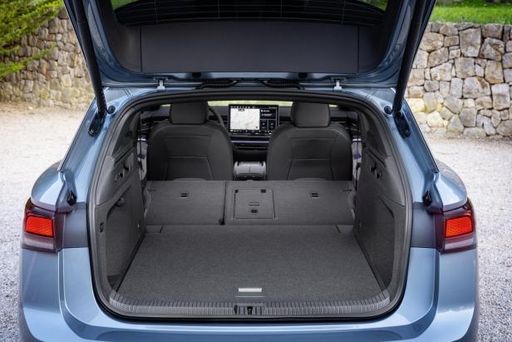
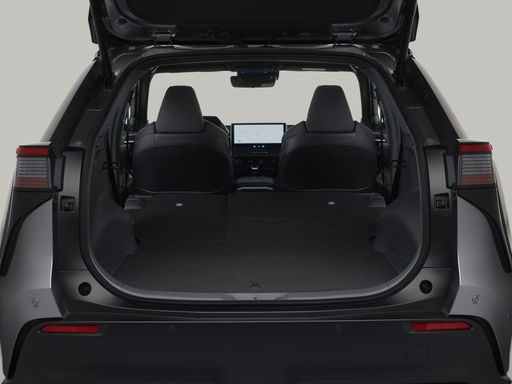
Space use is where the difference becomes practical rather than theoretical: the ID.7 Touring behaves like a proper wagon, with a wide hatch, a flexible load floor and a much more usable boot for bikes, luggage and weekly family life. The Toyota bZ4X offers generous rear legroom and a flat floor that helps three abreast, but the cargo area is more compromised by wheel arches and lacks a frunk or a few small stowage conveniences. For parents who regularly load prams, suitcases or awkward boxes the VW’s tailgate and load layout are noticeably less fussy; for families who prioritise rear passenger comfort and simpler day‑to‑day ergonomics the bZ4X still makes a lot of sense. Practicality becomes a question of which you value more: wagon‑style load flexibility in the ID.7 Touring or the SUV’s rear‑seat comfort and simpler cabin layout in the bZ4X.

ID.7 Touring

Cabin feel, controls and perceived quality

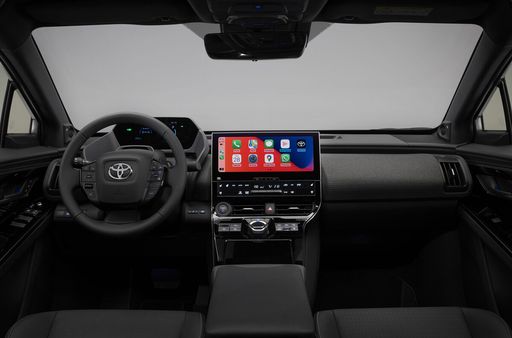
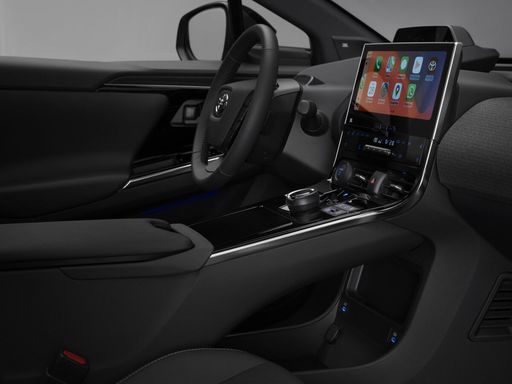
The Toyota bZ4X leans into a pragmatic cabin: physical climate controls, clear switchgear and a straightforward instrument layout that reward anyone who just wants to drive without wrestling menus. The VW ID.7 Touring feels a step up in material polish and visual calm, but that refinement is married to a touch‑centred control philosophy that can frustrate those who prefer tactile buttons. Both interiors improved over their predecessors, yet they communicate different priorities — Toyota prioritises usability and low‑stress operation while Volkswagen pursues a quieter, more premium ambience at the cost of more screen time. If perceived quality and a serene environment matter most, the ID.7 Touring has the edge; if intuitive daily ergonomics and fewer distractions are higher on your list, the bZ4X will please sooner.

bZ4X

Buyer fit: who should choose which

If your life is heavy on long motorway stints, repeated business trips or you simply want the largest, most usable boot, the VW ID.7 Touring is tailored to that mission with superior calm, range orientation and load‑space logic. If you value straightforward ownership, strong rear legroom, simpler controls and a more affordable, conservative package — especially for mixed city and family use — the Toyota bZ4X lands as the more sensible fit. Both will suit families, but the ID.7 Touring tilts to luggage‑heavy, long‑distance households while the bZ4X suits comfort‑minded urban commuters and buyers who prize Toyota’s predictability. The technical comparison that follows will make those trade‑offs concrete by looking at charging behavior, range endurance, luggage volumes and drive performance so you can match numbers to these real‑world preferences.

Here’s where it gets real: The technical differences in detail

ID.7 Touring

Costs and Efficiency:

Price and efficiency are key factors when choosing a car – and this is often where the real differences emerge.

Toyota bZ4X is markedly cheaper – starting at 36,800 £ , while the VW ID.7 Touring costs 47,100 £ . That’s a price difference of around 10,213 £.

In terms of energy consumption, the Toyota bZ4X is only slightly more efficient: consuming 13.5 kWh/100km compared to 14 kWh/100km for the VW ID.7 Touring. That’s a difference of about 0.5 kWh/100km.

As for electric range, the VW ID.7 Touring offers slightly more range – reaching up to 689 km, about 98 km more than the Toyota bZ4X.

bZ4X

Engine and Performance:

Under the bonnet, it becomes clear which model is tuned for sportiness and which one takes the lead when you hit the accelerator.

When it comes to engine power, the Toyota bZ4X offers somewhat more power – delivering 380 HP compared to 340 HP. That’s roughly 40 HP more horsepower.

When accelerating from 0 to 100 km/h, the Toyota bZ4X is visibly quicker – completing the sprint in 4.4 s, while the VW ID.7 Touring takes 5.5 s. That’s about 1.1 s quicker.

There’s also a difference in torque: the VW ID.7 Touring delivers considerably more torque with 679 Nm compared to 338 Nm. That’s about 341 Nm more.

ID.7 Touring

Space and Everyday Use:

Whether family car or daily driver – which one offers more room, flexibility and comfort?

Both vehicles offer seating for 5 people.

In terms of curb weight, Toyota bZ4X is slightly lighter – 1,900 kg compared to 2,191 kg. The difference is around 291 kg.

Looking at boot space, the Toyota bZ4X offers very slightly more boot space – 669 L compared to 605 L. That’s a difference of about 64 L.

When it comes to payload, the Toyota bZ4X carries somewhat more – 565 kg compared to 465 kg. That’s a difference of about 100 kg.

Who wins the race in the data check?

The Toyota bZ4X leads convincingly in the objective data comparison.
This result only shows which model scores more points on paper – not which of the two cars feels right for you.

from £36,800
bZ4X

Toyota bZ4X

  • Engine Type Electric
  • Transmission Automatic
  • Drive Type Front-Wheel Drive, All-Wheel Drive
  • Power HP 167 - 380 HP
  • Consumption kWh/100km 13.5 - 16.6 kWh/100km
  • Electric Range 444 - 591 km
VW ID.7 Touring
Toyota bZ4X

Costs and Consumption

View detailed analysis

Engine and Performance

View detailed analysis

Dimensions and Body

View detailed analysis

VW ID.7 Touring

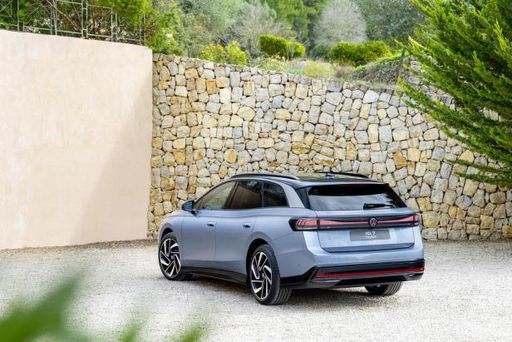
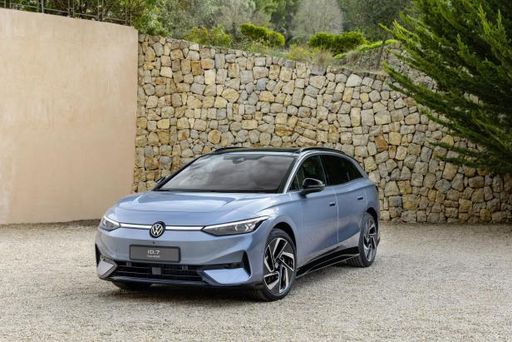
The VW ID.7 Touring blends sleek, aerodynamic fastback looks with estate practicality, delivering an electric family car that looks grown-up and feels refined. Inside it's calm and spacious with clever storage and modern tech, swallowing suitcases and weekend plans with ease — a sensible, slightly flashy choice for buyers who want electric comfort without giving up practicality.

details

Toyota bZ4X

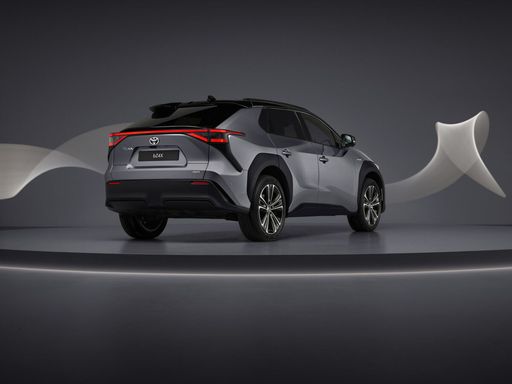
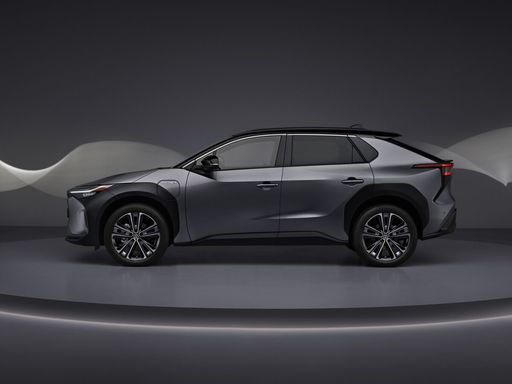
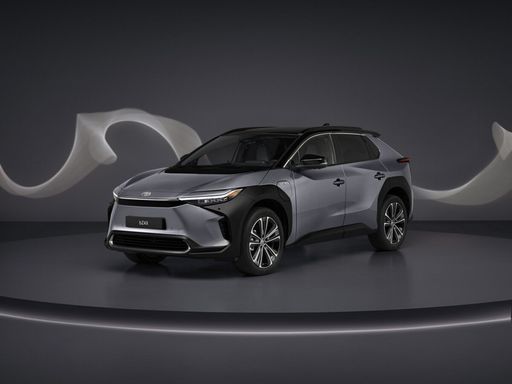
The Toyota bZ4X is an electric crossover that focuses on a calm ride, practical interior and predictable handling for everyday driving. It suits buyers who want an easygoing, reliable EV with Toyota's familiar build quality and a clean, simple design.

details
VW ID.7 Touring
Toyota bZ4X

Costs and Consumption

Price
47,100 - 54,900 £
Price
36,800 - 51,000 £
Consumption L/100km
-
Consumption L/100km
-
Consumption kWh/100km
14 - 16.6 kWh/100km
Consumption kWh/100km
13.5 - 16.6 kWh/100km
Electric Range
584 - 689 km
Electric Range
444 - 591 km
Battery Capacity
77 - 86 kWh
Battery Capacity
-
co2
0 g/km
co2
0 g/km
Fuel tank capacity
-
Fuel tank capacity
-

Dimensions and Body

Body Type
Estate
Body Type
SUV
Seats
5
Seats
5
Doors
5
Doors
-
Curb weight
2,191 - 2,336 kg
Curb weight
1,900 - 2,180 kg
Trunk capacity
605 L
Trunk capacity
452 - 669 L
Length
4,961 mm
Length
-
Width
1,862 mm
Width
1,860 mm
Height
1,549 - 1,551 mm
Height
-
Max trunk capacity
1,714 L
Max trunk capacity
-
Payload
459 - 465 kg
Payload
375 - 565 kg

Engine and Performance

Engine Type
Electric
Engine Type
Electric
Transmission
Automatic
Transmission
Automatic
Transmission Detail
Reduction Gearbox
Transmission Detail
Reduction Gearbox
Drive Type
Rear-Wheel Drive, All-Wheel Drive
Drive Type
Front-Wheel Drive, All-Wheel Drive
Power HP
286 - 340 HP
Power HP
167 - 380 HP
Acceleration 0-100km/h
5.5 - 6.7 s
Acceleration 0-100km/h
4.4 - 8.6 s
Max Speed
180 km/h
Max Speed
-
Torque
545 - 679 Nm
Torque
268 - 338 Nm
Number of Cylinders
-
Number of Cylinders
-
Power kW
210 - 250 kW
Power kW
123 - 280 kW
Engine capacity
-
Engine capacity
-

General

Model Year
2024
Model Year
2,025 - 2,026
CO2 Efficiency Class
A
CO2 Efficiency Class
A
Brand
VW
Brand
Toyota
DriveDuel uses data analysis and artificial intelligence to evaluate vehicle data and create content. Content is regularly reviewed and improved. The displayed prices are estimates based on German list prices, adjusted to the respective country’s VAT. Country-specific registration taxes are not included. This information is not legally binding.