VS

VW Polo vs Dacia Sandero comparison

Compare performance (207 HP vs 122 HP), boot space and price (17,300 £ vs 11,000 £ ) at a glance. Find out which car is the better choice for you – VW Polo or Dacia Sandero?

VW Polo vs Dacia Sandero: Key differences

VW Polo

4.1 (3 Reviews)
rate
  • clearly more power
  • only slightly more efficient
  • considerably quicker 0–100 km/h
details

Dacia Sandero

3.1 (5 Reviews)
rate
  • substantially cheaper
  • marginally lighter
  • marginally more trunk space
details

All details on performance, efficiency, range and trunk space can be found in the technical comparison below – including user reviews for both models.

By Achim Sedelmaier

Polo

Head-to-Head: Dacia Sandero VS VW Polo

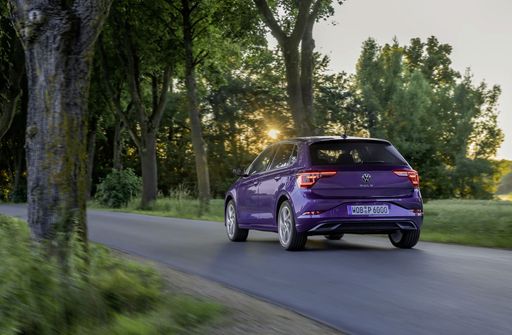
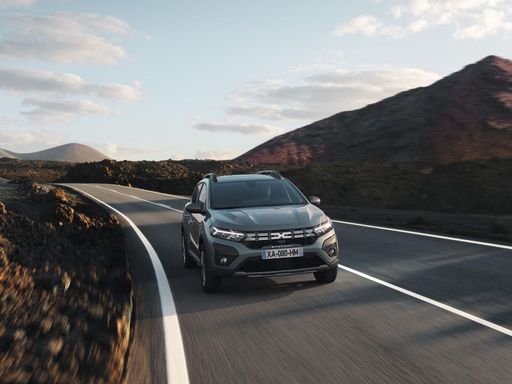
In the ever-competitive world of hatchbacks, the 2024 models of Dacia Sandero and VW Polo stand out with their unique offerings. Both models have been staples in their respective segments, offering compelling features for drivers looking for practicality coupled with modernity.

Sandero

Design and Dimensions

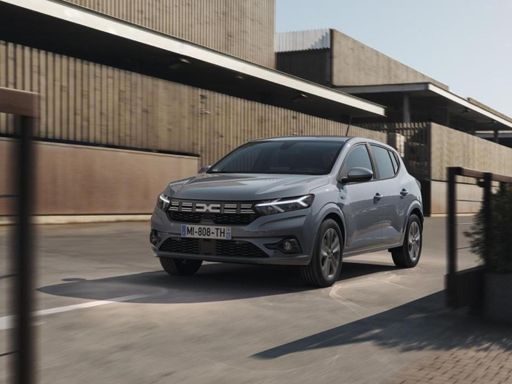
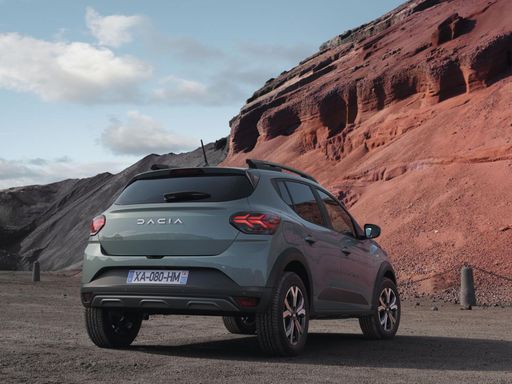
At first glance, both the Dacia Sandero and the VW Polo boast sleek hatchback designs, although they differ in their exact dimensions. The Sandero is slightly longer, measuring up to 4099 mm, and features a broader width of 1848 mm, which promises more interior space. Meanwhile, the Polo cuts a slightly more compact figure at 4074 mm in length and 1751 mm in width, allowing for easier urban navigation.

Polo

Engine and Performance

When it comes to engine performance, the Dacia Sandero offers a broad range of petrol and LPG engines, with power outputs ranging from 67 to 110 HP. It boasts a torque spectrum between 95 Nm to 200 Nm, and its acceleration ranges from a leisurely 16.7 seconds to a sprightly 10 seconds for the 0–100 km/h sprint, depending on the engine choice.

VW Polo, on the other hand, features only petrol engines with power from 80 HP up to a sporty 207 HP, with a maximum torque of 320 Nm in the top variant. The Polo impresses with quicker acceleration, starting from 15.6 seconds down to a rapid 6.5 seconds.

Sandero

Transmission and Driving Experience

Both hatchbacks offer a manual gearbox as standard, with Dacia allowing an optional CVT in higher trims, providing smoother and more effortless driving. In contrast, the VW Polo is available with a dual-clutch automatic transmission, offering quicker, almost seamless gear shifts that enhance the driving experience.

Polo

Fuel Efficiency and Environmental Impact

Fuel consumption rates present a point of contention between the two competitors. The Sandero records consumption from 5.2 to 7 L/100 km, while the Polo aligns closely with figures from 5.2 to 6.5 L/100 km. When considering CO2 emissions, both also fall within similar efficiency classes of D and E, although the Polo offers configurations with slightly lower emissions, making it a somewhat greener option.

Sandero

Interior Space and Practicality

With a trunk capacity of 328 L, the Dacia Sandero provides a competent cargo space, suitable for everyday needs. The VW Polo edges ahead slightly with 351 L of trunk capacity, making it more attractive for those who prioritize luggage space. Both vehicles comfortably seat five passengers, promising practical use for families and commuters alike.

Polo

Innovations and Features

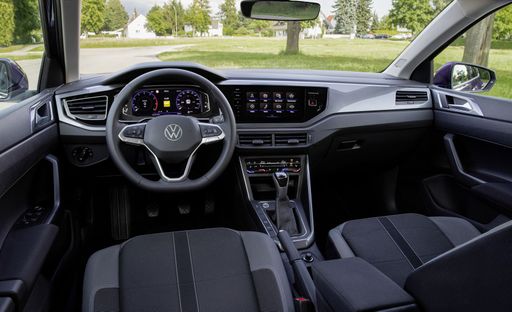
In terms of technological innovation, the VW Polo tends to have the upper hand, often equipped with advanced infotainment systems and connectivity options across its range. The Dacia Sandero focuses on offering no-nonsense utility with straightforward functionality, including an array of needed features while keeping the price attractive. Both vehicles continue leveraging new tech upgrades more centered on practicality and user-friendliness rather than extravagant electrification or autonomous driving technologies.

Verdict

The decision between the Dacia Sandero and VW Polo comes down to personal preference. The Sandero is an attractive proposition if you're in the market for a cost-effective, spacious, and straightforward vehicle. Meanwhile, the Polo should appeal to those who seek a blend of high performance with advanced features, wrapped up in a compact yet refined package. Either choice delivers quality and value, ensuring satisfied drivers no matter the road taken.

Here’s where it gets real: The technical differences in detail

Polo

Costs and Efficiency:

Price and efficiency are often the first things buyers look at. Here it becomes clear which model has the long-term edge – whether at the pump, the plug, or in purchase price.

Dacia Sandero is substantially cheaper – starting at 11,000 £ , while the VW Polo costs 17,300 £ . That’s a price difference of around 6,296 £.

Fuel consumption also shows a difference: the VW Polo uses 5.1 L/100km and is only slightly more efficient than the Dacia Sandero with 5.3 L/100km. The difference is about 0.2 L/100km.

Sandero

Engine and Performance:

Power, torque and acceleration say a lot about how a car feels on the road. This is where you see which model delivers more driving dynamics.

When it comes to engine power, the VW Polo offers clearly more power – delivering 207 HP compared to 122 HP. That’s roughly 85 HP more horsepower.

When accelerating from 0 to 100 km/h, the VW Polo is considerably quicker – completing the sprint in 6.5 s, while the Dacia Sandero takes 9.7 s. That’s about 3.2 s quicker.

There’s also a difference in torque: the VW Polo delivers noticeably more torque with 320 Nm compared to 200 Nm. That’s about 120 Nm more.

Polo

Space and Everyday Use:

Whether family car or daily driver – which one offers more room, flexibility and comfort?

Both vehicles offer seating for 5 people.

In terms of curb weight, Dacia Sandero is marginally lighter – 1,100 kg compared to 1,143 kg. The difference is around 43 kg.

Looking at boot space, the Dacia Sandero offers marginally more boot space – 372 L compared to 351 L. That’s a difference of about 21 L.

When it comes to payload, the VW Polo carries barely more – 457 kg compared to 436 kg. That’s a difference of about 21 kg.

Who wins the race in the data check?

The VW Polo is clearly superior overall in the objective data comparison.
This result only shows which model scores more points on paper – not which of the two cars feels right for you.

from £17,300
Polo

VW Polo

  • Engine Type : Petrol
  • Transmission : Manuel, Automatic
  • Drive Type : Front-Wheel Drive
  • Power HP : 80 - 207 HP
  • Consumption L/100km : 5.1 - 6.5 L/100km
VW Polo
Dacia Sandero

Costs and Consumption

View detailed analysis

Engine and Performance

View detailed analysis

Dimensions and Body

View detailed analysis

VW Polo

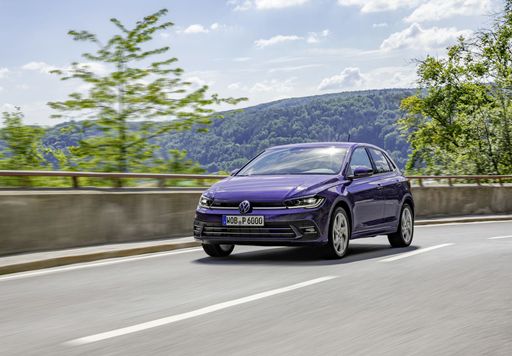
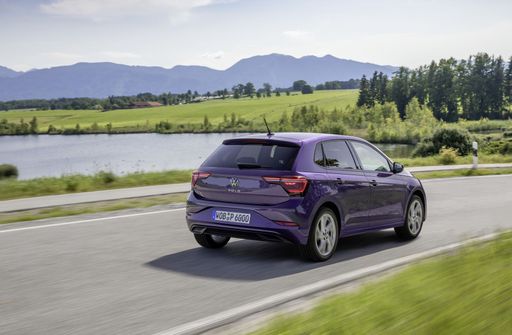
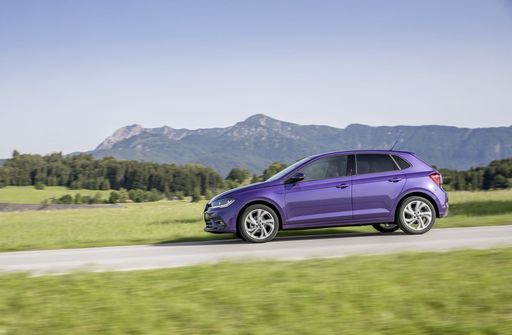
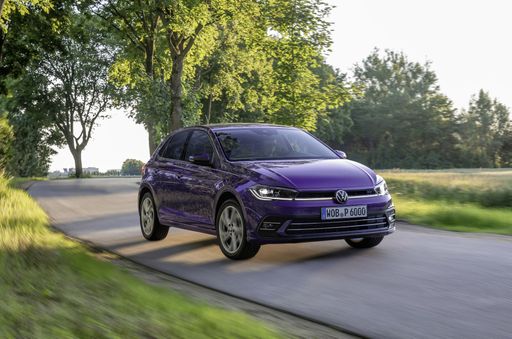
The Polo is a small car with surprisingly grown-up refinement, delivering comfortable packaging, crisp handling and a build quality that punches above its class. For buyers who want a practical, fuss-free hatch that still feels a little premium, it’s a sensible, slightly cheeky choice you’ll enjoy every day.

details

Dacia Sandero

The Dacia Sandero is the everyman's hatchback — unpretentious, practical and brilliantly affordable, with sensible space and straightforward charm where it matters most. It won't wow in the premium lane, but for buyers who want honest, dependable transport without showroom theatrics, the Sandero is a clever, no‑nonsense pick that keeps running costs low and grin levels high.

details
VW Polo
Dacia Sandero

Costs and Consumption

Price
17,300 - 30,800 £
Price
11,000 - 16,300 £
Consumption L/100km
5.1 - 6.5 L/100km
Consumption L/100km
5.3 - 7.2 L/100km
Consumption kWh/100km
-
Consumption kWh/100km
-
Electric Range
-
Electric Range
-
Battery Capacity
-
Battery Capacity
-
co2
116 - 148 g/km
co2
111 - 131 g/km
Fuel tank capacity
-
Fuel tank capacity
-

Dimensions and Body

Body Type
Hatchback
Body Type
Hatchback
Seats
5
Seats
5
Doors
-
Doors
-
Curb weight
1,143 - 1,378 kg
Curb weight
1,100 - 1,297 kg
Trunk capacity
351 L
Trunk capacity
372 L
Length
-
Length
-
Width
1,751 mm
Width
1,853 mm
Height
-
Height
-
Max trunk capacity
-
Max trunk capacity
-
Payload
432 - 457 kg
Payload
385 - 436 kg

Engine and Performance

Engine Type
Petrol
Engine Type
Petrol, LPG
Transmission
Manuel, Automatic
Transmission
Manuel, Automatic
Transmission Detail
Manual Gearbox, Dual-Clutch Automatic
Transmission Detail
Manual Gearbox, Dual-Clutch Automatic
Drive Type
Front-Wheel Drive
Drive Type
Front-Wheel Drive
Power HP
80 - 207 HP
Power HP
67 - 122 HP
Acceleration 0-100km/h
6.5 - 15.6 s
Acceleration 0-100km/h
9.7 - 16.7 s
Max Speed
-
Max Speed
-
Torque
93 - 320 Nm
Torque
95 - 200 Nm
Number of Cylinders
3 - 4
Number of Cylinders
3
Power kW
59 - 152 kW
Power kW
49 - 90 kW
Engine capacity
999 - 1,984 cm3
Engine capacity
999 - 1,199 cm3

General

Model Year
2,024 - 2,025
Model Year
2025
CO2 Efficiency Class
D, E
CO2 Efficiency Class
D, C
Brand
VW
Brand
Dacia
DriveDuel uses data analysis and artificial intelligence to evaluate vehicle data and create content. Content is regularly reviewed and improved. The displayed prices are estimates based on German list prices, adjusted to the respective country’s VAT. Country-specific registration taxes are not included. This information is not legally binding.