VS

VW T-Cross vs Nissan Juke comparison

Compare performance (150 HP vs 143 HP), boot space and price (21,400 £ vs 21,400 £ ) at a glance. Find out which car is the better choice for you – VW T-Cross or Nissan Juke?

VW T-Cross vs Nissan Juke: Key differences

VW T-Cross

4.5 (2 Reviews)
rate
  • marginally more power
  • markedly quicker 0–100 km/h
  • marginally lighter
  • marginally more trunk space

Nissan Juke

5 (1 Reviews)
rate
  • very slightly cheaper
  • a bit more efficient

All details on performance, efficiency, range and trunk space can be found in the technical comparison below – including user reviews for both models.

T-Cross

The compact SUV market has witnessed a significant surge in popularity, largely driven by consumers seeking a blend of practicality, style, and advanced technology. Two notable contenders in this segment are the Nissan Juke and the Volkswagen T-Cross. At first glance, these vehicles present unique characteristics that cater to different tastes and needs, yet both promise an engaging driving experience. In this comparison, we will delve into their technical aspects, innovations, and what sets them apart in this competitive landscape.
Juke

Design and Dimensions

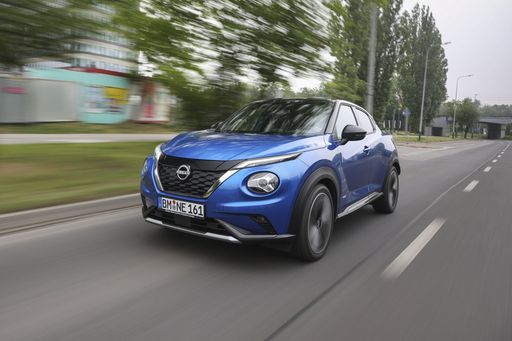
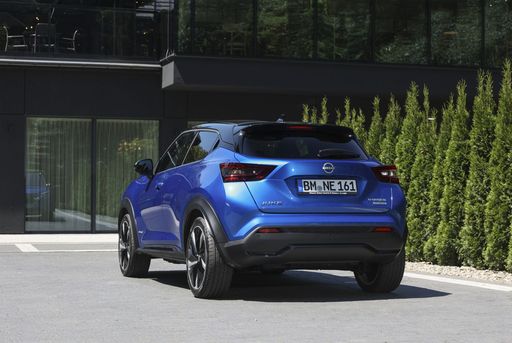
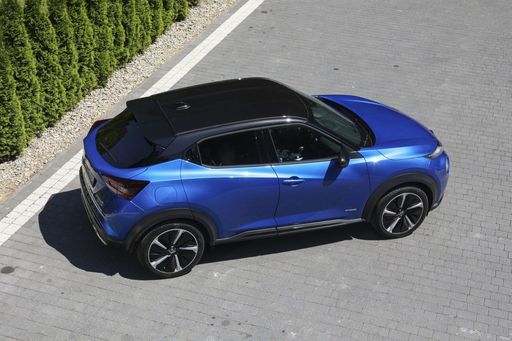
The Nissan Juke brings its iconic, bold styling to the forefront. With a length of 4210 mm, a width of 1800 mm, and a height of 1593 mm, it projects a sporty and muscular profile that turns heads on the road. The distinctive Juke aesthetic has remained largely unchanged, maintaining its charm with unique design elements like the high-mounted headlights and curved body lines.

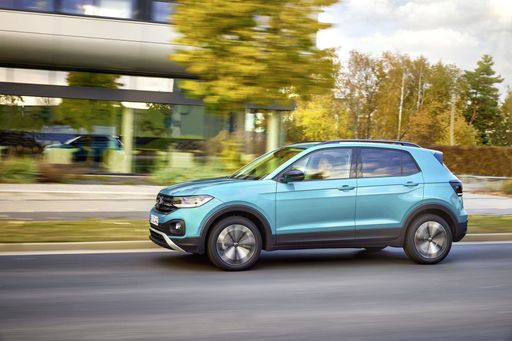
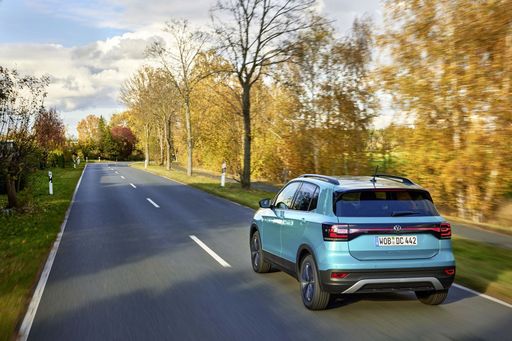
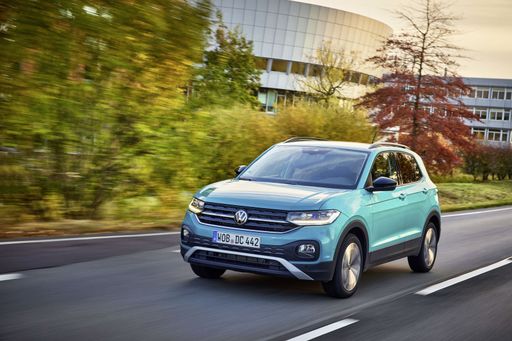
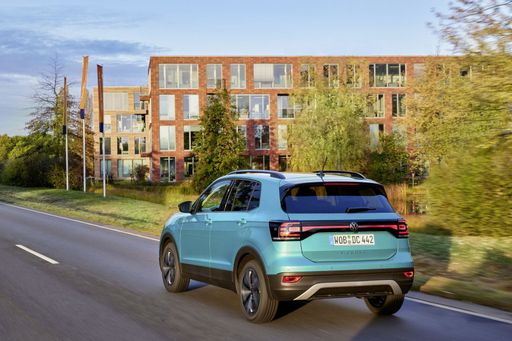
Contrastingly, the Volkswagen T-Cross embodies a more conventional SUV design with a slightly compact footprint, measuring 4127 mm in length, 1784 mm in width, and 1573 mm in height. Its understated yet modern look appeals to a broader audience, balancing functionality with a stylish presence.

T-Cross

Powertrains and Performance

When it comes to engine options, the Juke offers a diverse lineup, including petrol and a full hybrid variant. The petrol engines rage from 114 to 143 HP, delivering adequate performance for daily driving with a 0-100 km/h acceleration spread of 10.1 to 11.8 seconds. The Juke is known for its agile handling, enhanced by front-wheel drive and transmission options that include manual and dual-clutch automatic gearboxes.

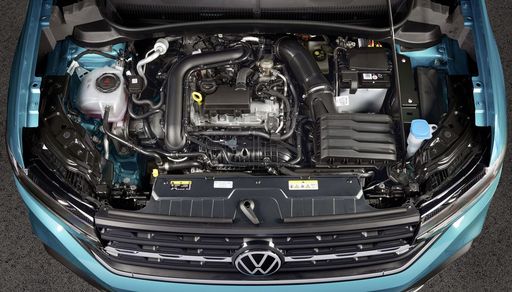
On the other hand, the T-Cross boasts a range of petrol engines with power outputs ranging from 95 to a robust 150 HP. The 0-100 km/h acceleration times vary from 8.4 seconds for the top variant to 11.2 seconds for the base model. Similar to the Juke, it offers both manual and automatic transmission options and is also front-wheel drive, ensuring a pleasurable driving experience ideal for city commutes and weekend getaways.

Juke

Fuel Efficiency and Eco-Friendliness

Fuel efficiency is an imperative aspect for modern consumers, and the Nissan Juke performs admirably in this domain with consumption levels ranging from 4.7 to 6 L/100km. The hybrid variant further enhances its eco-credentials, making it a commendable choice for environmentally-conscious drivers.

The T-Cross also holds its ground with slightly higher consumption figures of 5.6 to 6 L/100km, depending on the engine choice. Both vehicles are equipped with efficient engines designed to meet contemporary emissions standards, featuring CO2 emissions hovering around the 127-135 g/km mark for the T-Cross and 107-137 g/km for the Juke. This aligns them both in the 'D' efficiency class.

T-Cross

Interior and Space

Inside, the Juke provides an engaging, tech-forward environment with seating for five and a trunk capacity of 422 L, exceeding the T-Cross's 455 L. The Juke's unique dashboard layout, highlighted by an advanced infotainment system, makes it a strikingly modern cabin with an emphasis on driver-centric controls.

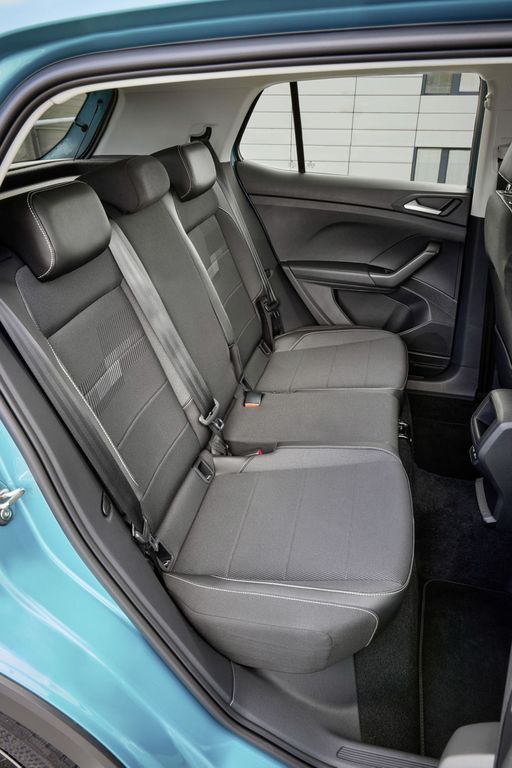
Conversely, the T-Cross delivers a more conventional interior setup, focusing on practicality and space. With its modular seating arrangements, the T-Cross enhances passenger comfort and cargo versatility. Its clean dashboard design features a straightforward infotainment system, making it user-friendly but less emotive than the Juke's offering.

Juke

Safety Features and Innovations

Both the Juke and T-Cross boast a plethora of safety features, including multiple airbags, electronic stability control, and advanced driver-assistance systems. Nissan’s ProPILOT Assist in the Juke enhances safety through adaptive cruise control and lane-keeping assist, setting a high standard for driving aids.

Similarly, the T-Cross incorporates VW's suite of safety technologies, including Front Assist and Emergency City Braking, which contribute to its reputation for reliability and safety. Both vehicles have undergone strict safety testing, ensuring peace of mind for consumers.

T-Cross

Conclusion: The Choice is Yours

In summary, the Nissan Juke and VW T-Cross cater to diverse preferences in the competitive compact SUV market. The Juke stands out with its sporty design, hybrid options, and innovative features, appealing to those seeking a distinctive experience. Meanwhile, the T-Cross excels in practicality, modularity, and traditional design, catering to an audience that prioritizes utility. Ultimately, your choice will depend on your lifestyle needs, personal taste, and driving habits, making either vehicle a strong contender in its class.

Here’s where it gets real: The technical differences in detail

T-Cross

Costs and Efficiency:

When it comes to price and running costs, the biggest differences usually appear. This is often where you see which car fits your budget better in the long run.

Nissan Juke is very slightly cheaper – starting at 21,400 £ , while the VW T-Cross costs 21,400 £ . That’s a price difference of around 9 £.

Fuel consumption also shows a difference: the Nissan Juke uses 4.7 L/100km and is a bit more efficient than the VW T-Cross with 5.4 L/100km. The difference is about 0.7 L/100km.

Juke

Engine and Performance:

Power, torque and acceleration are the classic benchmarks for car enthusiasts – and here, some clear differences start to show.

When it comes to engine power, the VW T-Cross offers marginally more power – delivering 150 HP compared to 143 HP. That’s roughly 7 HP more horsepower.

When accelerating from 0 to 100 km/h, the VW T-Cross is markedly quicker – completing the sprint in 8.4 s, while the Nissan Juke takes 10.1 s. That’s about 1.7 s quicker.

There’s also a difference in torque: the VW T-Cross delivers a bit more torque with 250 Nm compared to 200 Nm. That’s about 50 Nm more.

T-Cross

Space and Everyday Use:

Cabin size, boot volume and payload all play a role in everyday practicality. Here, comfort and flexibility make the difference.

Both vehicles offer seating for 5 people.

In terms of curb weight, VW T-Cross is marginally lighter – 1,267 kg compared to 1,274 kg. The difference is around 7 kg.

Looking at boot space, the VW T-Cross offers marginally more boot space – 455 L compared to 422 L. That’s a difference of about 33 L.

When it comes to payload, the VW T-Cross carries somewhat more – 480 kg compared to 427 kg. That’s a difference of about 53 kg.

Who wins the race in the data check?

The VW T-Cross holds a narrow overall lead in the objective data comparison.
This result only shows which model scores more points on paper – not which of the two cars feels right for you.

from £21,400
T-Cross

VW T-Cross

  • Engine Type : Petrol
  • Transmission : Manuel, Automatic
  • Drive Type : Front-Wheel Drive
  • Power HP : 95 - 150 HP
  • Consumption L/100km : 5.4 - 6 L/100km
VW T-Cross
Nissan Juke

Costs and Consumption

View detailed analysis

Engine and Performance

View detailed analysis

Dimensions and Body

View detailed analysis

VW T-Cross

The VW T-Cross turns everyday practicality into a style statement, offering a roomy-feeling cabin, clever storage and playful design that suits town life and family duties alike. On the road it's composed and relaxed, rewarding buyers who want the raised seating and confident presence of an SUV without the weighty compromises.

details

Nissan Juke

The Nissan Juke is a pocket-sized crossover that refuses to blend in, with quirky styling and a cheeky stance that turns heads at every traffic light. It’s ideal for shoppers who value personality and nimble urban driving over maximum practicality, delivering surprising pep and a well-equipped feel for everyday fun.

details
VW T-Cross
Nissan Juke

Costs and Consumption

Price
21,400 - 32,000 £
Price
21,400 - 31,800 £
Consumption L/100km
5.4 - 6 L/100km
Consumption L/100km
4.7 - 6 L/100km
Consumption kWh/100km
-
Consumption kWh/100km
-
Electric Range
-
Electric Range
-
Battery Capacity
-
Battery Capacity
-
co2
124 - 136 g/km
co2
105 - 136 g/km
Fuel tank capacity
-
Fuel tank capacity
-

Dimensions and Body

Body Type
SUV
Body Type
SUV
Seats
5
Seats
5
Doors
-
Doors
-
Curb weight
1,267 - 1,338 kg
Curb weight
1,274 - 1,405 kg
Trunk capacity
455 L
Trunk capacity
354 - 422 L
Length
-
Length
-
Width
1,784 mm
Width
1,800 mm
Height
-
Height
-
Max trunk capacity
-
Max trunk capacity
-
Payload
463 - 480 kg
Payload
405 - 427 kg

Engine and Performance

Engine Type
Petrol
Engine Type
Petrol, Full Hybrid
Transmission
Manuel, Automatic
Transmission
Manuel, Automatic
Transmission Detail
Manual Gearbox, Dual-Clutch Automatic
Transmission Detail
Manual Gearbox, Dual-Clutch Automatic, Automatic Gearbox
Drive Type
Front-Wheel Drive
Drive Type
Front-Wheel Drive
Power HP
95 - 150 HP
Power HP
114 - 143 HP
Acceleration 0-100km/h
8.4 - 11.3 s
Acceleration 0-100km/h
10.1 - 11.8 s
Max Speed
-
Max Speed
-
Torque
175 - 250 Nm
Torque
200 Nm
Number of Cylinders
3 - 4
Number of Cylinders
3 - 4
Power kW
70 - 110 kW
Power kW
84 - 105 kW
Engine capacity
999 - 1,498 cm3
Engine capacity
999 - 1,598 cm3

General

Model Year
2,024 - 2,025
Model Year
2,025
CO2 Efficiency Class
D, E
CO2 Efficiency Class
D, E, C
Brand
VW
Brand
Nissan
DriveDuel uses data analysis and artificial intelligence to evaluate vehicle data and create content. Content is regularly reviewed and improved. The displayed prices are estimates based on German list prices, adjusted to the respective country’s VAT. Country-specific registration taxes are not included. This information is not legally binding.