VS

Renault Symbioz vs VW T-Cross - Differences and prices compared

Compare performance (158 HP vs 150 HP), boot space and price (24400 £ vs 21100 £) at a glance. Find out which car is the better choice for you – Renault Symbioz or VW T-Cross?

Renault Symbioz

5 (1 Reviews)
rate

VW T-Cross

4 (1 Reviews)
rate

Here’s where it gets real: The technical differences in detail

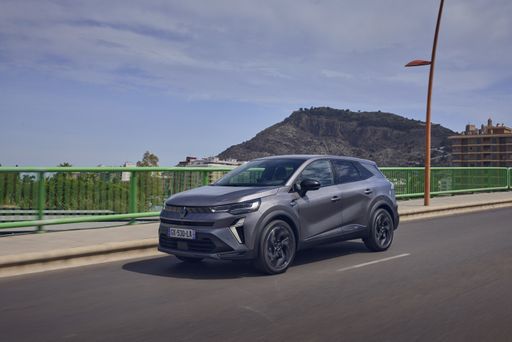
Symbioz

Costs and Efficiency:

Looking at overall running costs, both models reveal some interesting differences in everyday economy.

VW T-Cross has a a bit advantage in terms of price – it starts at 21100 £, while the Renault Symbioz costs 24400 £. That’s a price difference of around 3351 £.

Fuel consumption also shows a difference: Renault Symbioz manages with 4.50 L and is therefore noticeable more efficient than the VW T-Cross with 5.40 L. The difference is about 0.90 L per 100 km.

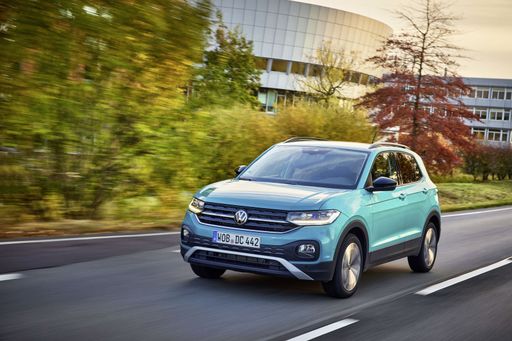
T-Cross

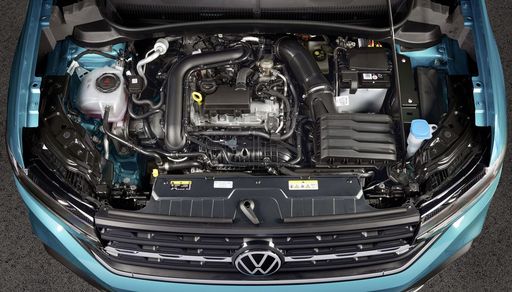
Engine and Performance:

Power, torque and acceleration are the classic benchmarks for car enthusiasts – and here, some clear differences start to show.

When it comes to engine power, the Renault Symbioz has a minimal edge – offering 158 HP compared to 150 HP. That’s roughly 8 HP more horsepower.

In acceleration from 0 to 100 km/h, the VW T-Cross is barely noticeable quicker – completing the sprint in 8.40 s, while the Renault Symbioz takes 9.10 s. That’s about 0.70 s faster.

In terms of top speed, the VW T-Cross performs hardly perceptible better – reaching 200 km/h, while the Renault Symbioz tops out at 180 km/h. The difference is around 20 km/h.

There’s also a difference in torque: Renault Symbioz pulls minimal stronger with 265 Nm compared to 250 Nm. That’s about 15 Nm difference.

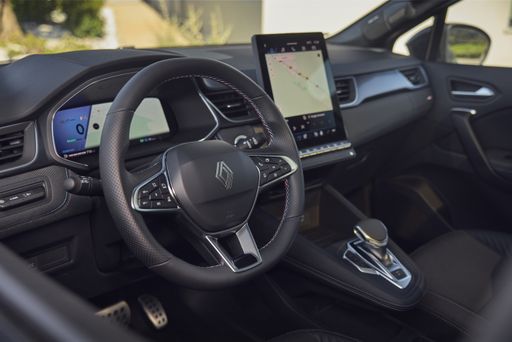
Symbioz

Space and Everyday Use:

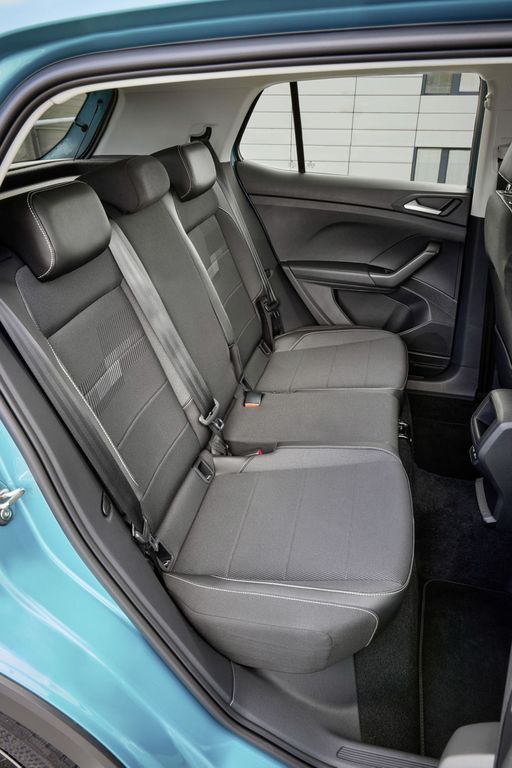
Cabin size, boot volume and payload all play a role in everyday practicality. Here, comfort and flexibility make the difference.

Both vehicles offer seating for 5 people.

In curb weight, VW T-Cross is minimal lighter – 1267 kg compared to 1359 kg. The difference is around 92 kg.

In terms of boot space, the Renault Symbioz offers clearly perceptible more room – 576 L compared to 455 L. That’s a difference of about 121 L.

In maximum load capacity, the Renault Symbioz performs distinct better – up to 1682 L, which is about 401 L more than the VW T-Cross.

When it comes to payload, VW T-Cross hardly perceptible takes the win – 480 kg compared to 459 kg. That’s a difference of about 21 kg.

Who comes out on top?

Overall, the Renault Symbioz shows itself to be outperforms in nearly all aspects and secures the title of DriveDuel Champion.
It convinces with the more balanced overall package and proves to be the more versatile choice for everyday use.

from about £24,400
Symbioz

Renault Symbioz

  • Engine Type : Full Hybrid, Petrol MHEV
  • Transmission : Automatic, Manuel
  • Drive Type : Front-Wheel Drive
  • Power HP : 140 - 158 HP
  • Consumption L/100km : 4.5 - 6 L
Renault Symbioz
VW T-Cross

Costs and Consumption

View detailed analysis

Engine and Performance

View detailed analysis

Dimensions and Body

View detailed analysis

Renault Symbioz

5 (1 Reviews)
rate

The Renault Symbioz feels less like a traditional car and more like a rolling living room that's been told it's allowed to drive — its flowing lines and minimalist cabin are pure concept-car theatre that teases the future of everyday transport. For buyers with an eye for design and a taste for tech-forward ideas, the Symbioz is an alluring vision of what Renault could offer tomorrow, even if it's not yet a model you can park in your driveway.

details

VW T-Cross

4 (1 Reviews)
rate

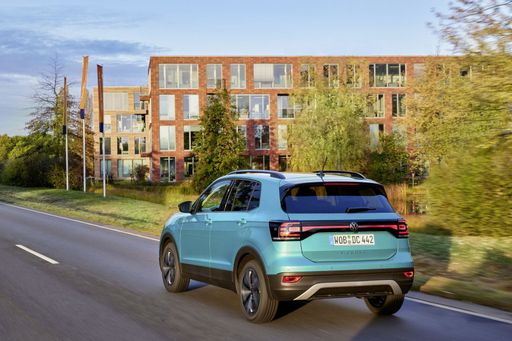
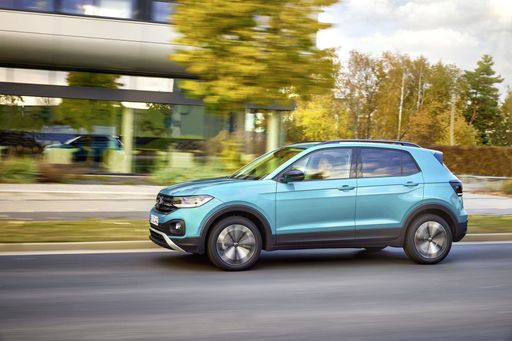
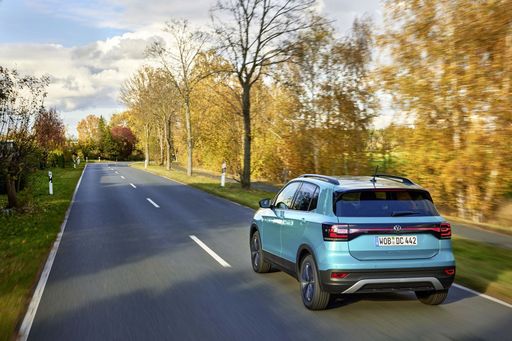
The VW T-Cross turns everyday practicality into a style statement, offering a roomy-feeling cabin, clever storage and playful design that suits town life and family duties alike. On the road it's composed and relaxed, rewarding buyers who want the raised seating and confident presence of an SUV without the weighty compromises.

details
Renault Symbioz
VW T-Cross
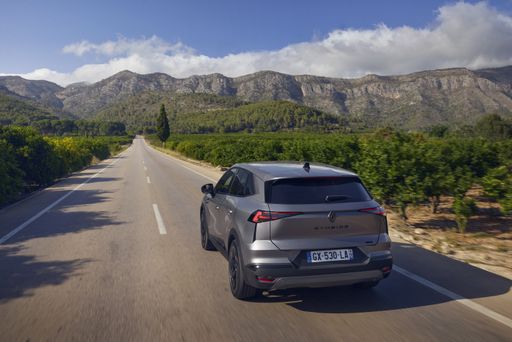
Symbioz
T-Cross

Costs and Consumption

Price
24400 - 30700 £
Price
21100 - 31500 £
Consumption L/100km
4.5 - 6 L
Consumption L/100km
5.4 - 6 L
Consumption kWh/100km
-
Consumption kWh/100km
-
Electric Range
-
Electric Range
-
Battery Capacity
-
Battery Capacity
-
co2
102 - 136 g/km
co2
124 - 136 g/km
Fuel tank capacity
48 L
Fuel tank capacity
40 L

Dimensions and Body

Body Type
SUV
Body Type
SUV
Seats
5
Seats
5
Doors
5
Doors
5
Curb weight
1359 - 1544 kg
Curb weight
1267 - 1338 kg
Trunk capacity
492 - 576 L
Trunk capacity
455 L
Length
4413 mm
Length
4127 mm
Width
1797 mm
Width
1784 mm
Height
1575 mm
Height
1573 mm
Max trunk capacity
1582 - 1682 L
Max trunk capacity
1281 L
Payload
376 - 459 kg
Payload
463 - 480 kg

Engine and Performance

Engine Type
Full Hybrid, Petrol MHEV
Engine Type
Petrol
Transmission
Automatic, Manuel
Transmission
Manuel, Automatic
Transmission Detail
Automatic Gearbox, Manual Gearbox, Dual-Clutch Automatic
Transmission Detail
Manual Gearbox, Dual-Clutch Automatic
Drive Type
Front-Wheel Drive
Drive Type
Front-Wheel Drive
Power HP
140 - 158 HP
Power HP
95 - 150 HP
Acceleration 0-100km/h
9.1 - 11 s
Acceleration 0-100km/h
8.4 - 11.3 s
Max Speed
180 km/h
Max Speed
180 - 200 km/h
Torque
250 - 265 Nm
Torque
175 - 250 Nm
Number of Cylinders
4
Number of Cylinders
3 - 4
Power kW
103 - 116 kW
Power kW
70 - 110 kW
Engine capacity
1332 - 1789 cm3
Engine capacity
999 - 1498 cm3

General

Model Year
2025
Model Year
2024 - 2025
CO2 Efficiency Class
C, D, E
CO2 Efficiency Class
D, E
Brand
Renault
Brand
VW
What drive types are available for the Renault Symbioz?

The Renault Symbioz is offered with Front-Wheel Drive.

The prices and data displayed are estimates based on German list prices and may vary by country. This information is not legally binding.