VS

VW T-Cross vs Renault Captur comparison

Compare performance (150 HP vs 158 HP), boot space and price (21,400 £ vs 21,100 £ ) at a glance. Find out which car is the better choice for you – VW T-Cross or Renault Captur?

VW T-Cross vs Renault Captur: Key differences

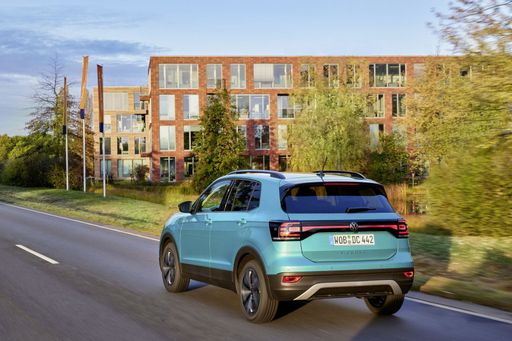
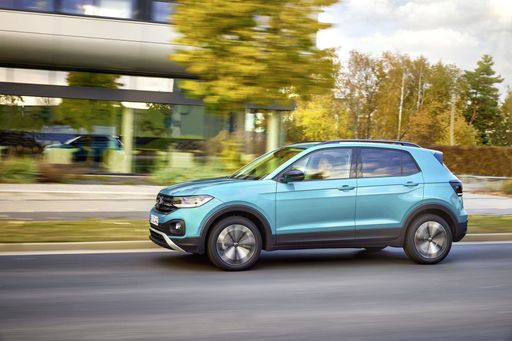
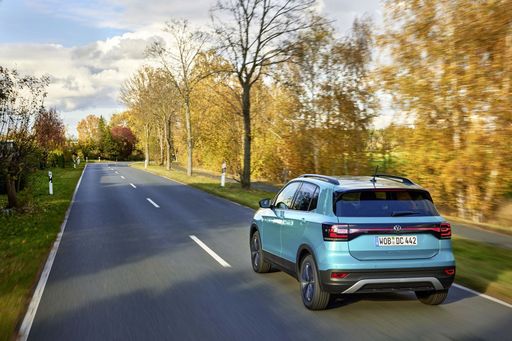
VW T-Cross

4.5 (2 Reviews)
rate
  • marginally quicker 0–100 km/h
  • barely lighter
  • marginally more trunk space

Renault Captur

4.8 (5 Reviews)
rate
  • only slightly cheaper
  • only slightly more power
  • clearly more efficient

All details on performance, efficiency, range and trunk space can be found in the technical comparison below – including user reviews for both models.

T-Cross

Renault Captur VS VW T-Cross — small-SUV face-off

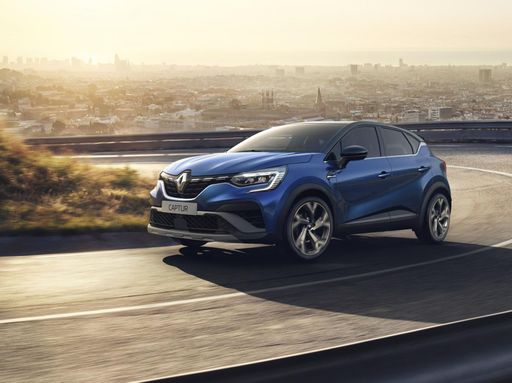
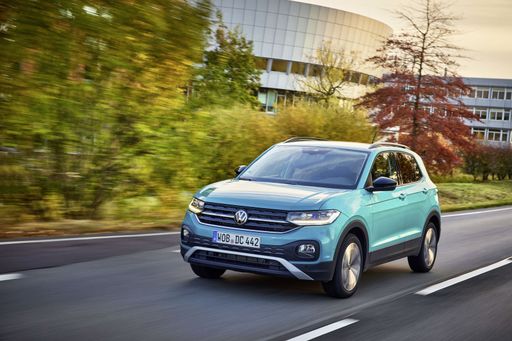
Renault Captur VS VW T-Cross — two compact crossovers that aim for the same parking space on your driveway but do it with different attitudes. This direct comparison peels back the brochures to show real-world differences in packaging, perceived quality and everyday comfort. If you’re searching online for a compact SUV comparison, you’ll want to know which of these two is more city-smart, more family-ready or simply more fun to live with. Read on for a punchy, buyer-focused take before you dig into the detailed spec sheet below.
Captur

Two personalities on the same platform

The Renault Captur arrives with a wink and a bright paint swatch — it’s tailored to feel playful, slightly more fashion-forward and content to prioritise comfort over sermon-like precision. By contrast, the VW T-Cross plays the reliable, no-nonsense card: cleaner lines, restrained trim choices and a more buttoned-up interior that suggests durability and sensible engineering. Materials and switchgear feel different in character — Captur leans softer and more expressive, T-Cross sharper and more conservative. It’s the classic French flourish versus German understatement, and each approach signals a different kind of ownership pleasure.

T-Cross

Everyday life: city hustles, school runs and weekend escapes

For daily urban life the Renault Captur feels forgiving — a supple ride, cushioned seats and cabin ambience that smooth out potholes and stress. The VW T-Cross rewards practical routines: easy-to-use controls, a slightly more upright load area feel and packaging that makes fitting a child seat or weekend gear less fussy. On longer drives the Captur’s softer setup soothes mile after mile, whereas the T-Cross stays composed and predictable when the road tightens up. Both will cope with school runs and city parking, but they sell different kinds of everyday comfort and utility.

Captur

Choosing a car says something about you

Pick the Renault Captur if you want to make a small statement without shouting — it’s for drivers who value personality, colour and a calm cabin more than clinical precision. Choose the VW T-Cross if you prefer to be efficient, unobtrusive and conservative: it projects sensible taste and a “does the job well” mojo. Neither is extravagant; the Captur leans style-first, the T-Cross tilts towards pragmatism, and both justify themselves depending on how much flair you want with your morning commute. It’s about whether you want to be noticed or simply not bothered by the little hassles of daily driving.

T-Cross

Who should seriously consider the Renault Captur?

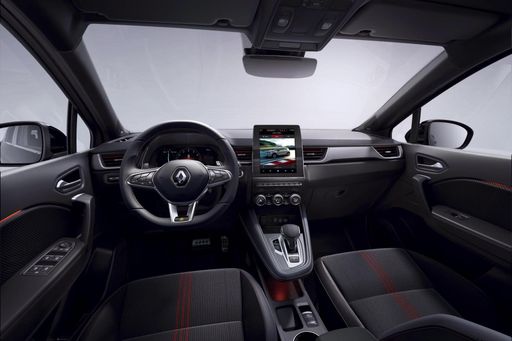
The Renault Captur will appeal most to buyers who prioritise cabin comfort, a softer ride and a touch of personal style — think commuters who enjoy their daily drive and weekend explorers who favour comfort over taut handling. It suits someone who wants an interior that feels inviting and a car that’s pleasant to live with rather than purely logical. Practicality isn’t sacrificed, but it’s packaged with personality and a quieter, more relaxed driving experience. If you care about being comfortable and making a visual statement, Captur is the one to test-drive first.

Captur

Who should lean toward the VW T-Cross (and when Captur still tempts)?

The VW T-Cross is for buyers who put value, neat packaging and straightforward usability at the top of the list — families and commuters who want tidy boot space, simple ergonomics and predictable handling. It rewards the pragmatic and those who like the idea of a conservative, low-fuss small SUV that feels reassuringly solid. That said, the Renault Captur will still tempt anyone who prefers a softer ride and a more expressive cabin, so your choice ultimately comes down to whether you prioritise practicality or personality. Browse the numbers below to match those impressions to the specifics and decide which direction suits you best.

Here’s where it gets real: The technical differences in detail

T-Cross

Costs and Efficiency:

Looking at overall running costs, both models reveal some interesting differences in everyday economy.

Renault Captur is only slightly cheaper – starting at 21,100 £ , while the VW T-Cross costs 21,400 £ . That’s a price difference of around 266 £.

Fuel consumption also shows a difference: the Renault Captur uses 4.4 L/100km and is clearly more efficient than the VW T-Cross with 5.4 L/100km. The difference is about 1 L/100km.

Captur

Engine and Performance:

Under the bonnet, it becomes clear which model is tuned for sportiness and which one takes the lead when you hit the accelerator.

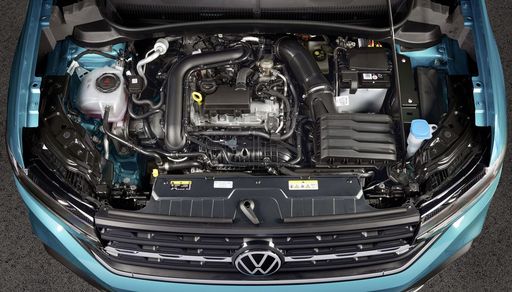
When it comes to engine power, the Renault Captur offers only slightly more power – delivering 158 HP compared to 150 HP. That’s roughly 8 HP more horsepower.

When accelerating from 0 to 100 km/h, the VW T-Cross is marginally quicker – completing the sprint in 8.4 s, while the Renault Captur takes 8.9 s. That’s about 0.5 s quicker.

There’s also a difference in torque: the Renault Captur delivers marginally more torque with 265 Nm compared to 250 Nm. That’s about 15 Nm more.

T-Cross

Space and Everyday Use:

Beyond pure performance, interior space and usability matter most in daily life. This is where you see which car is more practical and versatile.

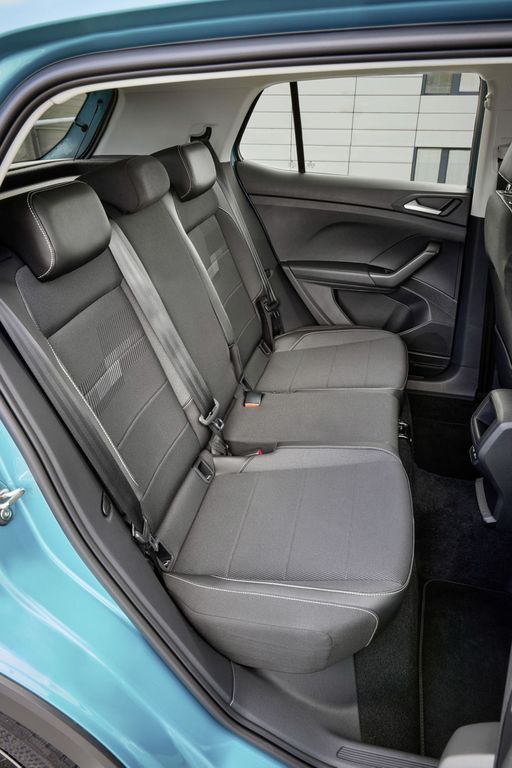
Both vehicles offer seating for 5 people.

In terms of curb weight, VW T-Cross is barely lighter – 1,267 kg compared to 1,323 kg. The difference is around 56 kg.

Looking at boot space, the VW T-Cross offers marginally more boot space – 455 L compared to 422 L. That’s a difference of about 33 L.

When it comes to payload, the VW T-Cross carries barely more – 480 kg compared to 453 kg. That’s a difference of about 27 kg.

Who wins the race in the data check?

The Renault Captur leads convincingly in the objective data comparison.
This result only shows which model scores more points on paper – not which of the two cars feels right for you.

from £21,100
Captur

Renault Captur

  • Engine Type : Full Hybrid, Petrol, Petrol MHEV
  • Transmission : Automatic, Manuel
  • Drive Type : Front-Wheel Drive
  • Power HP : 115 - 158 HP
  • Consumption L/100km : 4.4 - 6 L/100km
VW T-Cross
Renault Captur

Costs and Consumption

View detailed analysis

Engine and Performance

View detailed analysis

Dimensions and Body

View detailed analysis

VW T-Cross

The VW T-Cross turns everyday practicality into a style statement, offering a roomy-feeling cabin, clever storage and playful design that suits town life and family duties alike. On the road it's composed and relaxed, rewarding buyers who want the raised seating and confident presence of an SUV without the weighty compromises.

details

Renault Captur

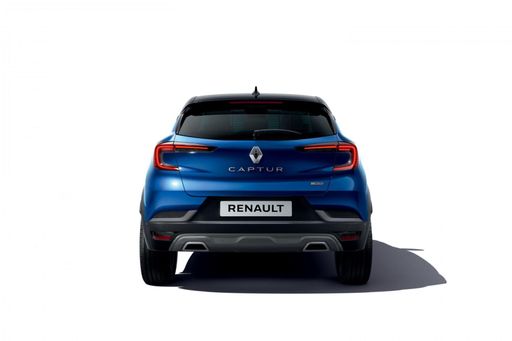
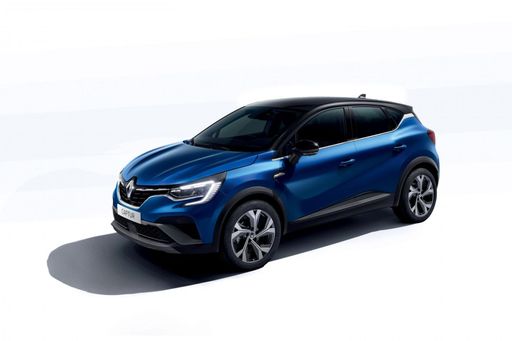
The Renault Captur is a cheeky little crossover that pairs city-friendly agility with a roomy, well-thought-out cabin and enough style to turn heads at the lights. It’s a sensible choice for buyers who want practical versatility and a dash of personality on their daily drives, without taking itself too seriously.

details
VW T-Cross
Renault Captur

Costs and Consumption

Price
21,400 - 32,000 £
Price
21,100 - 28,400 £
Consumption L/100km
5.4 - 6 L/100km
Consumption L/100km
4.4 - 6 L/100km
Consumption kWh/100km
-
Consumption kWh/100km
-
Electric Range
-
Electric Range
-
Battery Capacity
-
Battery Capacity
-
co2
124 - 136 g/km
co2
100 - 137 g/km
Fuel tank capacity
-
Fuel tank capacity
48 L

Dimensions and Body

Body Type
SUV
Body Type
SUV
Seats
5
Seats
5
Doors
-
Doors
5
Curb weight
1,267 - 1,338 kg
Curb weight
1,323 - 1,441 kg
Trunk capacity
455 L
Trunk capacity
326 - 422 L
Length
-
Length
4,239 mm
Width
1,784 mm
Width
1,797 mm
Height
-
Height
1,575 mm
Max trunk capacity
-
Max trunk capacity
1,363 L
Payload
463 - 480 kg
Payload
447 - 453 kg

Engine and Performance

Engine Type
Petrol
Engine Type
Full Hybrid, Petrol, Petrol MHEV
Transmission
Manuel, Automatic
Transmission
Automatic, Manuel
Transmission Detail
Manual Gearbox, Dual-Clutch Automatic
Transmission Detail
Automatic Gearbox, Manual Gearbox, Dual-Clutch Automatic
Drive Type
Front-Wheel Drive
Drive Type
Front-Wheel Drive
Power HP
95 - 150 HP
Power HP
115 - 158 HP
Acceleration 0-100km/h
8.4 - 11.3 s
Acceleration 0-100km/h
8.9 - 12.3 s
Max Speed
-
Max Speed
180 km/h
Torque
175 - 250 Nm
Torque
160 - 265 Nm
Number of Cylinders
3 - 4
Number of Cylinders
3 - 4
Power kW
70 - 110 kW
Power kW
84 - 116 kW
Engine capacity
999 - 1,498 cm3
Engine capacity
1,199 - 1,789 cm3

General

Model Year
2,024 - 2,025
Model Year
2,025
CO2 Efficiency Class
D, E
CO2 Efficiency Class
C, D, E
Brand
VW
Brand
Renault
DriveDuel uses data analysis and artificial intelligence to evaluate vehicle data and create content. Content is regularly reviewed and improved. The displayed prices are estimates based on German list prices, adjusted to the respective country’s VAT. Country-specific registration taxes are not included. This information is not legally binding.