VS

VW Tiguan vs Toyota Corolla Cross comparison

Compare performance (272 HP vs 180 HP), boot space and price (33,600 £ vs 31,700 £ ) at a glance. Find out which car is the better choice for you – VW Tiguan or Toyota Corolla Cross?

VW Tiguan vs Toyota Corolla Cross: Key differences

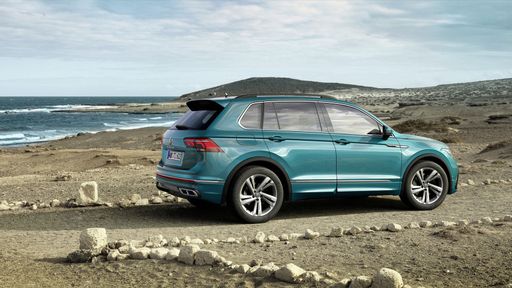
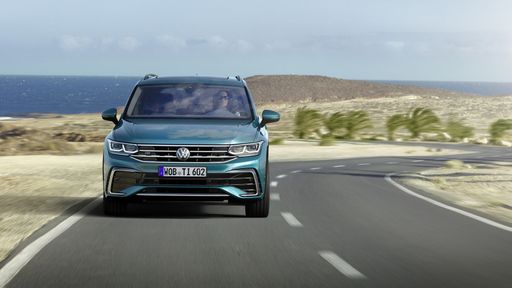
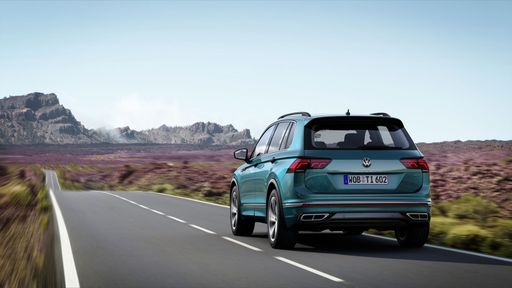
VW Tiguan

4.1 (10 Reviews)
rate
  • visibly more power
  • significantly more efficient
  • markedly quicker 0–100 km/h
  • visibly more trunk space
details

Toyota Corolla Cross

4.8 (7 Reviews)
rate
  • barely cheaper
  • somewhat lighter
details

All details on performance, efficiency, range and trunk space can be found in the technical comparison below – including user reviews for both models.

By Achim Sedelmaier

Tiguan

In the competitive world of compact SUVs, both the Toyota Corolla Cross and the Volkswagen Tiguan have made significant waves. Each model offers unique features, technical innovations, and performance metrics that cater to different preferences. In this article, we’ll explore how these two vehicles stack up against each other in various categories, helping potential buyers make an informed decision.
Corolla Cross

Design and Dimensions

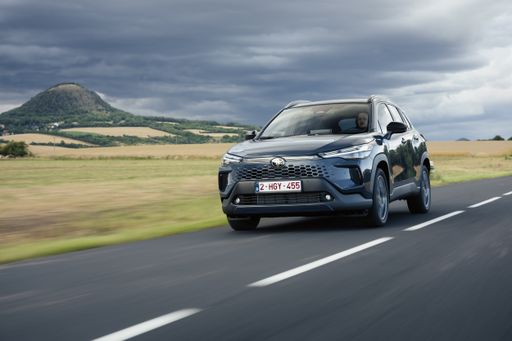
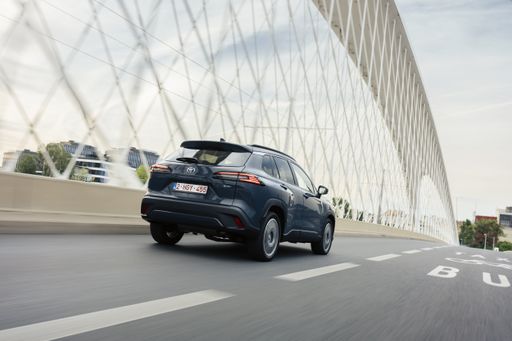
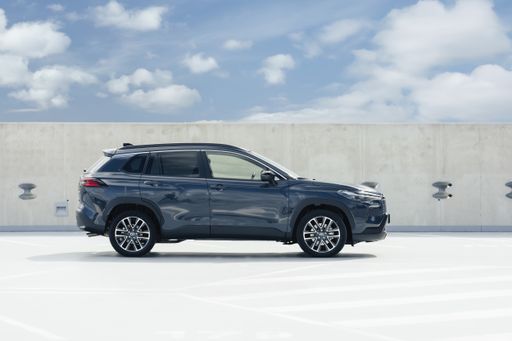
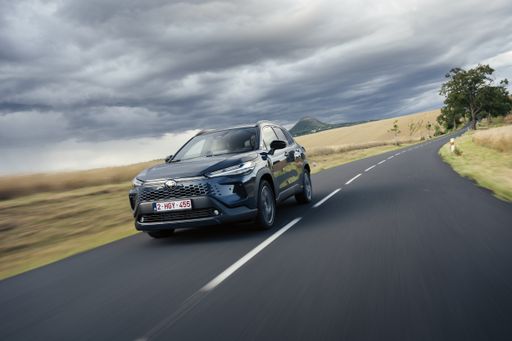
The Toyota Corolla Cross presents a modern and bold exterior design, measuring 4460 mm in length, 1825 mm in width, and 1620 mm in height. Its aerodynamic shape and sleek lines contribute to a contemporary SUV aesthetic.

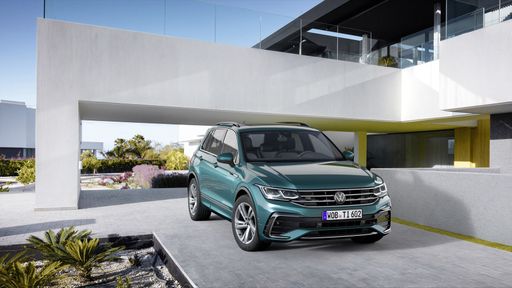
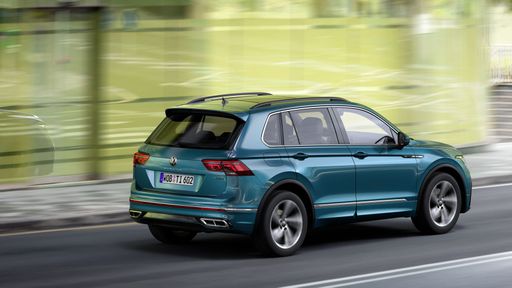
The VW Tiguan, slightly larger, comes in at a length of 4539 mm and boasts a width of 1842 mm. With its angled front grille and distinctive LED headlights, the Tiguan has a more aggressive look, appealing to those who prioritize a sportier SUV appearance.

Tiguan

Powertrains and Performance

The Corolla Cross offers two hybrid engine options: a full hybrid engine producing 140 HP and a more robust variant generating up to 197 HP. Both variants promise impressive fuel efficiency, with consumption figures as low as 5.1 L/100 km, thanks to its advanced CVT transmission. It can accelerate from 0 to 100 km/h in as little as 7.6 seconds, providing a peppy drive for city and highway journeys alike.

On the other hand, the Volkswagen Tiguan caters to a broader audience with multiple engine choices, ranging from a petrol MHEV to plugin hybrid and diesel options. Its power outputs vary widely, from 130 HP to a potent 272 HP in its highest configuration. This flexibility allows for different driving experiences, whether you prioritize fuel economy or robust performance. The Tiguan also excels in acceleration, with top trims achieving 0 to 100 km/h in just 5.9 seconds and a maximum speed reaching up to 242 km/h.

Corolla Cross

Innovative Technology

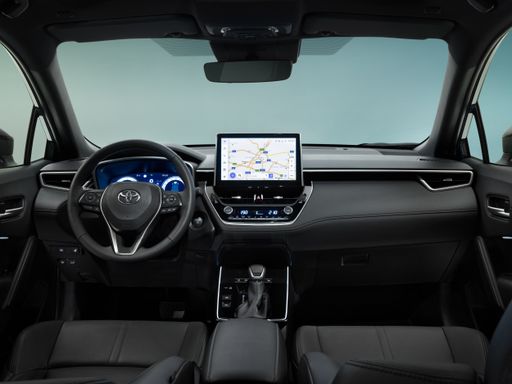
Both SUVs feature modern technology to enhance driving experiences. The Corolla Cross is equipped with Toyota’s latest infotainment system, providing seamless smartphone integration and driving-related applications. Safety innovations, including Toyota Safety Sense, ensure that drivers are protected with advanced assistance systems.

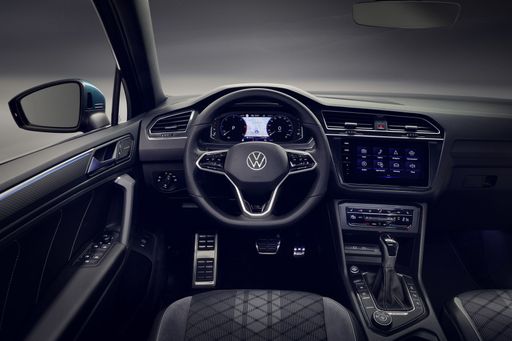
The Tiguan, recognized for its tech-forward approach, includes VW’s Digital Cockpit, delivering customizable displays. It also supports various connectivity features, allowing for a sophisticated infotainment experience. Furthermore, with its range of hybrid powertrains, it stands at the forefront of eco-friendly driving solutions.

Tiguan

Interior and Comfort

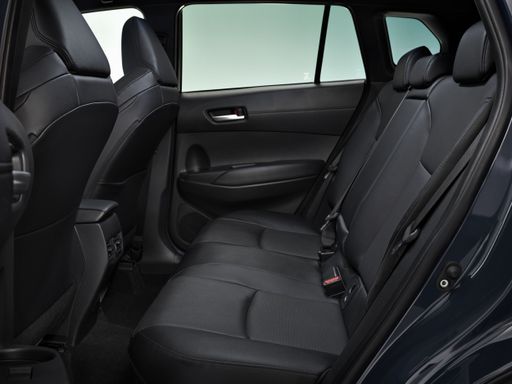
Inside the Toyota Corolla Cross, the cabin is designed for comfort, featuring supportive seating for up to five passengers and a cargo area ranging from 414 to 425 liters. The use of quality materials and intuitive layout creates a pleasant environment for both drivers and passengers.

The Volkswagen Tiguan, with its roomier interior, offers up to 652 liters of trunk capacity, making it suitable for family outings or long hauls. Its seating comfort and adjustable layouts allow for maximum utility and passenger comfort, ensuring that longer journeys remain enjoyable.

Corolla Cross

Efficiency and Environmental Impact

Fuel efficiency is a significant consideration for many SUV buyers. The Corolla Cross stands out with its hybrid options, offering CO2 emissions as low as 114 g/km, appealing to environmentally conscious consumers.

However, the Tiguan also presents competitive emissions figures, particularly in its hybrid versions, achieving CO2 outputs starting from just 8 g/km. Its ability to run on electric power for short distances adds an extra layer of efficiency that modern drivers find attractive.

Tiguan

Conclusion

In the showdown between the Toyota Corolla Cross and VW Tiguan, buyers will find two strong contenders, each catering to specific needs and preferences. The Corolla Cross shines with its hybrid technology and fuel efficiency, while the Tiguan offers a diverse range of engines, advanced tech features, and a sportier design. Ultimately, the choice may come down to individual priorities—whether that be environmental responsibility or performance capabilities. Whichever you choose, both models are sure to impress in today’s SUV market.

Here’s where it gets real: The technical differences in detail

Tiguan

Costs and Efficiency:

When it comes to price and running costs, the biggest differences usually appear. This is often where you see which car fits your budget better in the long run.

Toyota Corolla Cross is barely cheaper – starting at 31,700 £ , while the VW Tiguan costs 33,600 £ . That’s a price difference of around 1,873 £.

Fuel consumption also shows a difference: the VW Tiguan uses 1.4 L/100km and is significantly more efficient than the Toyota Corolla Cross with 4.9 L/100km. The difference is about 3.5 L/100km.

Corolla Cross

Engine and Performance:

Power, torque and acceleration are the classic benchmarks for car enthusiasts – and here, some clear differences start to show.

When it comes to engine power, the VW Tiguan offers visibly more power – delivering 272 HP compared to 180 HP. That’s roughly 92 HP more horsepower.

When accelerating from 0 to 100 km/h, the VW Tiguan is markedly quicker – completing the sprint in 5.9 s, while the Toyota Corolla Cross takes 7.6 s. That’s about 1.7 s quicker.

Tiguan

Space and Everyday Use:

Beyond pure performance, interior space and usability matter most in daily life. This is where you see which car is more practical and versatile.

Both vehicles offer seating for 5 people.

In terms of curb weight, Toyota Corolla Cross is somewhat lighter – 1,380 kg compared to 1,599 kg. The difference is around 219 kg.

Looking at boot space, the VW Tiguan offers visibly more boot space – 652 L compared to 473 L. That’s a difference of about 179 L.

When it comes to payload, the Toyota Corolla Cross carries only slightly more – 560 kg compared to 556 kg. That’s a difference of about 4 kg.

Who wins the race in the data check?

The VW Tiguan is clearly superior overall in the objective data comparison.
This result only shows which model scores more points on paper – not which of the two cars feels right for you.

from £33,600
Tiguan

VW Tiguan

  • Engine Type Petrol MHEV, Petrol, Diesel, Plugin Hybrid
  • Transmission Automatic
  • Drive Type Front-Wheel Drive, All-Wheel Drive
  • Power HP 130 - 272 HP
  • Consumption L/100km 1.4 - 8.4 L/100km
  • Electric Range 118 - 126 km
VW Tiguan
Toyota Corolla Cross

Costs and Consumption

View detailed analysis

Engine and Performance

View detailed analysis

Dimensions and Body

View detailed analysis

VW Tiguan

The VW Tiguan is a well-rounded compact SUV that delivers a comfortable cabin, composed ride and practical space suited to everyday family life. Its straightforward tech and clever storage make it easy to live with, leaning toward sensible refinement rather than flash.

details

Toyota Corolla Cross

The Toyota Corolla Cross is a compact crossover that blends the practicality and reliability Toyota is known for with a comfortable, easygoing driving experience. It offers a roomy interior and sensible features that make it a strong choice for daily commuting and family outings.

details
VW Tiguan
Toyota Corolla Cross

Costs and Consumption

Price
33,600 - 54,600 £
Price
31,700 - 41,900 £
Consumption L/100km
1.4 - 8.4 L/100km
Consumption L/100km
4.9 - 5.3 L/100km
Consumption kWh/100km
-
Consumption kWh/100km
-
Electric Range
118 - 126 km
Electric Range
-
Battery Capacity
-
Battery Capacity
-
co2
32 - 190 g/km
co2
112 - 120 g/km
Fuel tank capacity
-
Fuel tank capacity
-

Dimensions and Body

Body Type
SUV
Body Type
SUV
Seats
5
Seats
5
Doors
-
Doors
-
Curb weight
1,599 - 1,879 kg
Curb weight
1,380 - 1,500 kg
Trunk capacity
490 - 652 L
Trunk capacity
380 - 473 L
Length
-
Length
-
Width
1,842 - 1,859 mm
Width
1,825 mm
Height
-
Height
-
Max trunk capacity
-
Max trunk capacity
-
Payload
499 - 556 kg
Payload
515 - 560 kg

Engine and Performance

Engine Type
Petrol MHEV, Petrol, Diesel, Plugin Hybrid
Engine Type
Full Hybrid
Transmission
Automatic
Transmission
Automatic
Transmission Detail
Dual-Clutch Automatic
Transmission Detail
CVT
Drive Type
Front-Wheel Drive, All-Wheel Drive
Drive Type
Front-Wheel Drive, All-Wheel Drive
Power HP
130 - 272 HP
Power HP
140 - 180 HP
Acceleration 0-100km/h
5.9 - 10.2 s
Acceleration 0-100km/h
7.6 - 10 s
Max Speed
-
Max Speed
-
Torque
220 - 400 Nm
Torque
-
Number of Cylinders
4
Number of Cylinders
4
Power kW
96 - 200 kW
Power kW
103 - 132 kW
Engine capacity
1,498 - 1,984 cm3
Engine capacity
1,798 - 1,987 cm3

General

Model Year
2,024 - 2,026
Model Year
2025
CO2 Efficiency Class
D, E, F, B, G
CO2 Efficiency Class
C, D
Brand
VW
Brand
Toyota
DriveDuel uses data analysis and artificial intelligence to evaluate vehicle data and create content. Content is regularly reviewed and improved. The displayed prices are estimates based on German list prices, adjusted to the respective country’s VAT. Country-specific registration taxes are not included. This information is not legally binding.