VS

Toyota Corolla Cross vs Toyota C-HR+ comparison

Compare performance (180 HP vs 343 HP), boot space and price (31,700 £ vs 36,000 £ ) at a glance. Find out which car is the better choice for you – Toyota Corolla Cross or Toyota C-HR+?

Toyota Corolla Cross vs Toyota C-HR+: Key differences

Toyota Corolla Cross

4.8 (6 Reviews)
rate
  • a bit cheaper
  • markedly lighter
  • only slightly more trunk space
details

Toyota C-HR+

  • clearly more power
  • substantially quicker 0–100 km/h
details

All details on performance, efficiency, range and trunk space can be found in the technical comparison below – including user reviews for both models.

By Achim Sedelmaier

Corolla Cross

Toyota Corolla Cross VS Toyota C-HR+: a practical, buyer-focused comparison

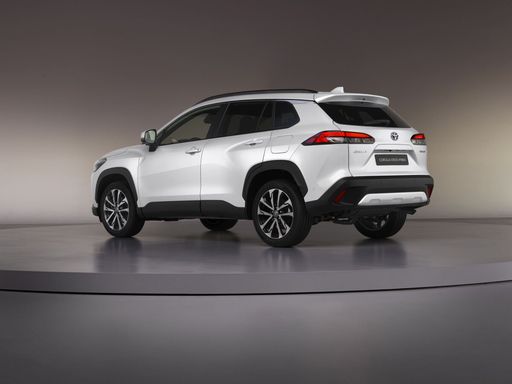
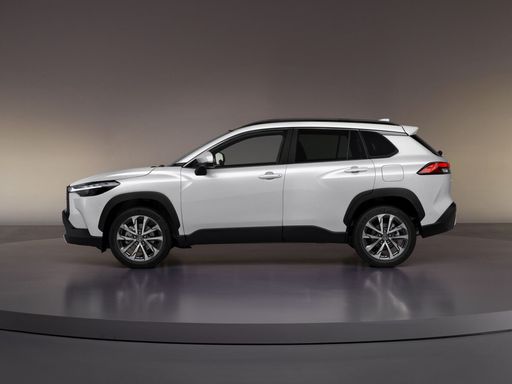
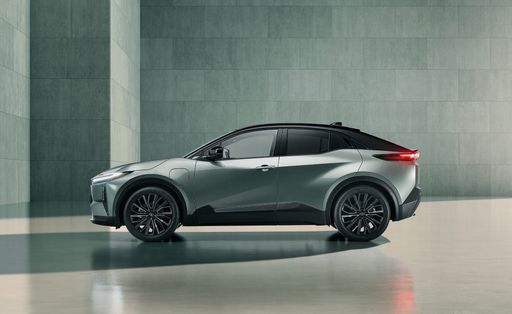
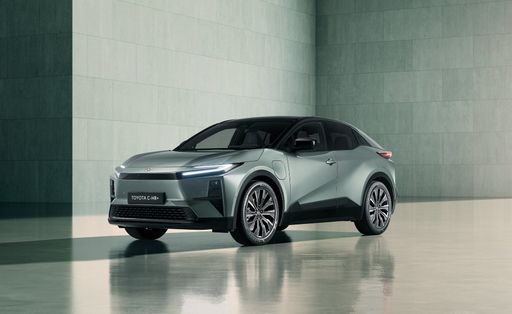
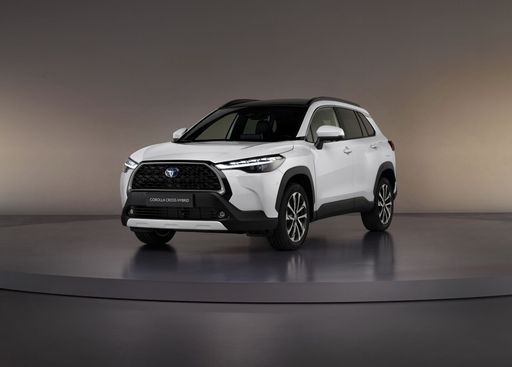
Toyota Corolla Cross and Toyota C-HR+ sit close together in Toyota’s compact SUV lineup but aim at different priorities: the Corolla Cross leans on calm efficiency and everyday practicality, while the C-HR+ trades some utility for sharper styling and plug‑in efficiency. Readers looking for a no‑nonsense car that quietly eats miles will be drawn to the Corolla Cross’s relaxed manner and reassuring safety package. Buyers attracted to bold looks, a higher‑quality cabin feel and the option to drive many short trips on electric power will find the C‑HR+ compelling. This comparison peels back the marketing to show how those priorities translate into real life — space, noise, loading, and how each car behaves on city streets versus motorways.
C-HR+

Character and driving feel

The Toyota Corolla Cross drives like the sensible sibling: digestible steering, predictable body control and a cultivated calm that suits commuting and family duties. The Toyota C-HR+ feels sportier off the line and more eager to respond, especially in plug‑in guise, so it will satisfy drivers who want a little sparkle around town. Both cars can become vocally strained when you ask for sudden acceleration, but that sensation is more noticeable in everyday overtakes in the Corolla Cross and under full throttle in the C‑HR+; neither is a performance car. In short, pick the Corolla Cross for relaxed, low‑stress progress and the C‑HR+ if you want sharper responses and a more animated city drive.

Corolla Cross

Comfort and cabin feel

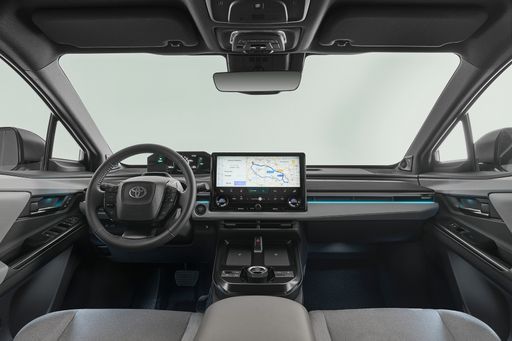
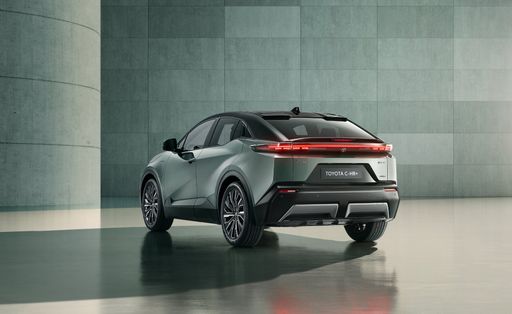
Inside, the Toyota Corolla Cross prioritises practicality: comfortable front seats, good visibility and materials that feel durable rather than luxurious. The Toyota C-HR+ upgrades the ambience with nicer surfaces and a more modern, slightly premium presentation up front, which makes it feel newer the moment you sit in it. However, the C‑HR+’s coupé‑like roofline and slimmer rear windows turn the rear cabin into a cozier, slightly claustrophobic space compared with the airier back seat of the Corolla Cross. If rear passenger comfort and easy ingress are priorities, the Corolla Cross will feel more accommodating; if you prize perceived quality and a stylish cockpit, the C‑HR+ wins on feel.

C-HR+

Practicality and day‑to‑day usability

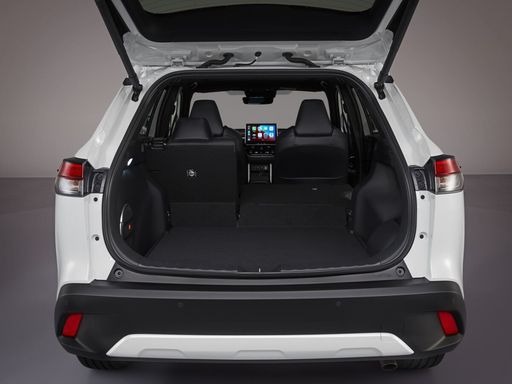
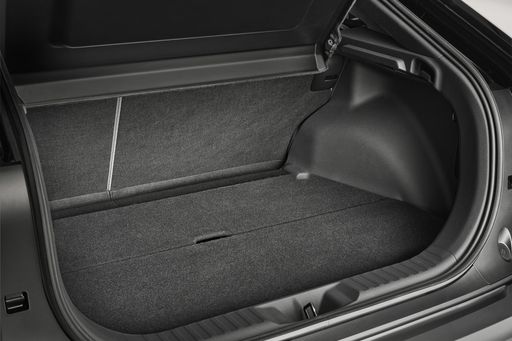
When it comes to hauling week‑to‑week life, the Toyota Corolla Cross shows its strengths: a wide opening, sensible boot shape and a loading experience aimed at usability over flash. The Toyota C-HR+ asks you to accept compromises — a notably smaller boot in plug‑in form, a higher loading sill and tighter rear door apertures — which makes stowing a stroller or bulky shopping more fiddly. Both cars secure child seats safely, but the Corolla Cross’s broader openings and more conventional rear bench make family routines easier. For buyers who regularly carry luggage or fit and remove child seats, the Corolla Cross simply reduces friction in daily life; the C‑HR+ suits buyers willing to trade convenience for style and efficiency gains.

Corolla Cross

City friendliness versus long‑distance behavior

In town, the Toyota C-HR+ shines: compact exterior dimensions, a small turning circle and frequent electric starts in PHEV/HEV modes make it relaxed in stop‑start traffic and easy to park. The Toyota Corolla Cross is also urban‑capable but plays the long game better — it settles into motorway speeds with less fuss and better cruising manners over distance. Both cars reward a steady right foot; however, the C‑HR+ delivers its biggest everyday advantage when you can charge regularly and use electric range, while the Corolla Cross repays you with consistently low running costs without needing plugs. If your routine is short trips from a home charger, the C‑HR+ is compelling; if you cover mixed or long distances without regular charging, the Corolla Cross is more convenient and composed.

C-HR+

Buyer fit and the trade‑offs to weigh

Choose the Toyota Corolla Cross if you prioritise usable space, low long‑term running costs, family‑friendly practicality and a calm, predictable drive — it’s the sensible pick for commuters and small families who want to minimise everyday friction. Opt for the Toyota C-HR+ if you value distinctive styling, a stronger sense of cabin quality and the ability to do many daily miles electrically, and you can live with a tighter rear seat and smaller boot. The decision really comes down to whether you want utility first or image plus plug‑in efficiency; each car makes different compromises that will matter depending on how you drive and what you carry. Below this editorial guide you’ll find the technical comparison that breaks down the numbers and specifications so you can match those trade‑offs to cold facts.

Here’s where it gets real: The technical differences in detail

Corolla Cross

Costs and Efficiency:

Price and efficiency are often the first things buyers look at. Here it becomes clear which model has the long-term edge – whether at the pump, the plug, or in purchase price.

Toyota Corolla Cross is a bit cheaper – starting at 31,700 £ , while the Toyota C-HR+ costs 36,000 £ . That’s a price difference of around 4,286 £.

C-HR+

Engine and Performance:

Power, torque and acceleration are the classic benchmarks for car enthusiasts – and here, some clear differences start to show.

When it comes to engine power, the Toyota C-HR+ offers clearly more power – delivering 343 HP compared to 180 HP. That’s roughly 163 HP more horsepower.

When accelerating from 0 to 100 km/h, the Toyota C-HR+ is substantially quicker – completing the sprint in 5.2 s, while the Toyota Corolla Cross takes 7.6 s. That’s about 2.4 s quicker.

Corolla Cross

Space and Everyday Use:

Beyond pure performance, interior space and usability matter most in daily life. This is where you see which car is more practical and versatile.

Both vehicles offer seating for 5 people.

In terms of curb weight, Toyota Corolla Cross is markedly lighter – 1,380 kg compared to 1,810 kg. The difference is around 430 kg.

Looking at boot space, the Toyota Corolla Cross offers only slightly more boot space – 425 L compared to 416 L. That’s a difference of about 9 L.

When it comes to payload, the Toyota C-HR+ carries slightly more – 655 kg compared to 560 kg. That’s a difference of about 95 kg.

Who wins the race in the data check?

The Toyota C-HR+ is decisively ahead in the objective data comparison.
This result only shows which model scores more points on paper – not which of the two cars feels right for you.

from £36,000
C-HR+

Toyota C-HR+

  • Engine Type : Electric
  • Transmission : Automatic
  • Drive Type : Front-Wheel Drive, All-Wheel Drive
  • Power HP : 167 - 343 HP
  • Consumption kWh/100km : 13.4 - 15.5 kWh/100km
  • Electric Range : 458 - 607 km
Toyota Corolla Cross
Toyota C-HR+

Costs and Consumption

View detailed analysis

Engine and Performance

View detailed analysis

Dimensions and Body

View detailed analysis

Toyota Corolla Cross

The Toyota Corolla Cross is a compact crossover that blends the practicality and reliability Toyota is known for with a comfortable, easygoing driving experience. It offers a roomy interior and sensible features that make it a strong choice for daily commuting and family outings.

details

Toyota C-HR+

The Toyota C‑HR is a distinctive crossover that pairs bold, coupe‑like styling with a comfortable, composed ride suited to daily city and suburban driving. It appeals to buyers who value standout design, practical cabin packaging and a refined, easy‑to‑use experience rather than outright performance or rugged off‑road ability.

details
Toyota Corolla Cross
Toyota C-HR+

Costs and Consumption

Price
31,700 - 41,900 £
Price
36,000 - 46,300 £
Consumption L/100km
4.9 - 5.3 L/100km
Consumption L/100km
-
Consumption kWh/100km
-
Consumption kWh/100km
13.4 - 15.5 kWh/100km
Electric Range
-
Electric Range
458 - 607 km
Battery Capacity
-
Battery Capacity
-
co2
112 - 120 g/km
co2
0 g/km
Fuel tank capacity
-
Fuel tank capacity
-

Dimensions and Body

Body Type
SUV
Body Type
SUV
Seats
5
Seats
5
Doors
-
Doors
-
Curb weight
1,380 - 1,500 kg
Curb weight
1,810 - 2,010 kg
Trunk capacity
414 - 425 L
Trunk capacity
416 L
Length
-
Length
-
Width
1,825 mm
Width
1,870 mm
Height
-
Height
-
Max trunk capacity
-
Max trunk capacity
-
Payload
515 - 560 kg
Payload
550 - 655 kg

Engine and Performance

Engine Type
Full Hybrid
Engine Type
Electric
Transmission
Automatic
Transmission
Automatic
Transmission Detail
CVT
Transmission Detail
Reduction Gearbox
Drive Type
Front-Wheel Drive, All-Wheel Drive
Drive Type
Front-Wheel Drive, All-Wheel Drive
Power HP
140 - 180 HP
Power HP
167 - 343 HP
Acceleration 0-100km/h
7.6 - 10 s
Acceleration 0-100km/h
5.2 - 8.4 s
Max Speed
-
Max Speed
-
Torque
-
Torque
268 - 338 Nm
Number of Cylinders
4
Number of Cylinders
-
Power kW
103 - 132 kW
Power kW
123 - 252 kW
Engine capacity
1,798 - 1,987 cm3
Engine capacity
-

General

Model Year
2025
Model Year
2026
CO2 Efficiency Class
C, D
CO2 Efficiency Class
A
Brand
Toyota
Brand
Toyota
DriveDuel uses data analysis and artificial intelligence to evaluate vehicle data and create content. Content is regularly reviewed and improved. The displayed prices are estimates based on German list prices, adjusted to the respective country’s VAT. Country-specific registration taxes are not included. This information is not legally binding.