VS

VW Tiguan vs VW T-Cross comparison

Compare performance (272 HP vs 150 HP), boot space and price (33,600 £ vs 21,400 £ ) at a glance. Find out which car is the better choice for you – VW Tiguan or VW T-Cross?

VW Tiguan vs VW T-Cross: Key differences

VW Tiguan

4.1 (9 Reviews)
rate
  • substantially more power
  • considerably more efficient
  • clearly quicker 0–100 km/h
  • markedly more trunk space
details

VW T-Cross

4 (5 Reviews)
rate
  • considerably cheaper
  • markedly lighter
details

All details on performance, efficiency, range and trunk space can be found in the technical comparison below – including user reviews for both models.

By Achim Sedelmaier

Tiguan

The Battle of the VW SUVs: T-Cross vs. Tiguan

Volkswagen is a name synonymous with reliability, innovative engineering, and unique styling. This holds true for its SUV lineup, where the compact VW T-Cross and the versatile VW Tiguan have carved out significant places in the market. But what happens when these two dynamic models go head-to-head? We’re diving into the specifics to help you decide which SUV best suits your needs.
T-Cross

Design & Dimensions: Subtle Elegance vs. Commanding Presence

The design philosophy for VW’s SUV range is to craft vehicles that exude confidence and capability, each with distinct characters.

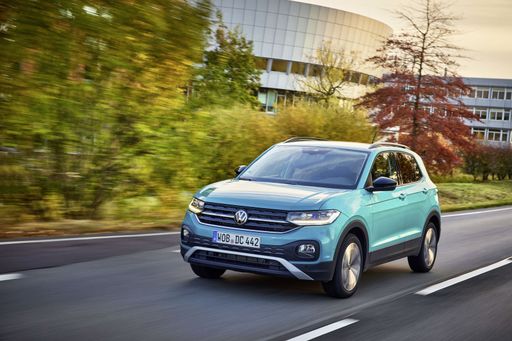
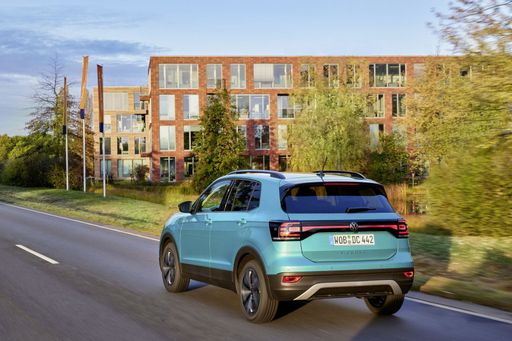
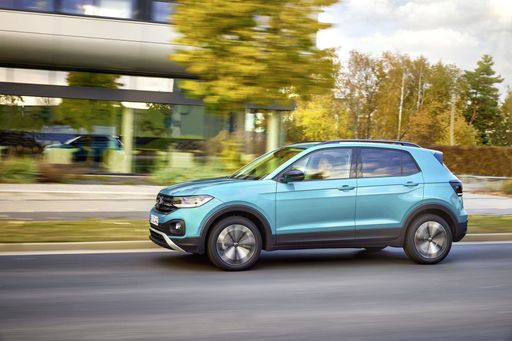
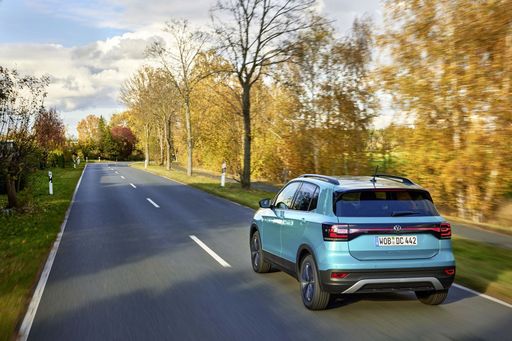
The T-Cross, with a length of 4127 mm, width of 1784 mm, and height of 1573 mm, is compact yet charmingly bold. Despite its size, it offers a substantial trunk capacity of 455 liters, making it a fantastic urban automotive companion.

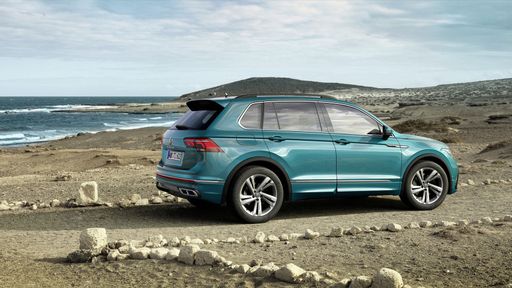
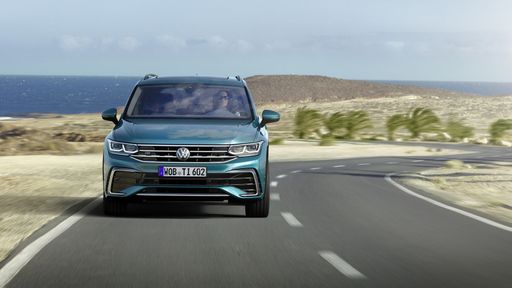
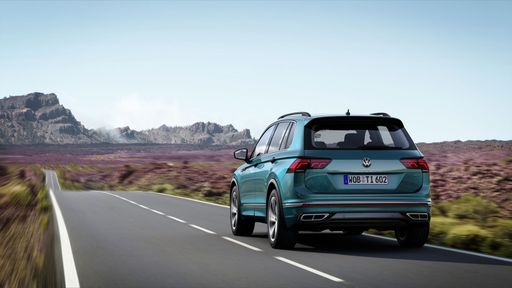
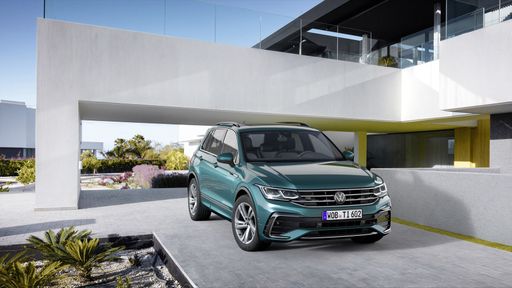
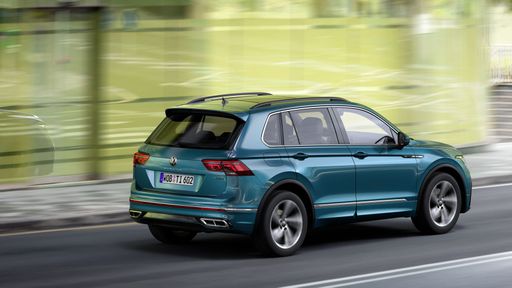
On the other hand, the Tiguan towers at 4539 mm in length and is wider with a spectrum from 1842 mm to 1859 mm. It boasts a more imposing profile coupled with practicality, demonstrated by its generous trunk space ranging from 490 to 652 liters, catering to family needs and adventure enthusiasts alike.

Tiguan

Performance: Efficiency and Power in Different Measures

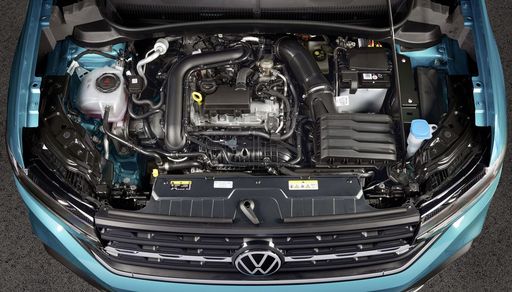
The T-Cross is praised for its engine variety, flaunting petrol engines up to 150 HP. Its efficient fuel consumption starts at 5.6 L/100 km and it achieves a satisfying 0-100 km/h in just 8.4 seconds at its peak. This model is ideal for those prioritizing fuel economy and nimble city navigation, reinforced by a curb weight starting at a nimble 1254 kg.

In contrast, the Tiguan, available with petrol, MHEV, plug-in hybrid, and diesel options, offers something for every driver. With power outputs ranging up to 272 HP, and innovative plug-in hybrid tech boasting an electric range of up to 113 km, it blends strength with modern eco-conscious designs. Its all-wheel-drive capabilities further extend its appeal to off-road explorers.

T-Cross

Interior & Technology: Comfort Meets Innovation

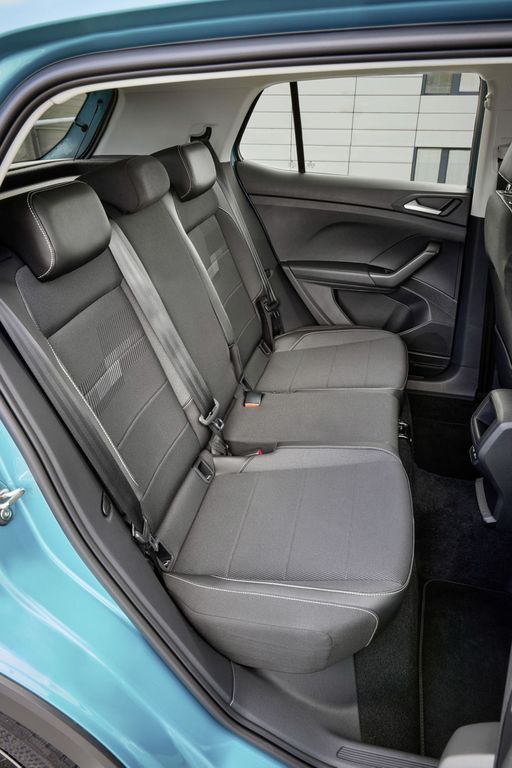
When inside the T-Cross, expect a well-organized space for five with a focus on accessible tech and sturdy build quality, making every journey comfortable and connected.

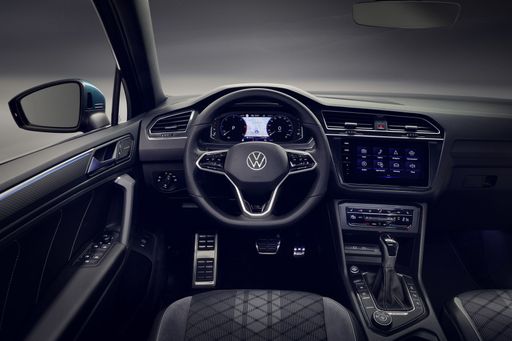
The Tiguan, meanwhile, indulges passengers with luxurious finishes and cutting-edge technology. Enhanced infotainment systems complement advanced safety features, making it an ideal choice for tech-savvy individuals or families who enjoy leisure trips without worrying about connectivity or safety.

Tiguan

Final Verdict: The Right SUV for You

The VW T-Cross, with its admirably compact size, fuel efficiency, and agile performance, is a compact SUV champion that targets urban dwellers and those desiring a practical everyday driver.

The Tiguan, on the other hand, flatters with more variety and power, appealing to those who demand more from their SUVs—whether it's rigorous daily commutes or exploring the road less traveled, offering top-tier comfort and forward-thinking technology.

In conclusion, your ideal match lies in your driving habits and personal preferences. Both models uphold VW’s promise of delivering refined quality and engineering excellence, ultimately making your choice a delightful dilemma.

Here’s where it gets real: The technical differences in detail

Tiguan

Costs and Efficiency:

Price and efficiency are often the first things buyers look at. Here it becomes clear which model has the long-term edge – whether at the pump, the plug, or in purchase price.

VW T-Cross is considerably cheaper – starting at 21,400 £ , while the VW Tiguan costs 33,600 £ . That’s a price difference of around 12,184 £.

Fuel consumption also shows a difference: the VW Tiguan uses 1.4 L/100km and is considerably more efficient than the VW T-Cross with 5.4 L/100km. The difference is about 4 L/100km.

T-Cross

Engine and Performance:

Power, torque and acceleration say a lot about how a car feels on the road. This is where you see which model delivers more driving dynamics.

When it comes to engine power, the VW Tiguan offers substantially more power – delivering 272 HP compared to 150 HP. That’s roughly 122 HP more horsepower.

When accelerating from 0 to 100 km/h, the VW Tiguan is clearly quicker – completing the sprint in 5.9 s, while the VW T-Cross takes 8.4 s. That’s about 2.5 s quicker.

There’s also a difference in torque: the VW Tiguan delivers noticeably more torque with 400 Nm compared to 250 Nm. That’s about 150 Nm more.

Tiguan

Space and Everyday Use:

Whether family car or daily driver – which one offers more room, flexibility and comfort?

Both vehicles offer seating for 5 people.

In terms of curb weight, VW T-Cross is markedly lighter – 1,267 kg compared to 1,599 kg. The difference is around 332 kg.

Looking at boot space, the VW Tiguan offers markedly more boot space – 652 L compared to 455 L. That’s a difference of about 197 L.

When it comes to payload, the VW Tiguan carries moderately more – 556 kg compared to 480 kg. That’s a difference of about 76 kg.

Who wins the race in the data check?

The VW Tiguan holds a decisive overall lead in the objective data comparison.
This result only shows which model scores more points on paper – not which of the two cars feels right for you.

from £33,600
Tiguan

VW Tiguan

  • Engine Type : Petrol MHEV, Petrol, Diesel, Plugin Hybrid
  • Transmission : Automatic
  • Drive Type : Front-Wheel Drive, All-Wheel Drive
  • Power HP : 130 - 272 HP
  • Consumption L/100km : 1.4 - 8.4 L/100km
  • Electric Range : 118 - 126 km
VW Tiguan
VW T-Cross

Costs and Consumption

View detailed analysis

Engine and Performance

View detailed analysis

Dimensions and Body

View detailed analysis

VW Tiguan

The VW Tiguan is a well-rounded compact SUV that delivers a comfortable cabin, composed ride and practical space suited to everyday family life. Its straightforward tech and clever storage make it easy to live with, leaning toward sensible refinement rather than flash.

details

VW T-Cross

The VW T-Cross is a small, city-friendly crossover that blends practical packaging with easygoing driving manners and a high seating position for good visibility. It’s a sensible, comfortable choice for buyers who want the convenience and style of an SUV without big compromises.

details
VW Tiguan
VW T-Cross

Costs and Consumption

Price
33,600 - 54,600 £
Price
21,400 - 32,000 £
Consumption L/100km
1.4 - 8.4 L/100km
Consumption L/100km
5.4 - 6 L/100km
Consumption kWh/100km
-
Consumption kWh/100km
-
Electric Range
118 - 126 km
Electric Range
-
Battery Capacity
-
Battery Capacity
-
co2
32 - 190 g/km
co2
124 - 136 g/km
Fuel tank capacity
-
Fuel tank capacity
-

Dimensions and Body

Body Type
SUV
Body Type
SUV
Seats
5
Seats
5
Doors
-
Doors
-
Curb weight
1,599 - 1,879 kg
Curb weight
1,267 - 1,338 kg
Trunk capacity
490 - 652 L
Trunk capacity
455 L
Length
-
Length
-
Width
1,842 - 1,859 mm
Width
1,784 mm
Height
-
Height
-
Max trunk capacity
-
Max trunk capacity
-
Payload
499 - 556 kg
Payload
463 - 480 kg

Engine and Performance

Engine Type
Petrol MHEV, Petrol, Diesel, Plugin Hybrid
Engine Type
Petrol
Transmission
Automatic
Transmission
Manuel, Automatic
Transmission Detail
Dual-Clutch Automatic
Transmission Detail
Manual Gearbox, Dual-Clutch Automatic
Drive Type
Front-Wheel Drive, All-Wheel Drive
Drive Type
Front-Wheel Drive
Power HP
130 - 272 HP
Power HP
95 - 150 HP
Acceleration 0-100km/h
5.9 - 10.2 s
Acceleration 0-100km/h
8.4 - 11.3 s
Max Speed
-
Max Speed
-
Torque
220 - 400 Nm
Torque
175 - 250 Nm
Number of Cylinders
4
Number of Cylinders
3 - 4
Power kW
96 - 200 kW
Power kW
70 - 110 kW
Engine capacity
1,498 - 1,984 cm3
Engine capacity
999 - 1,498 cm3

General

Model Year
2,024 - 2,026
Model Year
2,024 - 2,025
CO2 Efficiency Class
D, E, F, B, G
CO2 Efficiency Class
D, E
Brand
VW
Brand
VW
DriveDuel uses data analysis and artificial intelligence to evaluate vehicle data and create content. Content is regularly reviewed and improved. The displayed prices are estimates based on German list prices, adjusted to the respective country’s VAT. Country-specific registration taxes are not included. This information is not legally binding.