VS

VW Touran vs VW Tiguan comparison

Compare performance (150 HP vs 272 HP), boot space and price (36,000 £ vs 33,600 £ ) at a glance. Find out which car is the better choice for you – VW Touran or VW Tiguan?

VW Touran vs VW Tiguan: Key differences

VW Touran

4.6 (3 Reviews)
rate
  • only slightly lighter
  • markedly more trunk space
details

VW Tiguan

4.1 (9 Reviews)
rate
  • barely cheaper
  • considerably more power
  • considerably more efficient
  • substantially quicker 0–100 km/h
details

All details on performance, efficiency, range and trunk space can be found in the technical comparison below – including user reviews for both models.

By Achim Sedelmaier

Touran

Street Presence and First Impressions

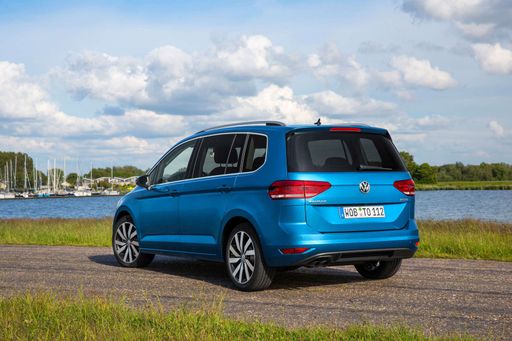
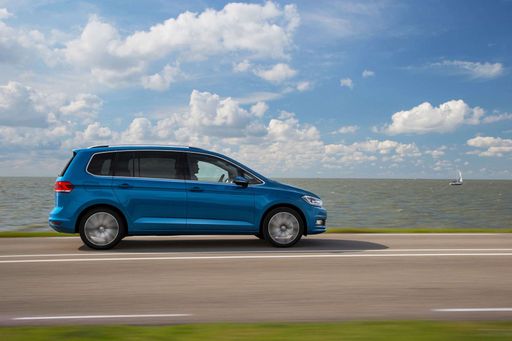
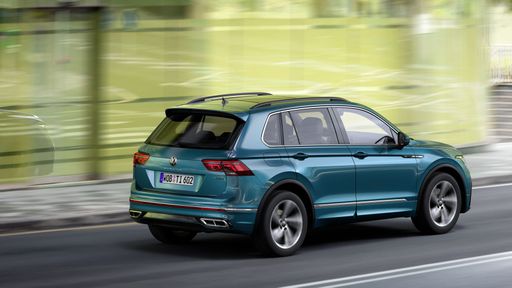
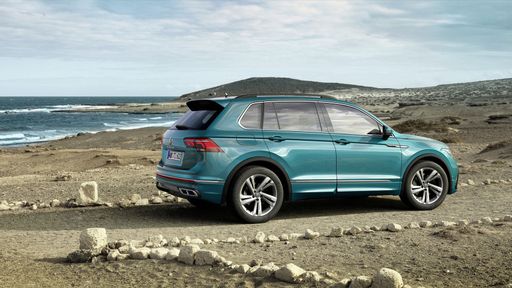
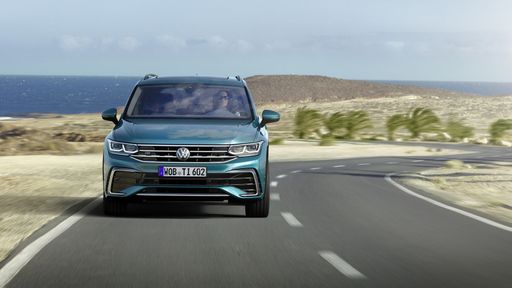
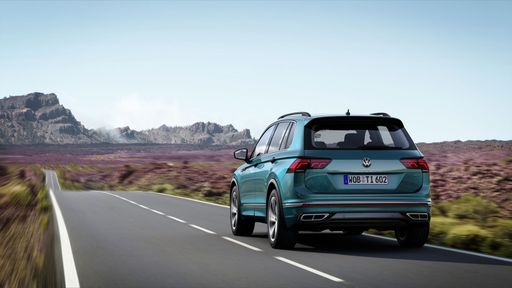
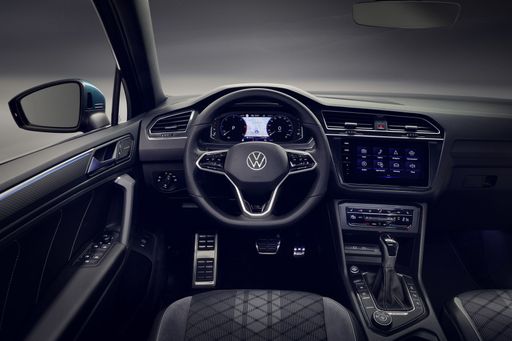
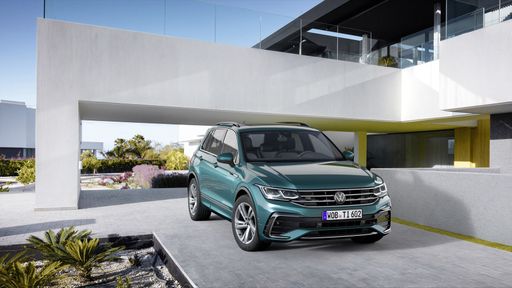
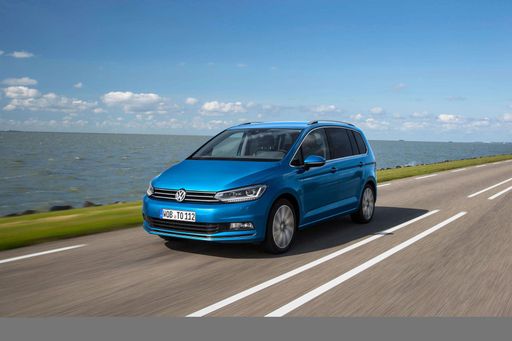
At first glance the two Volkswagens speak different languages: one leans into rugged SUV swagger while the other wears a purposeful, family-focused look. The styling choices tell you what each wants to be in the driveway — one projects a more adventurous attitude, the other a quietly sensible persona. Both feel unmistakably Volkswagen, but they target different kinds of pride of ownership.
Tiguan

Behind the Wheel

Driving either car is a lesson in composure, yet they deliver contrasting moods: one is eager and planted, rewarding brisk inputs with a sporty confidence, while the other prioritizes calm, predictable manners that make daily traffic less stressful. Steering feel, suspension tuning and transmission behaviour are all tuned to those characters, so your commute will feel either a touch more alive or notably more relaxed. For keen drivers who want a bit of engagement, the sharper choice will appeal; for routine-mile collectors, the gentler companion shines.

Touran

Family Life and Sunday Runs

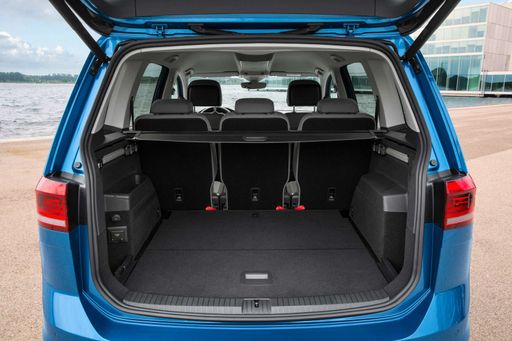
When it comes to hauling people and the weekend detritus of family life, the two go about their business differently — one offers a very flexible cabin that swallows awkward loads with ease, the other balances practicality with a compact footprint that still suits parenting duties. Both make daily routines simpler with intuitive seat arrangements and sensible storage pockets, but your priorities — occasional big hauls versus everyday versatility — will sway the decision. Think about how often you need to reconfigure the interior and what counts as “enough” space for day-to-day life.

Tiguan

Comfort, Controls and Usability

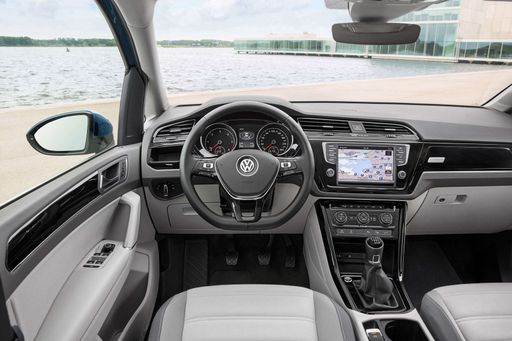
Inside, ergonomics are a strong suit for both: controls fall to hand without drama and the seating supports longer stints behind the wheel, though the seating posture differs enough to be felt over a couple of hours. Materials and trim choices give each cabin its own character — one leans toward a cozier, soft-touch ambience, the other keeps things airy and functional. If touchscreen menus and physical switches are part of your daily ritual, check how each handles your preferred blend of tech and tactile feedback.

Touran

Ownership Mood and Running Costs

Beyond showroom flash, ownership is about day-to-day economy and how a car fits into your life: one of these models aims to be a thrifty, sensible partner, the other plays the long game as a more versatile, image-conscious household asset. Maintenance, insurance and resale impressions tend to mirror those personalities, so imagine living with each for years rather than weeks. Your budgetary comfort zone will be the clearest tiebreaker here.

Tiguan

Who Should Drive Which?

If your life is run on short hops, school runs and tight urban parking, the more compact, pragmatic option feels like it was made for you, while drivers who crave a more assertive road presence and roomier flexibility will find the other more aligned with their tastes. Style-conscious buyers will notice the visual cues and choose the one that better matches their image, whereas practical buyers will weigh cabin adaptability and user-friendliness above all. Keep reading — the DriveDuel Champion will be revealed afterwards.

Here’s where it gets real: The technical differences in detail

Touran

Costs and Efficiency:

Price and efficiency are key factors when choosing a car – and this is often where the real differences emerge.

VW Tiguan is barely cheaper – starting at 33,600 £ , while the VW Touran costs 36,000 £ . That’s a price difference of around 2,417 £.

Fuel consumption also shows a difference: the VW Tiguan uses 1.4 L/100km and is considerably more efficient than the VW Touran with 5.2 L/100km. The difference is about 3.8 L/100km.

Tiguan

Engine and Performance:

Power, torque and acceleration say a lot about how a car feels on the road. This is where you see which model delivers more driving dynamics.

When it comes to engine power, the VW Tiguan offers considerably more power – delivering 272 HP compared to 150 HP. That’s roughly 122 HP more horsepower.

When accelerating from 0 to 100 km/h, the VW Tiguan is substantially quicker – completing the sprint in 5.9 s, while the VW Touran takes 8.9 s. That’s about 3 s quicker.

There’s also a difference in torque: the VW Tiguan delivers very slightly more torque with 400 Nm compared to 360 Nm. That’s about 40 Nm more.

Touran

Space and Everyday Use:

Beyond pure performance, interior space and usability matter most in daily life. This is where you see which car is more practical and versatile.

Both vehicles offer seating for 5 people.

In terms of curb weight, VW Touran is only slightly lighter – 1,520 kg compared to 1,599 kg. The difference is around 79 kg.

Looking at boot space, the VW Touran offers markedly more boot space – 834 L compared to 652 L. That’s a difference of about 182 L.

When it comes to payload, the VW Touran carries marginally more – 601 kg compared to 544 kg. That’s a difference of about 57 kg.

Who wins the race in the data check?

The VW Tiguan is clearly superior overall in the objective data comparison.
This result only shows which model scores more points on paper – not which of the two cars feels right for you.

from £33,600
Tiguan

VW Tiguan

  • Engine Type : Petrol MHEV, Petrol, Diesel, Plugin Hybrid
  • Transmission : Automatic
  • Drive Type : Front-Wheel Drive, All-Wheel Drive
  • Power HP : 130 - 272 HP
  • Consumption L/100km : 1.4 - 8.4 L/100km
  • Electric Range : 118 - 126 km
VW Touran
VW Tiguan

Costs and Consumption

View detailed analysis

Engine and Performance

View detailed analysis

Dimensions and Body

View detailed analysis

VW Touran

The VW Touran is a sensible family people‑carrier that mixes practical packaging with tidy, German-built refinement, making everyday life with kids and shopping feel a lot less chaotic. If you want a reliable, no-nonsense companion that drives with surprising poise and values usefulness over flash, the Touran is a very persuasive choice.

details

VW Tiguan

The VW Tiguan is a well-rounded compact SUV that delivers a comfortable cabin, composed ride and practical space suited to everyday family life. Its straightforward tech and clever storage make it easy to live with, leaning toward sensible refinement rather than flash.

details
VW Touran
VW Tiguan

Costs and Consumption

Price
36,000 - 45,300 £
Price
33,600 - 54,600 £
Consumption L/100km
5.2 - 6.5 L/100km
Consumption L/100km
1.4 - 8.4 L/100km
Consumption kWh/100km
-
Consumption kWh/100km
-
Electric Range
-
Electric Range
118 - 126 km
Battery Capacity
-
Battery Capacity
-
co2
136 - 149 g/km
co2
32 - 190 g/km
Fuel tank capacity
-
Fuel tank capacity
-

Dimensions and Body

Body Type
MPV
Body Type
SUV
Seats
5
Seats
5
Doors
-
Doors
-
Curb weight
1,520 - 1,631 kg
Curb weight
1,599 - 1,879 kg
Trunk capacity
834 L
Trunk capacity
490 - 652 L
Length
-
Length
-
Width
1,829 mm
Width
1,842 - 1,859 mm
Height
-
Height
-
Max trunk capacity
-
Max trunk capacity
-
Payload
590 - 601 kg
Payload
460 - 544 kg

Engine and Performance

Engine Type
Petrol, Diesel
Engine Type
Petrol MHEV, Petrol, Diesel, Plugin Hybrid
Transmission
Manuel, Automatic
Transmission
Automatic
Transmission Detail
Manual Gearbox, Dual-Clutch Automatic
Transmission Detail
Dual-Clutch Automatic
Drive Type
Front-Wheel Drive
Drive Type
Front-Wheel Drive, All-Wheel Drive
Power HP
122 - 150 HP
Power HP
130 - 272 HP
Acceleration 0-100km/h
8.9 - 10.8 s
Acceleration 0-100km/h
5.9 - 10.6 s
Max Speed
-
Max Speed
-
Torque
250 - 360 Nm
Torque
220 - 400 Nm
Number of Cylinders
4
Number of Cylinders
4
Power kW
90 - 110 kW
Power kW
96 - 200 kW
Engine capacity
1,498 - 1,968 cm3
Engine capacity
1,498 - 1,984 cm3

General

Model Year
2,024 - 2,025
Model Year
2,024 - 2,026
CO2 Efficiency Class
E
CO2 Efficiency Class
D, E, F, B, G
Brand
VW
Brand
VW
DriveDuel uses data analysis and artificial intelligence to evaluate vehicle data and create content. Content is regularly reviewed and improved. The displayed prices are estimates based on German list prices, adjusted to the respective country’s VAT. Country-specific registration taxes are not included. This information is not legally binding.