VS

XPeng G6 vs BYD Seal U comparison

Compare performance (487 HP vs 324 HP), boot space and price (37,400 £ vs 34,300 £ ) at a glance. Find out which car is the better choice for you – XPeng G6 or BYD Seal U?

XPeng G6 vs BYD Seal U: Key differences

XPeng G6

4.7 (5 Reviews)
rate
  • markedly more power
  • barely more electric range
  • clearly quicker 0–100 km/h
  • only slightly more trunk space
details

BYD Seal U

4.1 (7 Reviews)
rate
  • only slightly cheaper
  • substantially more efficient
  • barely lighter
details

All details on performance, efficiency, range and trunk space can be found in the technical comparison below – including user reviews for both models.

By Achim Sedelmaier

G6

BYD Seal U vs XPeng G6: the real‑world electric SUV matchup

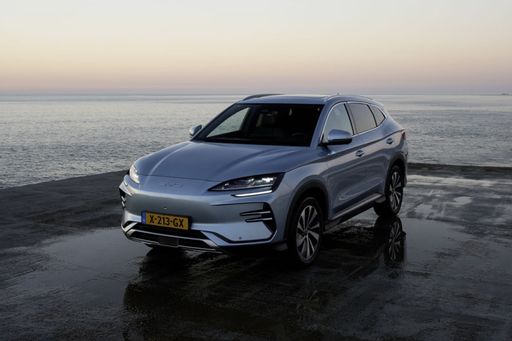
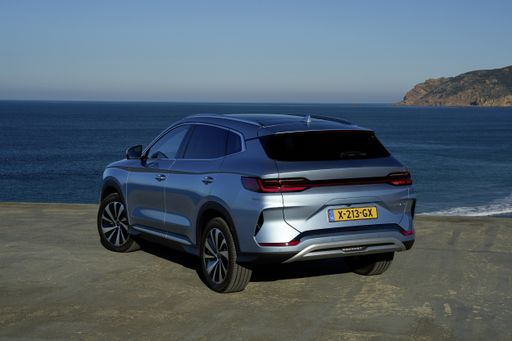
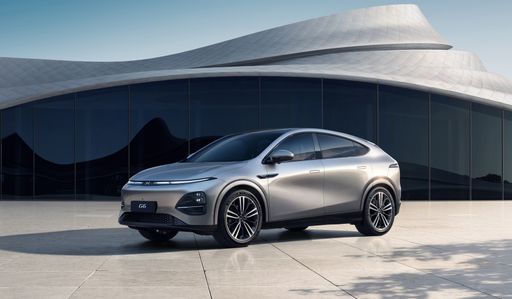
BYD Seal U and XPeng G6 face off in a focused comparison that looks past spec sheets to everyday life. If BYD Seal U VS XPeng G6 sits on your shortlist, here’s how they differ where it matters: character, comfort, charging, and family practicality. The BYD Seal U plays the calm, value‑rich cruiser with a hushed cabin and generous equipment. The XPeng G6 leans tech‑forward with ultra‑quick charging and punchier acceleration, wrapped in a sleek coupé‑SUV shape.
Seal U

Ride and character: calm comfort vs firmer control

The BYD Seal U is tuned for relaxation: supple over most bumps, very quiet at speed, and content to lope along without fuss. On wavey surfaces it can feel a touch floaty, and the light steering doesn’t invite you to hustle, but it keeps stress low on long days. The XPeng G6 feels more taut and responsive in a straight line, with noticeably stronger shove when you ask for it. That firmer edge brings more thump over sharp ridges and some droning on coarse tarmac, so it reads as brisk but less cosseting than the BYD Seal U.

G6

Cabin feel and usability: warm plushness or minimalist tech

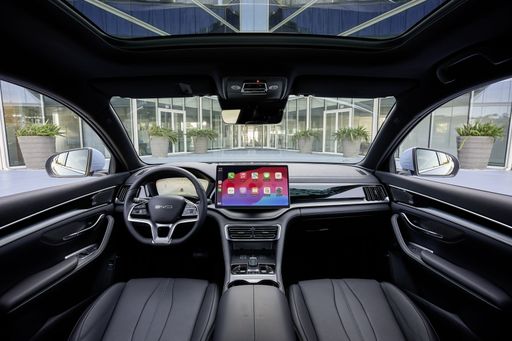
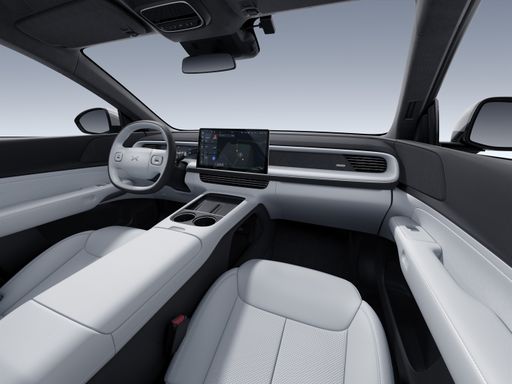
Inside, the BYD Seal U goes for a warmer, more cushioned vibe, with soft‑touch areas and a big rotating screen that pairs with crisp camera views. Its interface still hides too many basics in sub‑menus, but day to day it feels friendly and well equipped. The XPeng G6 looks cleaner and more futuristic, yet leans hard on the central touchscreen, with a smaller driver display and many core functions buried deeper in menus. Rear space is generous in both, but the G6’s coupé tail limits vertical loading, while the Seal U’s boot is practical rather than class‑leading; small‑item storage is also slightly easier to live with in the BYD.

Seal U

City manners and visibility: easygoing helper vs sleek but compromised

The BYD Seal U’s light steering, tight turning feel and high‑quality 360‑camera make tight streets and parking straightforward. Rearward visibility isn’t perfect, yet the camera system helps you trust its edges. The XPeng G6 counters with good cameras of its own but a small rear window and narrow wiper coverage mean you rely on aids more often. Add a firmer low‑speed ride and some common adjustments buried in the screen, and the G6 feels slick but a bit less forgiving in daily urban use.

Long‑distance behavior: serene efficiency or charge‑stop speed

On the motorway, the BYD Seal U settles into a quiet, unflustered groove, sipping less energy than the XPeng and keeping occupants relaxed over hours. Its charging speeds are only mid‑pack, though, so you’ll plan slightly longer breaks on pure EV road trips. The XPeng G6 flips that script with genuinely rapid DC capability that slashes stop times and keeps you rolling, even if consumption is a touch higher. Noise levels are low at a cruise, but the G6 can transmit more texture from rough asphalt; both cars’ driver assists have improved yet can still feel inconsistent depending on software.

Value, costs and buyer fit: which one suits you

The BYD Seal U undercuts the XPeng G6 on price and piles in kit you’ll use every day, making it a strong family SUV buy with low running costs. It suits drivers who prize comfort, a quiet cabin and straightforward practicality over thrills. The XPeng G6 asks a little more but pays back with standout fast charging, stronger performance and long warranties, ideal for frequent motorway users who live by short, predictable stops. Both carry top‑tier safety credentials; your choice comes down to serene efficiency and plushness (BYD Seal U) versus tech‑led pace and travel time (XPeng G6) in this modern electric SUV duel.

Here’s where it gets real: The technical differences in detail

G6

Costs and Efficiency:

Looking at overall running costs, both models reveal some interesting differences in everyday economy.

BYD Seal U is only slightly cheaper – starting at 34,300 £ , while the XPeng G6 costs 37,400 £ . That’s a price difference of around 3,094 £.

In terms of energy consumption, the BYD Seal U is substantially more efficient: consuming 12.1 kWh/100km compared to 17.3 kWh/100km for the XPeng G6. That’s a difference of about 5.2 kWh/100km.

As for electric range, the XPeng G6 offers barely more range – reaching up to 525 km, about 25 km more than the BYD Seal U.

Seal U

Engine and Performance:

Power, torque and acceleration say a lot about how a car feels on the road. This is where you see which model delivers more driving dynamics.

When it comes to engine power, the XPeng G6 offers markedly more power – delivering 487 HP compared to 324 HP. That’s roughly 163 HP more horsepower.

When accelerating from 0 to 100 km/h, the XPeng G6 is clearly quicker – completing the sprint in 4.1 s, while the BYD Seal U takes 5.9 s. That’s about 1.8 s quicker.

There’s also a difference in torque: the XPeng G6 delivers somewhat more torque with 660 Nm compared to 550 Nm. That’s about 110 Nm more.

G6

Space and Everyday Use:

Cabin size, boot volume and payload all play a role in everyday practicality. Here, comfort and flexibility make the difference.

Both vehicles offer seating for 5 people.

In terms of curb weight, BYD Seal U is barely lighter – 1,940 kg compared to 2,065 kg. The difference is around 125 kg.

Looking at boot space, the XPeng G6 offers only slightly more boot space – 571 L compared to 552 L. That’s a difference of about 19 L.

When it comes to payload, the XPeng G6 carries moderately more – 475 kg compared to 410 kg. That’s a difference of about 65 kg.

Who wins the race in the data check?

The XPeng G6 stands well ahead of its rival in the objective data comparison.
This result only shows which model scores more points on paper – not which of the two cars feels right for you.

from £37,400
G6

XPeng G6

  • Engine Type : Electric
  • Transmission : Automatic
  • Drive Type : Rear-Wheel Drive, All-Wheel Drive
  • Power HP : 252 - 487 HP
  • Consumption kWh/100km : 17.3 - 18.4 kWh/100km
  • Electric Range : 455 - 525 km
XPeng G6
BYD Seal U

Costs and Consumption

View detailed analysis

Engine and Performance

View detailed analysis

Dimensions and Body

View detailed analysis

XPeng G6

The XPeng G6 is a sleek, tech-focused electric crossover that pairs modern styling with a spacious, comfortable cabin. It delivers a refined, engaging driving experience and comes loaded with advanced driver-assistance and infotainment features that make it feel like a smarter, more connected car.

details

BYD Seal U

The BYD Seal U is a sleek electric fastback that blends sporty styling with a roomy, tech-focused interior, making it an appealing choice for buyers who want electric performance without sacrificing comfort. It delivers a smooth, composed ride and intuitive features, positioning it as a practical yet modern option in the EV market.

details
XPeng G6
BYD Seal U

Costs and Consumption

Price
37,400 - 44,200 £
Price
34,300 - 39,800 £
Consumption L/100km
-
Consumption L/100km
-
Consumption kWh/100km
17.3 - 18.4 kWh/100km
Consumption kWh/100km
12.1 - 20.5 kWh/100km
Electric Range
455 - 525 km
Electric Range
70 - 500 km
Battery Capacity
-
Battery Capacity
-
co2
0 g/km
co2
0 - 71 g/km
Fuel tank capacity
-
Fuel tank capacity
-

Dimensions and Body

Body Type
SUV
Body Type
SUV
Seats
5
Seats
5
Doors
-
Doors
-
Curb weight
2,065 - 2,220 kg
Curb weight
1,940 - 2,147 kg
Trunk capacity
571 L
Trunk capacity
425 - 552 L
Length
-
Length
-
Width
1,920 mm
Width
1,890 mm
Height
-
Height
-
Max trunk capacity
-
Max trunk capacity
-
Payload
470 - 475 kg
Payload
410 kg

Engine and Performance

Engine Type
Electric
Engine Type
Electric, Plugin Hybrid
Transmission
Automatic
Transmission
Automatic
Transmission Detail
Reduction Gearbox
Transmission Detail
Reduction Gearbox, Automatic Gearbox
Drive Type
Rear-Wheel Drive, All-Wheel Drive
Drive Type
Front-Wheel Drive, All-Wheel Drive
Power HP
252 - 487 HP
Power HP
218 - 324 HP
Acceleration 0-100km/h
4.1 - 6.9 s
Acceleration 0-100km/h
5.9 - 9.6 s
Max Speed
-
Max Speed
-
Torque
440 - 660 Nm
Torque
300 - 550 Nm
Number of Cylinders
-
Number of Cylinders
4
Power kW
185 - 358 kW
Power kW
160 - 238 kW
Engine capacity
-
Engine capacity
1,497 - 1,498 cm3

General

Model Year
2025
Model Year
2,024 - 2,026
CO2 Efficiency Class
A
CO2 Efficiency Class
A, B
Brand
XPeng
Brand
BYD
DriveDuel uses data analysis and artificial intelligence to evaluate vehicle data and create content. Content is regularly reviewed and improved. The displayed prices are estimates based on German list prices, adjusted to the respective country’s VAT. Country-specific registration taxes are not included. This information is not legally binding.