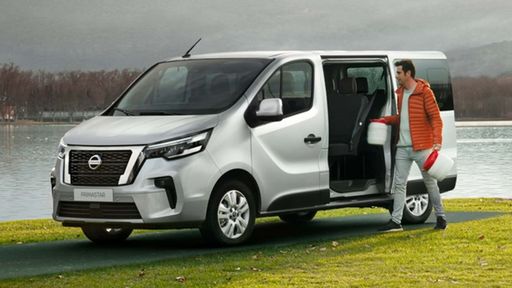
Nissan Primastar Bus Bus, starting at 38500 £

The Nissan Primastar Bus Bus impresses with 170 HP and an attractive starting price of 38500 £ . Here are all the details at a glance.

from about £38,500
default

Nissan Primastar Bus

  • Engine Type : Diesel
  • Transmission : Manuel, Automatic
  • Drive Type : Front-Wheel Drive
  • Power HP : 110 - 170 HP
  • Consumption L/100km : 6.9 - 8.8 L

Street Stance: honest, utilitarian looks that grow on you

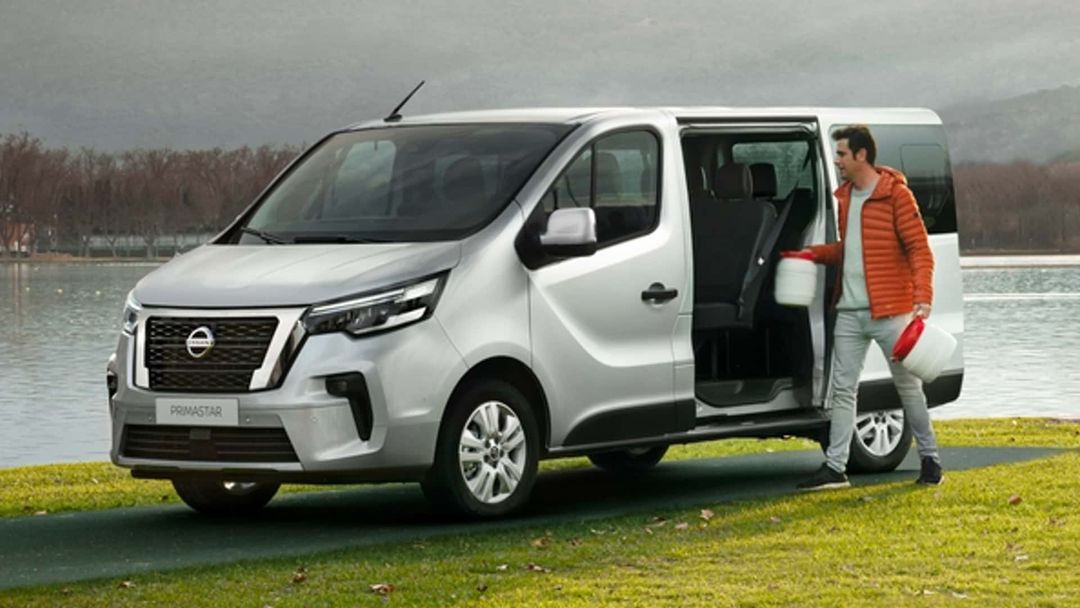
The Nissan Primastar Bus keeps the van aesthetic straightforward, with a squared roofline, tall greenhouse and a front end that reads purposeful rather than flashy. Proportions vary with the two length options—compact or long—so the silhouette can look commuter-friendly or almost commercial, depending on the wheelbase. Practical touches such as sliding side doors and a high loading sill are obvious from the outside and useful every day. The presence is functional: it doesn’t shout luxury, but it does telegraph capability on town streets and motorways alike.
Cab comfort: simple, robust and built for long shifts

The interior favours durability over designer flourishes, with hard-wearing plastics, large buttons and a driver-focused layout that stays usable with gloves on. Seating configurations go up to 9 seats or can be specified as a 6-seat layout, so passenger comfort is basic but acceptable for shuttle work or family trips, and the driver gets a commanding view. Visibility is good thanks to the tall windscreen and thin A-pillars, while storage bins and cup holders are sensibly placed for everyday items. Overall the cabin feels built to survive hard use rather than pamper occupants on luxury runs.

How much fits: people, luggage and small-business chores

The Primastar Bus is designed first as a mover of people and gear, with maximum boot volumes around 4,700–5,700 litres depending on configuration and a payload that can approach 1,000 kg on heavier variants, making it useful for weekend kit, airport runs or camper conversions. Long-wheelbase versions add noticeable legroom and cargo space behind the rearmost seats, while the taller roof helps stack bags or suitcases more efficiently. In practical terms this means a family’s holiday luggage, a sports team’s kit or a tradesman’s equipment can be handled without constant Tetris rearranging. Foldable or removable seats increase flexibility if occasional cargo duty is needed.

On the road: steady, predictable and tolerant

Powertrains are tuned for load-hauling rather than sport, with engine outputs spanning roughly 110–170 hp and torques in the 300–380 Nm bracket, which provides adequate shove when the bus is lightly laden and respectable low-end pull when full. The front-wheel-drive layout keeps packaging compact and improves traction in everyday conditions, though high-speed stability is governed more by weight and load than by sprightly chassis dynamics. Steering is on the lighter side and suspension prioritises comfort, so body roll is present but acceptable for the class and long-distance cruising is more composed than nervy. Manual and automatic gearbox choices let buyers favour economy or convenience depending on duty cycle.

Fuel figures that matter: cost per kilometre and realistic range

Official consumption figures sit in a band from around 6.9 to 8.8 L/100 km depending on engine, weight and gearbox, so real-world combined use typically falls nearer the upper end when fully loaded or in town traffic. With an 80-litre tank, expect a theoretical range between roughly 900 and 1,150 km on a single fill under mixed driving, though heavy loads and urban running will reduce that noticeably. Emissions are in the higher ranges for the segment, which matters for tax and low-emission zone considerations in some cities. For fleet operators the takeaway is manageable running costs when the vehicle is used as intended, but not the cheapest option for frequent city-only operation.

Electronics and convenience: basic, sensible tech

Technology in the Primastar Bus focuses on utility rather than gadgetry, with an infotainment system offering smartphone mirroring in many trims and clear, straightforward menus for navigation and media. Safety and driver aids tend to be practical items such as rear cameras, parking sensors and optional advanced driver assistance packs rather than a full suite of semi-autonomous features. Controls are tactile and simple to understand, which speeds up driver turnover for commercial use and reduces distraction. For buyers wanting every modern convenience, some items will be optional rather than standard, so specification checking is important.

Who should buy one: clear use-cases, clear compromises

The Primastar Bus suits shuttle operators, large families, tradespeople who occasionally move people, and adventurous buyers considering a compact camper conversion — including lifestyle editions like the Seaside by Dethleffs — because it balances passenger carrying with load-hauling ability. Multiple current versions are available, including Kombi and Seaside derivatives and a range of L1/L2 lengths with 110–170 hp engines and manual or automatic gearboxes, so buyers can match power and consumption to mission profile. The trade-offs are simple: practical space and robustness over refinement and premium finishes, and running costs that reflect a large diesel vehicle rather than a compact MPV. For those prioritising durability, payload and configurability, the Primastar Bus is a pragmatic, workmanlike choice.

Costs and Consumption

Price
38500 - 63200 £
Consumption L/100km
6.9 - 8.8 L
Consumption kWh/100km
-
Electric Range
-
Battery Capacity
-
co2
181 - 232 g/km
Fuel tank capacity
80 L

Dimensions and Body

Body Type
Bus
Seats
6 - 9
Doors
4 - 5
Curb weight
1952 - 2527 kg
Trunk capacity
-
Length
5080 - 5480 mm
Width
1956 mm
Height
1935 - 2040 mm
Max trunk capacity
4700 - 5700 L
Payload
543 - 1002 kg

Engine and Performance

Engine Type
Diesel
Transmission
Manuel, Automatic
Transmission Detail
Manual Gearbox, Dual-Clutch Automatic, Automatic Gearbox
Drive Type
Front-Wheel Drive
Power HP
110 - 170 HP
Acceleration 0-100km/h
-
Max Speed
161 - 180 km/h
Torque
300 - 380 Nm
Number of Cylinders
4
Power kW
81 - 125 kW
Engine capacity
1997 cm3

General

Model Year
2022 - 2025
CO2 Efficiency Class
G
Brand
Nissan
What drivetrain options does the Nissan Primastar Bus have?

The Nissan Primastar Bus is offered with Front-Wheel Drive.

The prices shown are estimates based on German list prices, adjusted for local VAT. Local registration taxes (e.g. NoVA, BPM or CO2 malus) are not included. This information is not legally binding.