VS

Audi Q8 e-tron vs Audi Q6 e-tron comparison

Compare performance (503 HP vs 490 HP), boot space and price (65,100 £ vs 54,400 £ ) at a glance. Find out which car is the better choice for you – Audi Q8 e-tron or Audi Q6 e-tron?

Audi Q8 e-tron vs Audi Q6 e-tron: Key differences

Audi Q8 e-tron

  • marginally more power
  • only slightly more trunk space

Audi Q6 e-tron

4.9 (3 Reviews)
rate
  • slightly cheaper
  • noticeably more efficient
  • marginally more electric range
  • barely quicker 0–100 km/h
  • moderately lighter

All details on performance, efficiency, range and trunk space can be found in the technical comparison below – including user reviews for both models.

Q8 e-tron

In the ever-evolving world of electric vehicles, Audi has stepped up its game with two of its flagship models: the Audi Q6 e-tron and the Audi Q8 e-tron. Both vehicles are impressive in their own right, but how do they stack up against each other? This article will delve into the technical aspects, innovations, and features that define these two electric SUVs.
Q6 e-tron

Design and Dimensions

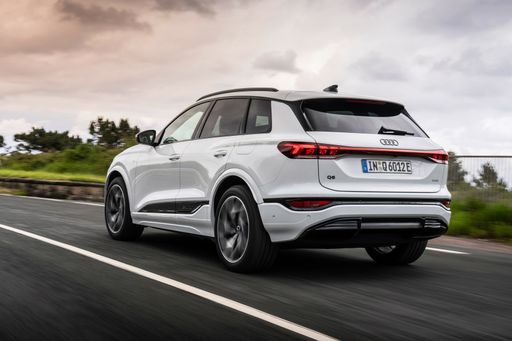
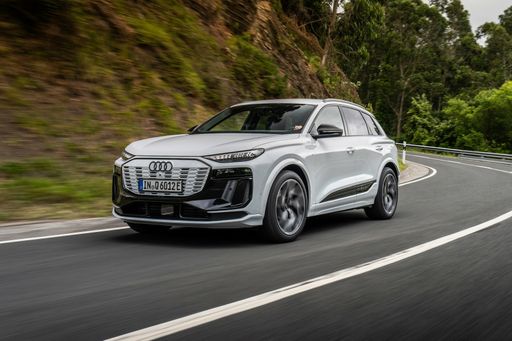
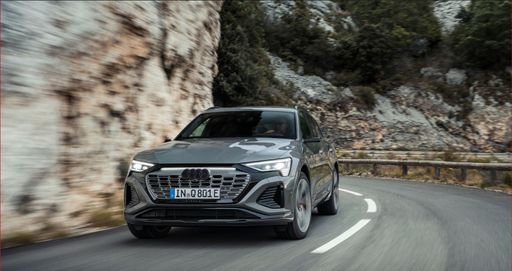
The Audi Q6 e-tron is slightly smaller than its Q8 counterpart, measuring 4,771 mm in length, compared to the Q8 e-tron’s 4,915 mm. Both models feature a sleek SUV design that is quintessentially Audi, with a bold front grille, sharp lines, and attention to aerodynamic efficiency. The Q6 e-tron tends to have a sportier silhouette, while the Q8 e-tron offers a more robust presence.

Q8 e-tron

Performance and Powertrain

Under the hood, the Q6 e-tron offers a range of power options from 292 to 516 HP, with torque ranging from 450 to an impressive 855 Nm. Meanwhile, the Q8 e-tron provides slightly less variety with power outputs from 340 to 503 HP and torque topping out at 973 Nm. Both models utilize an automatic transmission with a reduction gearbox, ensuring smooth transitions and efficient performance.

When it comes to acceleration, the Q6 e-tron boasts a 0-100 km/h time of as low as 4.3 seconds, making it a formidable competitor against the Q8 e-tron, which achieves the same sprint in as little as 4.5 seconds. Both vehicles come equipped with all-wheel drive, enhancing traction and stability.

Q6 e-tron

Electric Range and Efficiency

In terms of electric range, the Q6 e-tron takes the lead, offering up to 656 km on a single charge with its larger battery options (94.9 kWh). The Q8 e-tron, while slightly less efficient, still provides an impressive range of up to 595 km. Energy consumption is also notable, with the Q6 e-tron recording figures as low as 15.6 kWh/100 km, compared to the Q8 e-tron's best at 19.7 kWh/100 km.

Q8 e-tron

Battery and Charging

The Q6 e-tron supports battery capacities of 75.8 kWh and 94.9 kWh, while the Q8 e-tron features options of 89 kWh and 106 kWh. Both models promise rapid charging capabilities, allowing for quick top-ups at compatible charging stations, which is an essential aspect for electric vehicle users.

Q6 e-tron

Interior and Technology

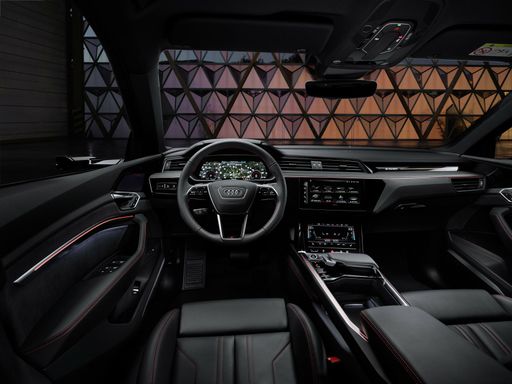
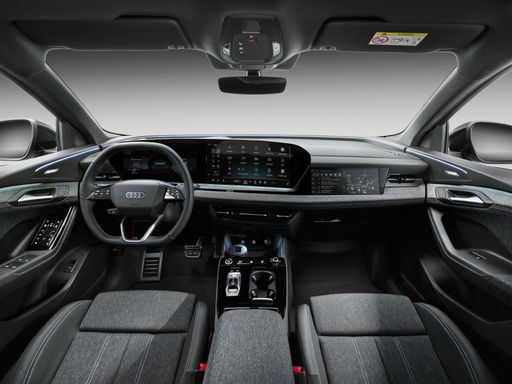
Inside, both vehicles epitomize luxury, offering comfortable seating for five and high-quality materials. The Q6 e-tron emphasizes a more tech-centric approach with its advanced infotainment system, offering users seamless connectivity and control through a touchscreen interface. On the other hand, the Q8 e-tron combines cutting-edge technology with traditional Audi luxury, featuring higher-end audio systems and more customizable options.

Q8 e-tron

Trunk Space and Practicality

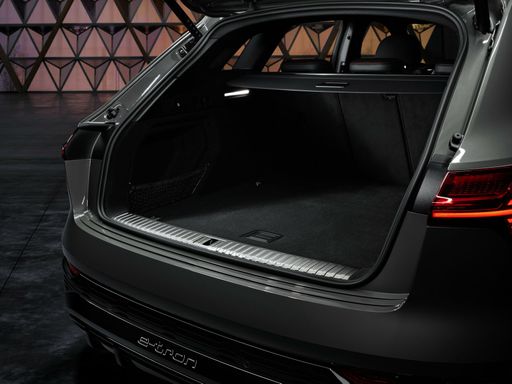
Trunk capacity is also an important factor for potential buyers. The Q6 e-tron provides up to 526 liters of storage space, while the Q8 e-tron leads slightly with 569 liters. Both trunks are designed for practicality, accommodating a variety of cargo sizes and shapes, making these SUVs suitable for families and weekend adventurers alike.

Conclusion: Which One to Choose?

Choosing between the Audi Q6 e-tron and Q8 e-tron ultimately comes down to individual needs and preferences. The Q6 e-tron is an excellent option for those looking for pioneering technology, enhanced range, and sportier design, while the Q8 e-tron stands out for its powerful performance, luxurious interior, and robust presence on the road.

As electric vehicles continue to shape the future of the automotive industry, Audi's commitment to innovation and performance is evident in both the Q6 and Q8 e-tron. The decision lies in whether you prioritize efficiency and space with the Q6 or power and luxury with the Q8.

Here’s where it gets real: The technical differences in detail

Q8 e-tron

Costs and Efficiency:

Price and efficiency are key factors when choosing a car – and this is often where the real differences emerge.

Audi Q6 e-tron is slightly cheaper – starting at 54,400 £ , while the Audi Q8 e-tron costs 65,100 £ . That’s a price difference of around 10,629 £.

In terms of energy consumption, the Audi Q6 e-tron is noticeably more efficient: consuming 15.6 kWh/100km compared to 19.7 kWh/100km for the Audi Q8 e-tron. That’s a difference of about 4.1 kWh/100km.

As for electric range, the Audi Q6 e-tron offers marginally more range – reaching up to 656 km, about 61 km more than the Audi Q8 e-tron.

Q6 e-tron

Engine and Performance:

Under the bonnet, it becomes clear which model is tuned for sportiness and which one takes the lead when you hit the accelerator.

When it comes to engine power, the Audi Q8 e-tron offers marginally more power – delivering 503 HP compared to 490 HP. That’s roughly 13 HP more horsepower.

When accelerating from 0 to 100 km/h, the Audi Q6 e-tron is barely quicker – completing the sprint in 4.4 s, while the Audi Q8 e-tron takes 4.5 s. That’s about 0.1 s quicker.

Looking at top speed, the Audi Q6 e-tron is marginally faster – reaching 230 km/h, while the Audi Q8 e-tron tops out at 210 km/h. The difference is around 20 km/h.

There’s also a difference in torque: the Audi Q8 e-tron delivers somewhat more torque with 973 Nm compared to 855 Nm. That’s about 118 Nm more.

Q8 e-tron

Space and Everyday Use:

Whether family car or daily driver – which one offers more room, flexibility and comfort?

Both vehicles offer seating for 5 people.

In terms of curb weight, Audi Q6 e-tron is moderately lighter – 2,200 kg compared to 2,585 kg. The difference is around 385 kg.

Looking at boot space, the Audi Q8 e-tron offers only slightly more boot space – 569 L compared to 526 L. That’s a difference of about 43 L.

For maximum load capacity, the Audi Q8 e-tron offers barely more capacity – up to 1,637 L, about 108 L more than the Audi Q6 e-tron.

When it comes to payload, the Audi Q8 e-tron carries barely more – 595 kg compared to 540 kg. That’s a difference of about 55 kg.

Who wins the race in the data check?

The Audi Q6 e-tron holds a narrow overall lead in the objective data comparison.
This result only shows which model scores more points on paper – not which of the two cars feels right for you.

from £54,400
Q6 e-tron

Audi Q6 e-tron

  • Engine Type : Electric
  • Transmission : Automatic
  • Drive Type : Rear-Wheel Drive, All-Wheel Drive
  • Power HP : 252 - 490 HP
  • Consumption kWh/100km : 15.6 - 18.4 kWh/100km
  • Electric Range : 529 - 656 km
Audi Q8 e-tron
Audi Q6 e-tron

Costs and Consumption

View detailed analysis

Engine and Performance

View detailed analysis

Dimensions and Body

View detailed analysis

Audi Q8 e-tron

The Audi Q8 e-tron wraps Audi’s usual premium polish into a quiet, composed electric SUV that feels refined and surprisingly effortless to drive. With a spacious, tech-forward cabin and understated road presence, it’s a practical yet stylish choice for buyers who want electric motoring without losing the dignity of a proper luxury SUV.

details

Audi Q6 e-tron

The Audi Q6 e-tron balances sleek, coupe-like styling with a roomy, upscale interior that feels modern without being showy. It delivers refined electric performance and smart tech that make daily driving effortless — the sort of EV that might make petrolheads grudgingly admit they fancy the future.

details
Audi Q8 e-tron
Audi Q6 e-tron

Costs and Consumption

Price
65,100 - 102,800 £
Price
54,400 - 82,500 £
Consumption L/100km
-
Consumption L/100km
-
Consumption kWh/100km
19.7 - 26.3 kWh/100km
Consumption kWh/100km
15.6 - 18.4 kWh/100km
Electric Range
456 - 595 km
Electric Range
529 - 656 km
Battery Capacity
89 - 106 kWh
Battery Capacity
75.8 - 94.9 kWh
co2
0 g/km
co2
0 g/km
Fuel tank capacity
-
Fuel tank capacity
-

Dimensions and Body

Body Type
SUV
Body Type
SUV
Seats
5
Seats
5
Doors
5
Doors
5
Curb weight
2,585 - 2,725 kg
Curb weight
2,200 - 2,425 kg
Trunk capacity
528 - 569 L
Trunk capacity
499 - 526 L
Length
4,915 mm
Length
4,771 mm
Width
1,937 - 1,994 mm
Width
1,939 - 1,965 mm
Height
1,617 - 1,683 mm
Height
1,665 - 1,685 mm
Max trunk capacity
1,567 - 1,637 L
Max trunk capacity
1,361 - 1,529 L
Payload
515 - 595 kg
Payload
540 kg

Engine and Performance

Engine Type
Electric
Engine Type
Electric
Transmission
Automatic
Transmission
Automatic
Transmission Detail
Reduction Gearbox
Transmission Detail
Reduction Gearbox
Drive Type
All-Wheel Drive
Drive Type
Rear-Wheel Drive, All-Wheel Drive
Power HP
340 - 503 HP
Power HP
252 - 490 HP
Acceleration 0-100km/h
4.5 - 6 s
Acceleration 0-100km/h
4.4 - 7.6 s
Max Speed
200 - 210 km/h
Max Speed
210 - 230 km/h
Torque
664 - 973 Nm
Torque
450 - 855 Nm
Number of Cylinders
-
Number of Cylinders
-
Power kW
250 - 370 kW
Power kW
185 - 360 kW
Engine capacity
-
Engine capacity
-

General

Model Year
2,023 - 2,024
Model Year
2,024 - 2,025
CO2 Efficiency Class
A
CO2 Efficiency Class
A
Brand
Audi
Brand
Audi
DriveDuel uses data analysis and artificial intelligence to evaluate vehicle data and create content. Content is regularly reviewed and improved. The displayed prices are estimates based on German list prices, adjusted to the respective country’s VAT. Country-specific registration taxes are not included. This information is not legally binding.